
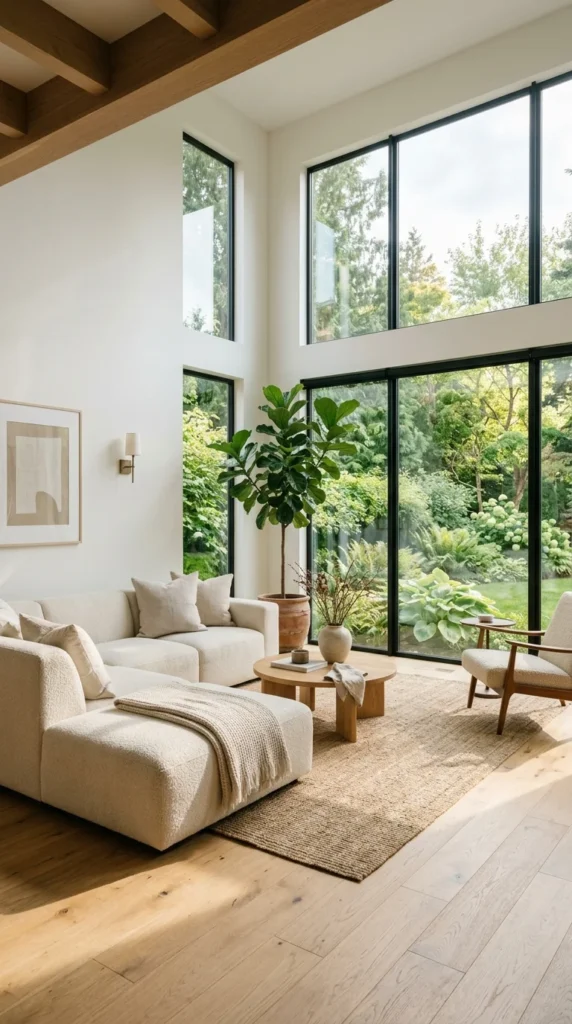
Minimalism is often misunderstood as a sterile, cold design choice that lacks personality. However, when executed correctly, a minimalist living room is the ultimate sanctuary—a space designed to reduce visual noise and promote mental clarity. The modern minimalist aesthetic is about “essentialism,” focusing on high-quality pieces, intentional layouts, and a harmony of textures that make a home feel both expansive and cozy.
If you are looking to transform your living area into a peaceful retreat without sacrificing style, these thirteen ideas will help you master the art of curated simplicity.
1. Neutral Tones
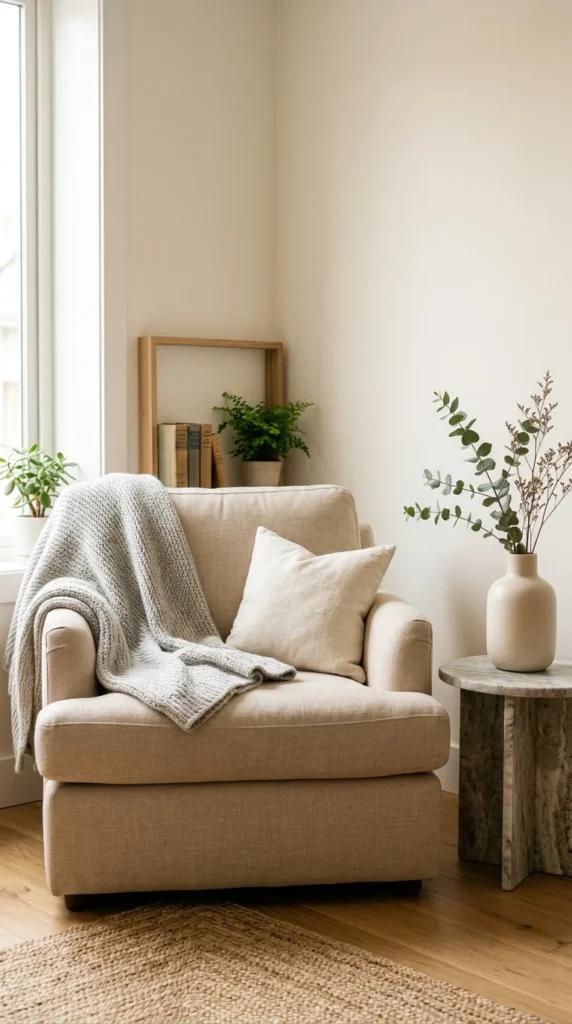
The foundation of any minimalist space is a cohesive, neutral color palette. Moving away from stark, clinical whites, modern minimalism embraces “warm neutrals” like oatmeal, biscuit, stone, and dove gray. These colors reflect natural light beautifully, making a room feel larger and more open. By layering different shades of the same color family, you create depth and interest without the need for jarring patterns or bright hues. This monochromatic approach acts as a canvas, allowing the architecture of the room and the quality of your furniture to take center stage.
2. Organic Materials
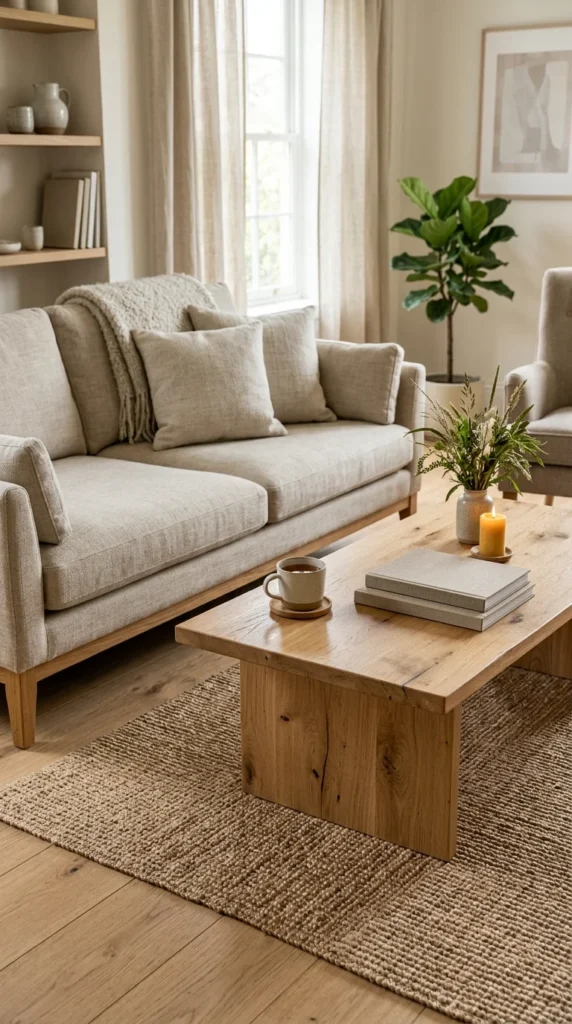
To prevent a minimalist room from feeling “flat,” introduce organic materials. Elements like raw wood, polished stone, linen, wool, and rattan bring a tactile quality that connects the indoors with the natural world. A solid oak coffee table or a marble side table provides a sense of weight and permanence. These materials age gracefully and possess an inherent beauty that doesn’t require extra ornamentation. The goal is to let the natural grain of wood or the veining of stone serve as the “pattern” in the room.
3. Functional Furniture
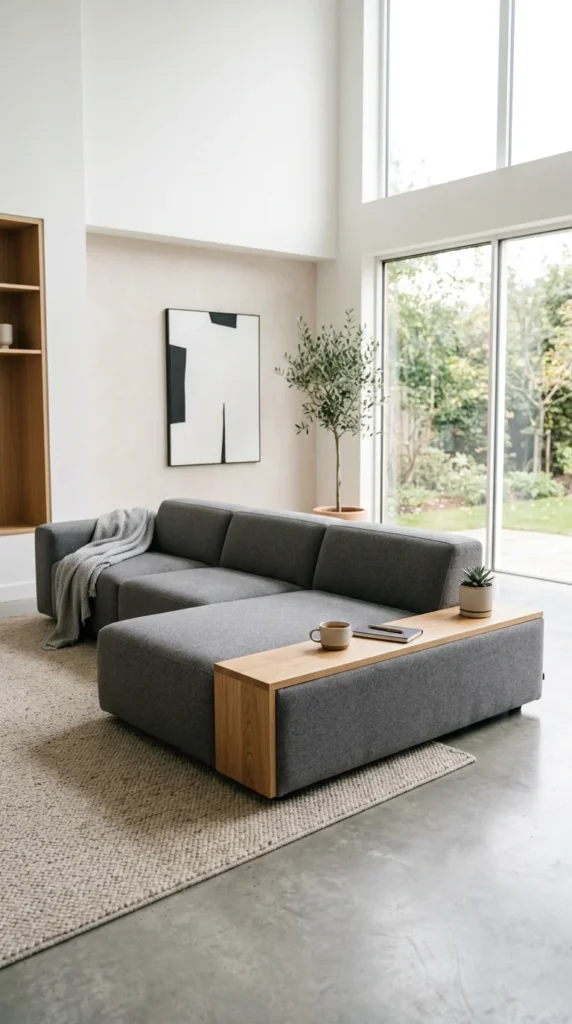
In a minimalist living room, every piece of furniture must earn its place. Choose pieces that prioritize function and silhouette. Instead of a bulky entertainment center, opt for a floating console. Instead of multiple small chairs that clutter the floor plan, choose one iconic, well-designed lounge chair. Multi-functional furniture, such as ottomans with hidden storage or nested tables, helps maintain a clean look while providing the utility needed for daily living. When furniture is chosen with intention, the room feels curated rather than crowded.
4. Statement Art
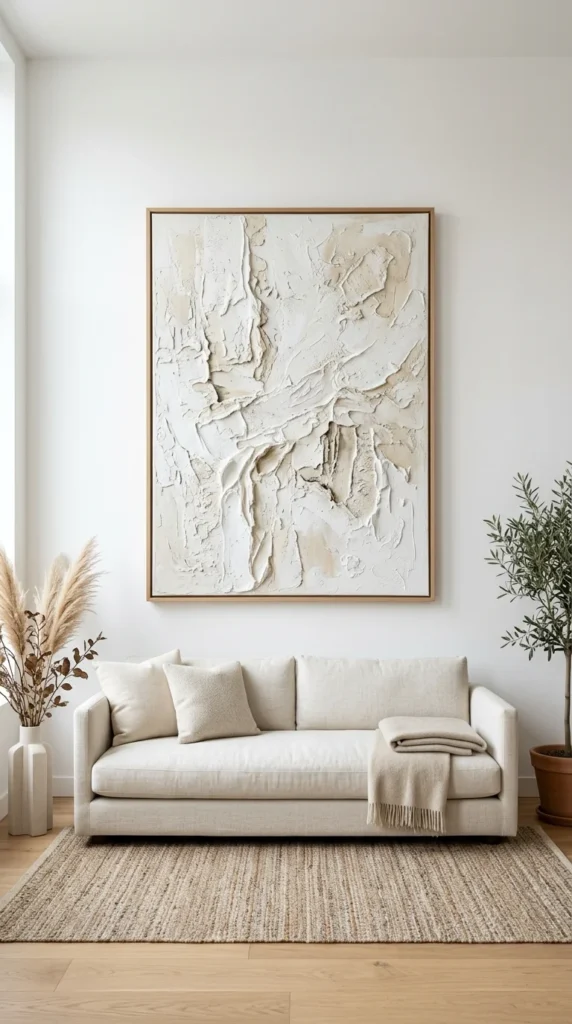
Minimalism doesn’t mean empty walls, but it does mean avoiding the visual chaos of a crowded gallery wall. One large-scale piece of art creates a sophisticated focal point and anchors the room. Look for abstract works, line drawings, or textured canvases that complement your color palette. The scale is key here; a large piece makes a bold statement of confidence, whereas many small pieces can make a wall feel “busy.” This single-point-of-focus strategy draws the eye and gives the mind a place to rest.
5. Negative Space
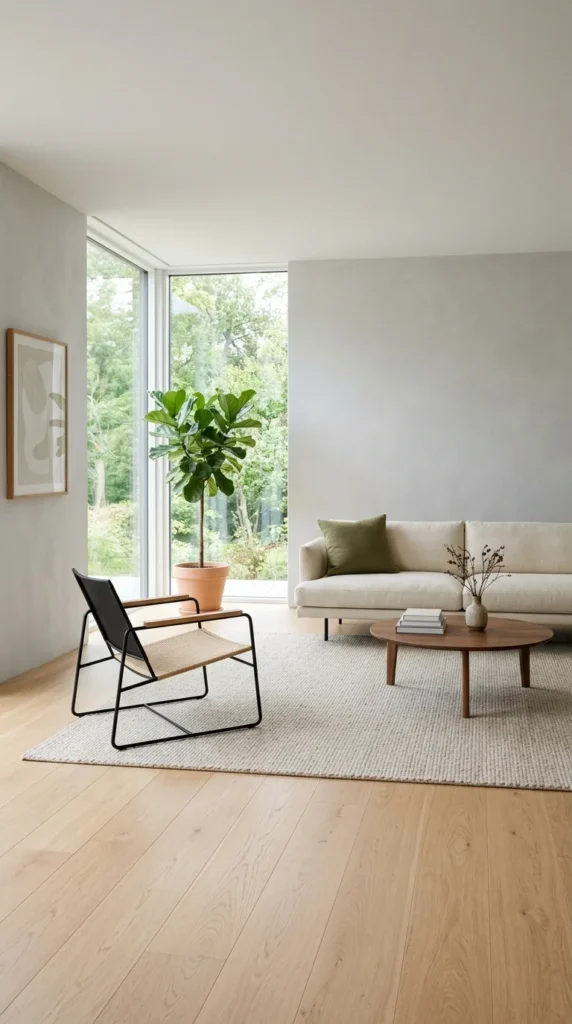
Negative space—the empty areas around and between objects—is a vital design element in minimalism. It is the “breath” of the room. Resist the urge to fill every corner or every inch of a shelf. By leaving parts of the floor and walls empty, you highlight the items you do choose to display. This openness creates a sense of luxury and freedom, allowing air and light to circulate more effectively. In a minimalist home, what you leave out is just as important as what you put in.
6. Indoor Greenery
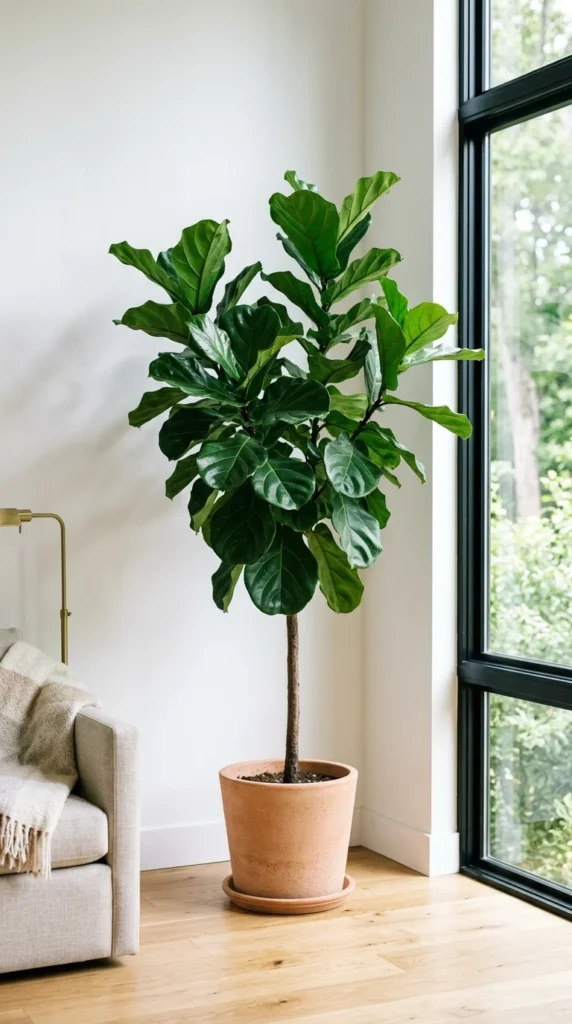
Plants are the perfect minimalist accessory because they add life, color, and movement without adding “clutter.” A single, large architectural plant like a Fiddle Leaf Fig, an Olive Tree, or a Monstera can soften the sharp lines of minimalist furniture. The organic, irregular shape of a plant provides a beautiful contrast to the geometric precision of a modern sofa or shelving unit. Furthermore, plants improve air quality and provide a psychological link to nature, which enhances the “calm” factor of the room.
7. Sculptural Lighting
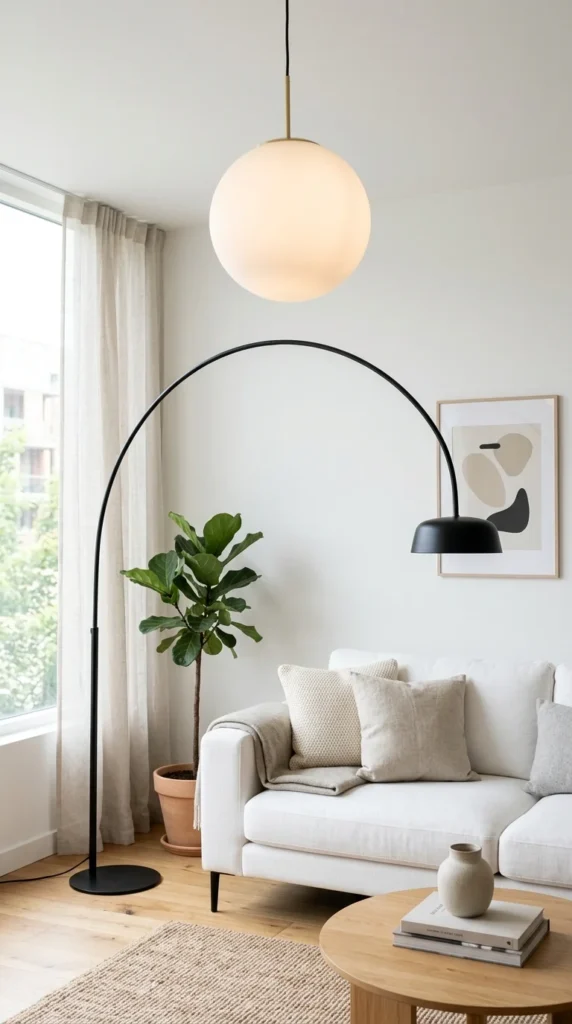
Lighting should be both a functional tool and a work of art. In a minimalist living room, avoid fussy chandeliers with too many crystals or details. Instead, look for sculptural fixtures with clean lines and interesting shapes. An overhanging arc lamp or a globe pendant light can serve as a visual anchor. Consider “hidden” lighting as well, such as LED strips under cabinets or behind a sofa, to create a soft, ambient glow that doesn’t rely on bulky fixtures.
8. Hidden Storage
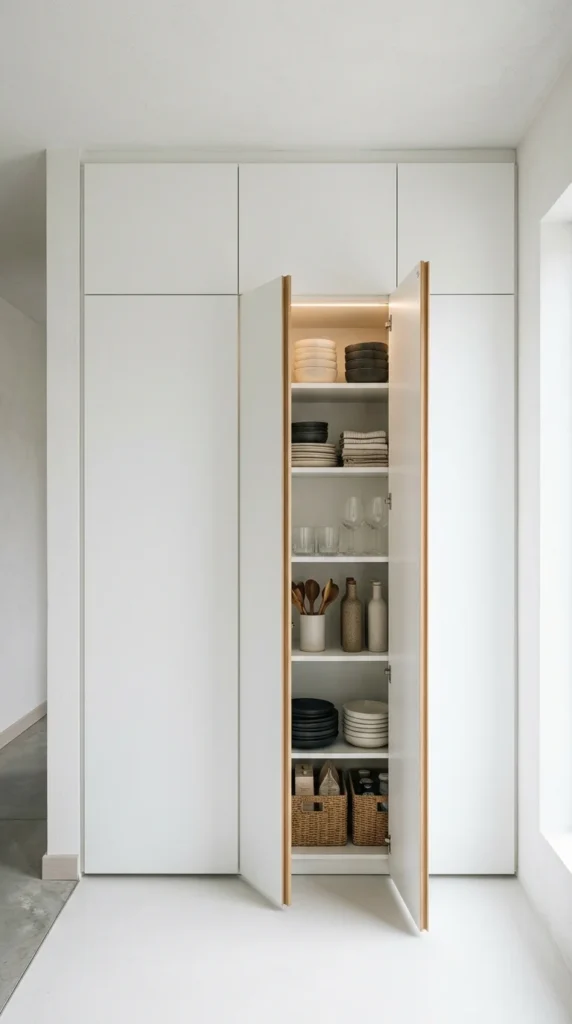
The secret to a successful minimalist living room is a place to hide the “mess” of everyday life. Integrated storage solutions that blend into the architecture are ideal. Think handle-less cabinets that look like wall panels, or media consoles that hide all cables and electronics. When your belongings are tucked away out of sight, the visual environment remains tranquil. This allows you to enjoy your living space without the constant reminder of chores or unfinished business.
9. Low-Profile Seating
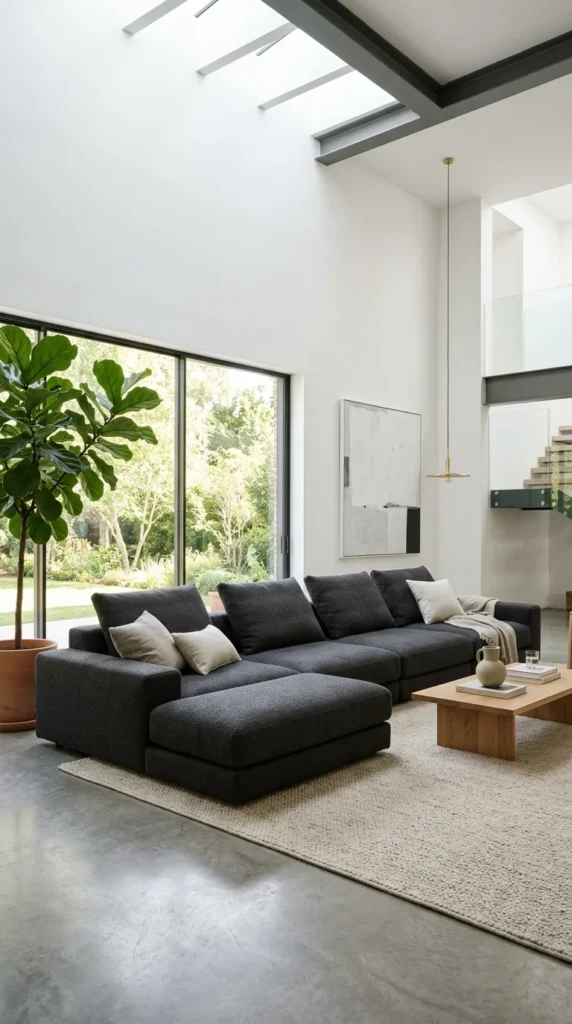
To maximize the sense of height and volume in a room, choose low-profile furniture. Sofas and armchairs that sit closer to the ground create an unobstructed line of sight across the room, making the space feel more expansive and relaxed. Low-profile seating often features deep cushions, encouraging a “lounge” atmosphere that is perfect for unwinding. This design choice feels modern, grounded, and incredibly inviting.
10. Textured Rugs
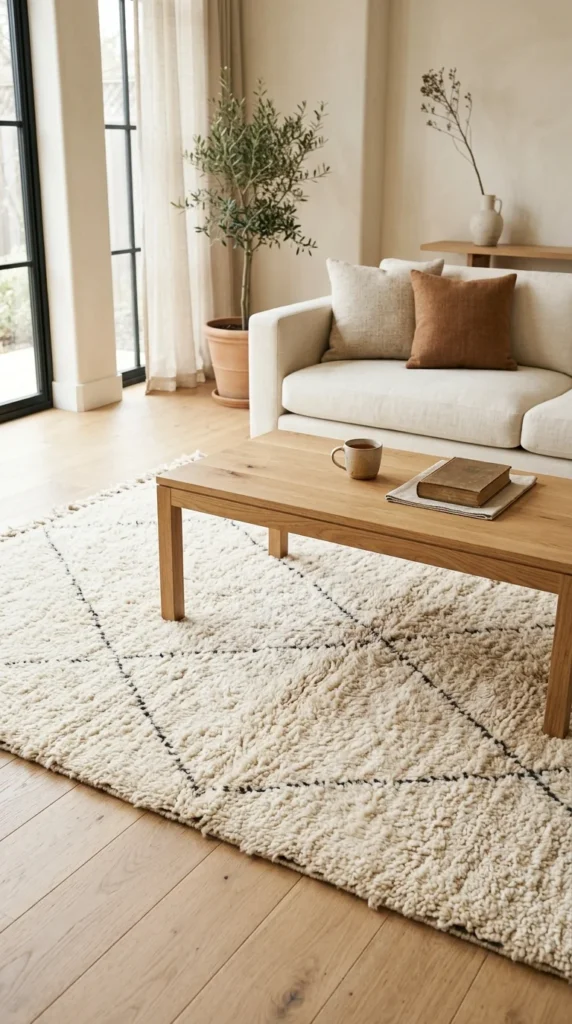
While you may be avoiding bright patterns, you shouldn’t avoid texture. A large, plush rug can “zone” the living area and add a layer of warmth. Look for rugs made of natural fibers like wool, silk, or jute. A high-pile rug in a solid neutral color adds a sense of luxury and comfort underfoot, which is essential for making a minimalist room feel like a home rather than a showroom. The subtle shadow lines created by the texture of the rug provide visual interest without breaking the color scheme.
11. Minimalist Window Treatments
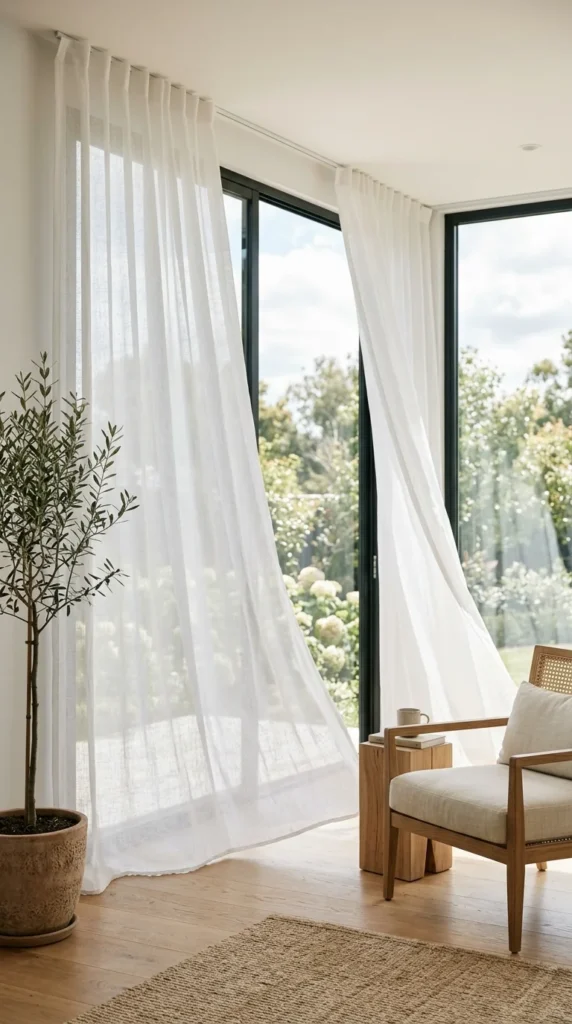
Natural light is the best decorator. To keep a room feeling calm and stylish, opt for window treatments that are as unobtrusive as possible. Sheer linen curtains allow light to filter in while providing privacy, creating a soft, dreamy atmosphere. Alternatively, simple roller shades or Roman shades in a fabric that matches the wall color can “disappear” when not in use. Avoid heavy drapes, valances, or ornate hardware that can weigh down the aesthetic of the windows.
12. Curated Surfaces
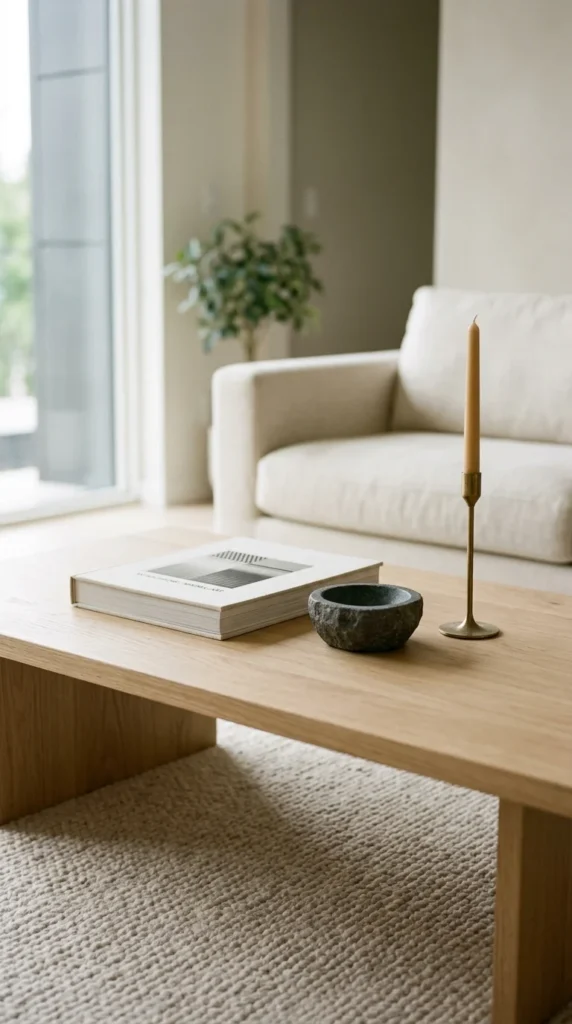
The surfaces in your living room—the coffee table, side tables, and mantel—should be styled with restraint. Follow the “rule of three” or the “odd number rule” but keep it very sparse. A single beautiful book, a ceramic bowl, and perhaps one sculptural object are all you need. By limiting the number of items on display, you give each object the “space” to be appreciated. This prevents the room from feeling “staged” and instead makes it feel like a collection of meaningful items.
13. Monochromatic Textures
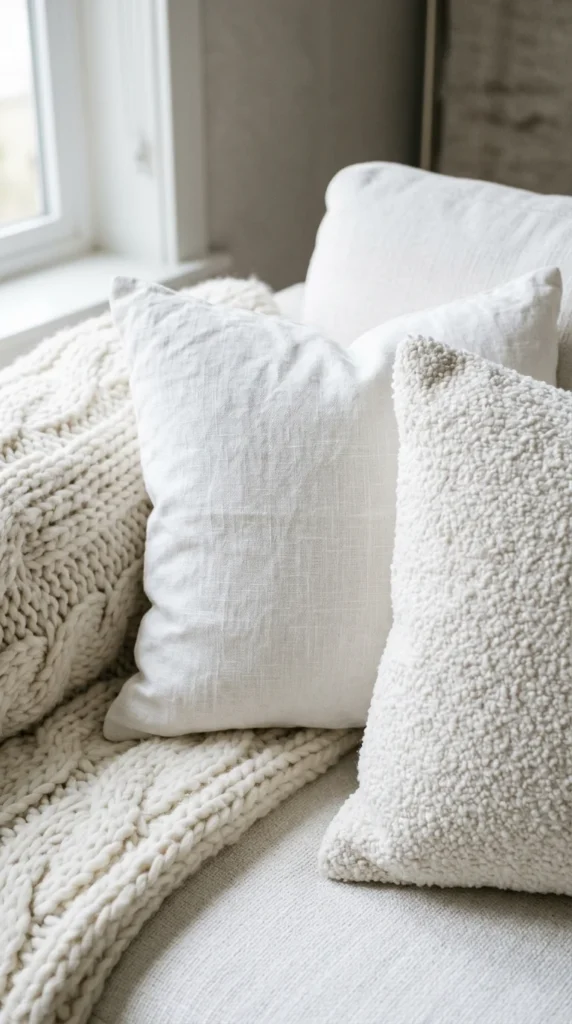
If you find that your neutral room feels a bit boring, the solution is not more color, but more texture. Mix and match different fabrics in the same shade. Combine a smooth leather chair with a chunky knit throw and linen pillows. This interplay of “rough” and “smooth” or “hard” and “soft” creates a sensory richness that is sophisticated and deeply calming. It proves that you can achieve a high-style look using only the most basic elements of design.