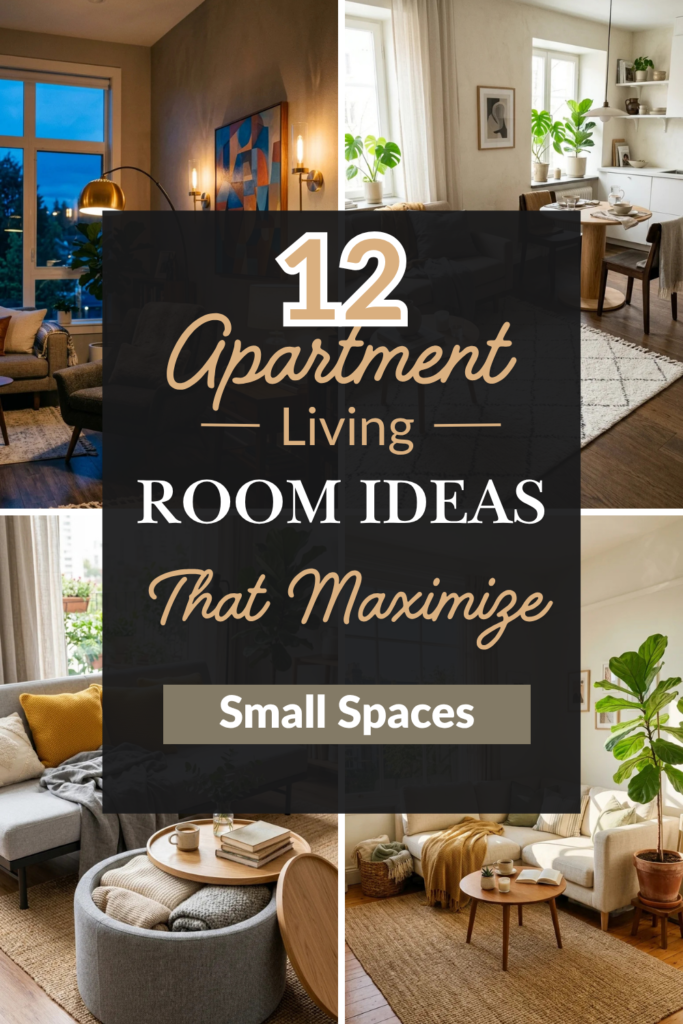

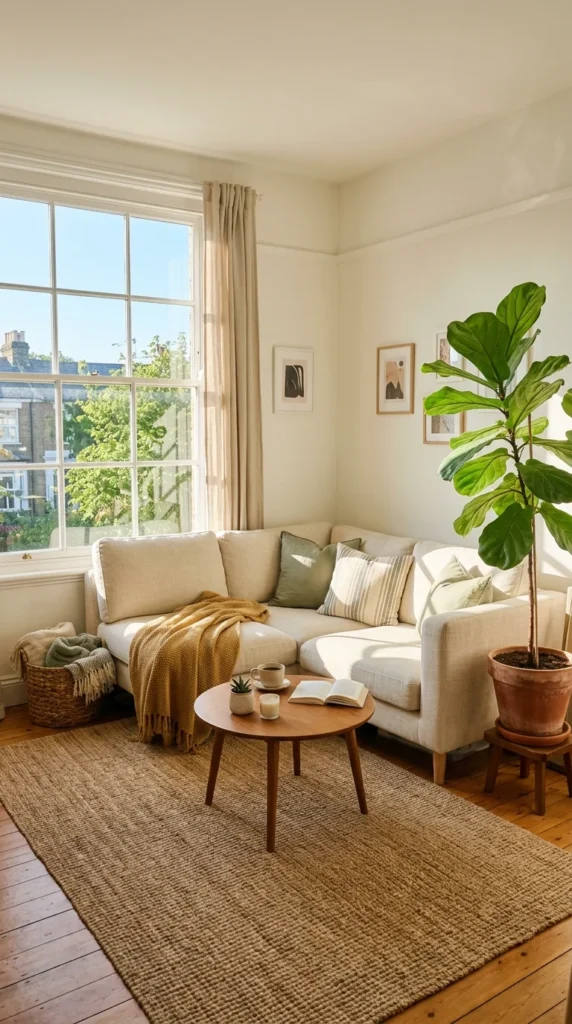
Living in an apartment often means grappling with limited square footage, but a small footprint doesn’t have to limit your style or comfort. The secret to a successful small living room lies in “spatial intelligence”—the art of using every inch of your room purposefully while creating the optical illusion of a much larger area. By focusing on light, scale, and multi-functional design, you can transform a cramped quarters into a sophisticated sanctuary.
Whether you are dealing with a studio apartment or a narrow urban flat, these ten strategies will help you unlock the full potential of your living space.
1. Multifunctional Furniture
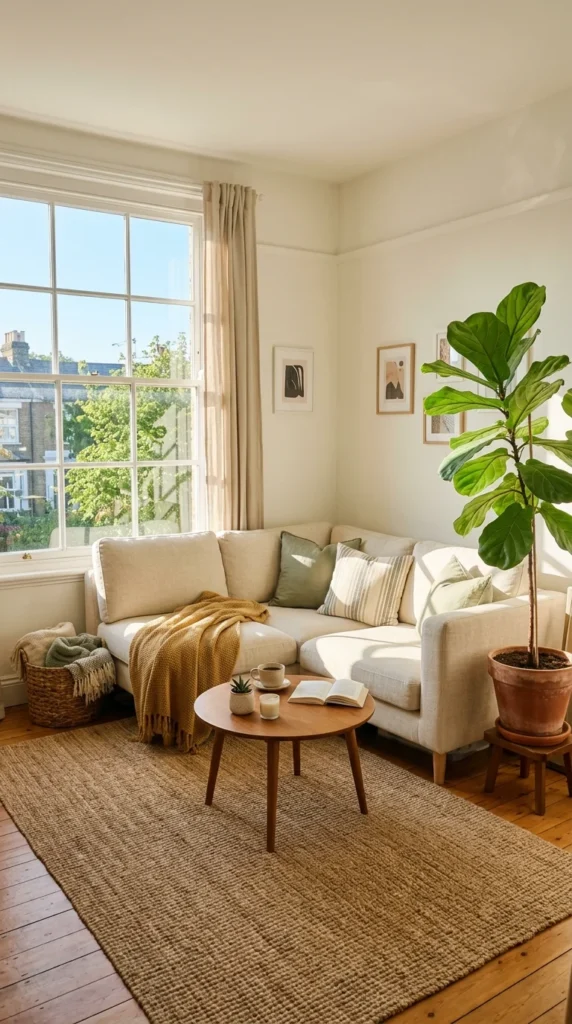
Living in an apartment often means grappling with limited square footage, but a small footprint doesn’t have to limit your style or comfort. The secret to a successful small living room lies in “spatial intelligence”—the art of using every inch of your room purposefully while creating the optical illusion of a much larger area. By focusing on light, scale, and multi-functional design, you can transform a cramped quarters into a sophisticated sanctuary.
Whether you are dealing with a studio apartment or a narrow urban flat, these ten strategies will help you unlock the full potential of your living space.
1. Multifunctional Furniture
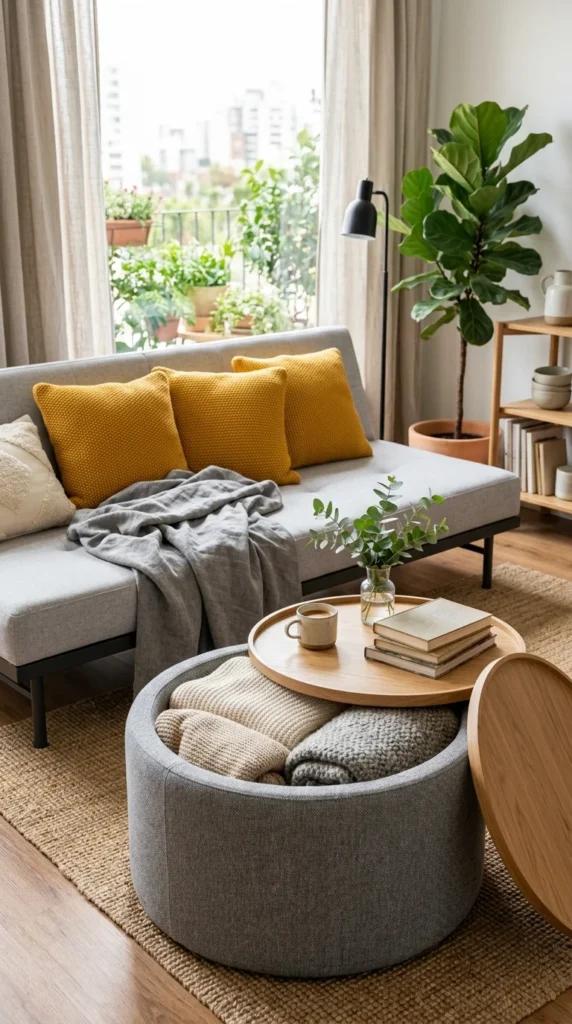
When space is at a premium, every piece of furniture must earn its keep. Multifunctional pieces are the backbone of small-space living. Instead of a traditional coffee table, consider a storage ottoman that provides a place to rest your feet, extra seating for guests, and a hidden compartment for blankets or board games.
- Sofa Beds: Look for “clic-clac” mechanisms or sleek pull-outs that don’t look bulky during the day.
- Lift-top Coffee Tables: These allow you to transition from a lounging area to a home office or dining spot in seconds.
- Nesting Tables: Perfect for when you need extra surface area for drinks but want to tuck them away to keep the floor clear when not in use.
2. Vertical Storage
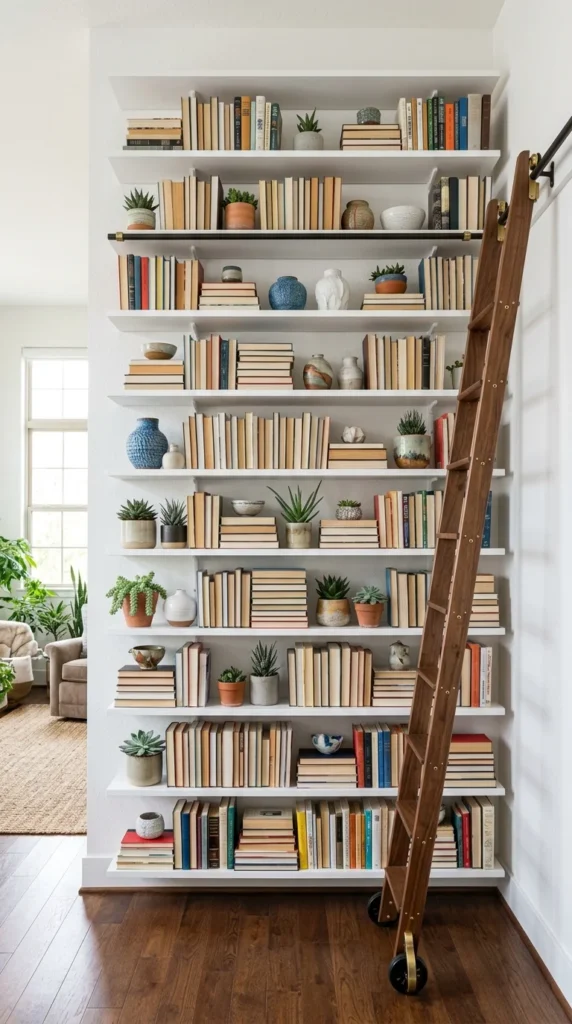
When you run out of floor space, look up. Utilizing the vertical dimension of your room draws the eye upward, making the ceiling feel higher and the room more expansive. Floating shelves are a minimalist’s dream, providing storage without the heavy visual weight of a traditional bookcase.
- Floor-to-Ceiling Shelving: Custom or modular units that reach the ceiling maximize storage and create a dramatic focal point.
- Wall-Mounted Media Consoles: Lifting your TV stand off the floor creates an unbroken line of flooring, which tricks the eye into seeing more space.
- High-Level Hooks: Use decorative hooks for items like hats, bags, or even folding chairs that can be hung as “wall art” until needed.
3. Strategic Mirrors
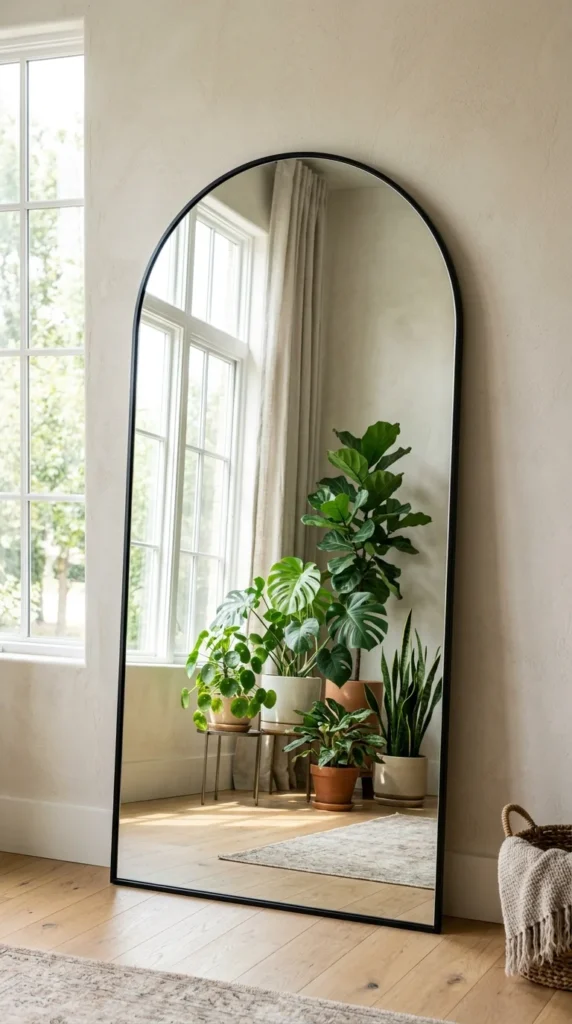
Interior designers have long used mirrors as the ultimate “cheat code” for small rooms. A well-placed mirror reflects both natural and artificial light, brightening dark corners and creating a “window” where one doesn’t exist.
- Opposite the Window: Placing a large mirror directly across from your primary light source will bounce sunlight throughout the room.
- Mirrored Furniture: A mirrored side table or sideboard adds a touch of glamour while disappearing into its surroundings.
- Gallery Wall of Mirrors: Instead of art, use a collection of vintage mirrors to create a reflective feature wall that adds character and light.
4. Light Colors
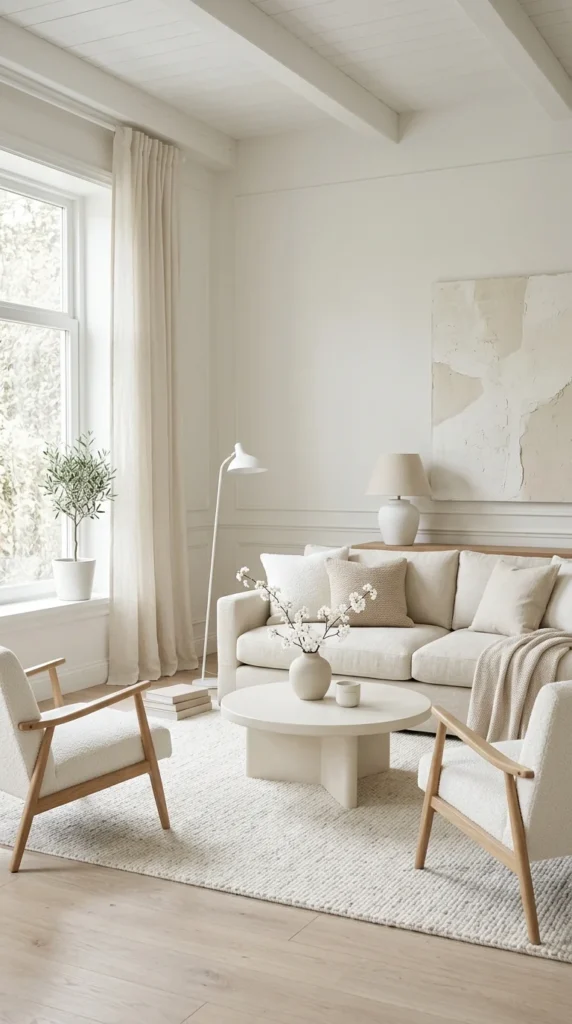
Color has a profound impact on how we perceive space. While dark colors can feel cozy, they tend to absorb light and make walls feel closer. A light, neutral palette—think whites, creams, soft grays, and pastels—reflects light and makes the boundaries of the room feel less defined.
- Monochromatic Schemes: Using varying shades of the same light color creates a cohesive look that prevents the eye from getting “stuck” on contrasting furniture.
- Semi-Gloss Paint: Using a slight sheen on the walls can help bounce light even further.
- Light Wood Tones: Opt for ash, birch, or light oak for flooring and furniture to keep the vibe breezy and organic.
5. Elevated Legs
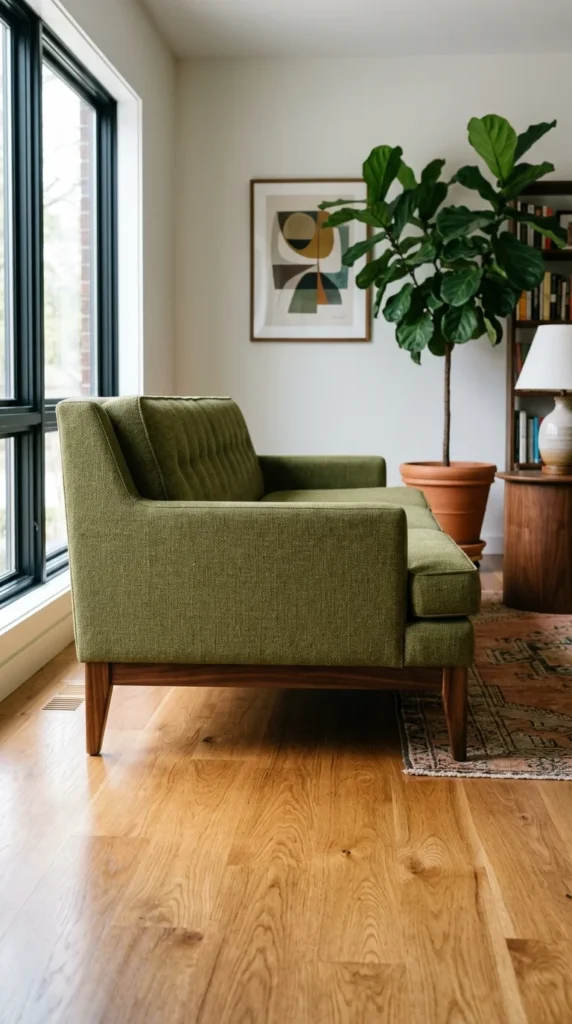
Furniture that sits flat on the floor can act as a visual blockade. Choosing pieces with “leggy” profiles—especially those in the Mid-Century Modern style—allows light and sightlines to pass underneath the furniture. This creates the illusion that the furniture is “floating” and reveals more of the floor, which automatically makes the room feel larger.
- Tapered Legs: Thin, angled legs provide stability without the bulk.
- Wire Frames: Chairs or tables with thin metal frames provide a structural look that remains visually “quiet.”
- Avoid Skirted Furniture: Traditional sofas with fabric skirts that hide the legs can make a small room feel heavy and cluttered.
6. Area Rugs
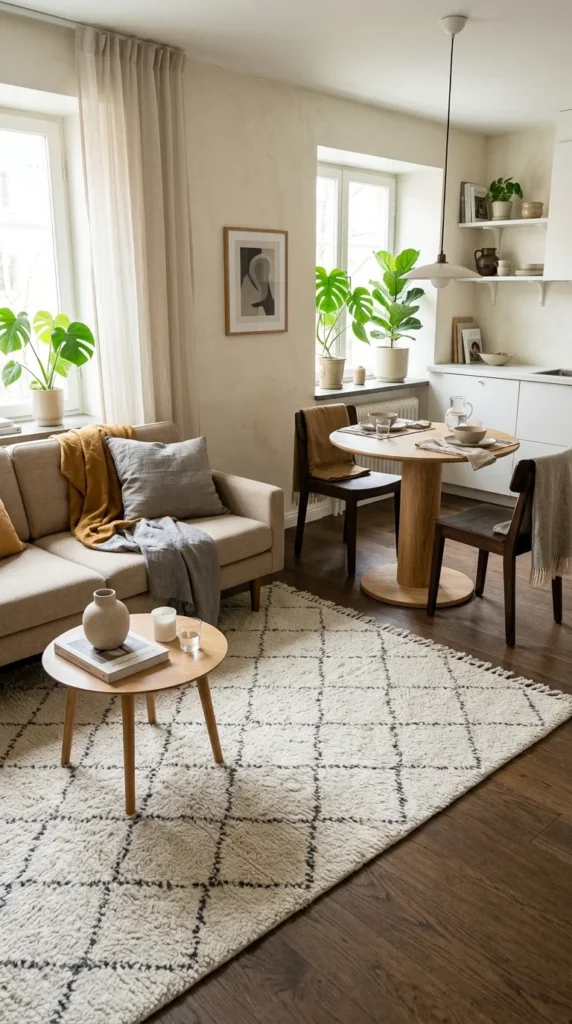
In an open-concept apartment or a studio, defining different “zones” is crucial to prevent the space from feeling like a chaotic jumble. An area rug acts as an anchor, grouping your furniture together to create a dedicated living room “island.”
- Go Big: A common mistake is buying a rug that is too small. A tiny rug makes the room look fragmented. Ensure at least the front legs of all seating furniture sit on the rug.
- Layering: For added texture, layer a smaller patterned rug over a larger, neutral jute or sisal rug.
- Low Pile: Choose low-pile rugs to keep the transition between the rug and the floor smooth, which prevents tripping and looks sleeker.
7. Clear Acrylics
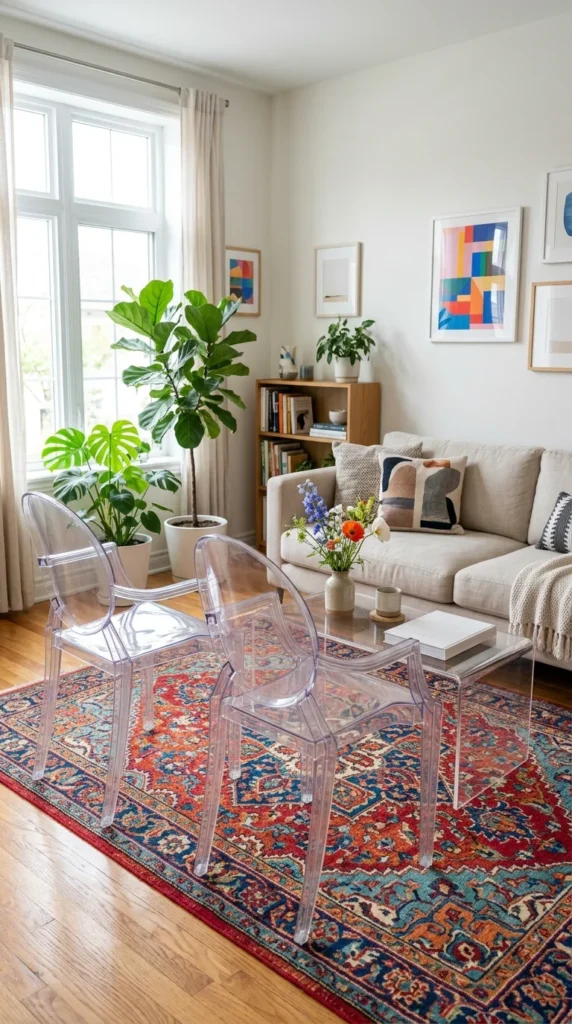
Acrylic, glass, and Lucite furniture are the “invisible” heroes of small-space design. Because they are transparent, they provide the necessary function of a table or chair without taking up any visual real estate.
- Ghost Chairs: These are perfect for small dining nooks within a living room, as they don’t block the view of the rest of the space.
- Glass Coffee Tables: A glass top allows you to see the rug and floor beneath, maintaining an open flow.
- Acrylic C-Tables: These can slide over the arm of your sofa, providing a surface for your laptop or coffee without needing a dedicated footprint on the floor.
8. Curated Minimalist
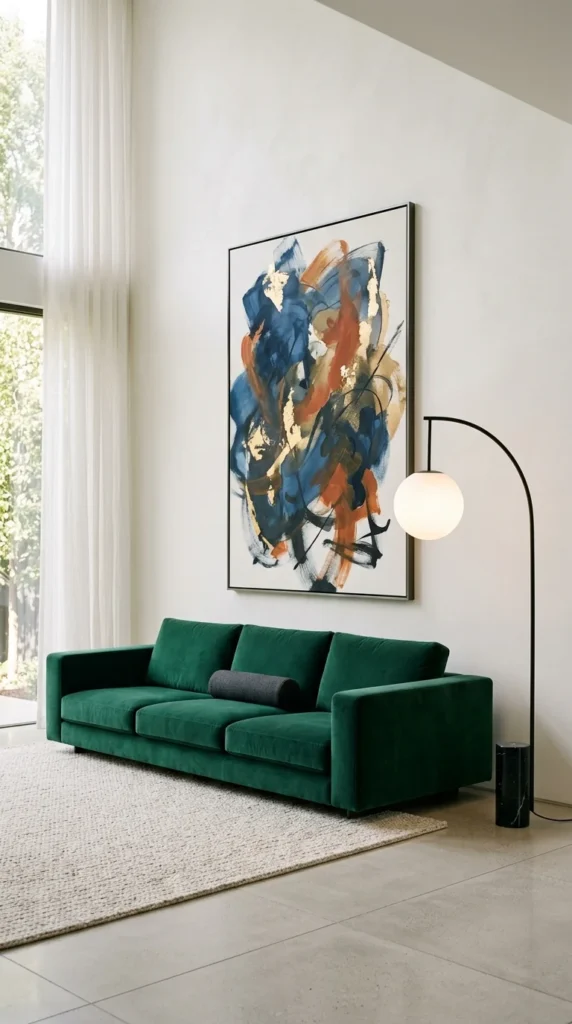
In a small space, “less is more” is a lifestyle. Clutter is the enemy of a spacious feel. By adopting a curated minimalist approach, you ensure that every item in the room is either beautiful or functional—ideally both.
- Quality Over Quantity: Instead of several small decor items, choose one large, impactful piece of art or a single statement vase.
- Closed Storage: Use baskets or cabinets with doors to hide away “visual noise” like remote controls, charging cables, and magazines.
- The One-In, One-Out Rule: To prevent clutter from creeping back in, commit to removing one item every time you bring a new one into the home.
9. Ceiling-High Curtains
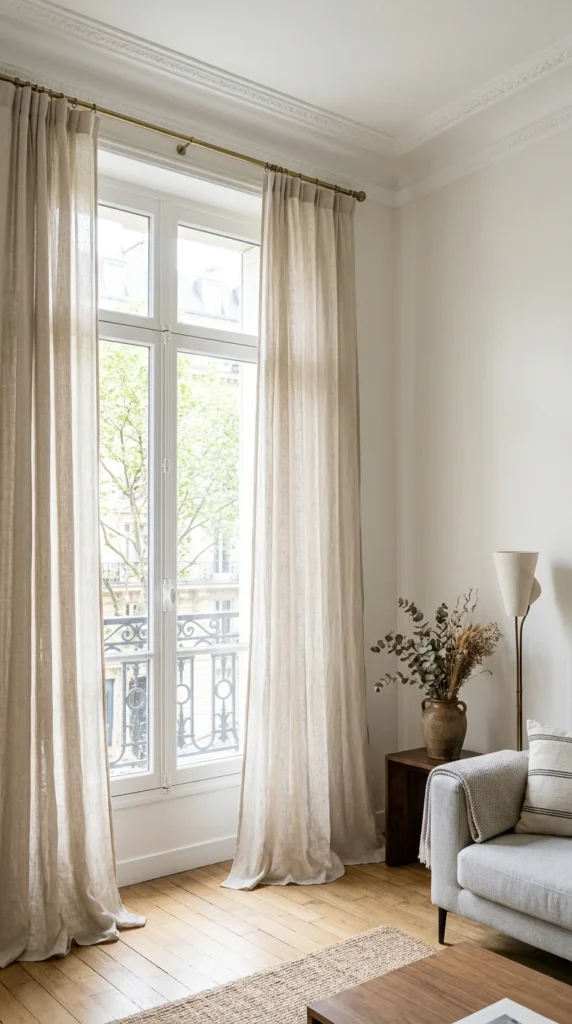
One of the easiest ways to change the perceived height of a room is through window treatments. Many people hang curtain rods directly above the window frame, which “cuts” the wall in half. By mounting the rod as close to the ceiling as possible, you draw the eye upward and elongate the walls.
- Sheer Fabrics: Use sheers to allow maximum natural light while still providing privacy.
- Floor-to-Ceiling Length: Ensure your curtains touch or slightly “puddle” on the floor for a high-end, custom look.
- Wide Rods: Extend the rod wider than the window itself so that when the curtains are open, they don’t block the glass, allowing every bit of light to enter.
10. Layered Lighting
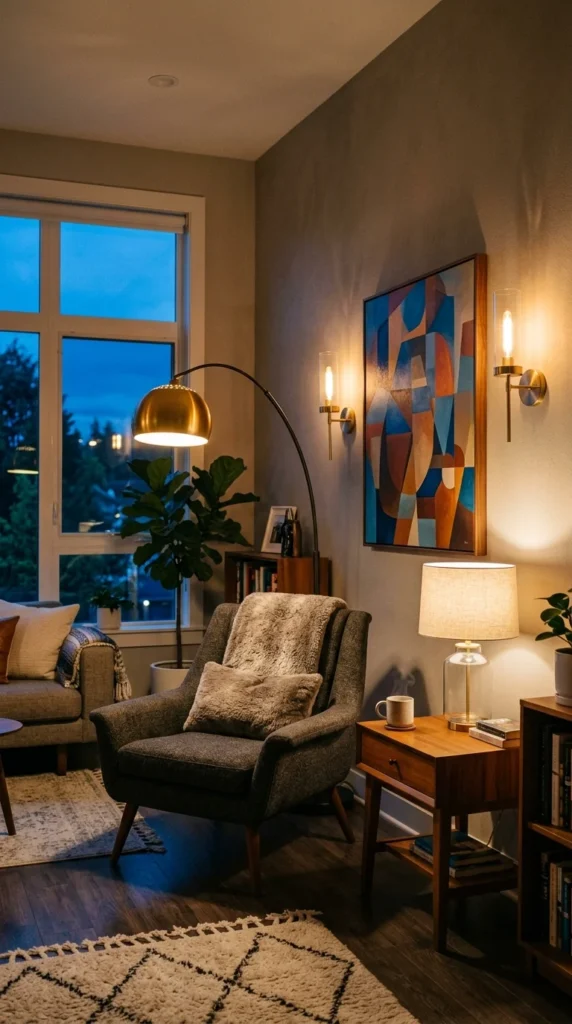
Relying on a single, harsh overhead light can make a small room feel flat and institutional. Layered lighting creates depth and shadows, which can actually make the corners of the room feel more expansive and inviting.
- Wall Sconces: Choose plug-in sconces to save floor space and provide task lighting for reading.
- Ambient Lighting: Use LED strips behind a TV or under shelves to create a soft, recessed glow that adds dimension.
- Task Lighting: A slim, adjustable floor lamp can provide targeted light without the footprint of a bulky end table and lamp combo.