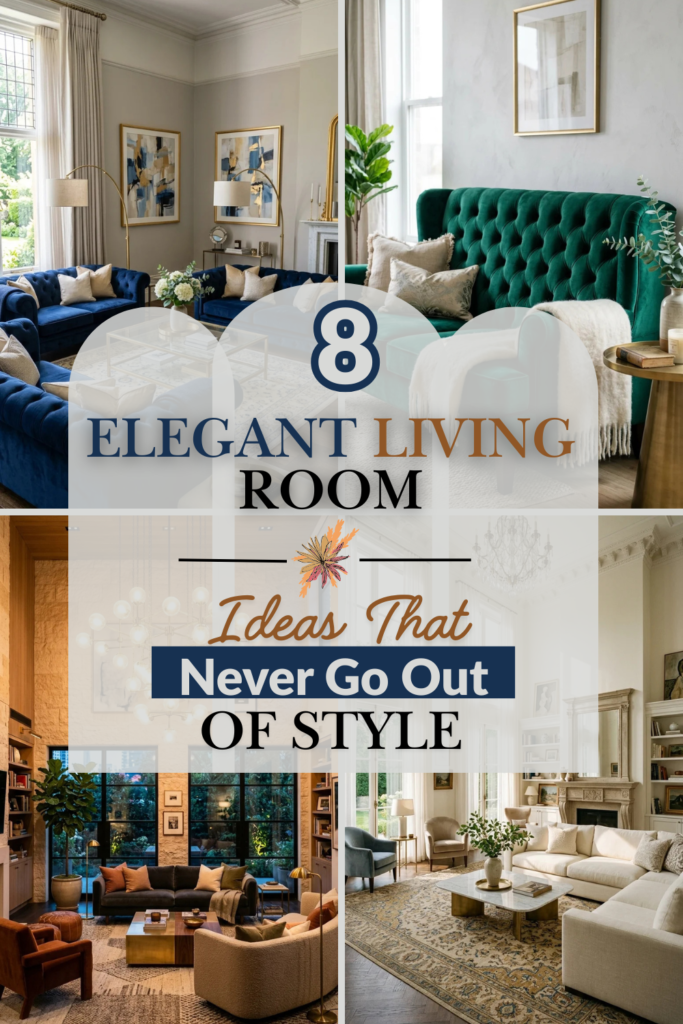

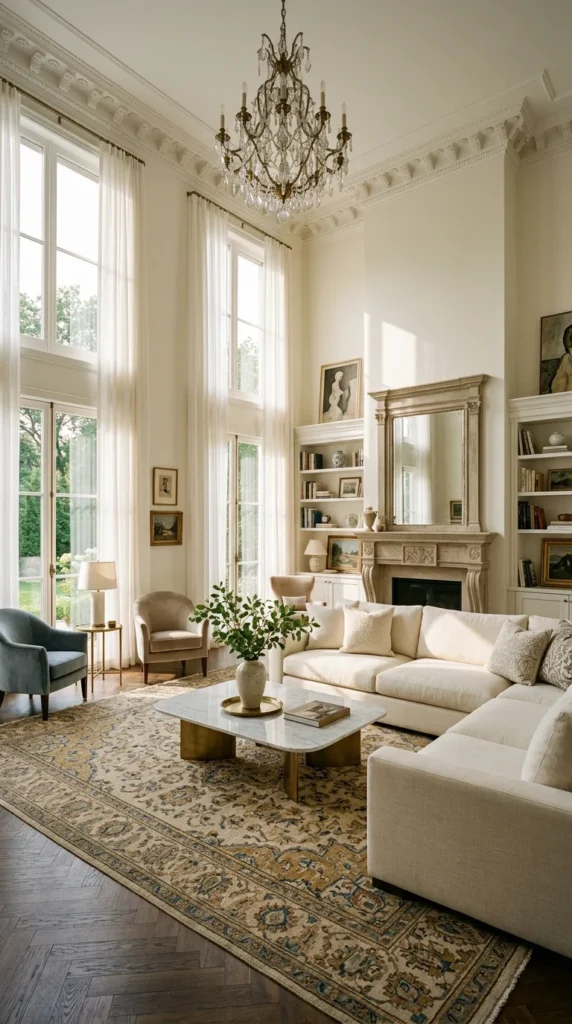
Creating a living room that feels both luxurious and timeless is an art form. While design trends come and go—shifting from the neon pops of the eighties to the stark minimalism of the early 2000s—true elegance remains constant. An elegant living room isn’t just about spending a fortune on furniture; it is about balance, texture, and a commitment to quality materials that age gracefully.
To achieve a look that transcends the seasons, one must look toward the foundational principles of interior design. Whether you are moving into a new home or looking to refresh your current space, these eight design strategies will ensure your living room remains a bastion of style for decades to come.
1. Neutral Palettes
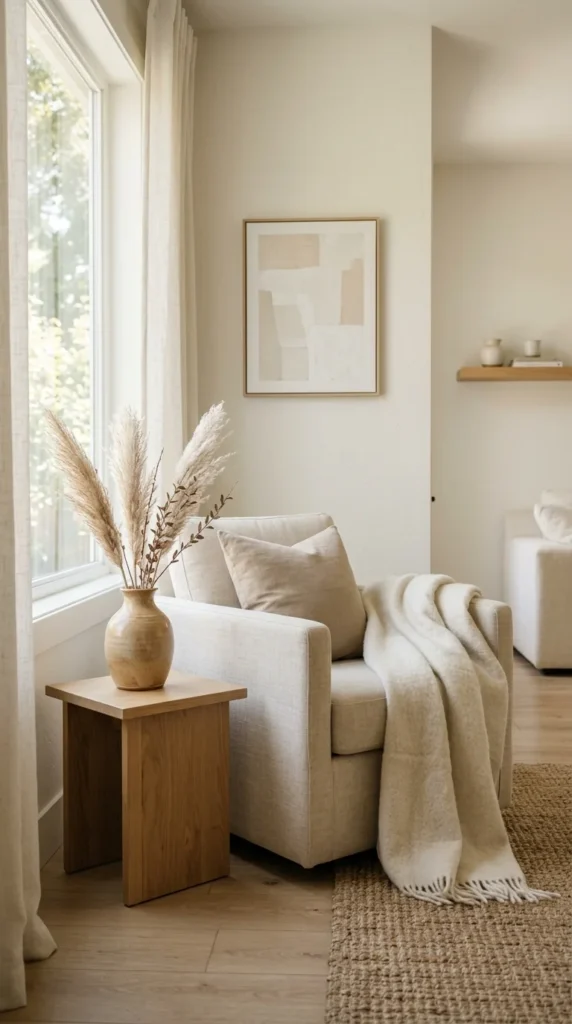
The most enduring elegant living rooms almost always start with a neutral color palette. Shades of white, cream, beige, and greige provide a sophisticated backdrop that allows architectural details and high-quality furniture to shine. A neutral room feels airy, calm, and expansive.
Beyond its aesthetic appeal, a neutral palette is incredibly practical. It serves as a blank canvas that can be updated with seasonal accents. In the winter, you can add warmth with deep chocolate brown pillows and cashmere throws; in the summer, you can introduce coolness with navy blue ceramics or green plants. Because the base of the room remains neutral, these small changes never feel jarring.
2. Symmetrical Arrangements
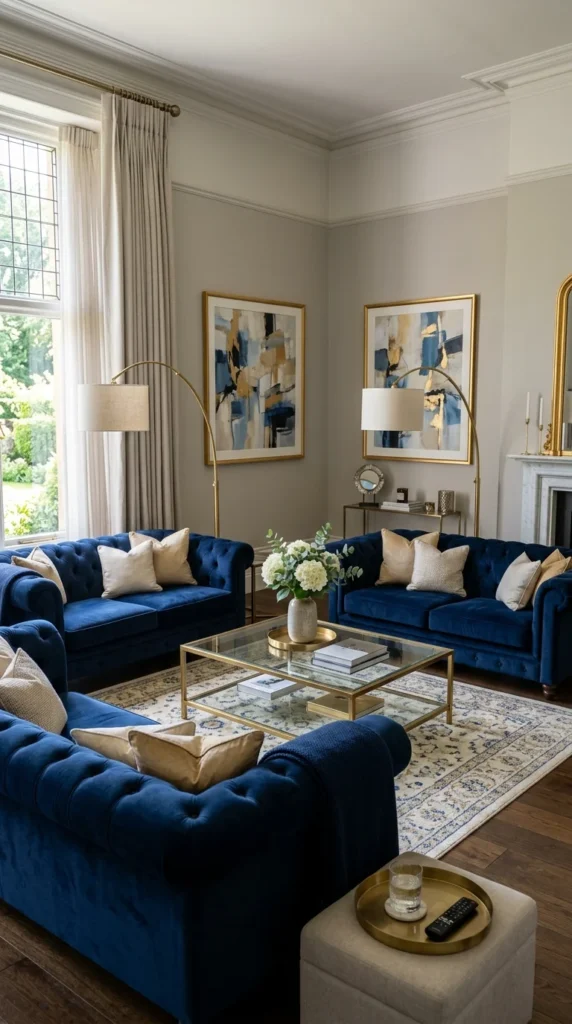
Symmetry is a classic design trick used to create an immediate sense of order and calm. The human eye is naturally drawn to balance, and a symmetrical furniture arrangement communicates a sense of formality and elegance that asymmetrical layouts often lack.
The easiest way to achieve this is by mirroring your furniture. Two identical sofas facing each other, or a pair of armchairs flanking a fireplace, creates a focal point that feels intentional. When you pair this with matching side tables and lamps, the room feels grounded. This structural harmony is a hallmark of traditional European and high-end contemporary design alike, ensuring the room never feels cluttered or chaotic.
3. Natural Wood
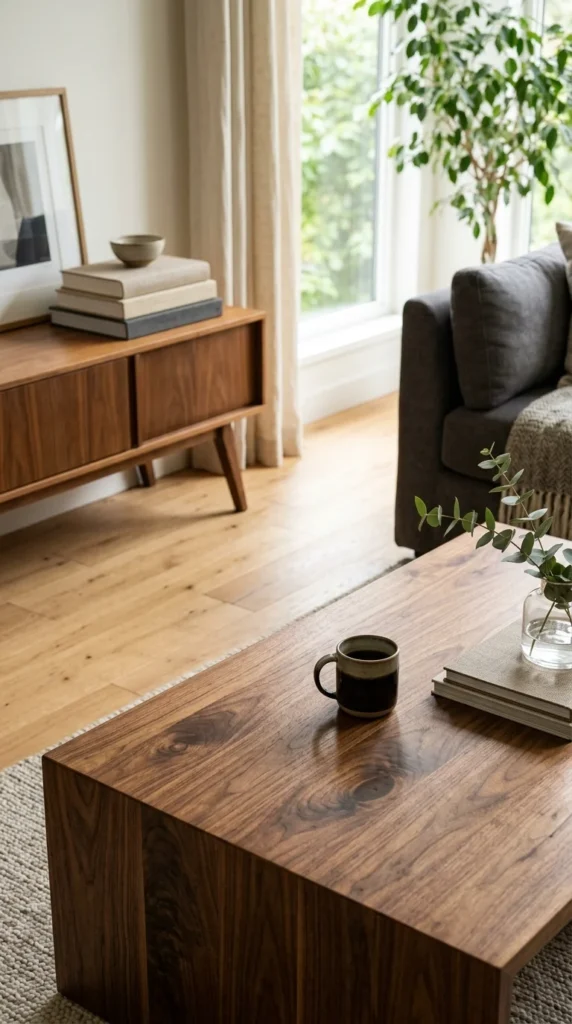
There is a tactile warmth to natural wood that synthetic materials simply cannot replicate. Whether it is a reclaimed oak coffee table, dark walnut shelving, or polished herringbone floors, wood brings an organic element to the living room that keeps it from feeling sterile.
The key to keeping wood elegant is to focus on the grain and the finish. Matte or satin finishes are generally more timeless than high-gloss lacquers. Mixing wood tones—such as pairing a light maple floor with a darker mahogany chest—adds depth and history to a space, making it look as though it has been curated over time rather than purchased from a single showroom catalog.
4. Statement Lighting
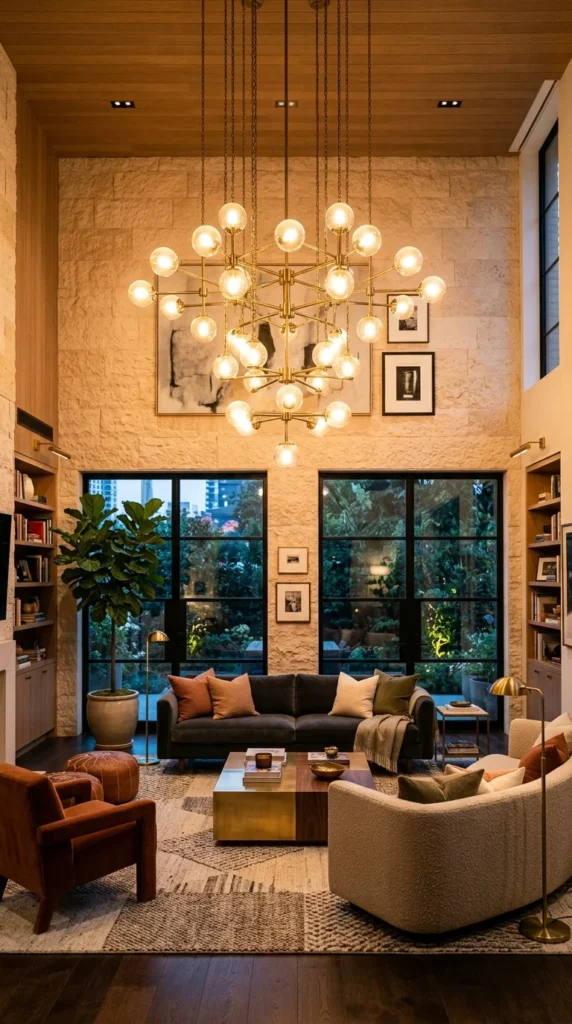
In an elegant living room, lighting is never an afterthought; it is the “jewelry” of the space. A single, well-chosen statement light fixture can define the entire character of a room. Whether you prefer a vintage crystal chandelier, a mid-century modern mobile, or an oversized sculptural pendant, the fixture should act as a piece of art.
Beyond the ceiling fixture, layered lighting is essential. To maintain an elegant atmosphere, avoid harsh overhead lights. Instead, use a combination of floor lamps, table lamps, and wall sconces to create “pools” of light. This adds dimension to the room and allows you to adjust the mood depending on the time of day or the occasion.
5. Built-in Bookshelves
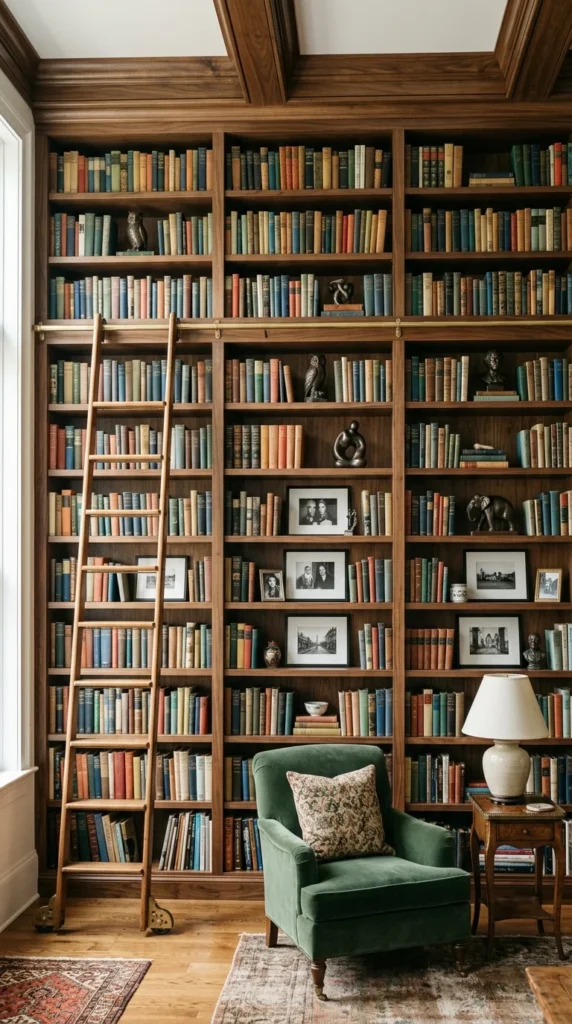
Built-in cabinetry and bookshelves offer a sense of permanence and architectural “soul.” They provide a dedicated space to display curated collections, literature, and art, which tells a story about the people who live there. An elegant living room should feel lived-in and intellectual, and nothing achieves this quite like a wall of books.
To keep bookshelves looking sophisticated rather than cluttered, use the “breathe” technique: leave some empty space on the shelves and mix vertical stacks of books with horizontal ones. Integrating decorative objects—like antique globes, ceramic bowls, or small framed paintings—among the books breaks up the visual weight and adds layers of interest.
6. Velvet Upholstery
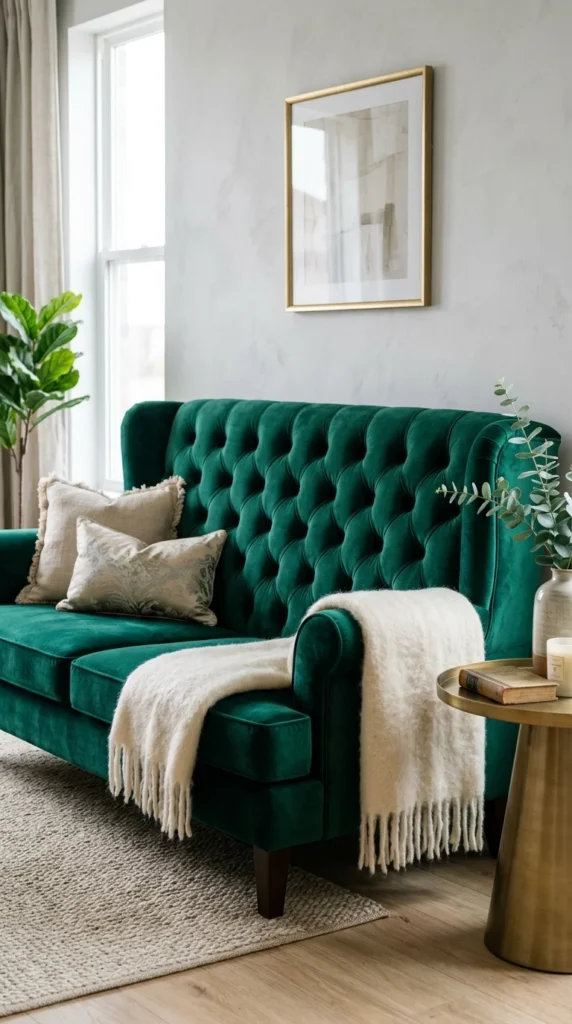
Velvet has been a symbol of luxury for centuries, and for good reason. It has a depth of color and a light-reflecting quality that flat fabrics like cotton or polyester lack. A velvet sofa or a pair of velvet accent chairs adds an instant touch of “glam” without being gaudy.
The beauty of modern velvet is its durability. High-quality performance velvets are now available that can withstand pets and children while maintaining their plush appearance. For a timeless look, stick to jewel tones like navy, forest green, or burgundy, or opt for a sophisticated neutral like silver-gray or champagne. The texture alone provides enough visual interest to keep the room from feeling flat.
7. Large Area Rugs
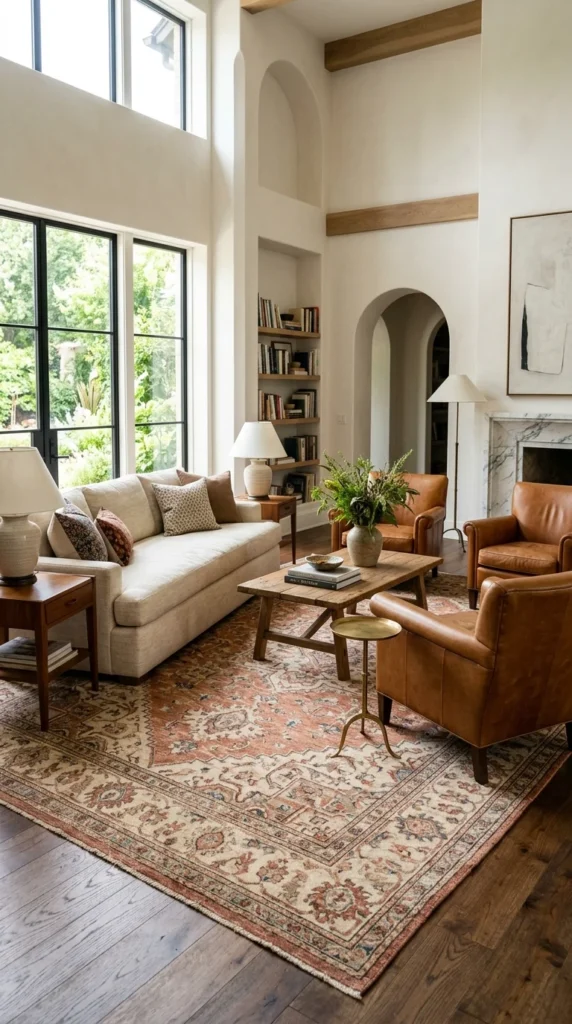
One of the most common mistakes in living room design is choosing a rug that is too small. An elegant room requires a rug that is large enough to “anchor” the furniture. Ideally, all the legs of the seating arrangement should sit on the rug, or at the very least, the front legs.
A high-quality rug—whether it’s a hand-knotted Persian, a textured sisal, or a thick wool plush—acts as the foundation of the room’s color story. It provides acoustic benefits, muffling echoes and creating a cozy, intimate environment. By choosing a classic pattern or a high-quality solid texture, you ensure that the floor remains a stylish element rather than just a functional one.
8. Fine Art
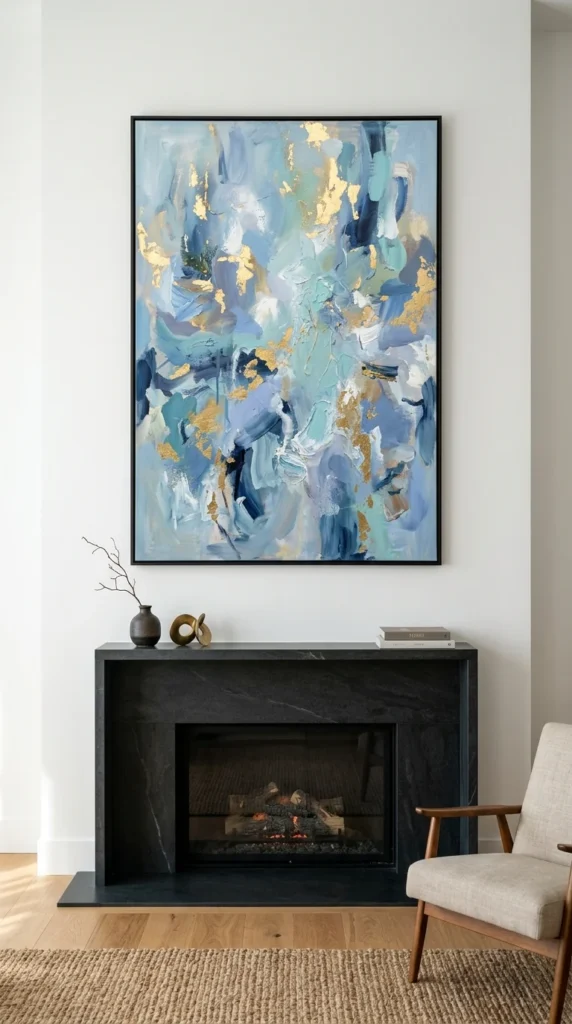
Finally, no elegant living room is complete without art. Instead of mass-produced prints, look for original pieces or high-quality limited editions that resonate with you. Art gives a room a focal point and serves as a conversation starter.
Placement is key: a single large-scale piece over a sofa or fireplace creates a bold, gallery-like feel. Alternatively, a carefully curated gallery wall of smaller sketches and photographs can add a personal, eclectic touch. The frame choice is equally important—sleek black frames offer a modern edge, while gilded, ornate frames lend a sense of history and traditional luxury. Art is the final layer that transforms a house into a home with enduring style.