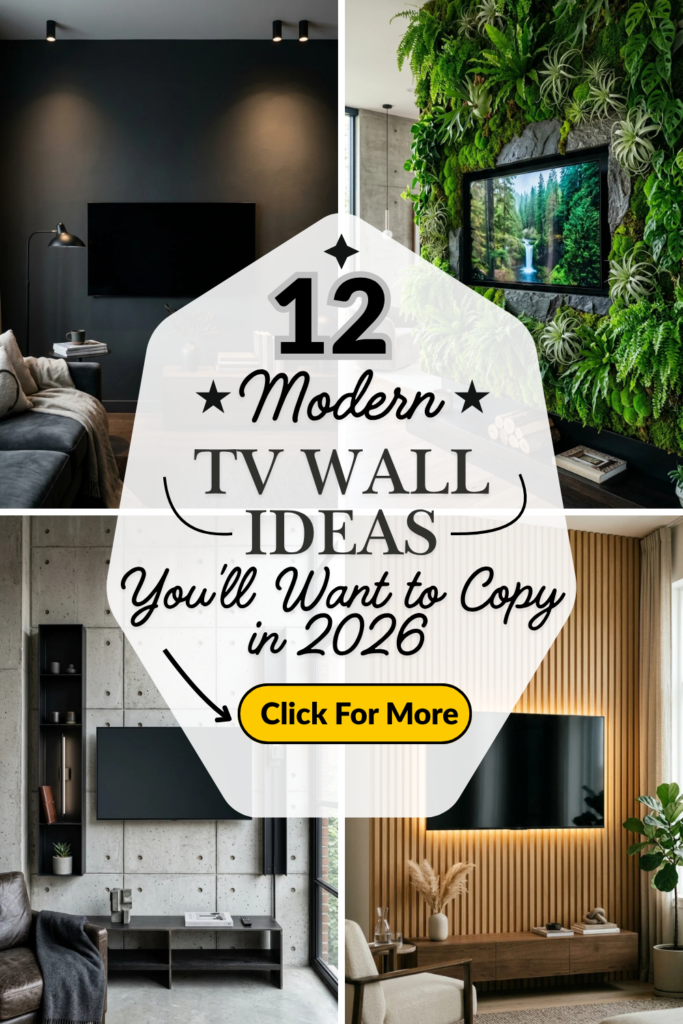

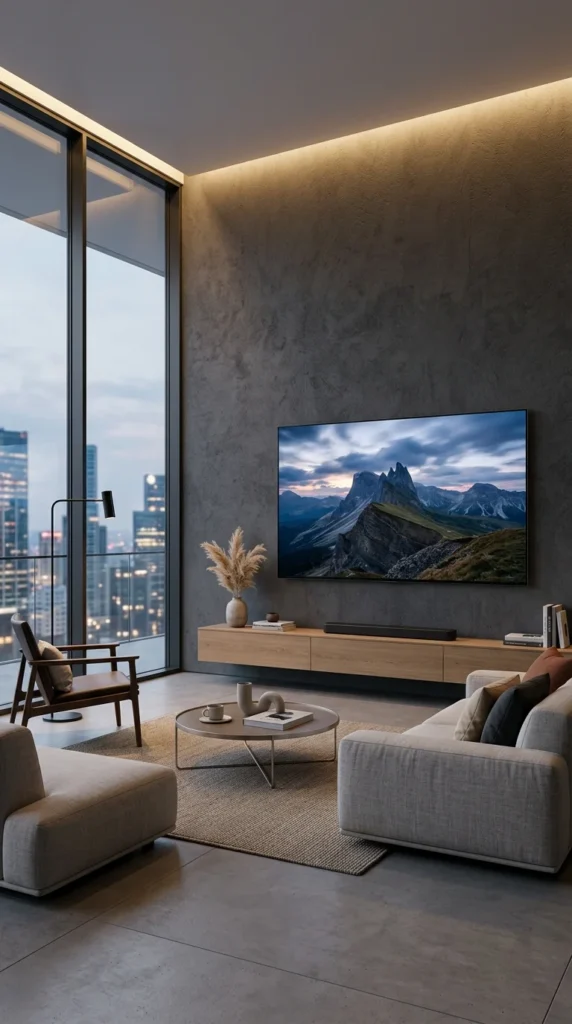
The living room has undergone a massive transformation over the last decade, shifting from a room centered around a bulky cabinet to a curated gallery of technology and art. As we look toward 2026, the “TV wall” is no longer just a place to hang a screen; it is the definitive focal point of the home. Homeowners are demanding designs that blend seamless technology with organic materials, prioritizing both aesthetics and functionality.
In 2026, the trend is moving away from the “black hole” effect—where a large TV dominates a white wall—and moving toward integrated environments. Whether you prefer the raw texture of industrial concrete or the soft warmth of biophilic greens, these twelve ideas will redefine how you view your media space.
1. Wood Slats
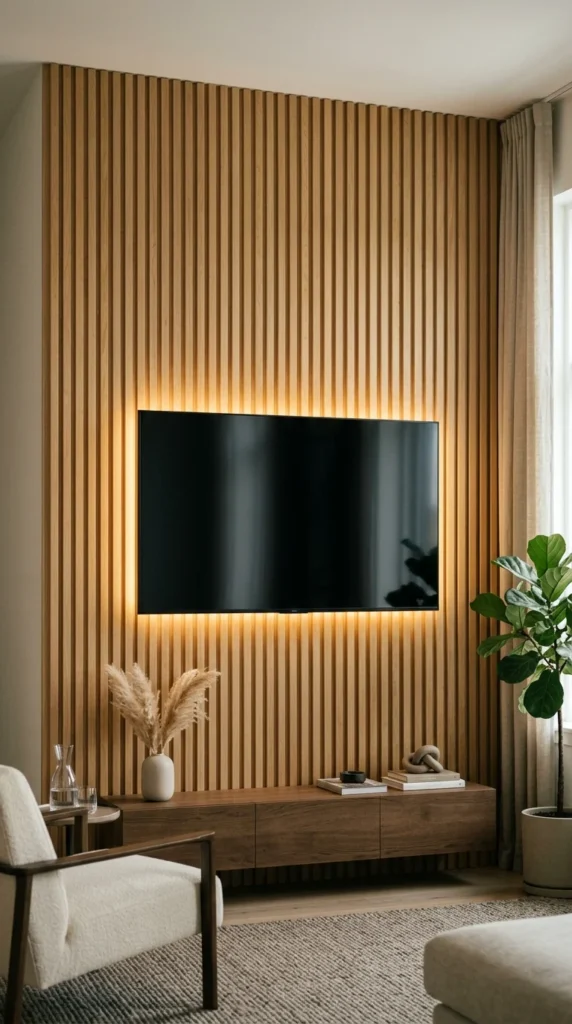
Vertical wood slats have become a staple of modern “Scandi-Industrial” design, and their popularity is only surging as we head into 2026. This look provides incredible texture and linear rhythm to a room. The gaps between the slats are perfect for hiding wires, while the wood itself adds a much-needed organic warmth to the cold glass of a television screen. For a truly futuristic feel, integrate smart LED strips behind the slats that sync with the colors on your screen, extending the visual experience beyond the bezel.
2. Concrete Panels
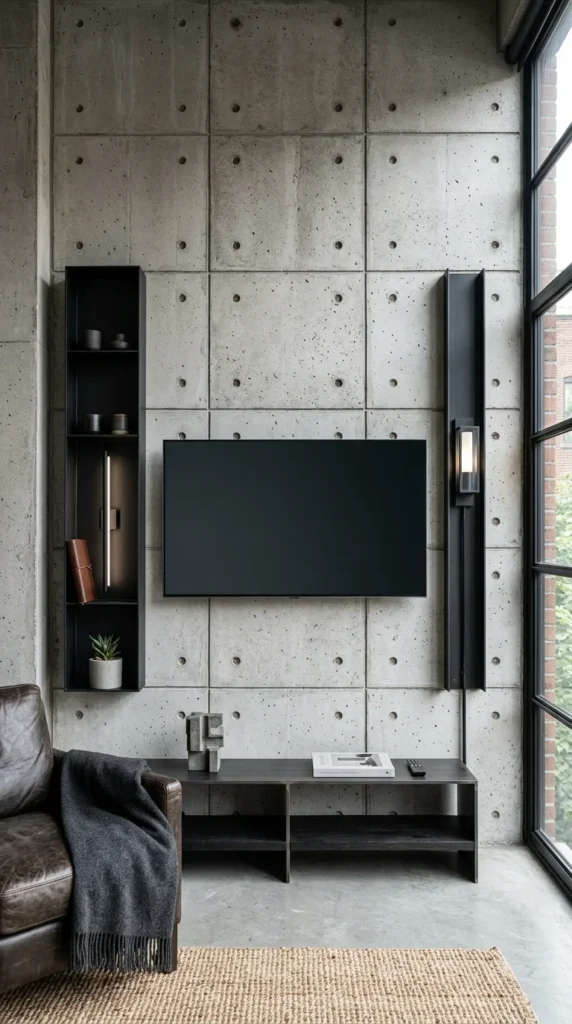
Industrial chic is evolving into “Soft Minimalism.” Using large-format concrete panels or high-quality micro-cement finishes creates a sophisticated, architectural backdrop. In 2026, we are seeing concrete paired with softer elements like wool rugs and velvet seating to balance the hardness of the stone. This setup works exceptionally well in open-concept lofts where the TV wall needs to feel like a structural element of the building rather than an afterthought.
3. LED Backlighting
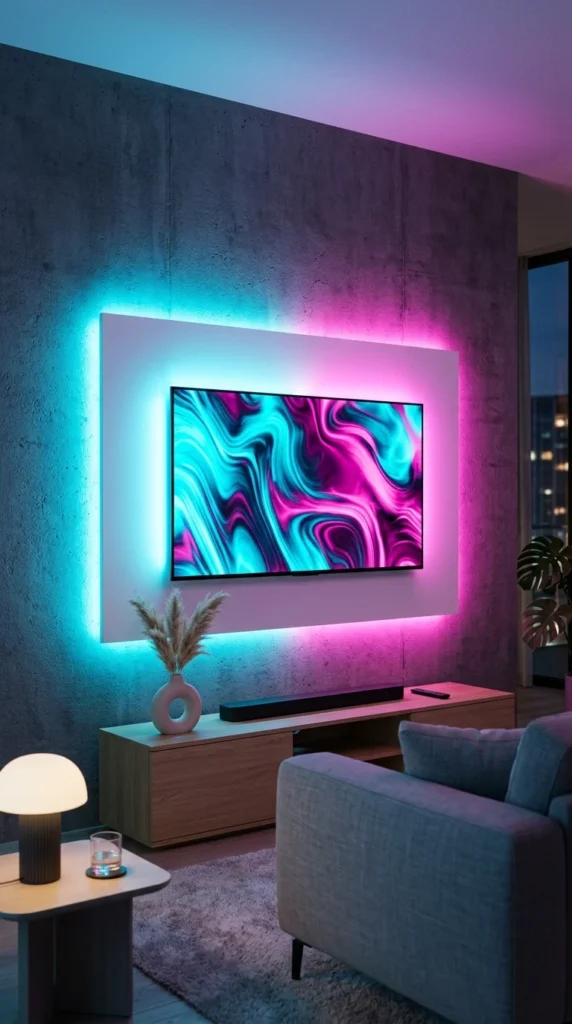
Backlighting is no longer just for gaming dens. In 2026, sophisticated “bias lighting” is integrated directly into the wall architecture. By creating a “floating” wall panel slightly offset from the main wall, you can install high-density LED strips that reduce eye strain and increase the perceived contrast of the screen. The key for 2026 is “indirect” light—you should never see the bulbs, only the ethereal glow they produce.
4. Hidden Cabinetry
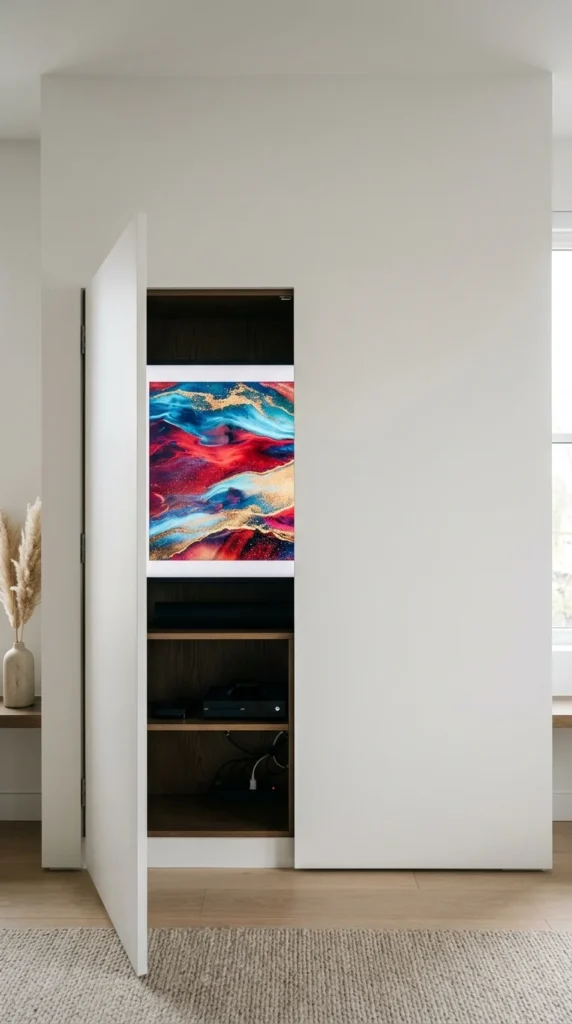
The “invisible home” trend is peaking. For those who find a giant screen distracting when it’s not in use, hidden cabinetry is the ultimate luxury. Using custom-built, handle-less panels that match the wall color perfectly, you can “disappear” your entire entertainment system with a single touch. This is the perfect solution for multi-purpose rooms where you want a formal sitting area during the day and a cinema experience at night.
5. Marble Slabs
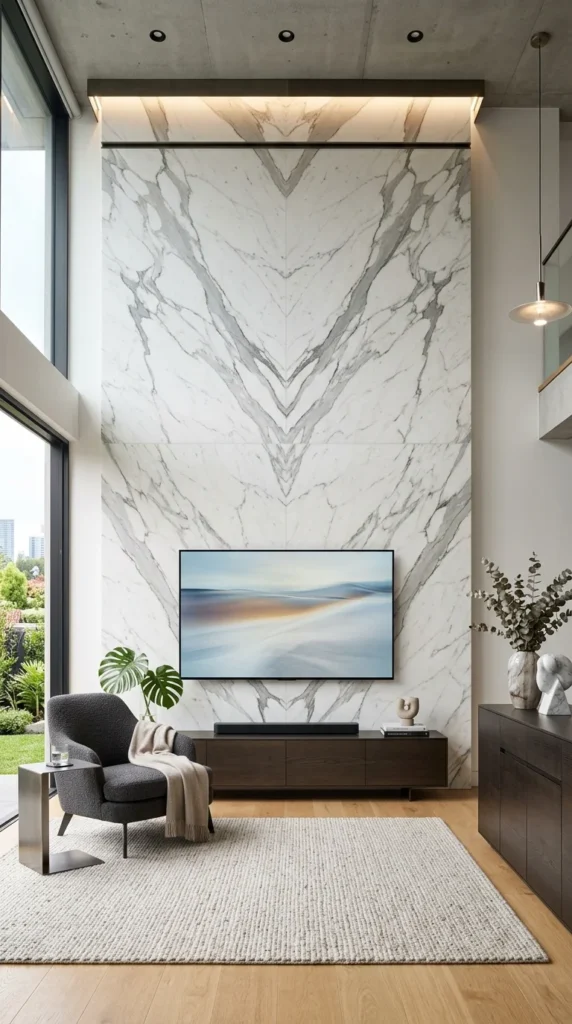
Nothing says “modern luxury” like a book-matched marble TV wall. In 2026, designers are using massive single-slab porcelain or natural stone to create a sense of permanence and grandeur. Because marble is naturally cool, it helps dissipate heat from electronics. Pair a white marble wall with gold or brass trim to lean into a “New Deco” aesthetic that feels both timeless and cutting-edge.
6. Gallery Frame
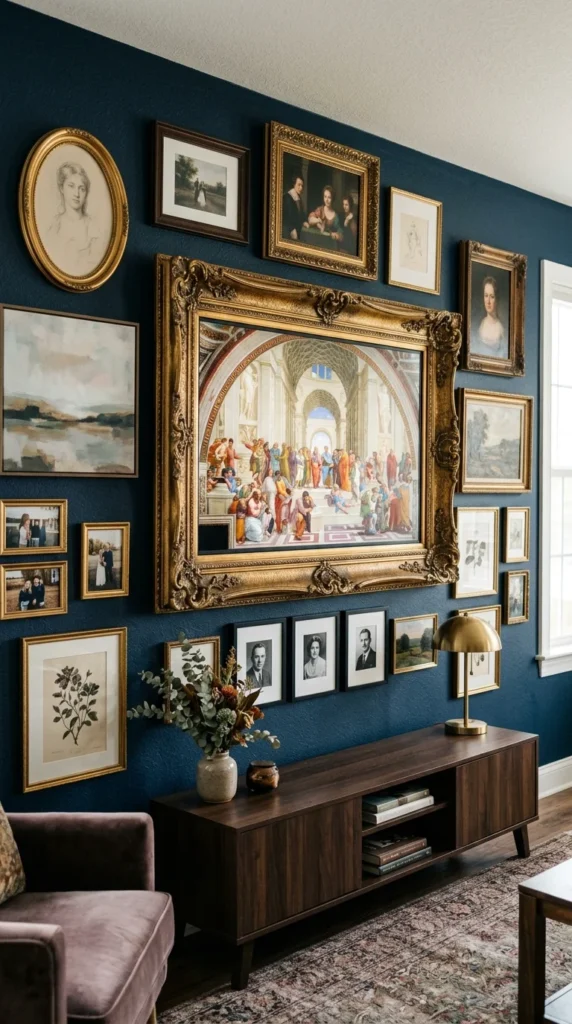
As “Art Mode” technology becomes standard, the TV wall is becoming a literal gallery. In 2026, the trend is to treat the TV exactly like a piece of fine art. This involves custom-framing the screen with traditional moldings or sleek modern metals. By surrounding the TV with an asymmetrical arrangement of smaller framed prints, the screen “disappears” into the collection when turned off, making it a favorite for maximalist and transitional interior styles.
7. Recessed Niche
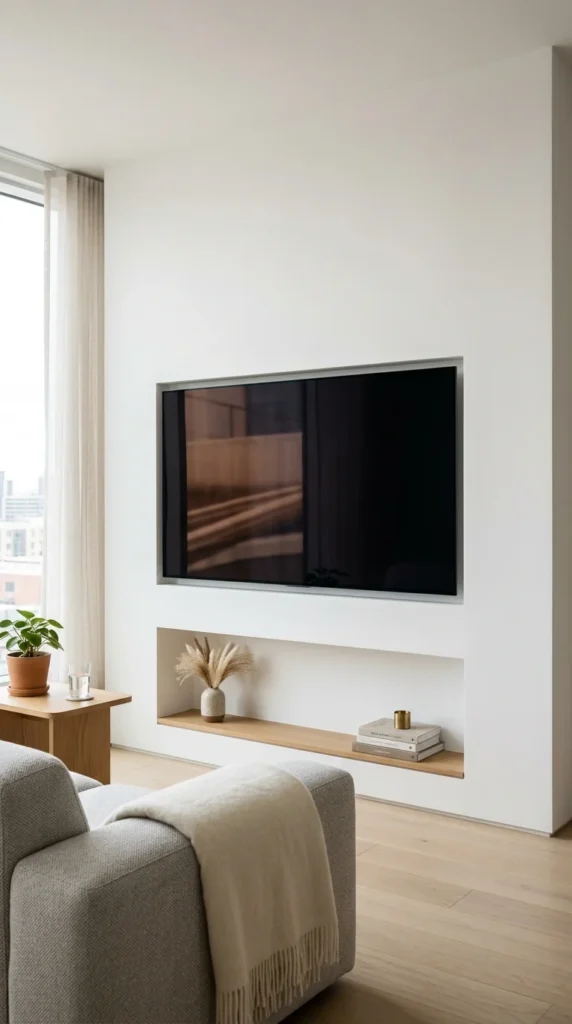
The recessed niche is the hallmark of high-end custom builds. By building the wall out slightly, you create a dedicated “pocket” for the TV. This allows the screen to sit perfectly flush with the wall surface, eliminating the “bulge” of a wall mount. In 2026, these niches are often lined with contrasting materials like dark felt, cork, or even metallic wallpaper to create a “frame within a wall” effect.
8. Charcoal Matte
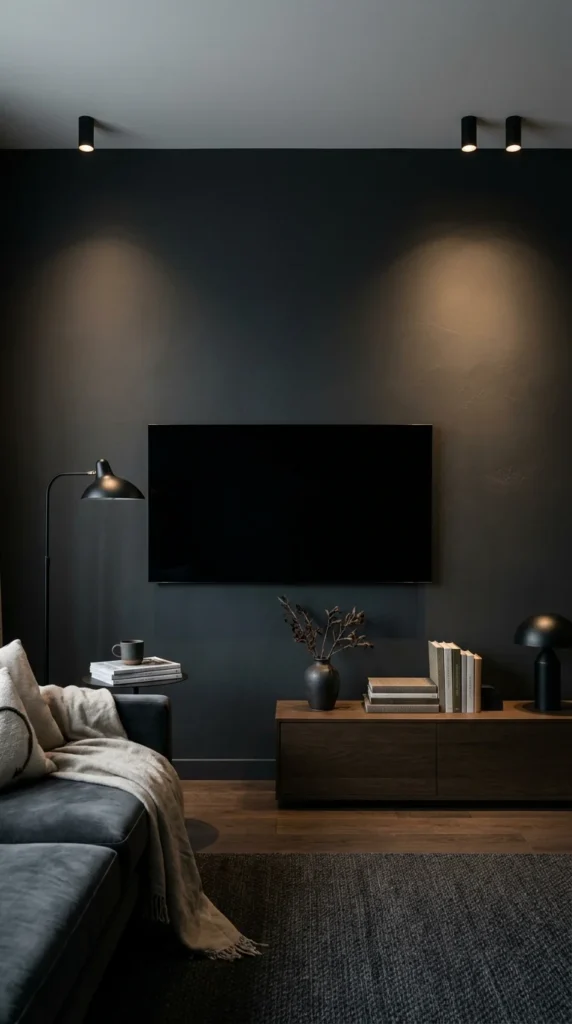
Dark feature walls are the secret to a true “cinematic” experience at home. A matte charcoal or “Obsidian” black wall absorbs light rather than reflecting it, which makes the colors on your TV pop with incredible intensity. To keep the room from feeling too dark, 2026 trends suggest using “limewash” paints in dark tones to give the wall a velvety, mottled texture that adds depth without adding clutter.
9. Glass Shelving
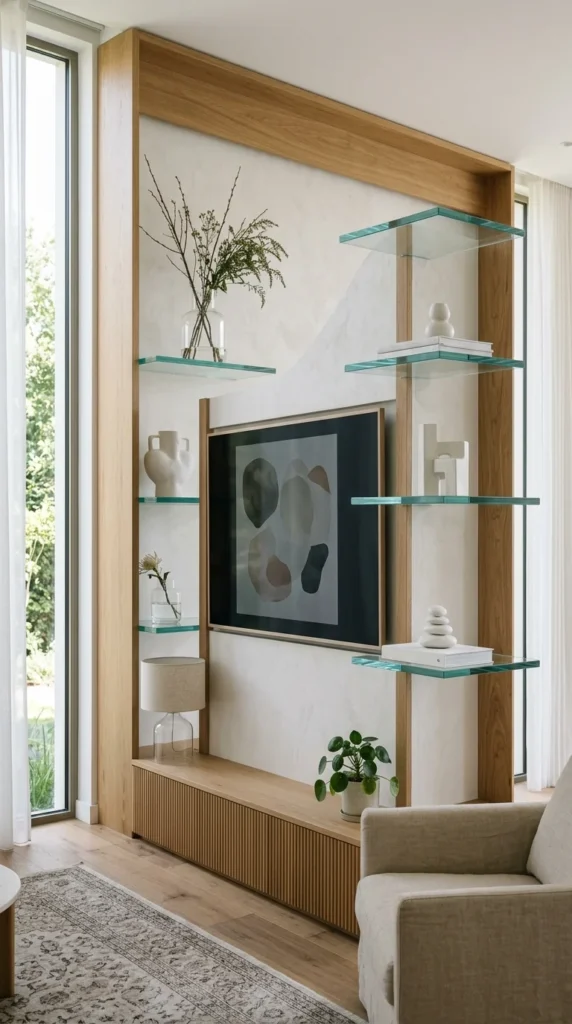
For smaller apartments or homes that prioritize light, glass shelving is a game-changer. By using transparent supports, you provide a place for decor and media devices without visually “shrinking” the room. In 2026, we are seeing glass shelves integrated with internal fiber-optic lighting, making the edges of the glass glow softly at night, adding a touch of sci-fi elegance to the living room.
10. Mixed Textures
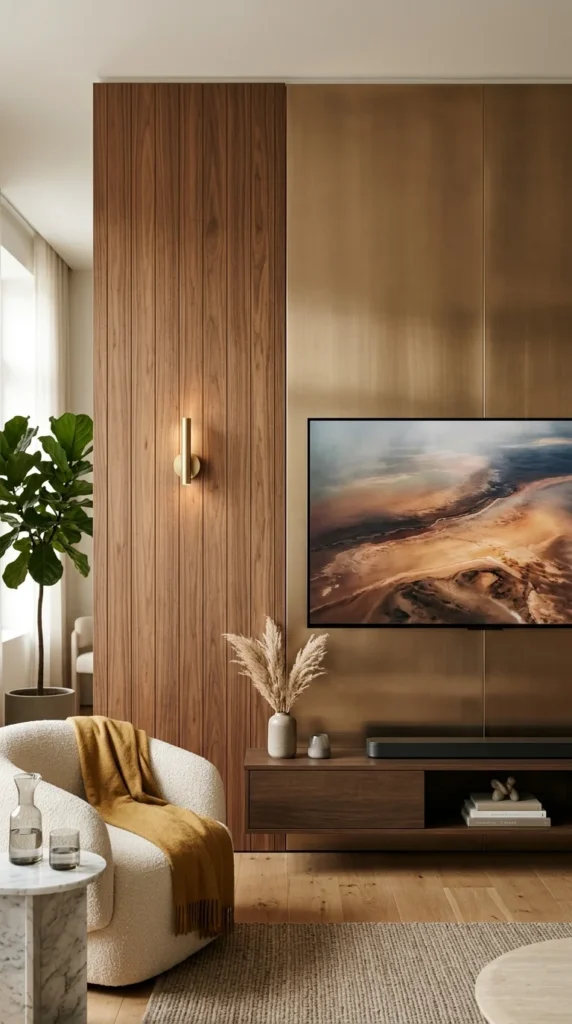
Why settle for one material when you can have three? 2026 is the year of the “Material Mashup.” This design involves layering different textures—such as a ribbed wood panel next to a smooth matte metal, with a stone base cabinet below. This approach breaks up the visual weight of the wall and creates a dynamic, high-fashion look that feels custom-designed for the space.
11. Floor-to-Ceiling Unit
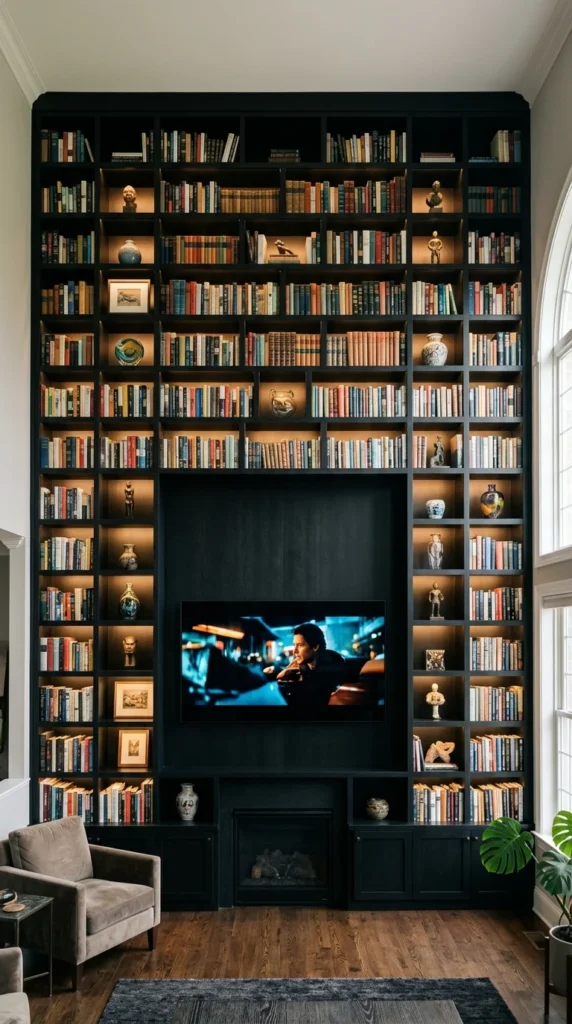
The “Media Wall” is evolving back into the “Library Wall.” This design involves a massive, floor-to-ceiling cabinetry system that houses the TV, a fireplace, bookshelves, and storage. In 2026, the look is very streamlined, with thin shelving and integrated ladder systems. This is the ultimate “functional” wall, providing massive storage capacity while framing the TV as the crown jewel of a sophisticated study.
12. Biophilic Design
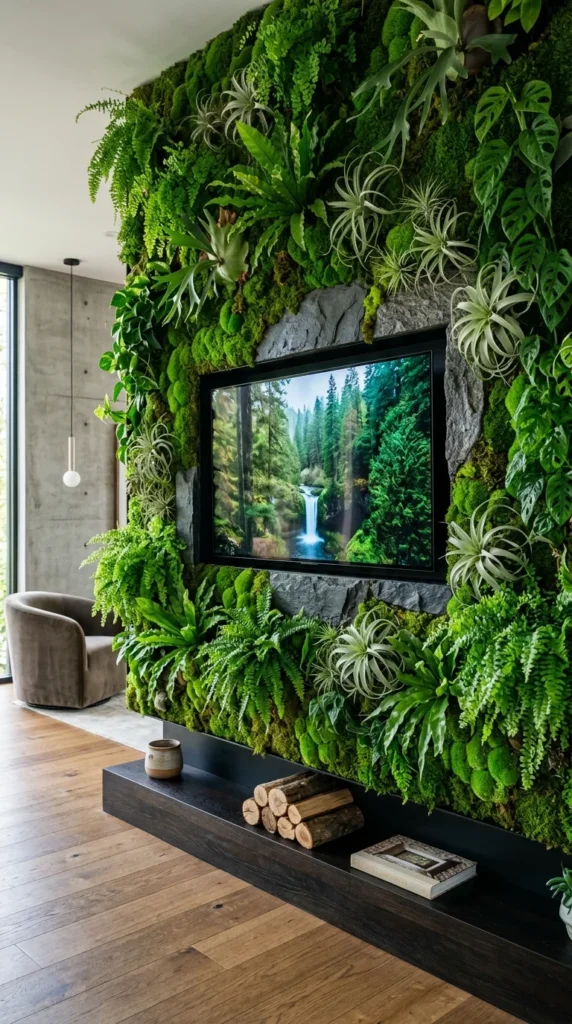
Bringing the outdoors in is the most significant movement in 2026 interior design. A biophilic TV wall uses preserved moss panels, vertical gardens, or reclaimed driftwood to surround the technology with nature. This contrast between the digital world and the natural world creates a calming, “Zen” atmosphere. Not only does it look stunning, but the organic shapes of the plants help diffuse sound, improving the acoustics of your home theater.