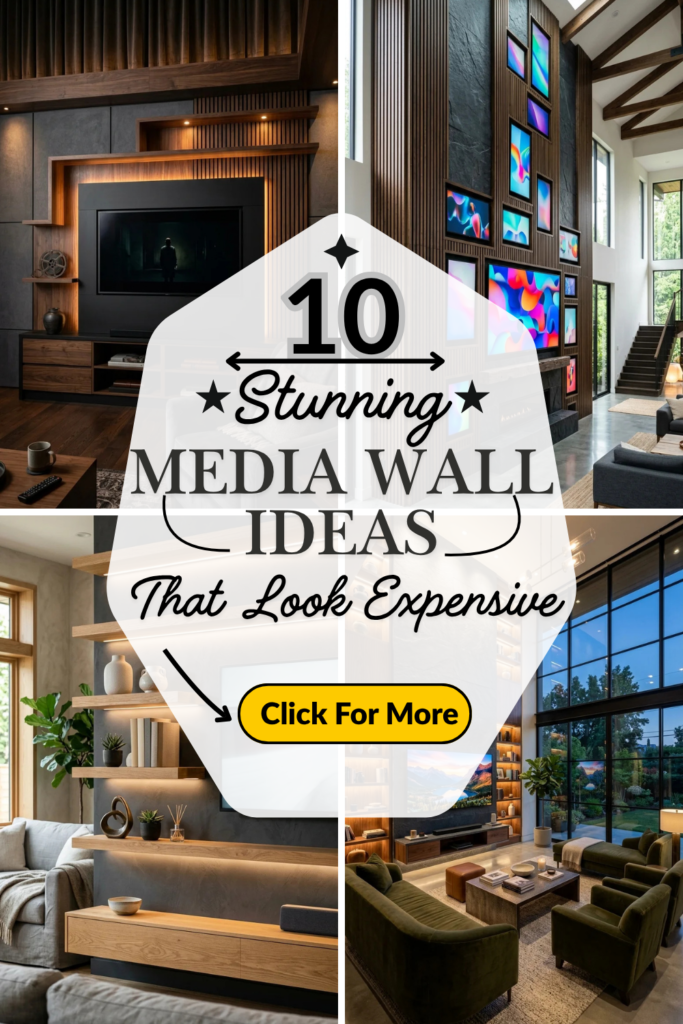

In the world of interior design, few features make a statement quite like a custom media wall. Gone are the days of simple TV stands and tangled wires. Today, the media wall serves as the architectural heart of the home, blending entertainment, art, and high-end craftsmanship into a single focal point. Creating a “expensive” look isn’t always about the price tag; it’s about intentional design, texture, and the seamless integration of technology.
Whether you are renovating a dedicated cinema room or looking to elevate your main living area, these ten stunning media wall ideas will provide that high-end, bespoke aesthetic you crave.
1. Fluted Panels
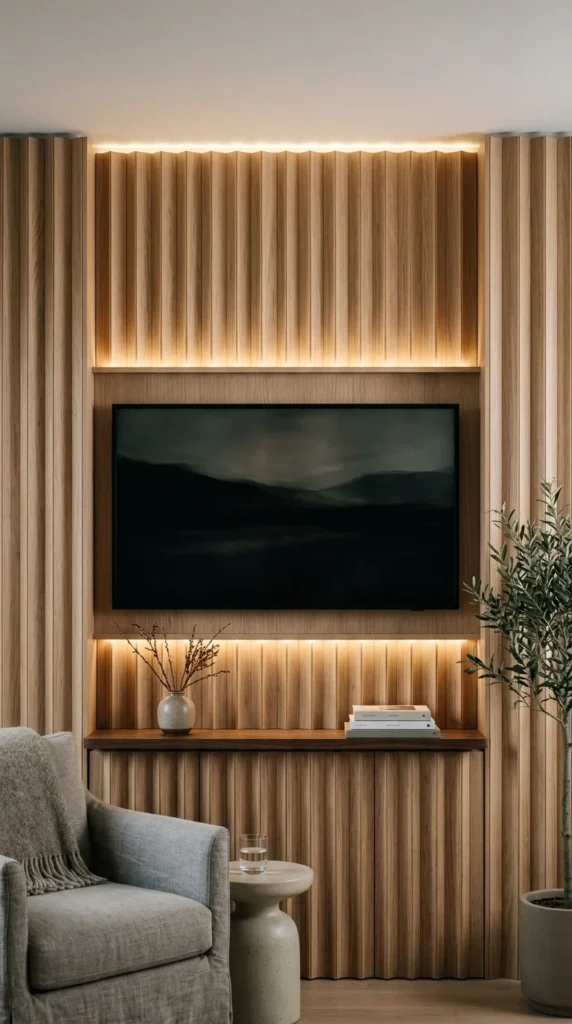
Texture is the secret weapon of expensive interior design. Fluted or “tambour” panels add a rhythmic, architectural quality to a media wall that flat surfaces simply cannot match. By using vertical ridges, you create a play of light and shadow that changes throughout the day, giving the wall a dynamic, three-dimensional feel.
- Why it looks expensive: The intricacy of the woodwork suggests custom craftsmanship.
- Design Tip: Pair light oak fluting with a dark matte background to make the television blend in when turned off.
2. Venetian Plaster
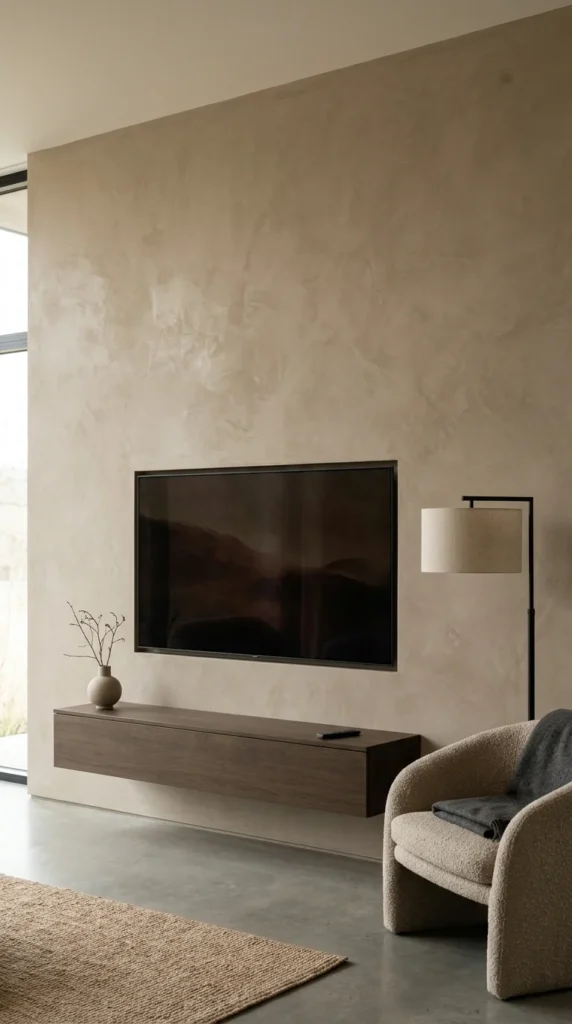
For a look that screams Mediterranean luxury and “old money” elegance, Venetian plaster is unparalleled. This ancient technique involves applying multiple layers of lime putty and pigments to create a finish with incredible depth and a marble-like sheen. It provides a soft, organic backdrop that feels much more sophisticated than standard paint.
- Why it looks expensive: It is a handcrafted finish that requires a skilled artisan, offering a unique, non-uniform texture.
- Design Tip: Choose a neutral, earthy tone like sand, charcoal, or bone to keep the look timeless.
3. Marble Slab
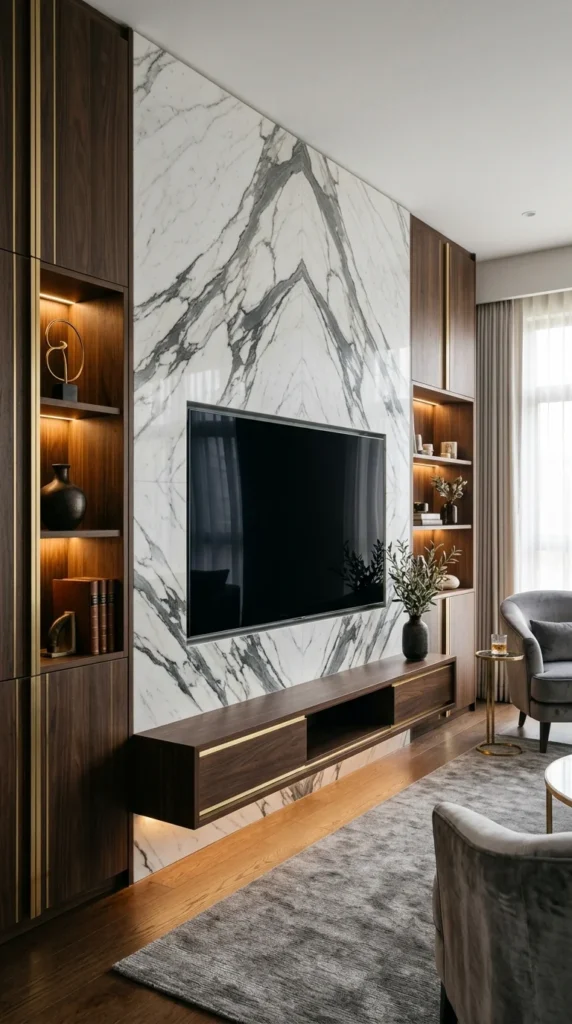
Nothing says high-end luxury quite like natural stone. A book-matched marble or porcelain slab serves as a piece of art in its own right. When used as a backdrop for a television, it creates a high-contrast, polished look that anchors the entire room. Porcelain slabs are a popular alternative, offering the same grand scale as marble with more durability and a slightly lower price point.
- Why it looks expensive: The scale of the stone and the continuity of the veining are classic hallmarks of luxury hotels and penthouses.
- Design Tip: Ensure your television is recessed slightly into the stone for a flush, integrated appearance.
4. Floating Shelves
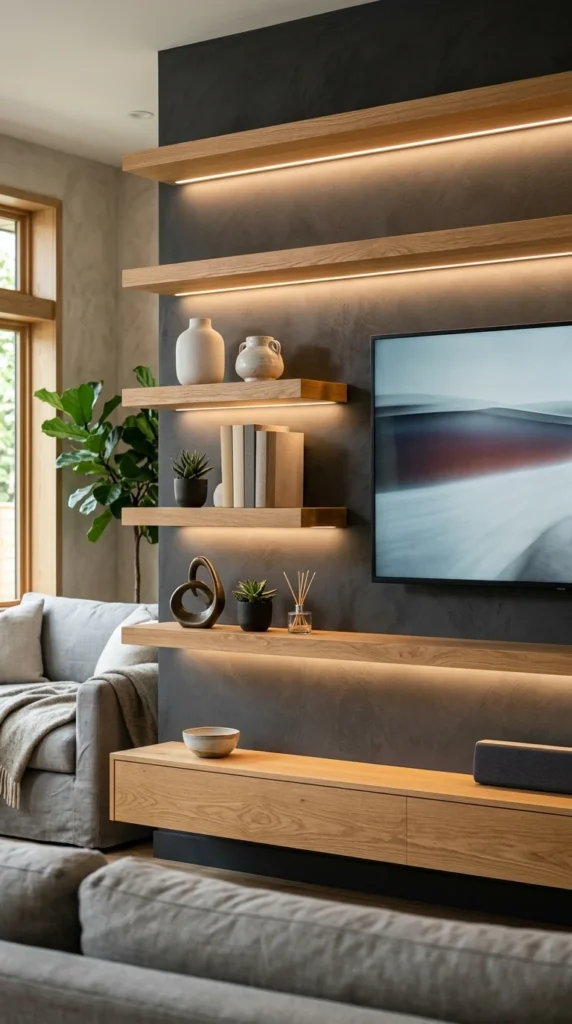
The “floating” look is synonymous with contemporary high-end design. By removing visible brackets and bulky supports, floating shelves create a sense of lightness and architectural precision. When integrated into a media wall, they provide a space for curated decor—vases, sculptures, and books—that helps the TV feel like part of a larger composition rather than just an appliance.
- Why it looks expensive: It creates a clean, uncluttered silhouette that emphasizes the “void” and spatial geometry.
- Design Tip: Use extra-thick shelves (at least 2-3 inches) to give them a structural, “built-in” feel.
5. Integrated Lighting
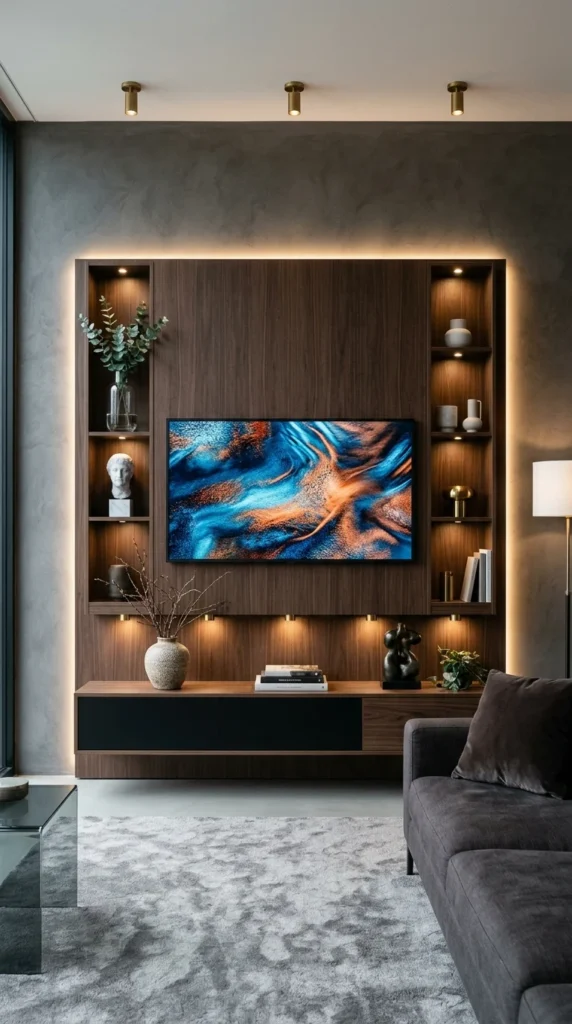
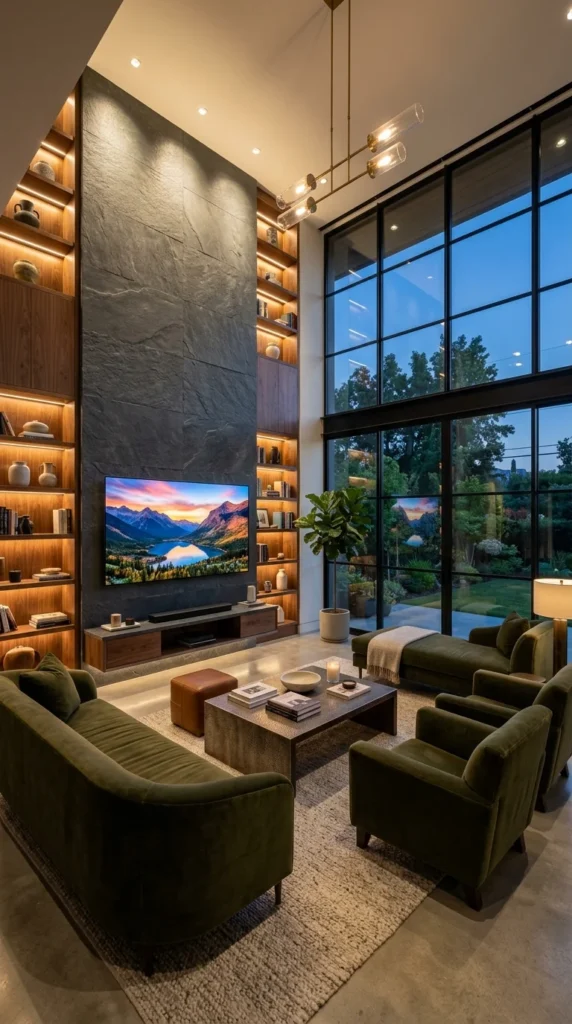
Lighting is the difference between a good media wall and a spectacular one. High-end media walls utilize “layered lighting” to create atmosphere. This includes backlighting behind the TV to reduce eye strain, “wash” lighting to highlight textures like stone or wood, and internal cabinet lighting to showcase decorative objects.
- Why it looks expensive: Professional lighting design adds a cinematic quality and makes the installation feel like a gallery feature.
- Design Tip: Use smart LEDs that allow you to adjust the color temperature from warm white to cool white depending on the time of day.
6. Built-in Fireplace
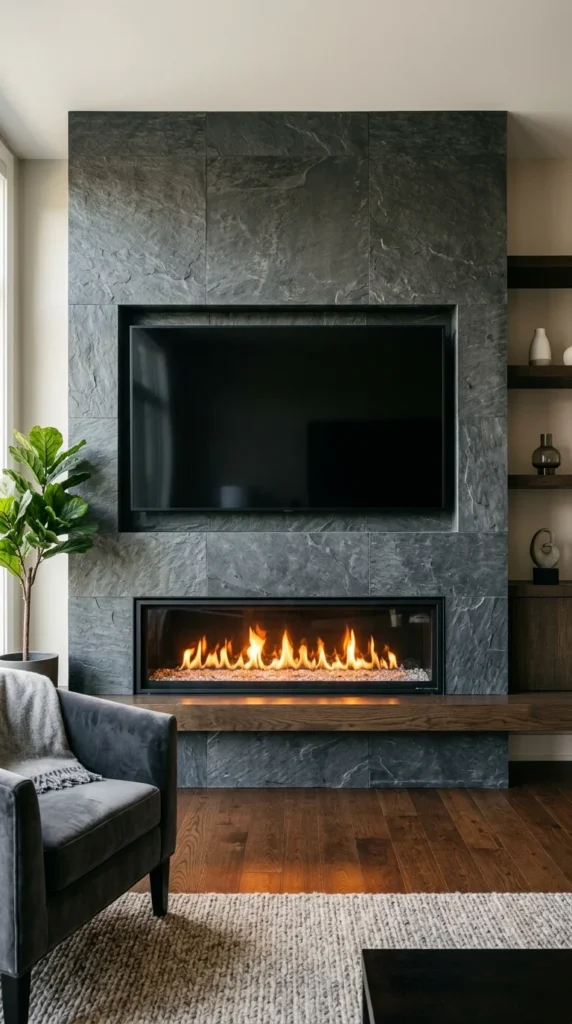
The “Fire and Ice” combination—a television paired with a modern electric fireplace—is the gold standard for cozy, expensive-looking media walls. A long, linear fireplace adds horizontal movement to the design and provides a secondary focal point that keeps the room feeling warm even when the TV is off.
- Why it looks expensive: It transforms a simple wall into a multi-functional architectural feature.
- Design Tip: Opt for a “hole-in-the-wall” style fireplace that sits completely flush with the surrounding materials for a sleek finish.
7. Hidden Storage
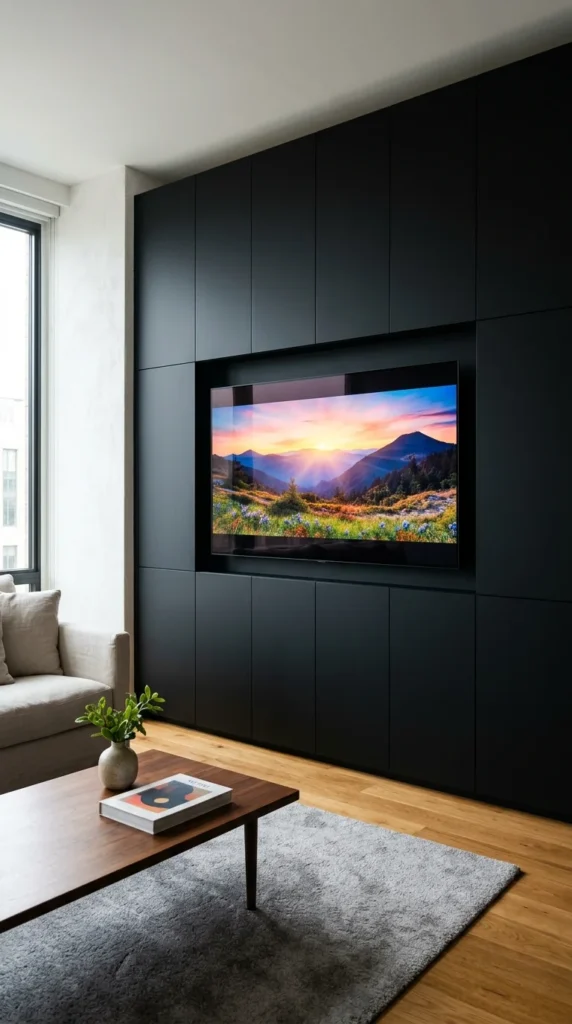
Clutter is the enemy of luxury. An expensive-looking media wall should be perfectly streamlined, with zero visible wires, cable boxes, or remote controls. Custom-built cabinetry with “push-to-open” mechanisms allows you to hide all the “tech noise” behind sleek, minimalist panels.
- Why it looks expensive: It showcases a level of bespoke planning where every device has a dedicated, hidden home.
- Design Tip: Include ventilated cabinets to ensure your electronics don’t overheat while hidden away.
8. Floor-to-Ceiling
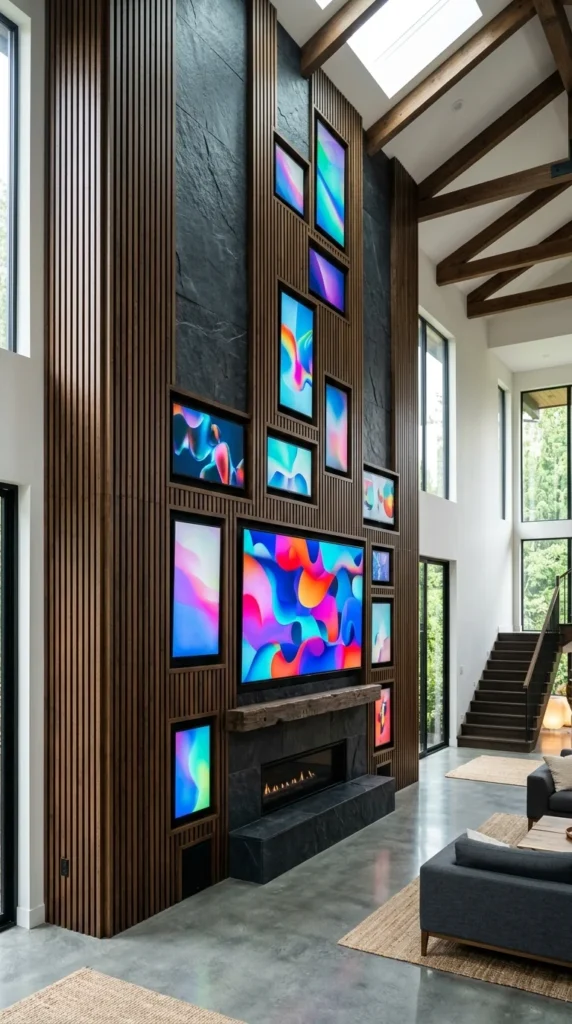
If you want to make a small room feel bigger or a large room feel more grounded, go floor-to-ceiling. By extending the materials of your media wall to the very top of the room, you draw the eye upward, emphasizing the height of the space. This creates an immersive “feature wall” effect that feels intentional and grand.
- Why it looks expensive: It abandons the “modular furniture” look in favor of a permanent, built-in architectural element.
- Design Tip: Use vertical lines or long grain wood to further enhance the sense of height.
9. Slat Wood
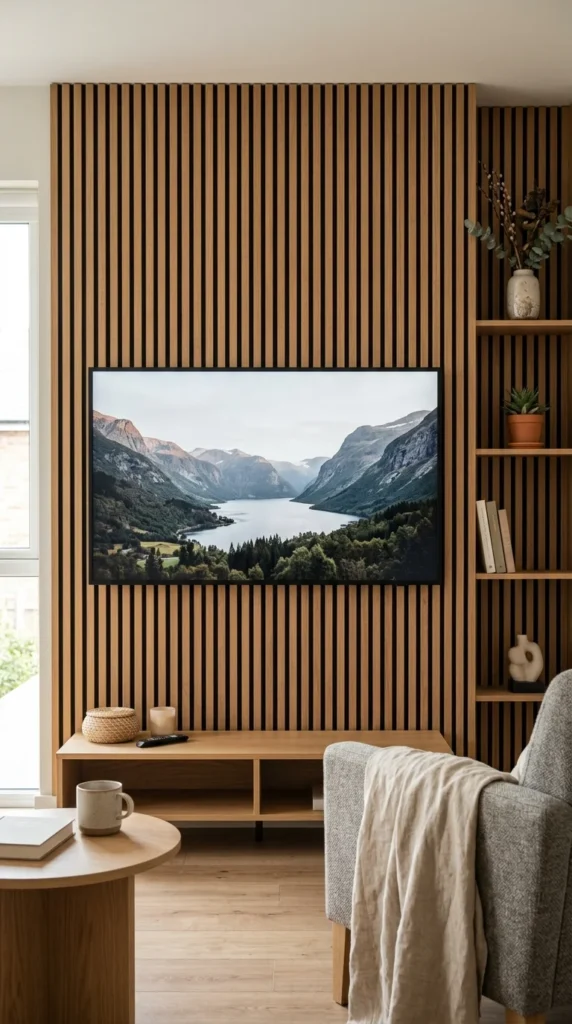
Acoustic wood slat panels have become a staple in luxury modern homes. They offer a beautiful, organic warmth while simultaneously improving the acoustics of the room by reducing echoes. The contrast between the natural wood slats and the dark felt background adds depth and a “designer” touch that works perfectly with minimalist or mid-century modern aesthetics.
- Why it looks expensive: It provides a rich, repetitive pattern that is visually soothing and highly tactile.
- Design Tip: Wrap the slats around a corner or onto the ceiling to create a “canopy” effect for a truly bespoke look.
10. Dark Tones
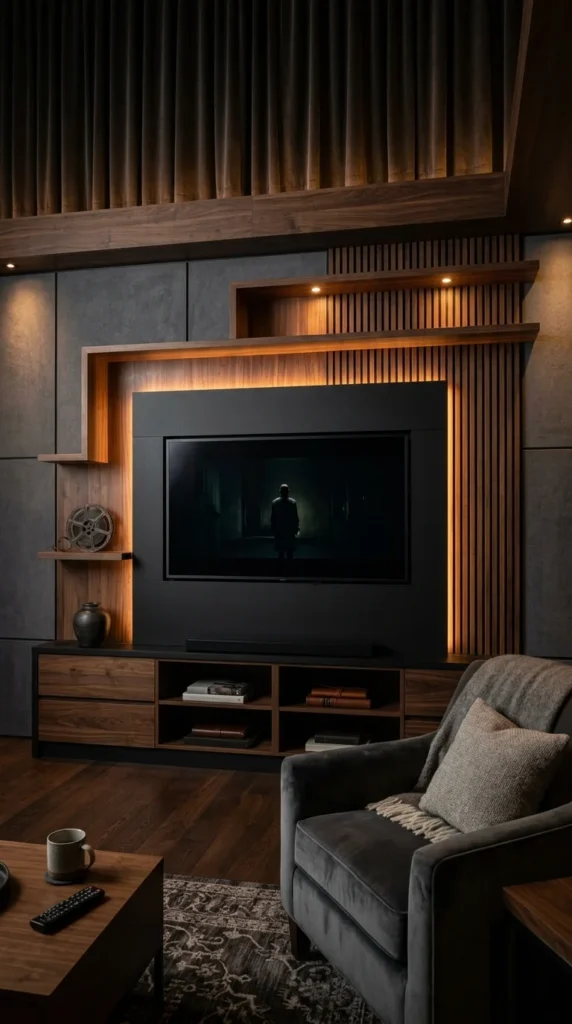
While white and bright interiors are popular, nothing says “premium cinema” like a dark, moody color palette. Using deep charcoals, navies, or matte blacks for your media wall allows the television screen to disappear when it’s off. This creates a sophisticated, bold look that feels like a private lounge or a high-end screening room.
- Why it looks expensive: Darker tones feel heavier, more permanent, and inherently more dramatic.
- Design Tip: Mix different dark textures—such as matte paint, black oak, and smoked glass—to keep the dark wall from looking flat or one-dimensional.
Summary
An expensive-looking media wall is the result of balancing form and function. By focusing on premium textures like marble or fluted wood, integrating smart lighting, and ensuring all clutter is hidden behind seamless cabinetry, you can create a centerpiece that significantly increases the perceived value of your home. Whether you prefer the organic warmth of slats or the sharp drama of a dark, floor-to-ceiling installation, these ideas prove that your entertainment center can be the most stylish part of your house.