
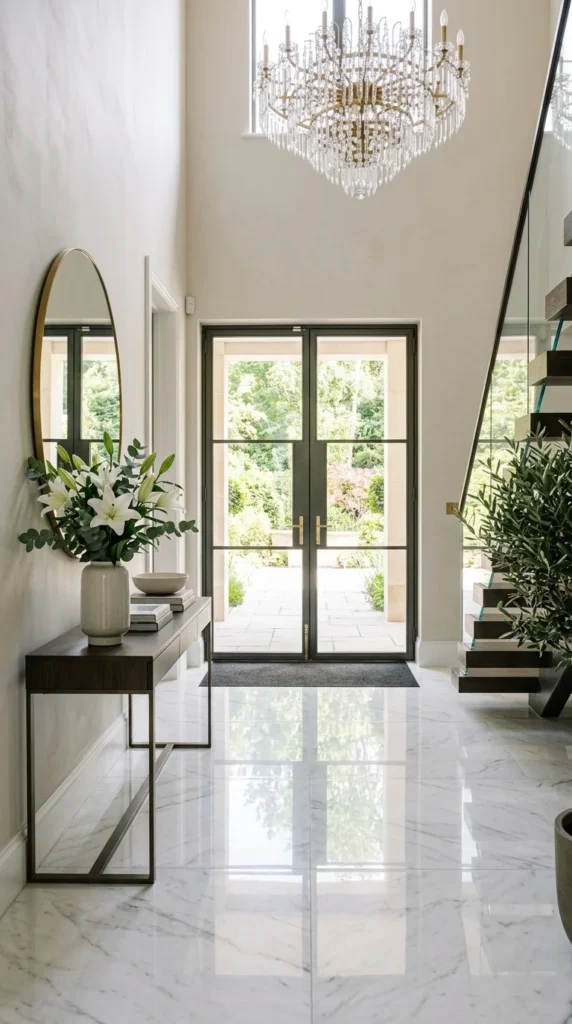
The entryway is more than just a transition zone; it is the definitive “handshake” of your home. It sets the tone for the rest of the interior and provides the first glimpse into your personal style. Achieving a high-end, expensive look doesn’t necessarily require a massive renovation budget. Instead, it involves strategic choices in scale, lighting, materials, and curation. By focusing on intentionality and minimalist luxury, you can transform a cluttered foyer into a sophisticated gallery-like space.
1. Oversized Art
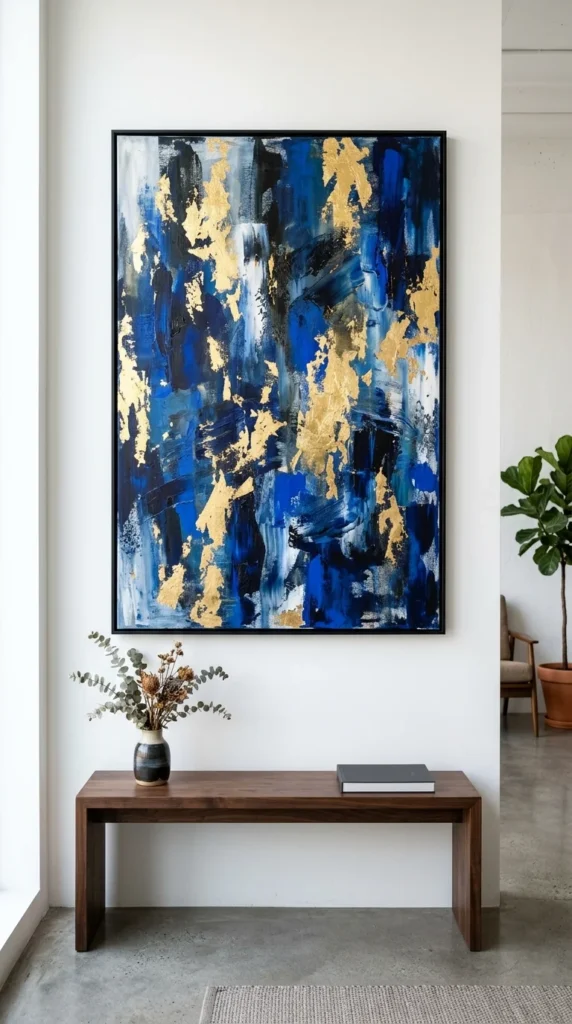
When it comes to making a statement, scale is your best friend. A single, massive piece of artwork creates an immediate focal point that screams “gallery-inspired luxury.” Small, scattered frames can often look cluttered and “cheapen” the space. By opting for one large canvas or a framed photograph, you simplify the visual field and draw the eye upward, making the ceilings feel higher. Choose pieces with high-contrast colors or rich textures to add depth to the entryway.
2. Statement Lighting
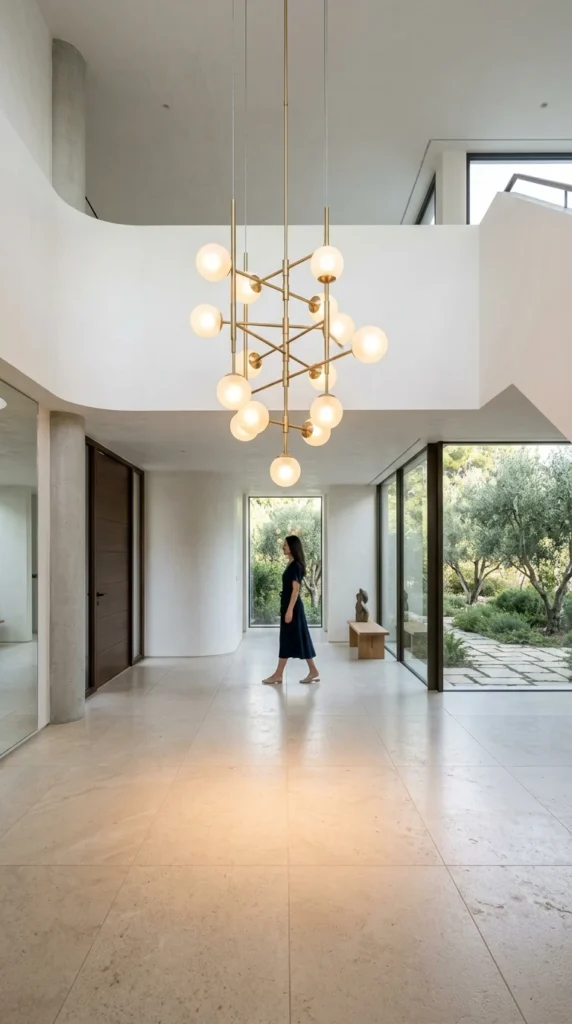
Lighting is the jewelry of a home. Replacing a standard builder-grade flush mount with a sculptural chandelier or a bold pendant light can instantly elevate the perceived value of your home. Look for materials like brushed brass, hand-blown glass, or matte black steel. The key to an expensive look is “layered lighting”—combining a stunning overhead fixture with subtle wall sconces or a designer table lamp on the console to create a warm, inviting atmosphere.
3. Marble Surfaces
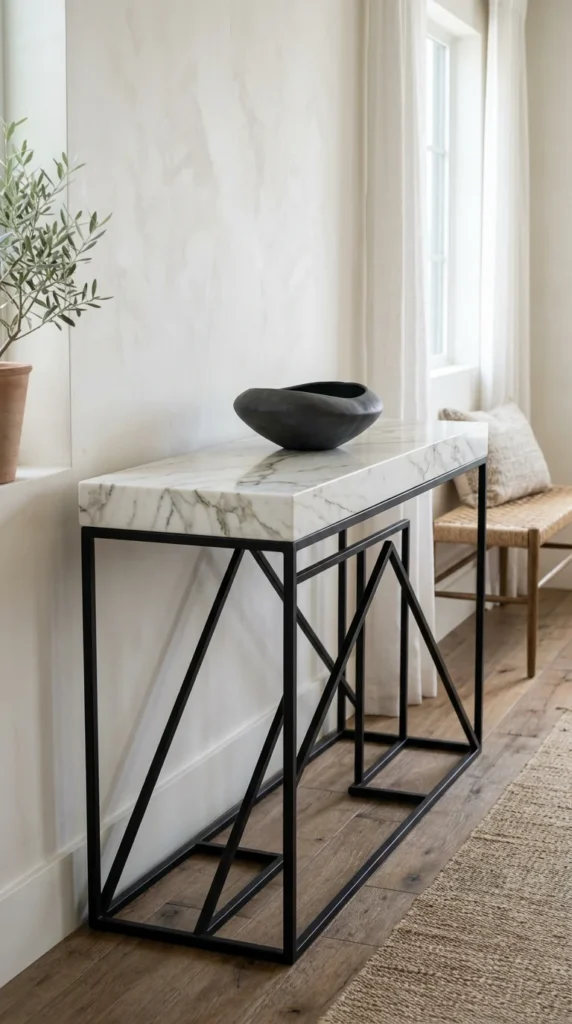
Nothing says luxury quite like marble. Whether it is a full marble floor or a simple marble-topped console table, the natural veining and cool touch of stone provide an organic yet polished feel. If a full installation isn’t in the budget, look for high-quality marble accessories or a small pedestal to display a piece of art. The weight and unique patterns of natural stone lend an air of permanence and quality that synthetic materials cannot replicate.
4. Floor-to-Ceiling Mirrors
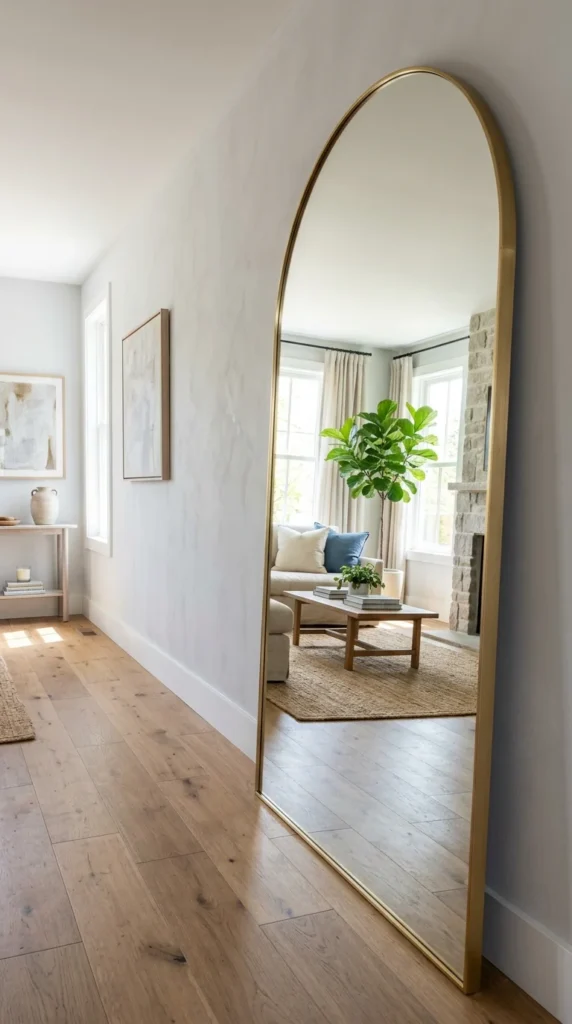
Mirrors are a classic designer trick for a reason: they double the light and the perceived space. To achieve an expensive look, go big. An oversized floor mirror with a thin, elegant frame (or no frame at all) creates a sense of grandeur. It reflects the architecture of the home and adds a “glam” factor. For a more modern approach, consider a tinted mirror in smoke or bronze to add a moody, sophisticated edge to the foyer.
5. Sculptural Seating
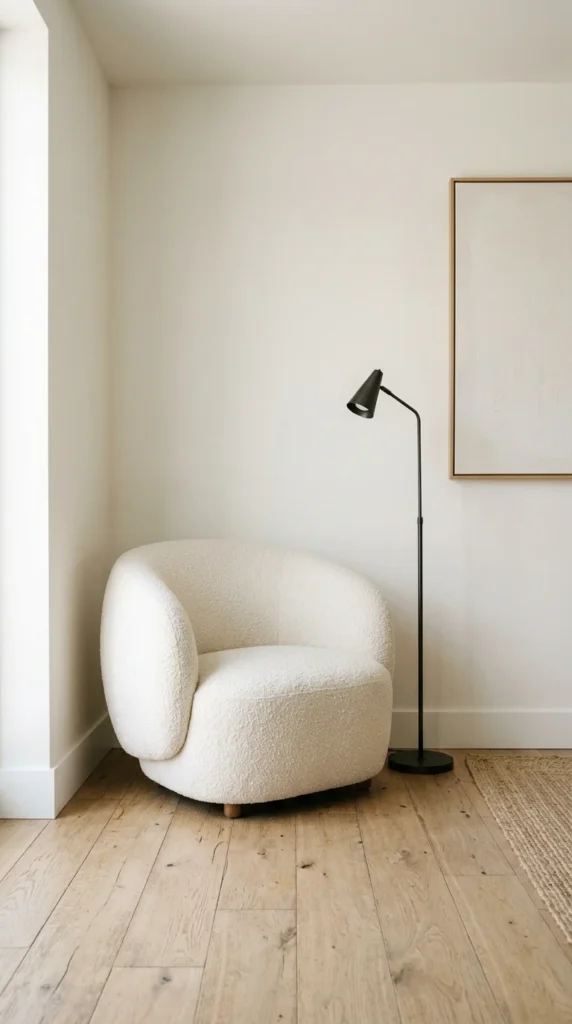
Every functional entryway needs a place to sit, but instead of a standard bench, opt for a piece of furniture that looks like a work of art. A curved velvet armchair, a minimalist wooden bench with organic edges, or a sculptural stool can serve as a conversation starter. Choose high-quality fabrics like boucle, leather, or mohair to add tactile richness to the space.
6. Architectural Paneling
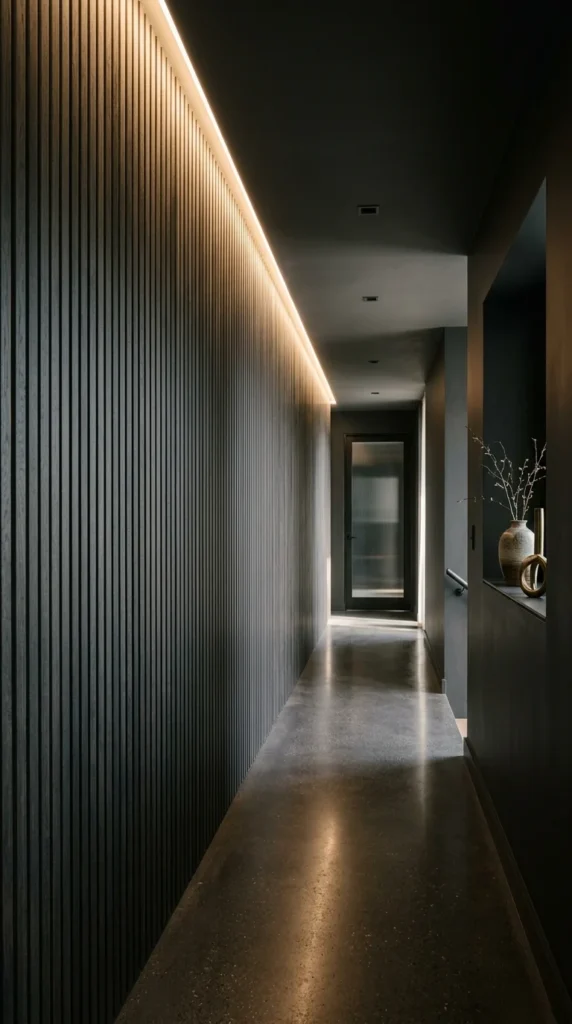
If your entryway feels flat, architectural wall treatments can add the necessary “bones” to make it look custom-built. Modern wall paneling—such as vertical wooden slats, oversized wainscoting, or subtle picture frame molding—adds texture and shadow. Painting the paneling in a monochromatic tone (where the walls, trim, and doors are the same color) creates a seamless, designer-approved look that feels cohesive and expensive.
7. Monochrome Palette
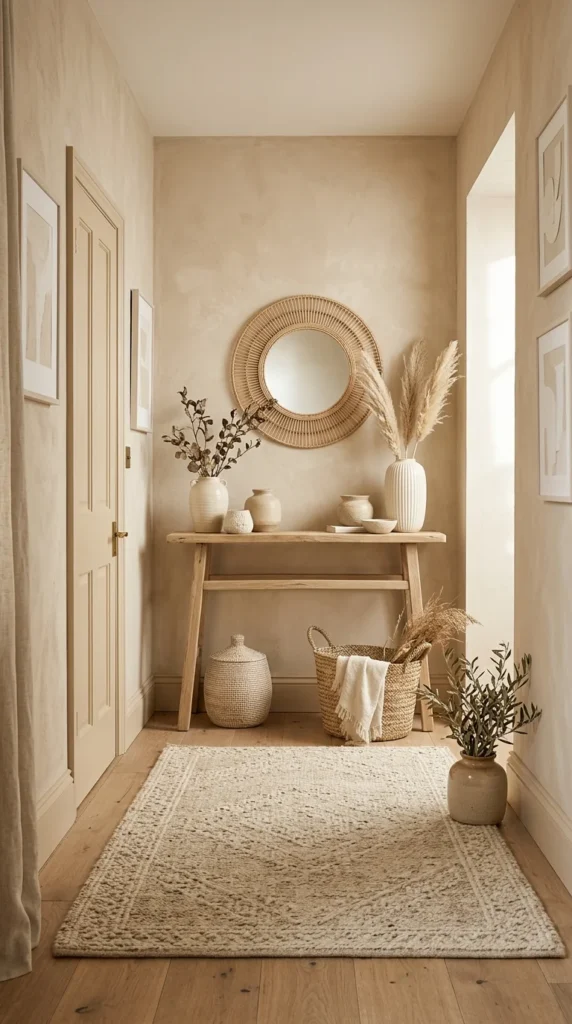
A secret of high-end interior design is the use of a monochromatic color scheme. By sticking to various shades of a single color—such as warm whites, deep charcoals, or soft beiges—you create a sophisticated, “quiet luxury” aesthetic. This approach minimizes visual noise and allows the textures and shapes of your furniture to stand out. Use different finishes (matte walls versus glossy decor) to keep the space from feeling flat.
8. Integrated Storage
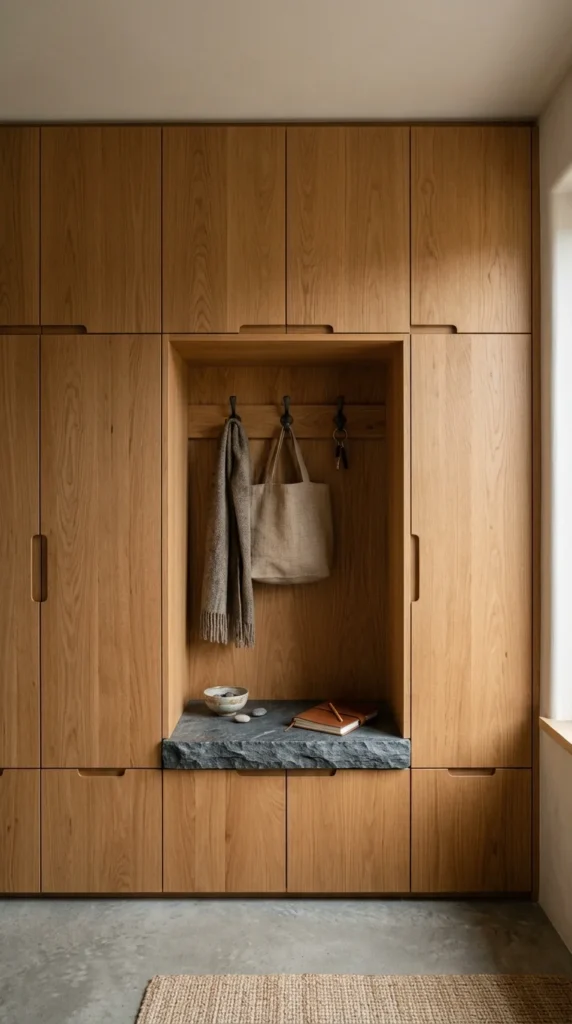
Clutter is the enemy of an expensive-looking home. High-end entryways prioritize “stealth storage” where coats, shoes, and bags are hidden behind seamless cabinetry. Custom built-ins that match the wall color or feature beautiful wood grains provide a clean, streamlined look. If custom cabinetry isn’t an option, use a sleek sideboard or an armoire with clean lines to tuck away the daily essentials.
9. Tall Greenery
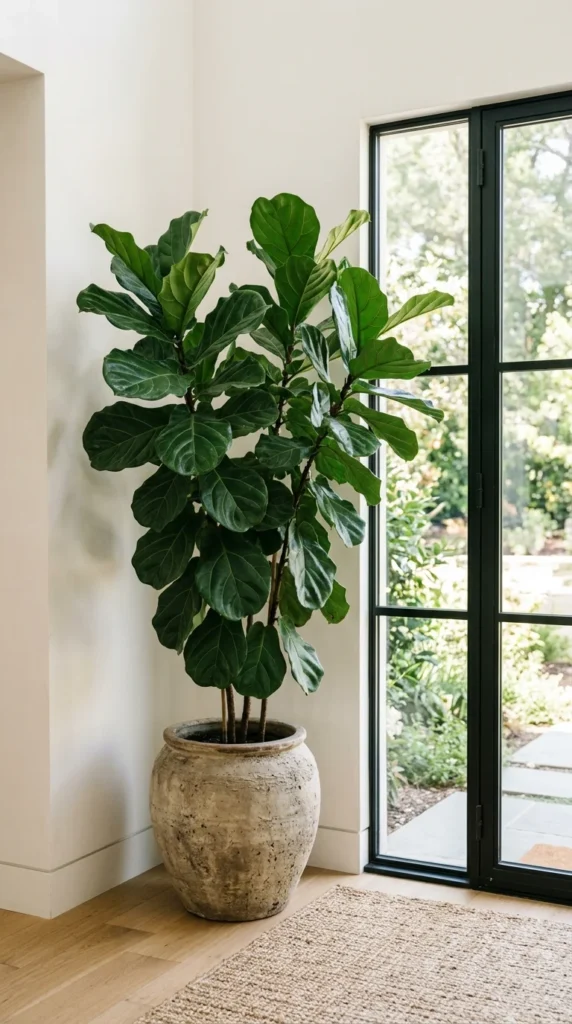
Bringing the outdoors in is a hallmark of modern luxury. However, instead of small potted plants, choose one large, architectural indoor tree. A Fiddle Leaf Fig, an Olive Tree, or a tall Sansevieria adds life and height to the room. The key is the vessel—place your plant in a heavy, high-quality ceramic or stone pot that complements your decor. The presence of a thriving, large-scale plant suggests a well-cared-for and established home.
10. High-End Hardware
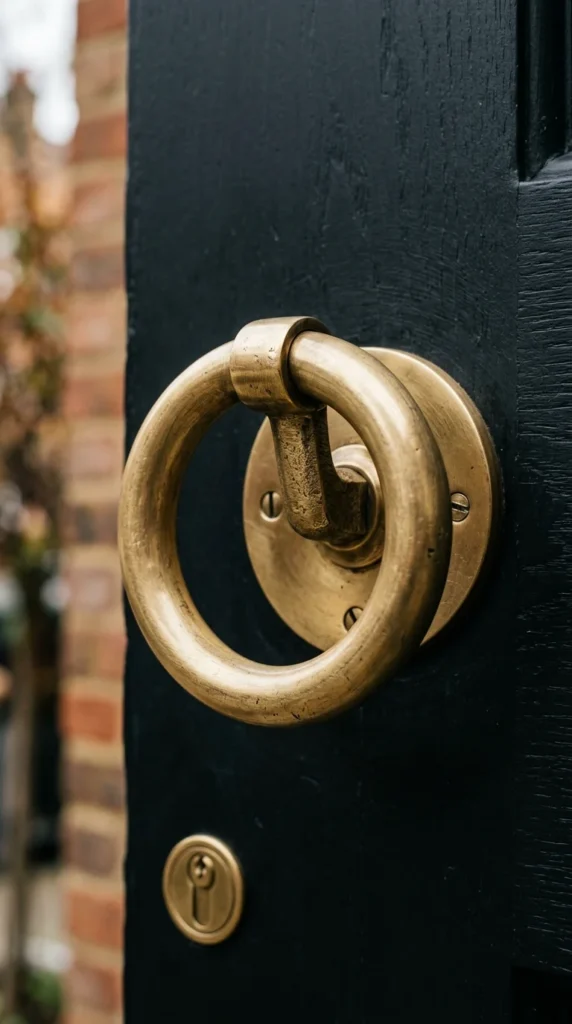
The details you touch every day make the biggest impact on the “feel” of a home. Swapping out standard door handles, cabinet knobs, or light switches for high-end versions in solid brass, knurled metal, or matte black can make a world of difference. These “micro-luxuries” provide a tactile sense of quality that guests will notice the moment they step through the door.
11. Designer Rugs
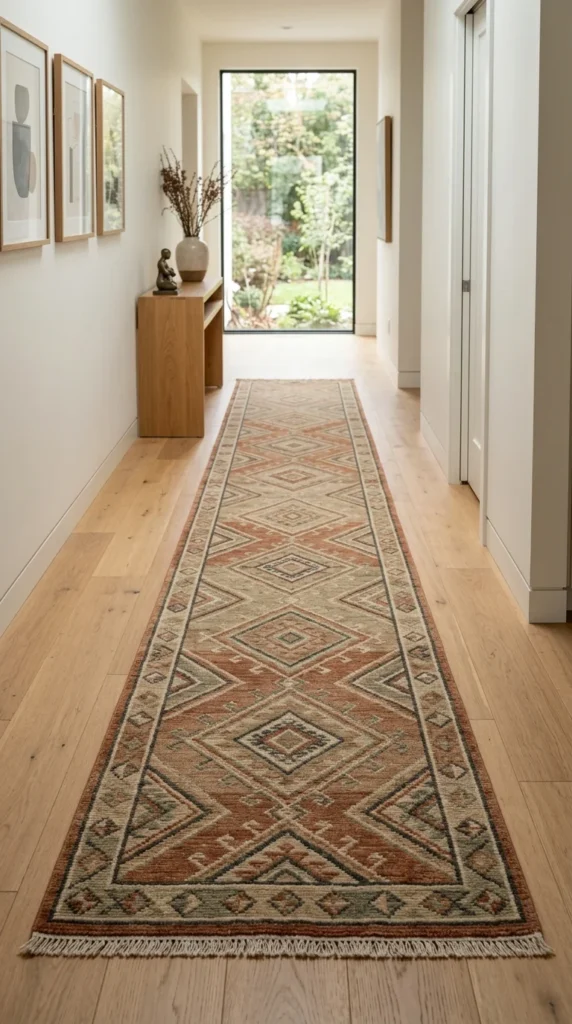
The floor is a massive canvas that is often overlooked. A thin, cheap rug will slide around and wear quickly. Investing in a high-quality, hand-knotted wool or silk runner adds warmth and acoustic insulation. Choose a rug with a subtle, sophisticated pattern or a rich solid texture. A rug that is properly sized—extending nearly to the edges of the hallway or centering the foyer—anchors the furniture and makes the space feel finished.
12. Minimalist Curation
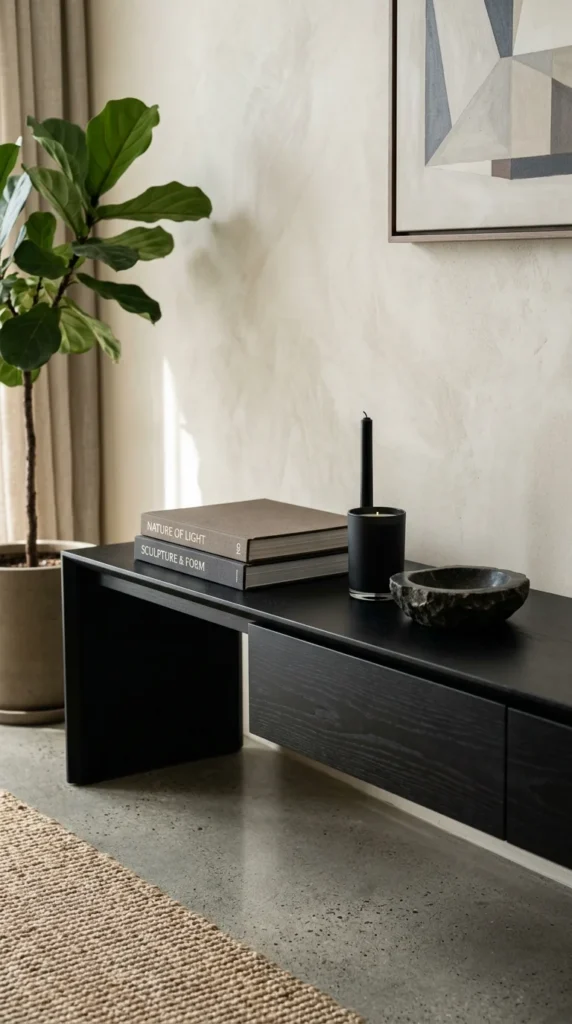
One of the most common mistakes in entryway design is over-decorating. Expensive spaces often lean into “minimalist curation.” Rather than filling every surface with knick-knacks, choose three to five high-quality items. A stack of coffee table books, a designer candle, and a single sculptural object create a look that feels curated rather than cluttered. Remember: the “negative space” (the empty areas) is just as important as the items themselves.
13. Signature Scent
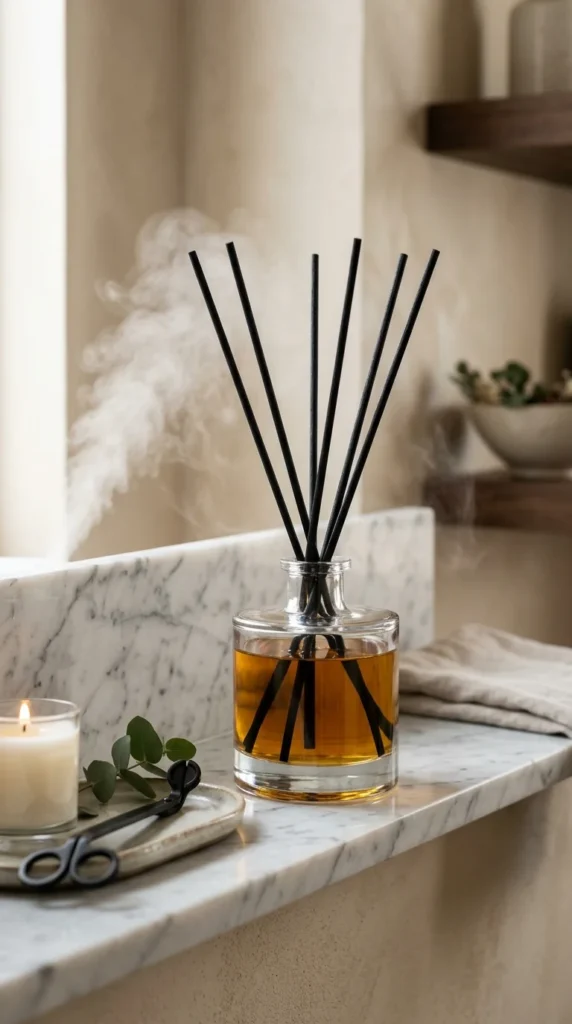
While not a visual element, the “scent” of a home is a powerful indicator of luxury. High-end hotels and boutiques use signature scents to create an unforgettable experience. Use a high-quality reed diffuser, a designer candle, or an electronic fragrance mist with notes of sandalwood, bergamot, or leather. When a guest walks into a home that smells as good as it looks, it completes the sensory experience of a truly expensive environment.