
The entryway is the handshake of your home. It’s the very first thing guests see when they step inside and the last thing you encounter before heading out into the world. However, in many modern apartments and cozy cottages, this “foyer” is often little more than a narrow strip of wall or a corner behind the front door.
Creating an impactful entryway in a cramped space requires a blend of clever spatial planning and high-impact design. You don’t need sprawling square footage to create a sense of arrival. With the right combination of functional furniture and decorative flair, even the smallest “drop zone” can become a stylish sanctuary. Here are 12 transformative ideas to help your small entryway make a massive first impression.
1. Floating Shelves
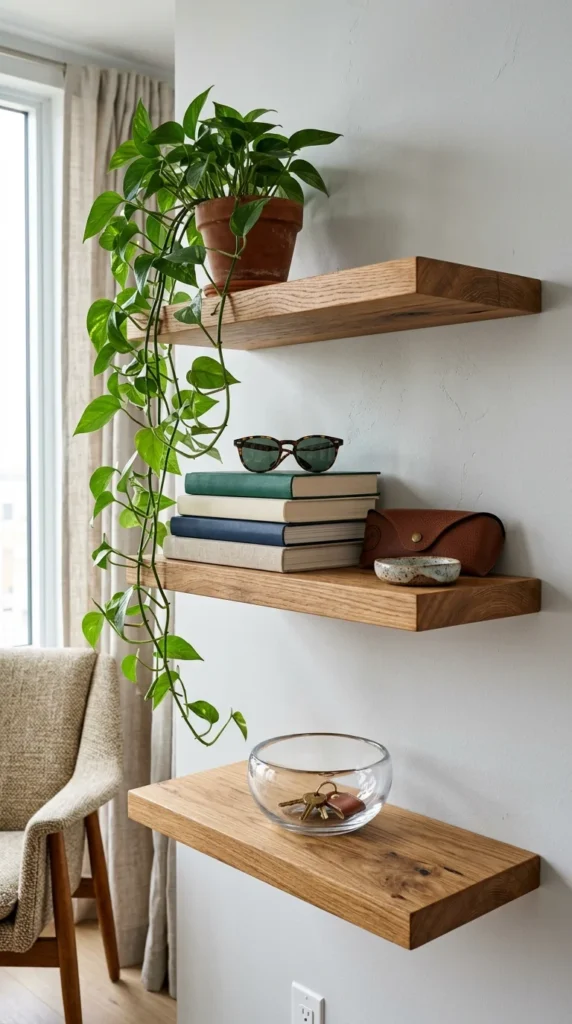
When floor space is at a premium, the only way to go is up. Floating shelves are the ultimate “spatial hack” for tiny entryways. By removing the legs of a traditional console table, you open up the floor area, making the entire hallway feel wider and airier.
A single, chunky wood shelf can serve as a “landing strip” for mail and keys, while multiple staggered shelves allow for a vertical gallery of personal items. To keep it from looking cluttered, follow the “rule of three”: group items in odd numbers and vary their heights. Pair a functional item, like a key bowl, with a decorative one, like a small sculpture or a framed photo, to balance utility with beauty.
2. Statement Mirrors
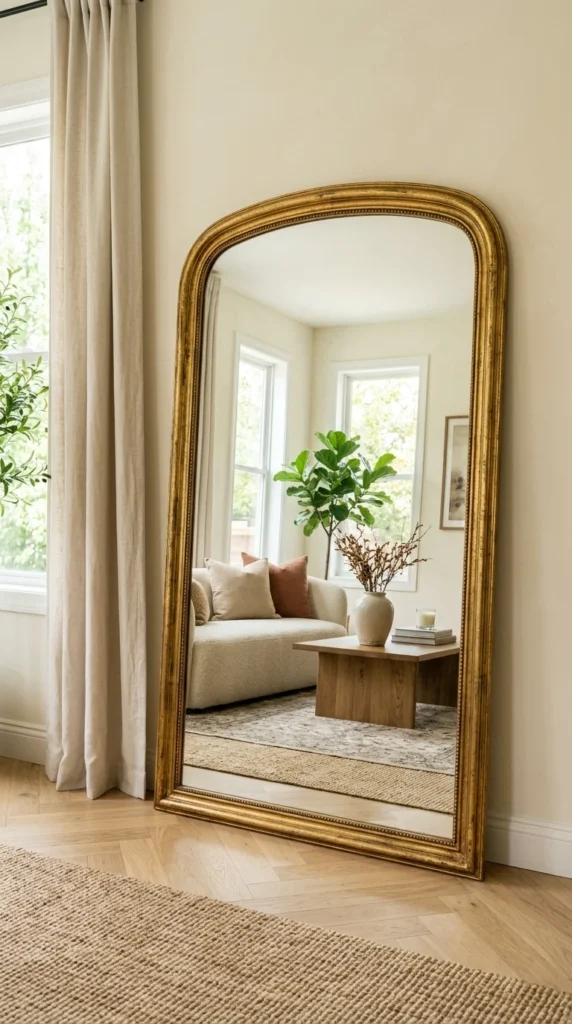
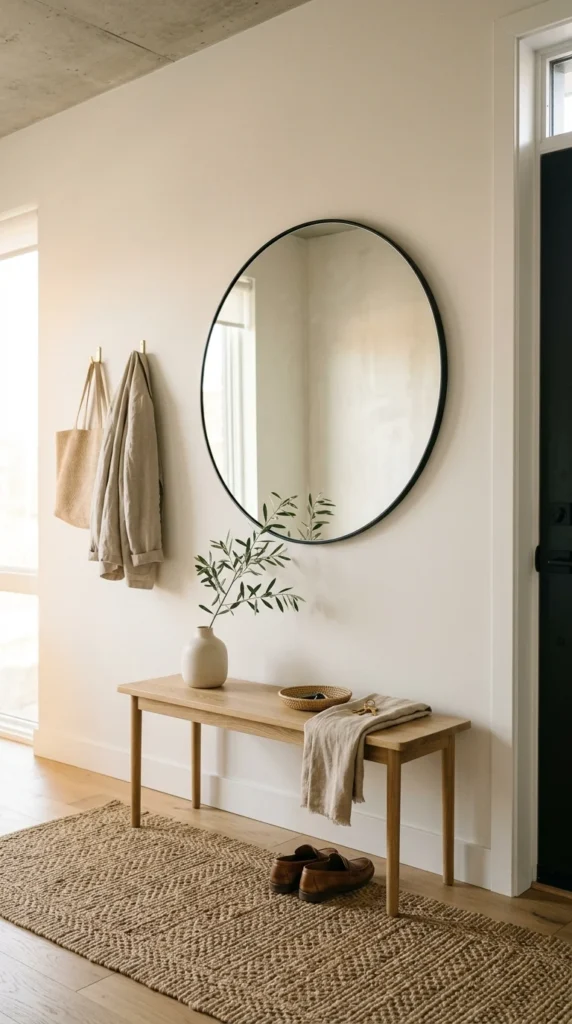
Interior designers have long used mirrors as their secret weapon for expanding tight quarters. In a small entryway, a large mirror serves two purposes: it bounces light around to brighten a typically dark area, and it creates the optical illusion of depth, making the wall seem to disappear.
Whether you choose a massive floor-leaning mirror or a sleek, round wall-mounted version, the frame is where you can inject personality. A thin black metal frame offers an industrial, modern look, while an ornate, gilded frame adds a touch of classic luxury. Position the mirror opposite a light source or an open doorway to maximize the “window” effect.
3. Slim Consoles
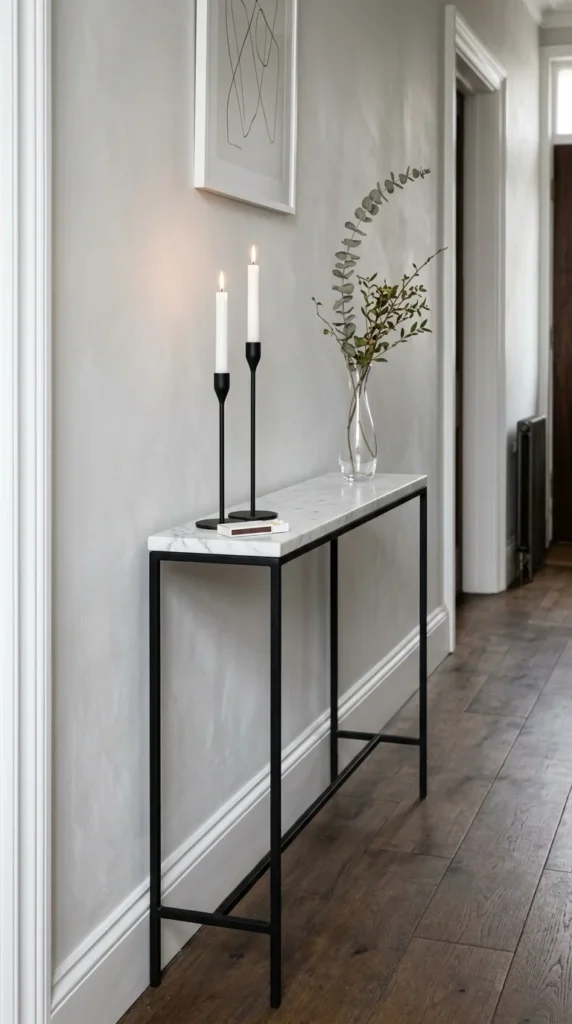
If you have at least six to eight inches of clearance behind your door or along a wall, you have room for a slim console. Manufacturers now specialize in “extra-narrow” or “hallway-width” tables specifically designed for urban living.
These pieces provide a dedicated surface for lamps and decor without obstructing the flow of traffic. Look for designs with “open” bases—thin legs rather than solid cabinets—to maintain a visual sense of openness. A console with a lower shelf also provides an extra layer of storage for baskets or neatly stacked coffee table books.
4. Vertical Storage
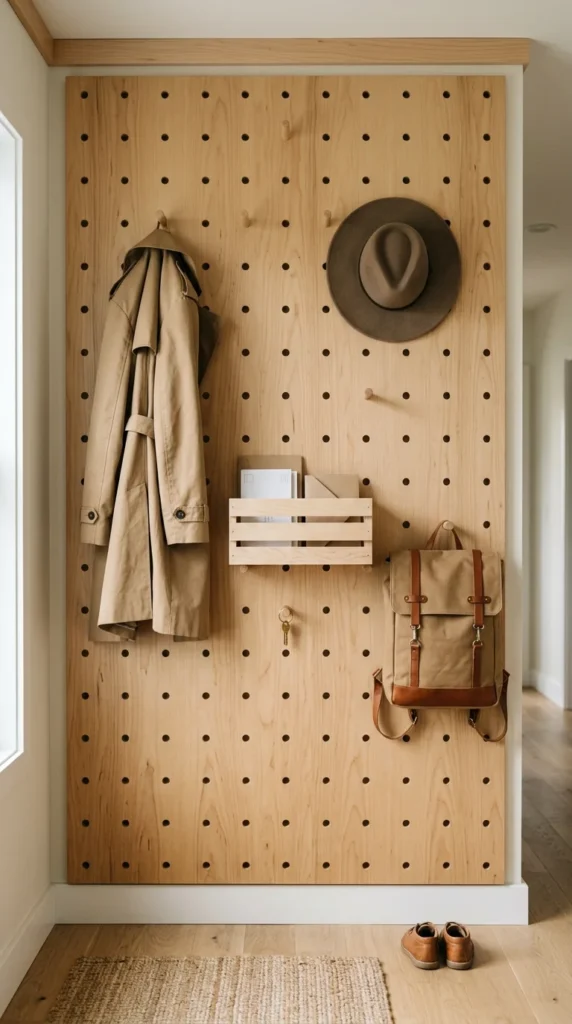
In a small home, every inch of vertical real estate is valuable. Instead of a bulky coat rack that eats up floor space, consider a wall-integrated storage system. Pegboards, slat walls, or even a simple grid of high-quality hooks can turn an empty wall into a functional masterpiece.
The key to making vertical storage look intentional rather than messy is curation. Don’t overload every hook; leave space for the architecture of the wall to breathe. Use matching hangers or a consistent color palette for the items you hang to create a cohesive, boutique-hotel vibe right at your front door.
5. Bold Wallpaper
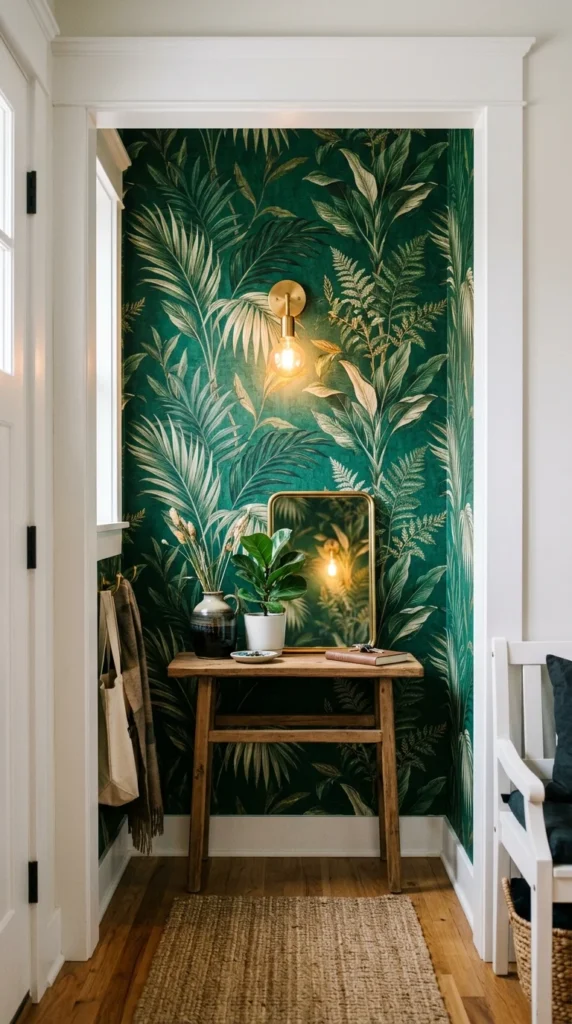
Don’t be afraid to go big in a small space. Many homeowners shy away from bold patterns in tight areas, but the entryway is actually the perfect place for a “jewel box” effect. Because it’s a transitional space rather than a room you sit in for hours, you can afford to be more daring with color and pattern.
A dramatic floral, a geometric print, or a textured grasscloth can define the entryway as a distinct “zone” within an open-concept layout. If you’re a renter, high-quality peel-and-stick wallpaper allows you to achieve this high-end look without a permanent commitment.
6. Wall Hooks
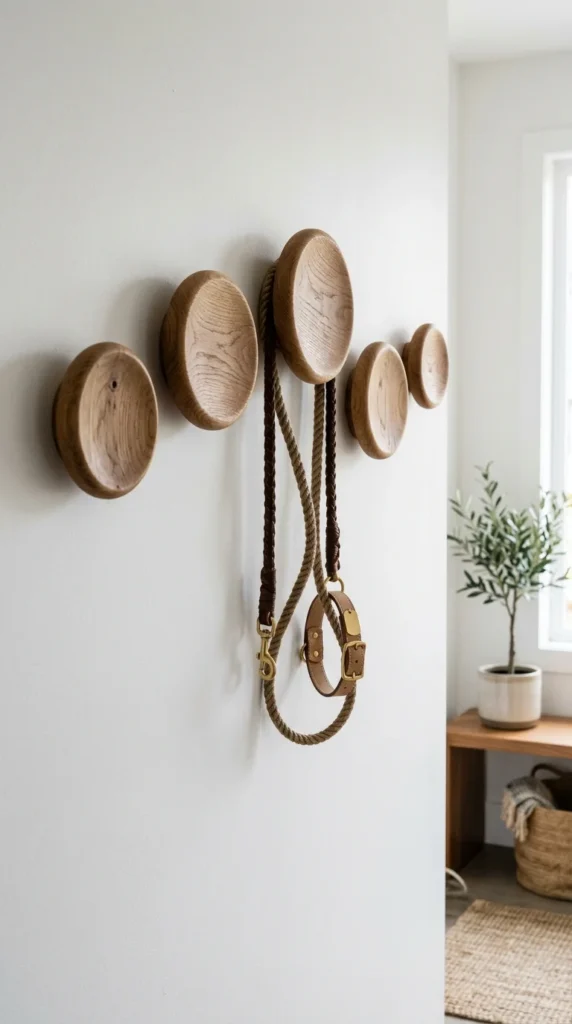
Traditional coat racks are often top-heavy and take up too much physical and visual room. Individual wall hooks, however, offer total flexibility. You can mount them at different heights—lower for children’s bags and higher for adult coats—to make the most of your wall height.
For a modern look, choose “knob” style hooks in natural wood or matte metals. For a more eclectic feel, mix and match vintage-style brass hooks. These small details act as functional jewelry for your walls, providing a place for everything while keeping the floor completely clear.
7. Nested Benches
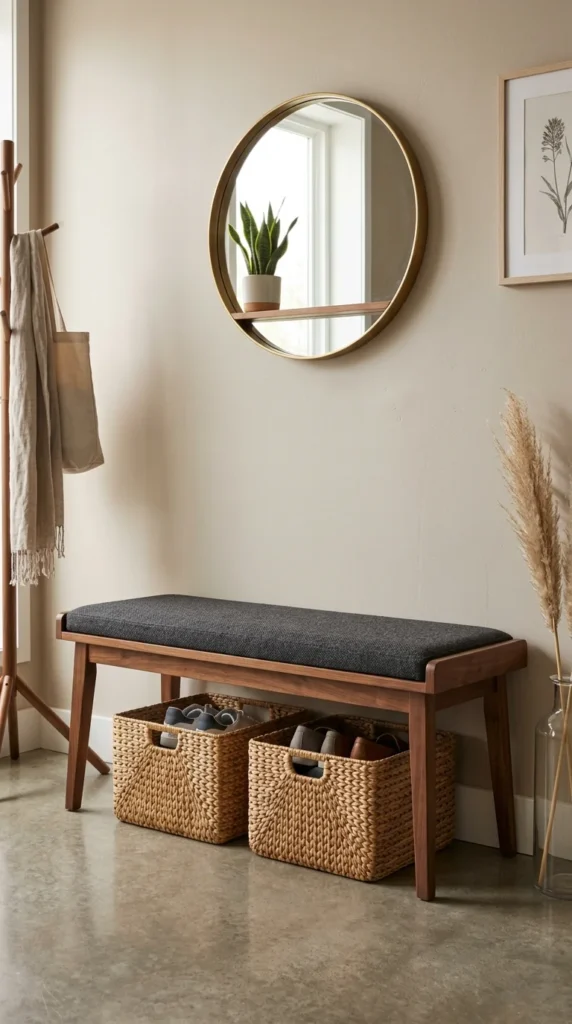
A place to sit while putting on shoes is a luxury in a small entryway, but it is achievable. A low-profile bench provides a horizontal line that anchors the space without blocking sightlines.
The real magic happens underneath. By selecting a bench with an open bottom, you create a “garage” for shoes or storage baskets. This “nested” approach keeps clutter off the floor and tucked away, maintaining a tidy appearance even in a high-traffic zone. Choose a bench with a slim profile to ensure it doesn’t jut out too far into the walking path.
8. Strategic Lighting
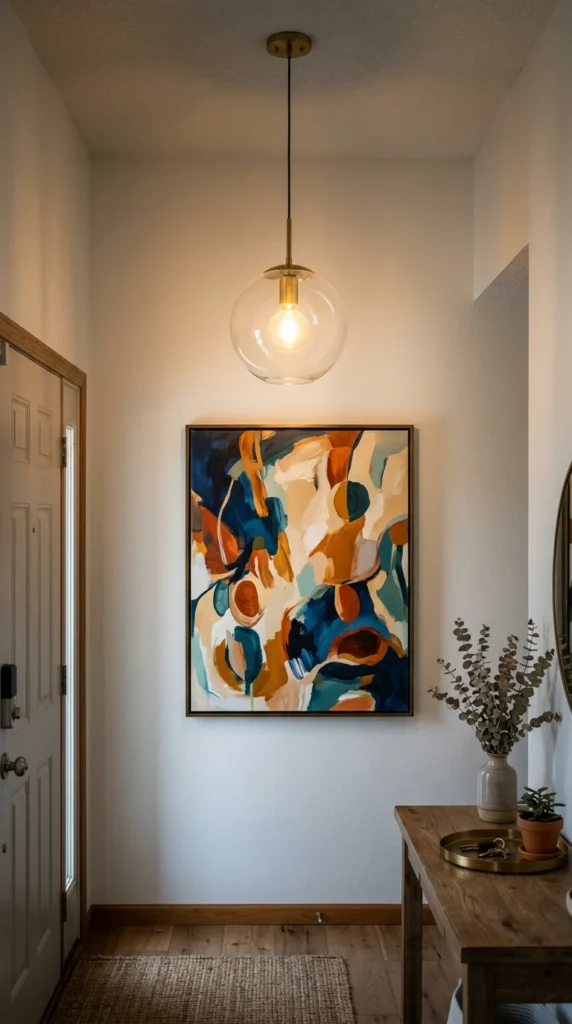
Small entryways often suffer from a lack of natural light, which can make them feel cave-like. The right lighting can transform the mood instantly. Avoid the “boob light” (standard flush mounts) and opt for something with personality.
A statement pendant light draws the eye upward, emphasizing ceiling height. If you don’t have an overhead electrical box, a pair of wall sconces can flank a mirror to provide “flattering” eye-level light. Even a small, stylish cord-free LED lamp on a floating shelf can provide a warm “welcome home” glow in the evening.
9. Rugs & Runners
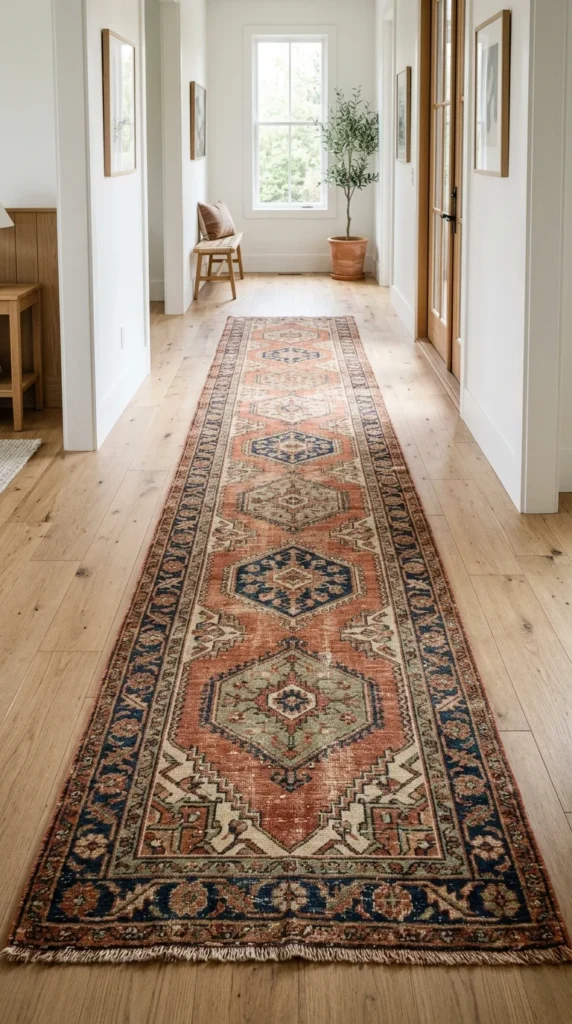
A rug does more than just catch dirt; it acts as a visual boundary. In an open-plan home where the front door opens directly into the living room, a runner or a small rug “zones” the entryway, telling the eye where the “outside” ends and the “inside” begins.
Choose a durable material like jute, sisal, or a high-quality synthetic “washable” rug that can stand up to heavy foot traffic. A bold pattern or a pop of color in the rug can also bridge the gap between the entryway decor and the rest of your home’s aesthetic.
10. Hidden Organizers
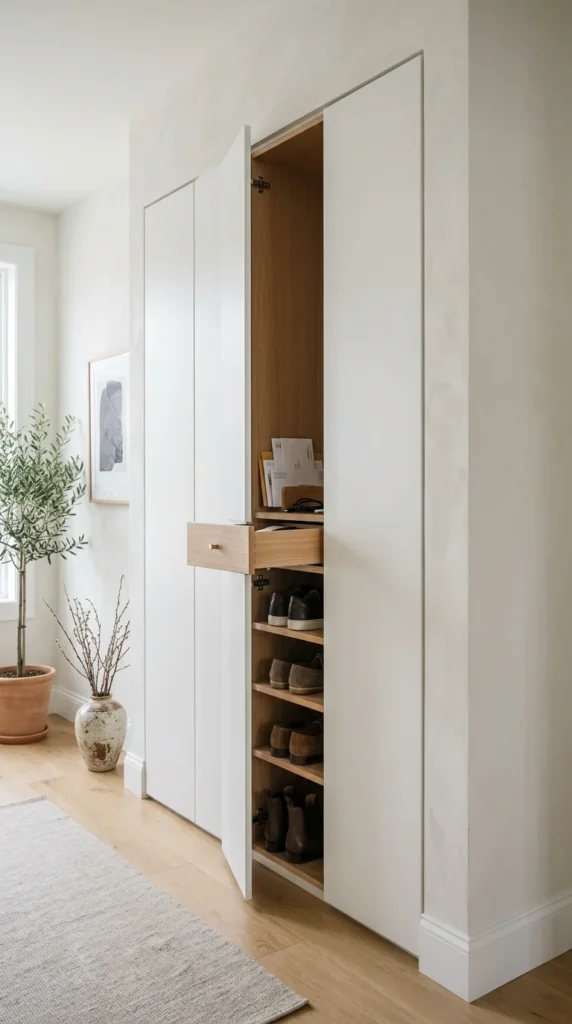
If you prefer a “clutter-free” look, hidden storage is your best friend. Look for ultra-slim shoe cabinets (like the famous IKEA Hemnes or Trones) that are only a few inches deep. These pieces use a tilting mechanism to store shoes vertically, saving an incredible amount of space.
When closed, these cabinets look like a slim console or part of the wall architecture. You can top them with a tray for mail or a small plant to integrate them seamlessly into your decor. It’s the perfect solution for those who want the functionality of a mudroom without the visual noise.
11. Natural Greenery
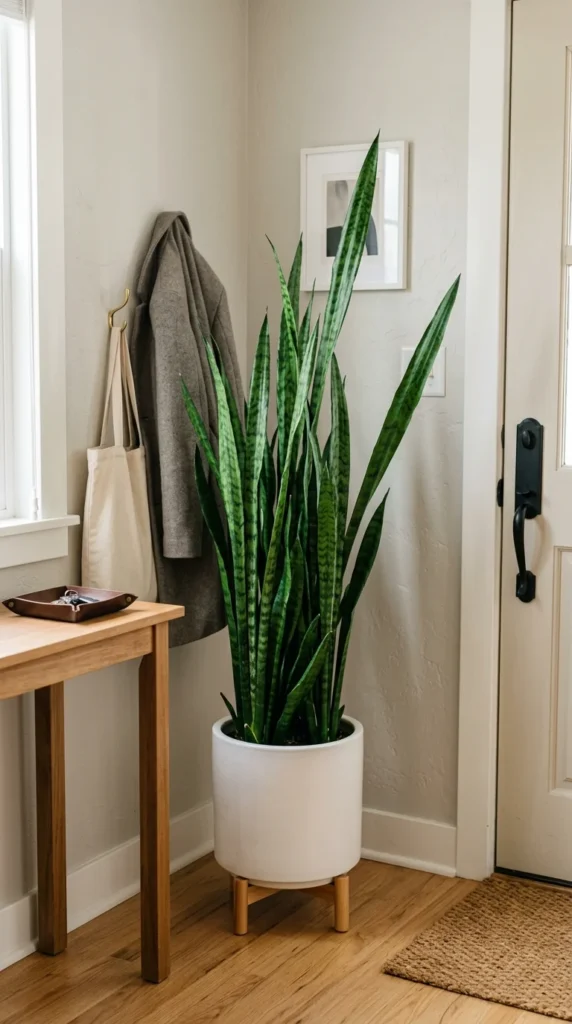
Never underestimate the power of a plant to make a space feel “finished.” In a small entryway, greenery adds life, texture, and a sense of freshness. If you have a corner that feels empty but is too small for furniture, a tall, narrow plant like a Snake Plant or a Fiddle Leaf Fig is the perfect filler.
If floor space is non-existent, use a hanging planter or place a trailing succulent on a high shelf. Plants not only improve air quality but also create a soothing transition from the outdoors to your private sanctuary.
12. Cohesive Palette
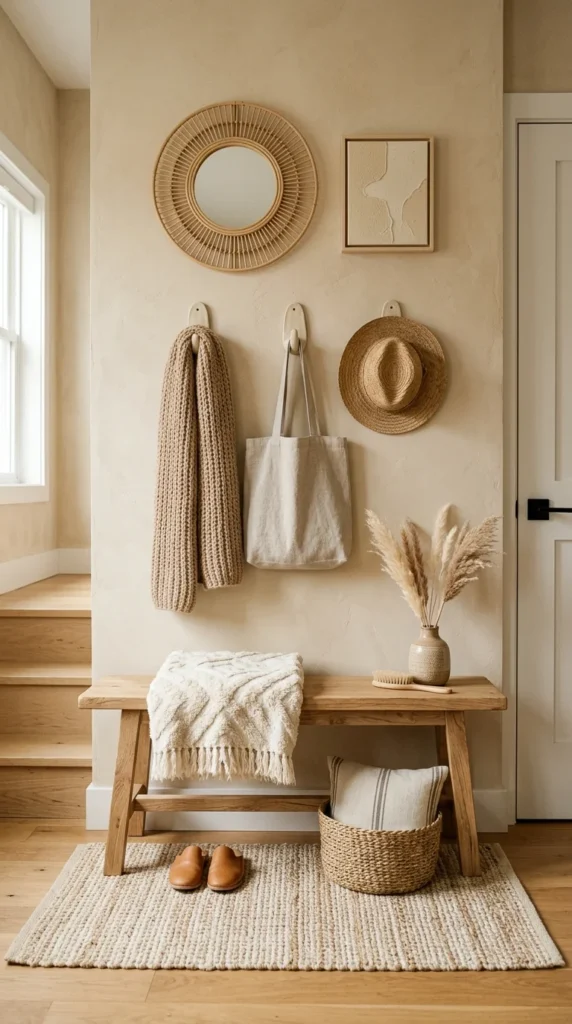
The most effective way to make a small space feel larger and more “expensive” is to stick to a cohesive color palette. When the colors of your furniture, walls, and accessories harmonize, the eye moves smoothly across the space without being “tripped up” by jarring contrasts.
This doesn’t mean everything has to be white. You can choose a “moody” palette of deep blues and grays or a “warm” palette of earth tones. By matching your storage bins to your wall color or using the same wood tone for your bench and shelves, you create a streamlined, intentional look that feels curated rather than crowded.