

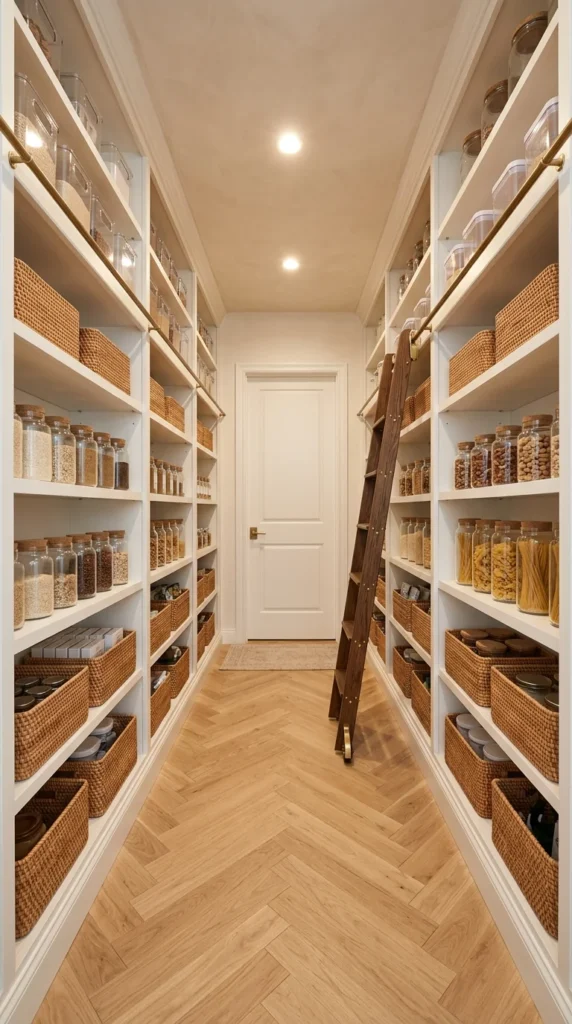
The pantry is often the hidden engine of the home. It is where morning routines begin with a cup of coffee and where late-night snack cravings are satisfied. However, for many, the pantry can quickly become a chaotic wasteland of half-empty chip bags, expired canned goods, and loose packets of seasoning.
Transforming your pantry into an organized sanctuary isn’t just about aesthetics; it’s about efficiency, reducing food waste, and creating a sense of calm every time you open the door. When every item has a dedicated home, meal prep becomes faster, and grocery shopping becomes more intentional. Here are 13 pantry organization ideas that blend high-end design with practical functionality.
1. Glass Jars
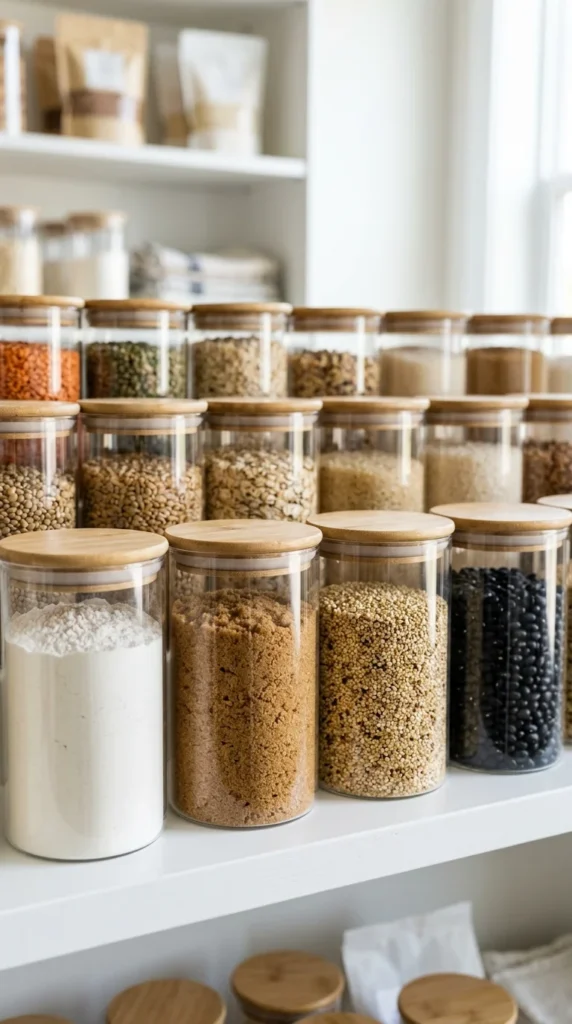
Decanting is the ultimate secret to a high-end pantry look. By removing dry goods from their original, clashing plastic packaging and transferring them into uniform glass jars, you eliminate visual noise instantly. Glass allows you to see exactly how much of an ingredient you have left, preventing you from overbuying at the store. To keep things fresh, ensure your jars have airtight seals—silicone rings or screw-top lids are best for keeping flour, sugar, and pasta shelf-stable for longer periods.
2. Woven Baskets
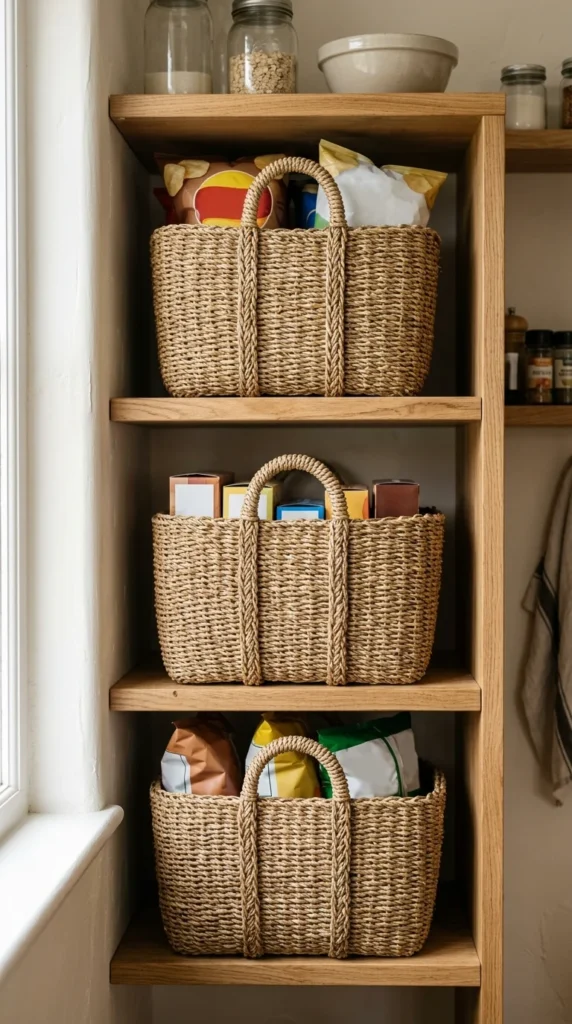
Not everything in your pantry is “pretty” enough to be on display. For bulky items like bags of snacks, extra paper towels, or multipacks of juice boxes, woven baskets are your best friend. Natural materials like seagrass, water hyacinth, or wicker add warmth and texture to the space, breaking up the coldness of white shelves. These baskets act as “drawers” for your shelves; instead of digging through the back, you simply pull the basket out to find what you need.
3. Lazy Susans
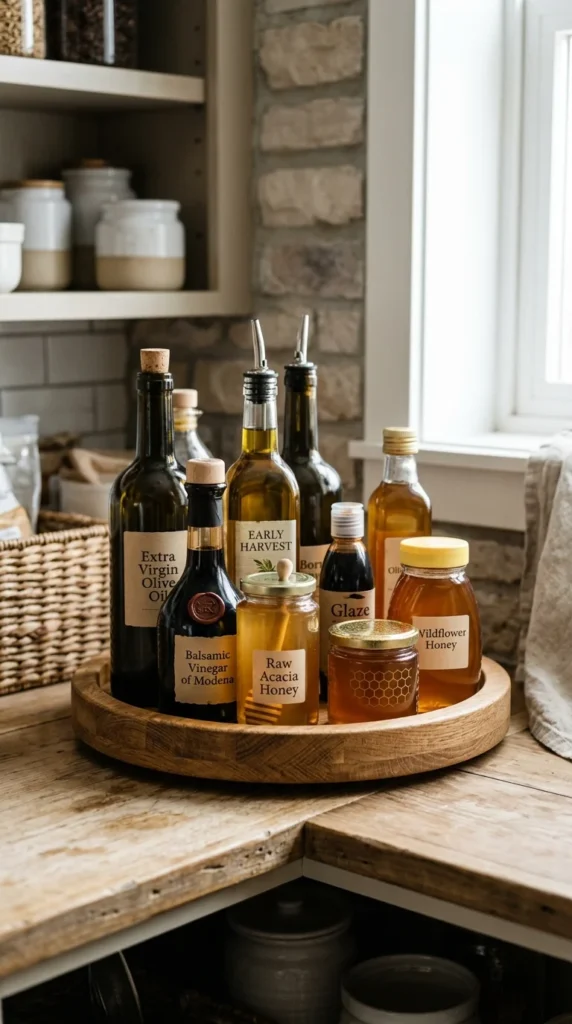
Corners are where pantry items go to die. A Lazy Susan—or turntable—is the perfect solution for maximizing corner space and ensuring that nothing gets lost in the “dark zone.” These are particularly effective for oils, vinegars, and condiments. With a quick flick of the wrist, the bottle of hot sauce that was hidden in the back is now front and center. Look for non-slip surfaces or lipped edges to prevent taller bottles from tipping over during a spin.
4. Tiered Shelves
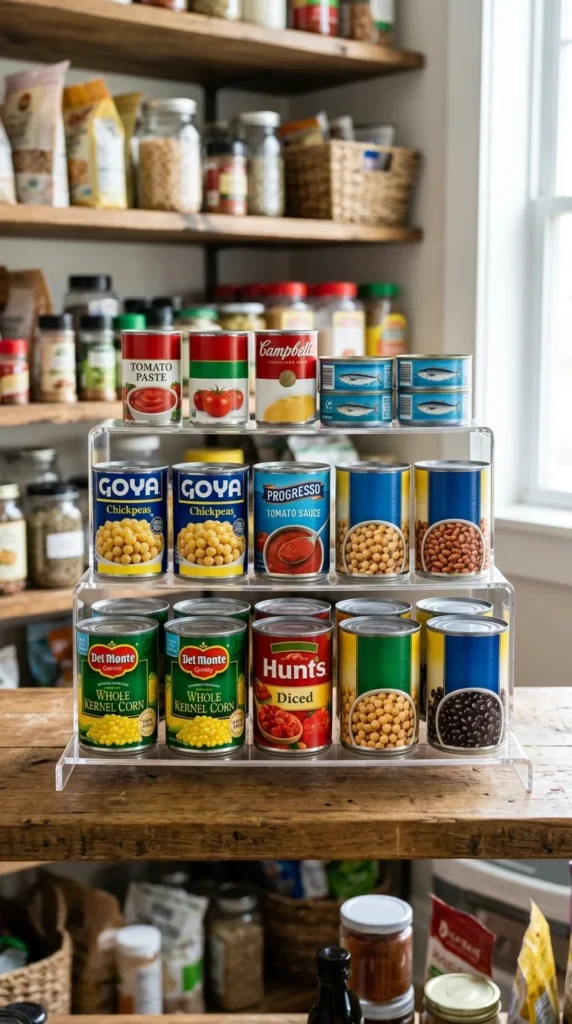
Standard shelving makes it nearly impossible to see the cans in the back without moving everything in the front. Tiered risers—often called “stadium seating” for your pantry—lift the back rows so every label is visible at a glance. This simple addition prevents “mystery cans” from sitting at the back for years. It’s also an excellent way to organize smaller jars like artichoke hearts, olives, or baby food.
5. Over-the-Door Racks
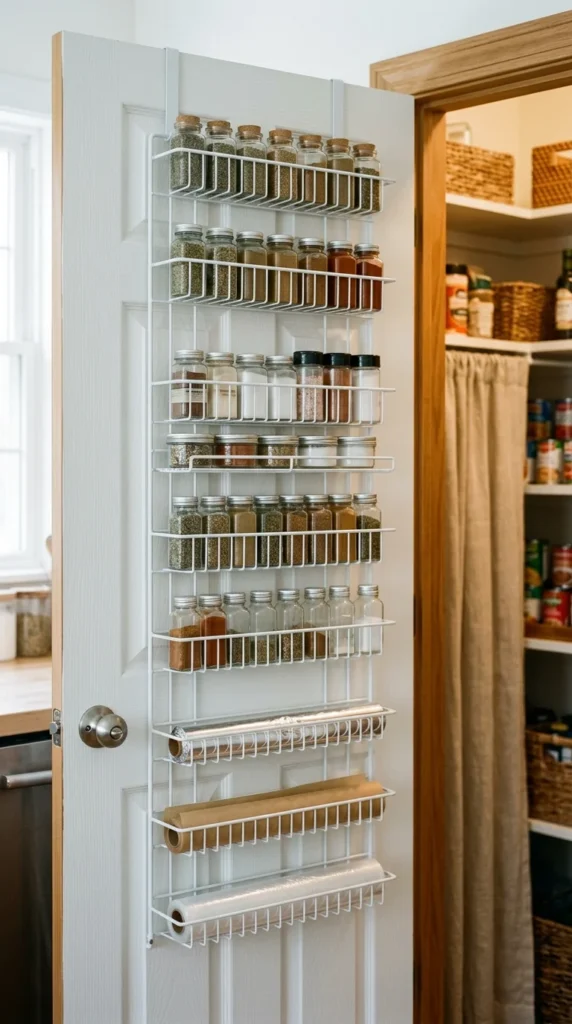
If you have a small pantry, you must utilize every square inch of vertical space. The back of the door is often overlooked real estate. Installing a heavy-duty over-the-door rack creates an entire extra “wall” of storage. This is the ideal spot for items you use frequently but that are small enough to get lost on deep shelves, such as spices, sprinkles, or cling wrap.
6. Pull-out Drawers
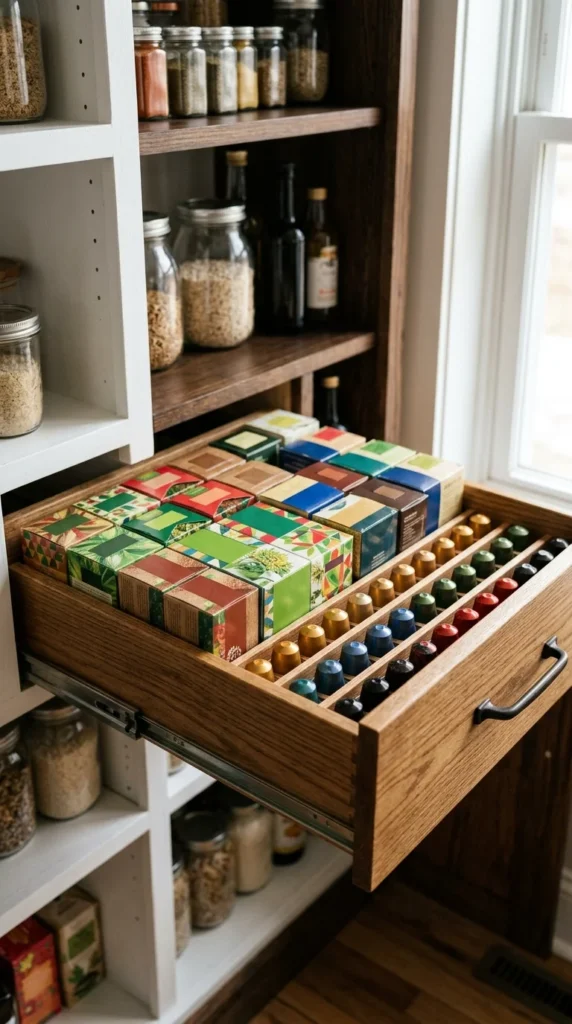
Converting static shelves into pull-out drawers can be a game-changer for ergonomics. Rather than kneeling on the floor to see what’s on the bottom shelf, you simply slide the drawer out to reveal the contents from an aerial view. This is particularly useful for heavy items like small appliances, bags of potatoes, or large jugs of vinegar. It brings the back of the pantry to you, ensuring total accessibility.
7. Uniform Labels
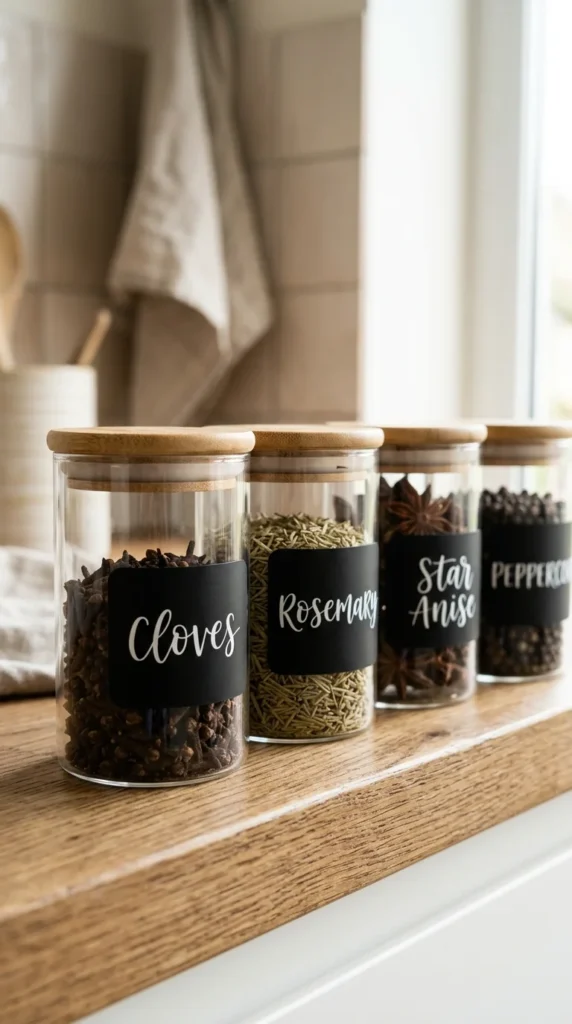
Even the most organized pantry can fall apart if your household members don’t know where things go. Labels are the “operating manual” for your pantry. For a cohesive look, choose a consistent style—whether it’s minimalist black-and-white stickers, hand-written chalkboard tags, or embossed plastic labels. Beyond just naming the item, consider adding “best by” dates on the bottom or back of the jar using a chalk marker to maintain food safety.
8. Color-Coding
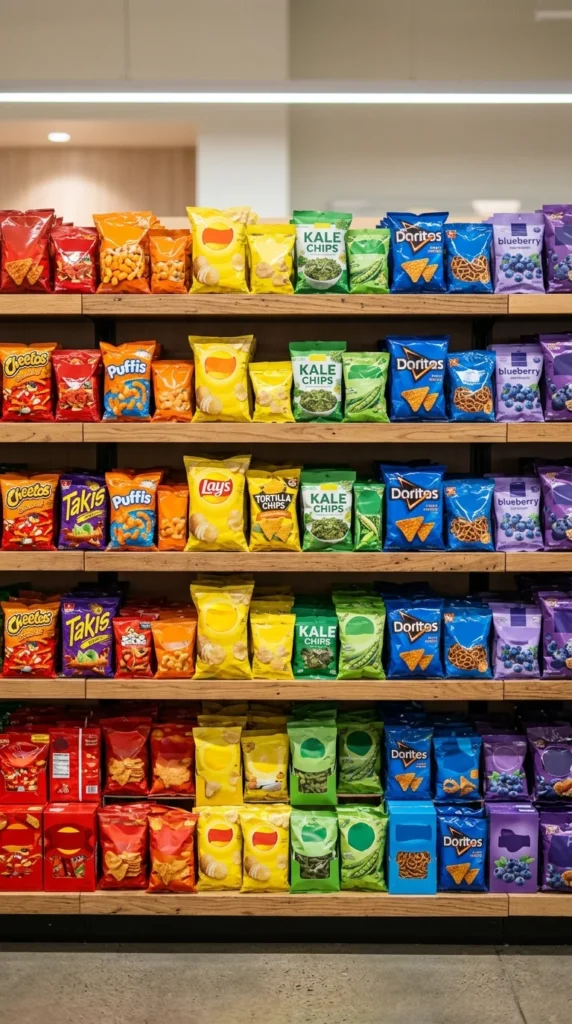
For those with children, color-coding is a visual strategy that makes organization fun. Grouping snacks, juice boxes, or fruit pouches by the color of their packaging creates an incredibly satisfying “rainbow” effect. Not only does this look stunning for photos, but it also makes it very easy for kids to identify where their favorite snacks live and where they should be put back after a grocery trip.
9. Under-Shelf Baskets
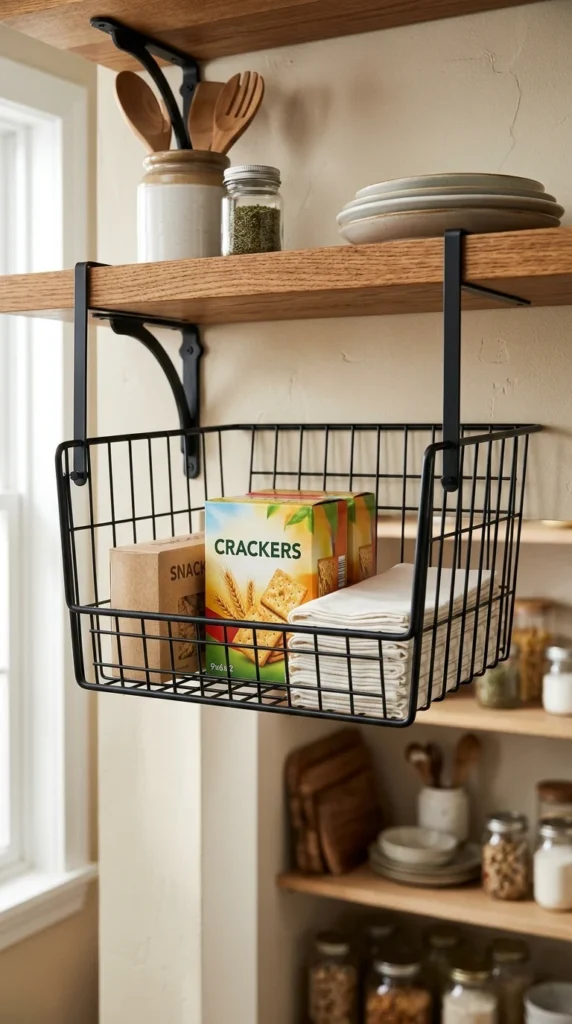
There is often several inches of “dead air” between the top of your items and the bottom of the shelf above them. Under-shelf baskets slide onto your existing shelving and create a hanging cubby. These are perfect for light, flat items that don’t stack well, such as napkins, bread loaves, or silicone lids. It’s an easy, non-permanent way to add an extra layer of storage without any drilling.
10. Clear Acrylic Bins
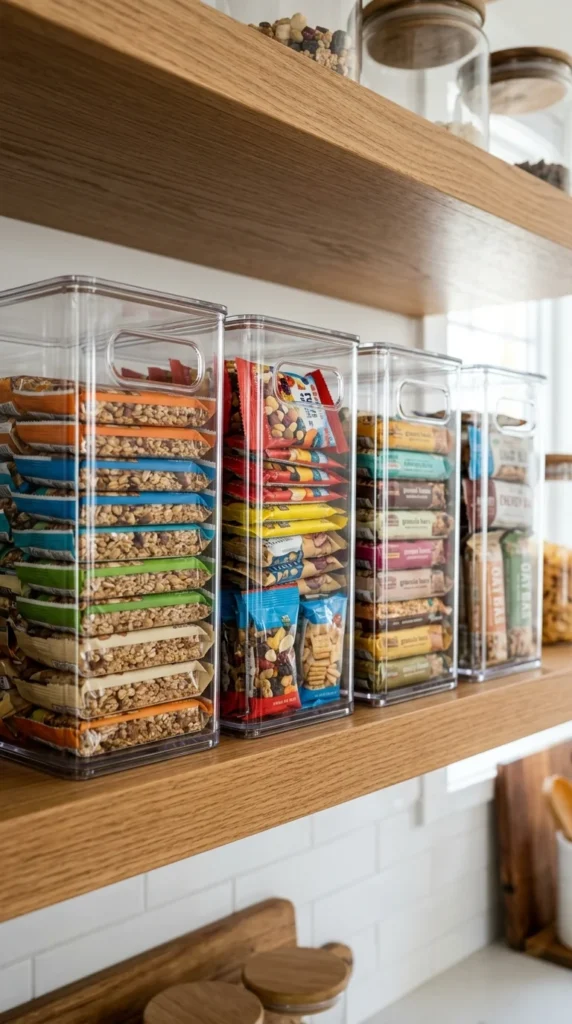
While woven baskets are great for hiding clutter, clear acrylic bins are the gold standard for items you need to see. They provide a “fridge-like” aesthetic that feels clean and modern. Use them to “corral” items by category: a “Breakfast” bin for oatmeal packets, a “Baking” bin for sprinkles and cupcake liners, or a “Kid-Friendly” bin at eye level for easy grabbing. The transparency keeps the pantry feeling airy and bright.
11. Floor Baskets
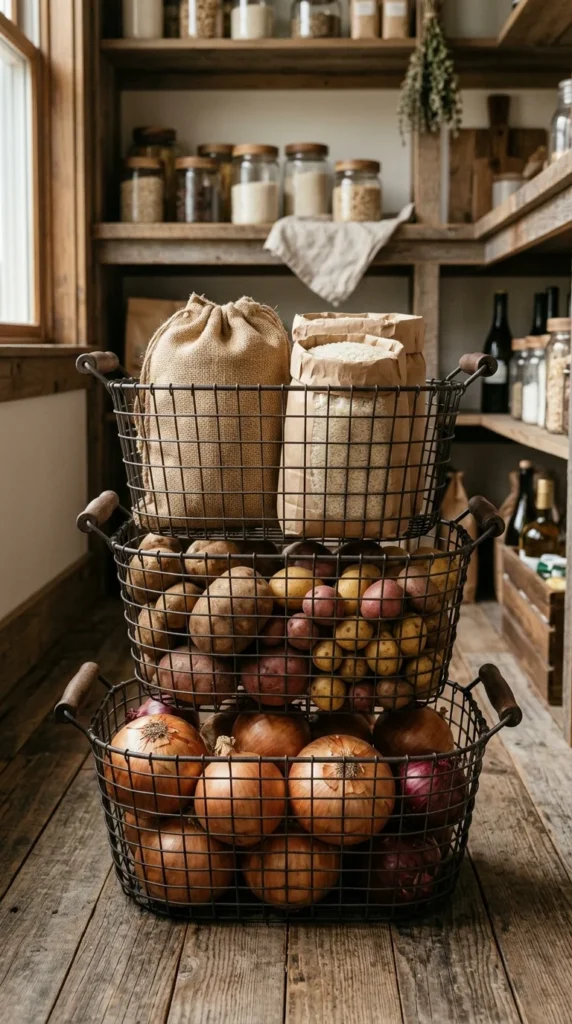
The floor of the pantry is frequently a catch-all for random items. By placing large, heavy-duty baskets on the floor, you create a designated spot for bulk items. Sturdy wire or oversized wicker baskets are perfect for produce that doesn’t need refrigeration, like onions and potatoes, as they allow for air circulation. This keeps the floor clear and makes cleaning the pantry much easier.
12. Spice Racks
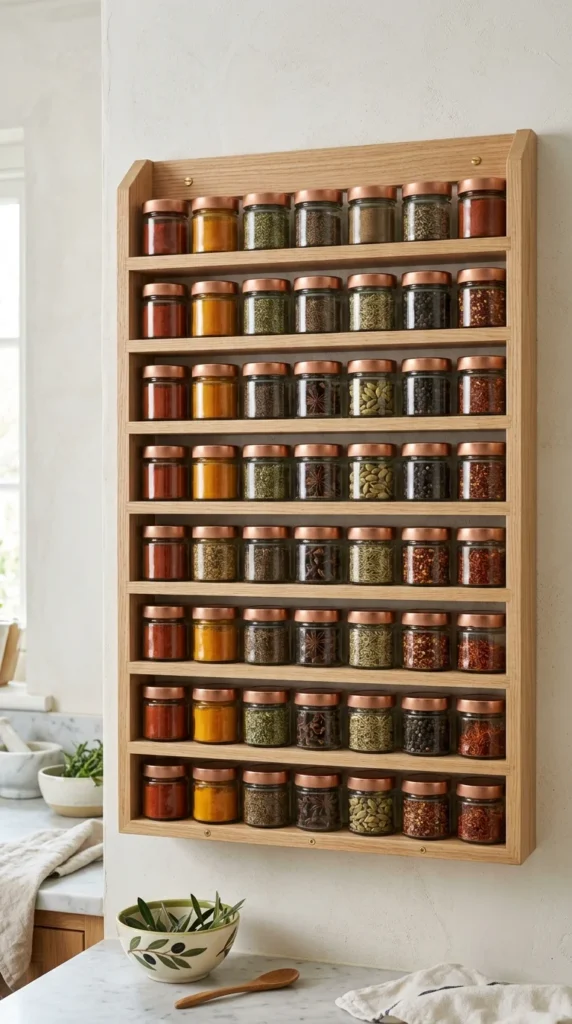
Spices are notorious for creating clutter. If they are tossed into a bin, you spend half your cooking time digging for the cumin. A dedicated spice rack—whether mounted on the wall, placed on a tiered riser, or tucked into a slim pull-out—ensures that every flavor profile is accessible. Organizing them alphabetically or by cuisine type (e.g., Italian, Mexican, Baking) can further streamline your cooking process.
13. Integrated Lighting
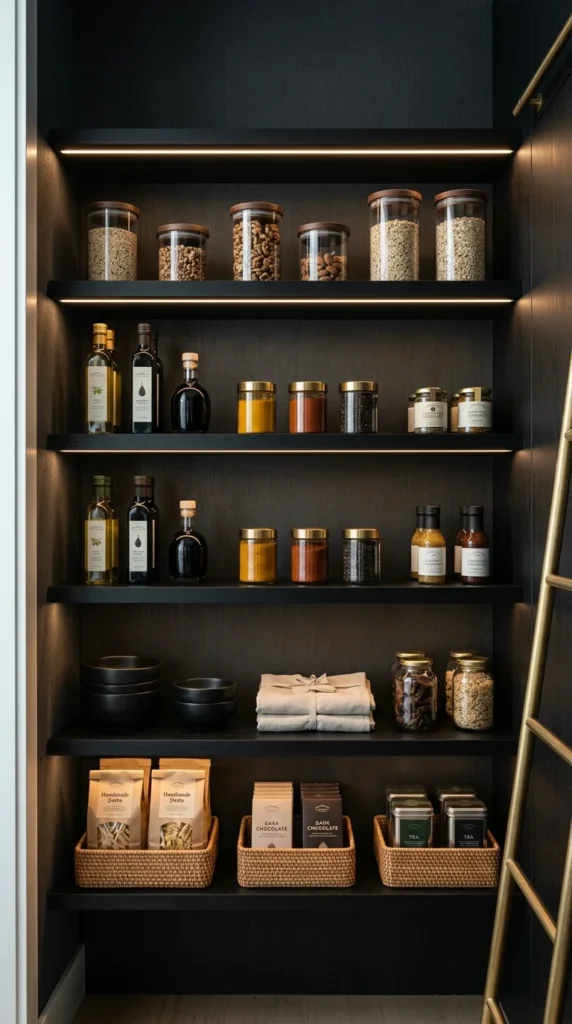
The difference between a “utility closet” and a “luxury pantry” is often just the lighting. Most pantries suffer from a single, weak overhead bulb that casts shadows. Adding battery-operated LED motion-sensor strips under each shelf can transform the space. As soon as you open the door, the pantry glows, making it easy to find what you need even in the middle of the night. It highlights your hard work and makes the organized jars and baskets pop.