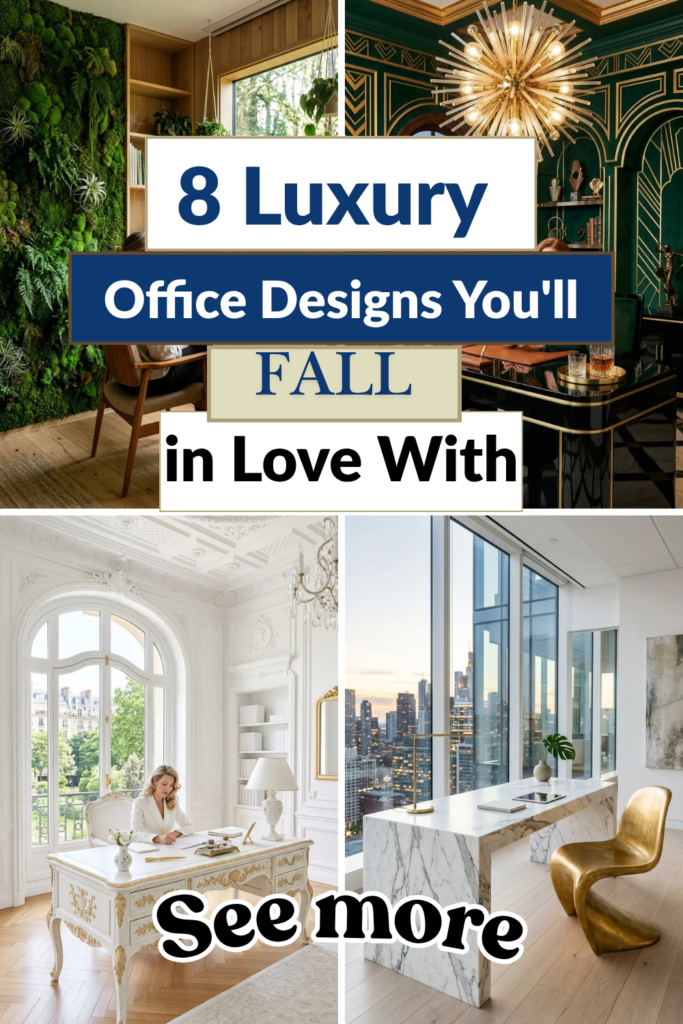

The modern professional landscape has undergone a seismic shift, transforming the home office from a mere afterthought into the crown jewel of the luxury residence. No longer is a desk tucked into a quiet corner sufficient; today’s elite workspaces are masterpieces of architectural design, blending cutting-edge technology with the finest materials known to man. A luxury home office is more than just a place to conduct business; it is a sanctuary for focus, a theater for high-stakes digital meetings, and a personal gallery that reflects the inhabitant’s taste and achievements.
Whether you are a creative visionary, a corporate titan, or a tech innovator, your environment dictates your output. When you surround yourself with velvet textures, rare hardwoods, and panoramic vistas, the act of “working” becomes an elevated experience. Below, we explore eight breathtaking luxury home office designs that redefine the meaning of executive elegance.
1. The Library
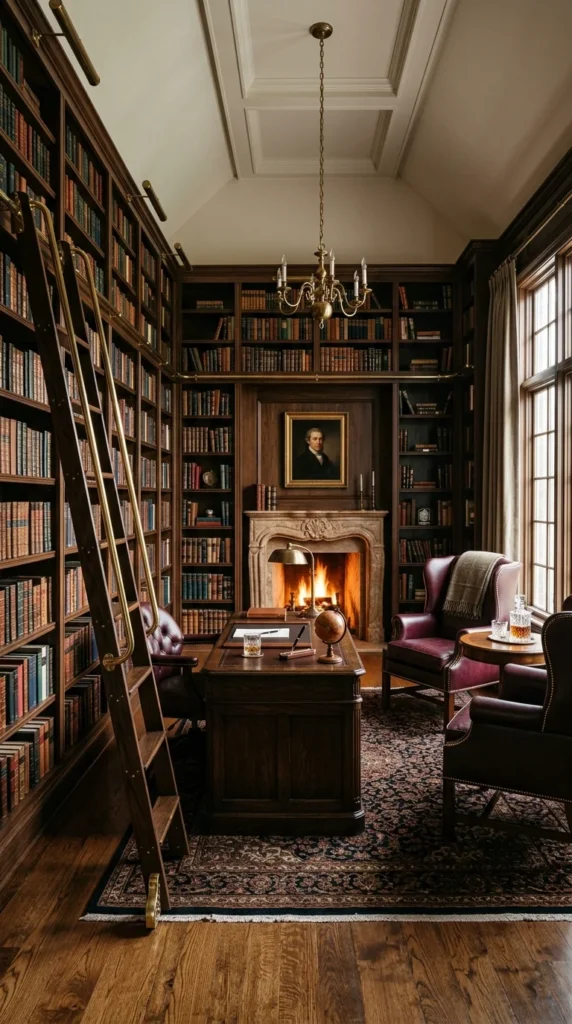
For those who find inspiration in history and the tactile feel of parchment, the traditional executive library remains the gold standard of luxury. This design focuses on “weight” and “permanence.” The walls are typically clad in rich, dark wood—think mahogany, walnut, or cherry—which provides an immediate sense of gravity and quiet.
Central to this design is the floor-to-ceiling shelving, often accessed by a custom rolling ladder. This isn’t just for storage; it’s a display of intellectual heritage. Lighting plays a crucial role here, moving away from harsh overhead fixtures toward warm, layered illumination. A brass banker’s lamp sits on a leather-topped desk, while recessed LED strips highlight the spines of rare books. This is an office designed for deep thought, long-form writing, and the sipping of fine Scotch during a late-night strategy session.
2. Minimalist Marble
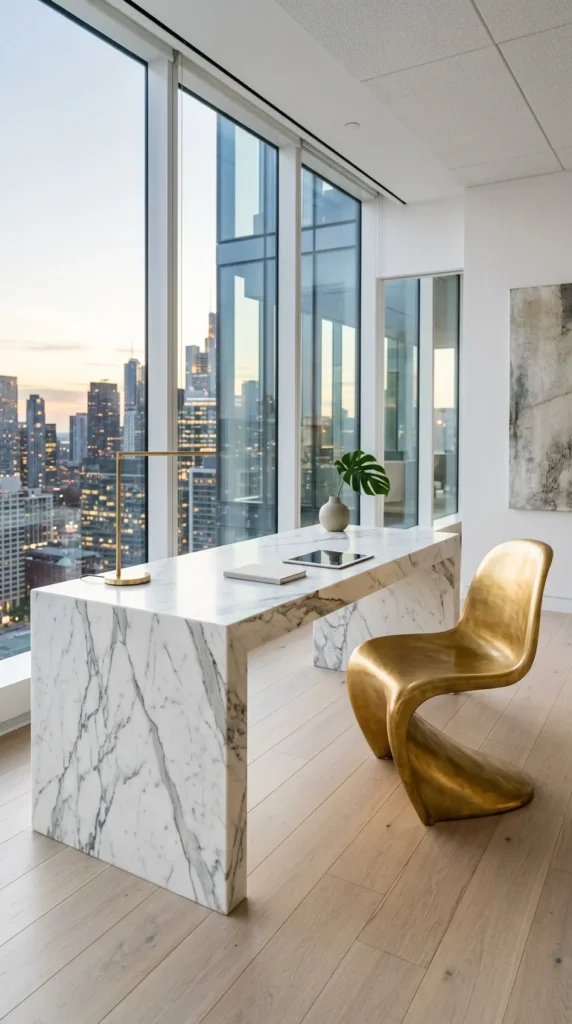
Minimalism in a luxury context isn’t about having less; it’s about having only the best. The Minimalist Marble design is centered on the concept of “visual silence.” By removing clutter and focusing on high-contrast, premium materials, the mind is allowed to focus entirely on the task at hand.
The centerpiece of such a room is almost always a custom-fabricated stone desk. A single slab of Calacatta or Carrara marble creates an imposing yet serene workstation. To keep the space from feeling cold, designers often incorporate “soft minimalism” through the use of sheer linen drapes that diffuse natural light and architectural lighting that highlights the textures of the stone. Hidden cable management is paramount here—not a single wire should be visible, maintaining the illusion of a digital-free, zen-like environment.
3. Panoramic Views
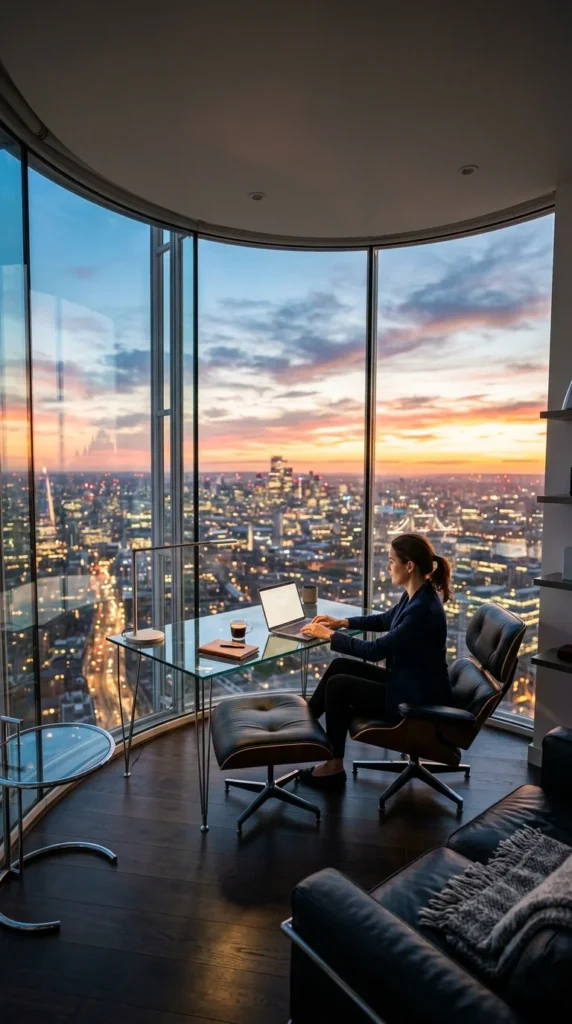
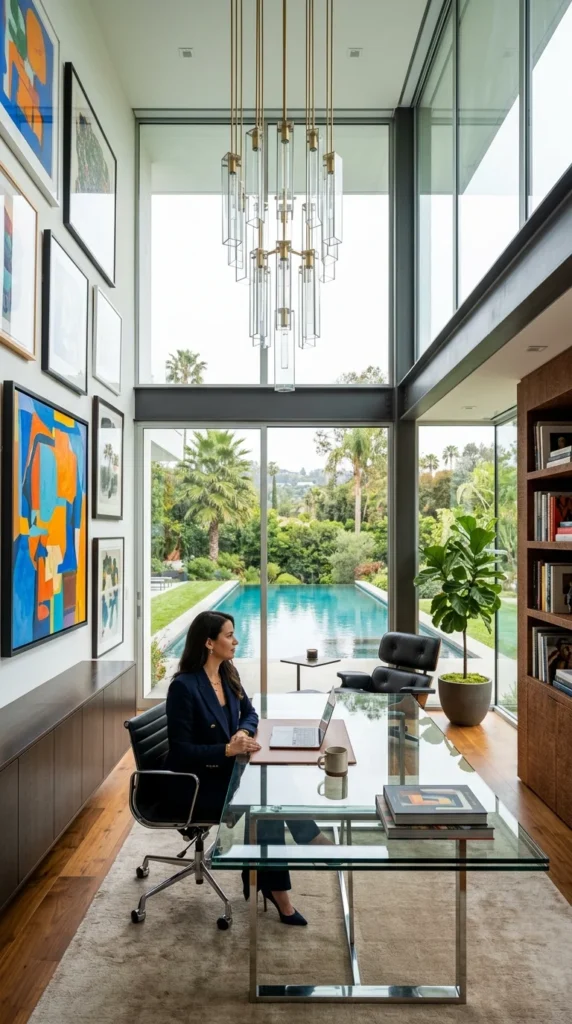
If you have a home with a view, the office should be designed to frame it. The Panoramic Suite turns the world outside into a living mural. In these designs, the furniture is often kept low-profile and sleek to ensure nothing obstructs the horizon.
Architects often use “invisible” glass corners and cantilevered desks that seem to float over the landscape. Whether your view is of the Manhattan skyline, the rolling hills of Tuscany, or the crashing waves of Malibu, the office is oriented to maximize this connection to the outside world. This design is particularly effective for high-energy roles, as the constant influx of natural light and the vastness of the view can prevent the feeling of being “chained to a desk.”
4. Art Deco
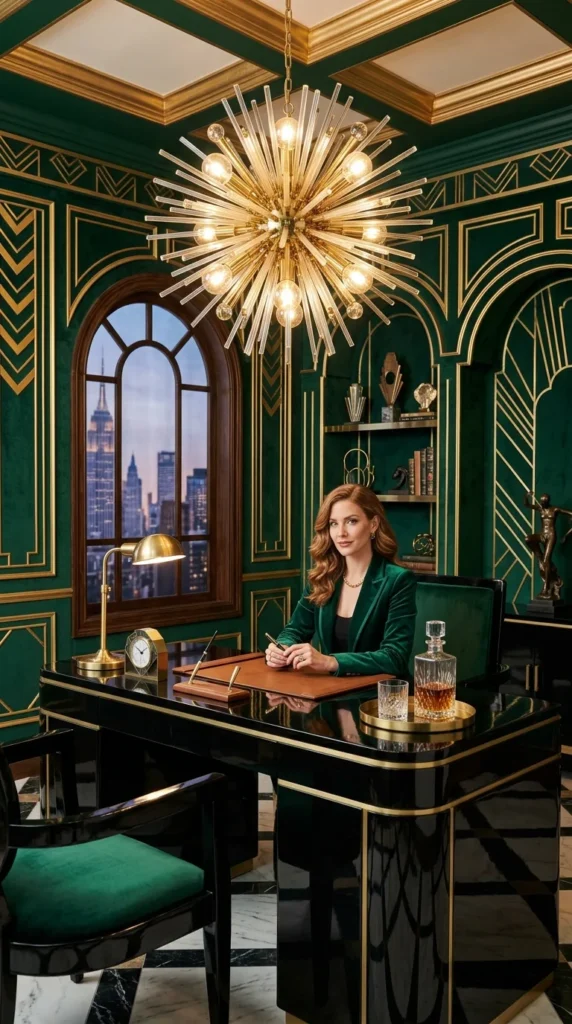
For the professional who enjoys a touch of drama and old-world Hollywood glamour, the Art Deco office is the ultimate choice. This style is characterized by bold geometric shapes, rich colors, and lavish metallic accents. It is a design that celebrates success and exudes confidence.
In an Art Deco suite, you might find a desk made of Macassar ebony with inlaid brass details. The color palette often leans toward the jewel-toned: sapphire blues, emerald greens, or deep burnt oranges. Textures are layered—velvet upholstery, silk rugs, and polished stone floors. The lighting is never just functional; it is sculptural. A tiered glass chandelier or a pair of symmetrical sconces provides the “jewelry” for the room, making every video call look like a scene from a cinematic masterpiece.
5. Industrial Loft
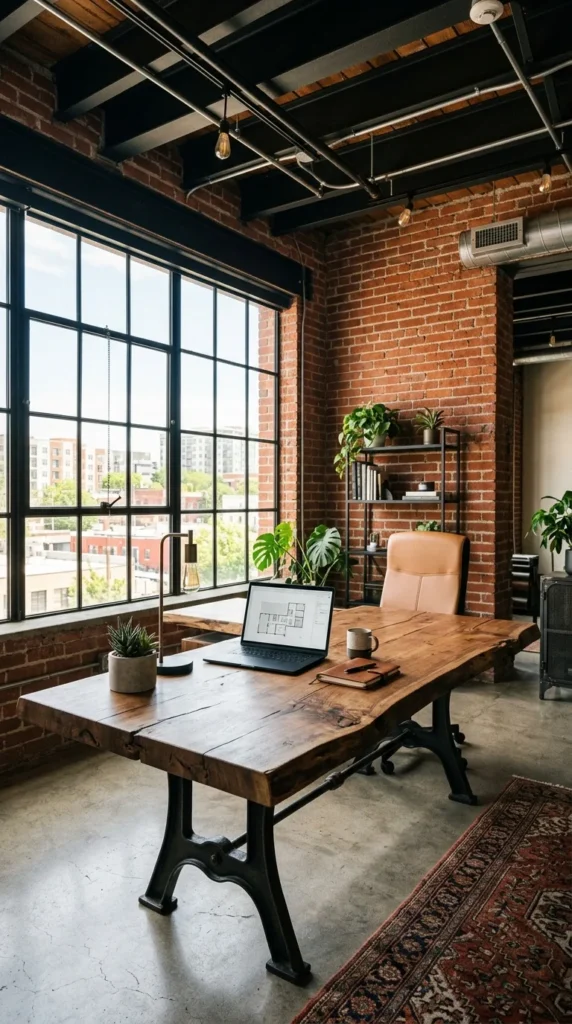
The luxury industrial design takes the raw, gritty elements of urban lofts and polishes them to a high-end finish. It is a favorite among tech founders and creative directors who want a space that feels grounded, authentic, and “lived-in” yet distinctly expensive.
The key to this look is the contrast between the rough and the refined. You might have a desk made of reclaimed timber from a 19th-century warehouse, paired with the most ergonomic, high-tech carbon fiber task chair on the market. Exposed brickwork provides a textured backdrop, while custom steel-framed glass doors provide acoustic privacy without closing off the space. Art in an industrial office is usually large-scale and contemporary, often leaning toward abstract expressionism to match the raw energy of the architecture.
6. Biophilic Retreat
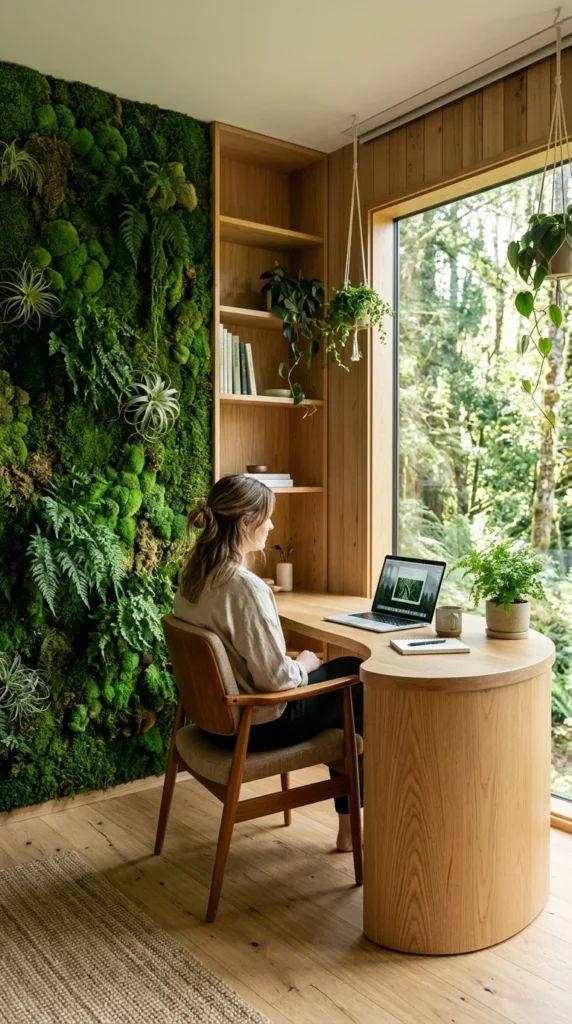
Biophilic design—the practice of connecting human spaces to the natural world—has become a cornerstone of luxury wellness. A biophilic home office is designed to reduce stress and boost cognitive function through the presence of greenery, natural materials, and organic shapes.
These offices often feature “living walls” (vertical gardens with built-in irrigation) that act as natural air purifiers. The furniture avoids sharp angles in favor of soft, flowing curves that mimic the shapes found in nature. Light-toned woods like white oak or ash are used to keep the space feeling airy and fresh. Water features, such as a small indoor waterfall or a minimalist stone basin, provide a soothing acoustic backdrop that masks the sounds of a busy household, creating a true sanctuary for productivity.
7. Neo-Classical
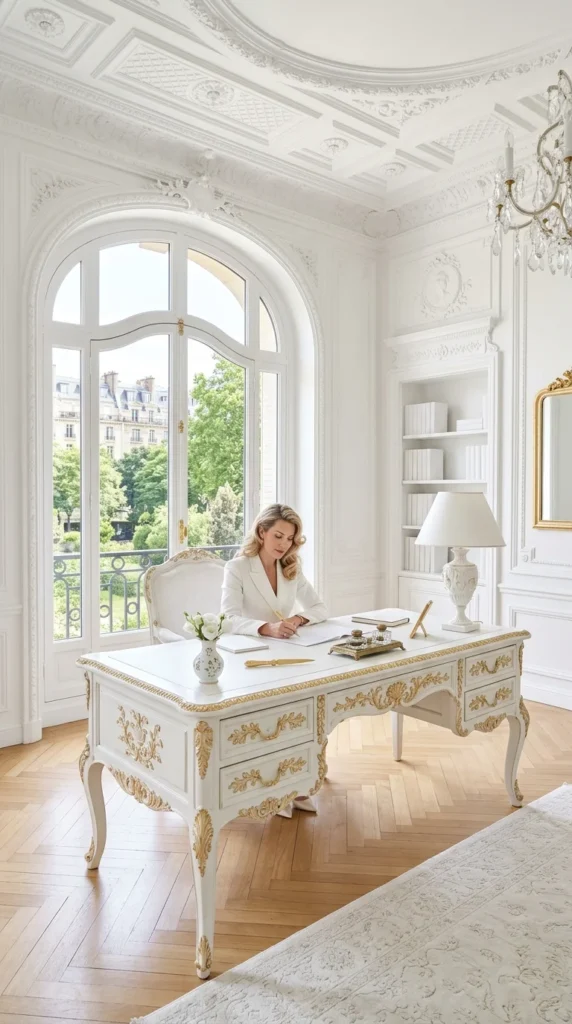
The Neo-Classical office is the height of European sophistication. It draws inspiration from the grand estates of France and Italy, utilizing symmetry, proportion, and ornate detailing to create a workspace that feels like a room in a palace.
The walls are typically decorated with intricate wainscoting and crown molding, painted in varying shades of cream, bone, or soft grey. A Louis XIV-style desk might serve as the centerpiece, updated with modern tech integration. This design style often incorporates mirrors to expand the sense of space and reflect the light from a central crystal chandelier. It is a formal, prestigious environment that commands respect, making it the perfect setting for high-level negotiations and private consultations.
8. Tech Command
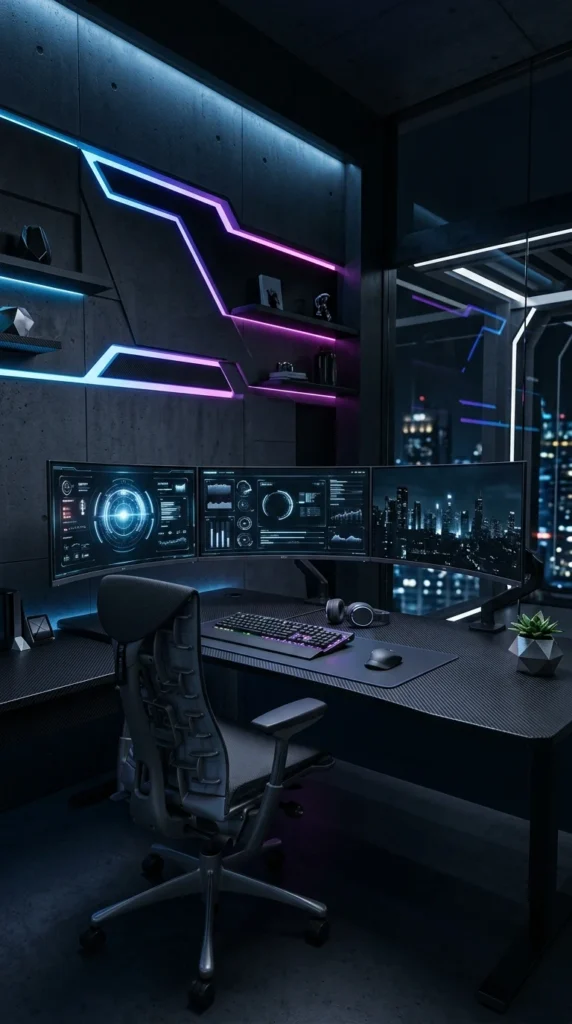
For the data-driven executive or the digital pioneer, the Tech Command Center is the office of the future. This design prioritizes function, speed, and ergonomic perfection, but wraps it in a sleek, “stealth” aesthetic that looks like it belongs on a luxury spacecraft.
The centerpiece is usually a high-performance workstation featuring multiple ultra-wide monitors and an integrated sound system. Lighting is highly customizable, with smart systems that can change color temperature based on the time of day to protect the user’s circadian rhythm. The materials are modern and durable: brushed aluminum, carbon fiber, and matte-finish synthetics. Every peripheral is housed in custom-milled drawers or hidden compartments, ensuring that while the power is immense, the aesthetic remains clean and clutter-free.
Designing a luxury home office is an investment in your most valuable asset: your ability to think, create, and lead. Whether you prefer the hushed tones of a wood-paneled library or the high-octane energy of a tech command center, the right environment will not only make you more productive—it will make the journey of your career infinitely more enjoyable. Which of these sanctuaries will you choose for your next big breakthrough?