

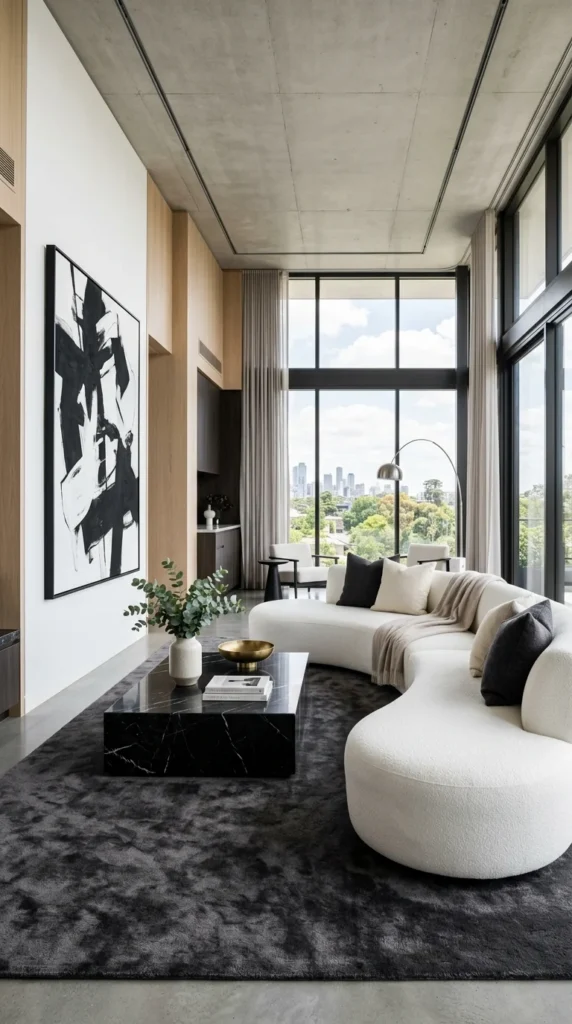
The allure of a monochromatic palette is timeless, yet as we look toward 2026, the classic black-and-white aesthetic is undergoing a radical transformation. No longer confined to the cold, clinical minimalism of the past decade, the new “Noir et Blanc” movement embraces depth, organic shapes, and tactile warmth. This isn’t just about high contrast; it’s about the sophisticated interplay of light, shadow, and texture.
As interior design shifts toward more intentional, sustainable, and emotionally resonant spaces, the black-and-white home provides a perfect canvas. It offers a sense of order in a chaotic world while allowing architectural details and unique furniture silhouettes to take center stage. From the “Soft Noir” bedroom to the “Kinetic Texture” kitchen, here are ten innovative ways to bring the black-and-white trend into your home for 2026.
1. Sculptural Minimalism
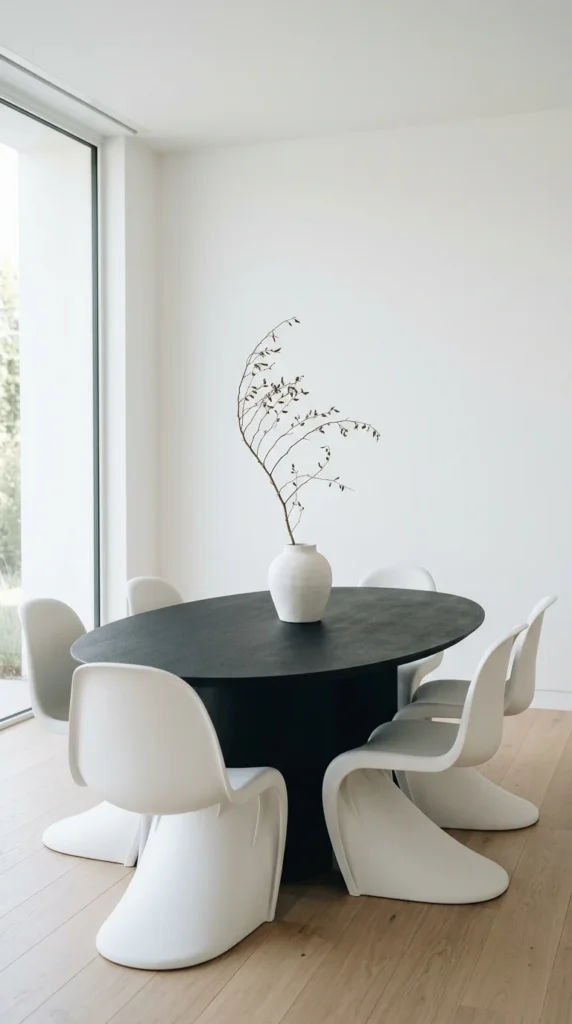
The year 2026 is all about the “object as art.” In a black-and-white interior, furniture shouldn’t just be functional; it should be sculptural. We are seeing a move away from sharp, rectangular edges toward fluid, biomorphic shapes. Think of a dining table as a piece of carved obsidian or chairs that mimic the curves of the human body.
When you strip away color, the silhouette of your furniture becomes its defining characteristic. By choosing pieces with dramatic outlines—like a chunky, arched white sofa or a black pedestal table—you create visual interest without needing a single drop of paint. This approach relies on “negative space,” where the white walls act as a gallery backdrop for your black statement pieces.
2. Kinetic Textures
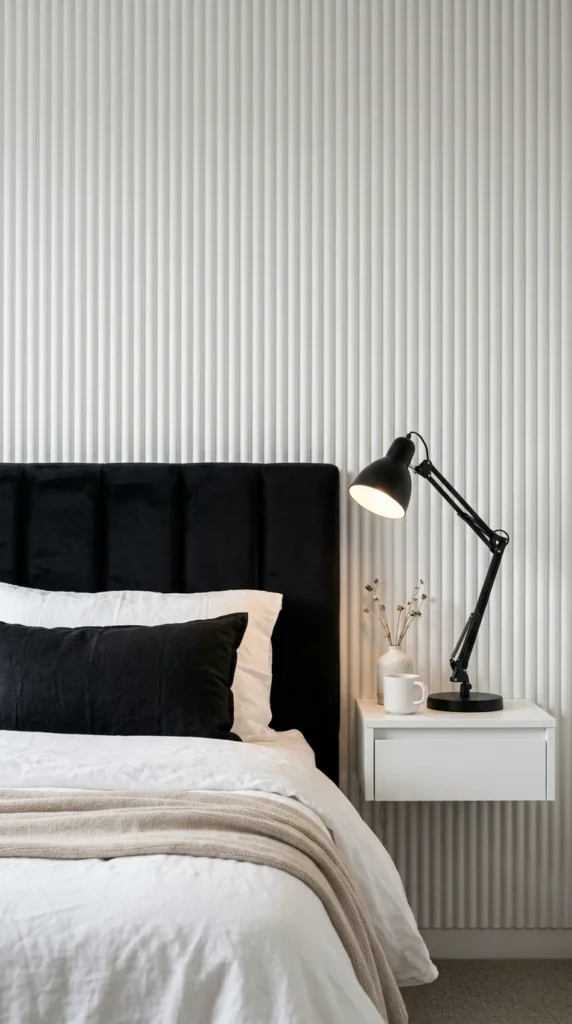
Flat surfaces are a thing of the past. In 2026, the most successful monochromatic rooms will prioritize “kinetic” or moving textures. This includes fluted wall panels, ribbed cabinetry, and lime-wash finishes that catch the light differently throughout the day.
When you use a limited color palette, texture is what prevents the room from feeling “flat.” A white wall shouldn’t just be white; it should be Venetian plaster with subtle movements or a 3D-printed acoustic panel. Similarly, black elements should range from matte, porous lava stone to high-gloss lacquer. The contrast between these tactile surfaces creates a rich, sensory experience that feels incredibly modern and expensive.
3. Oversized Checkerboard
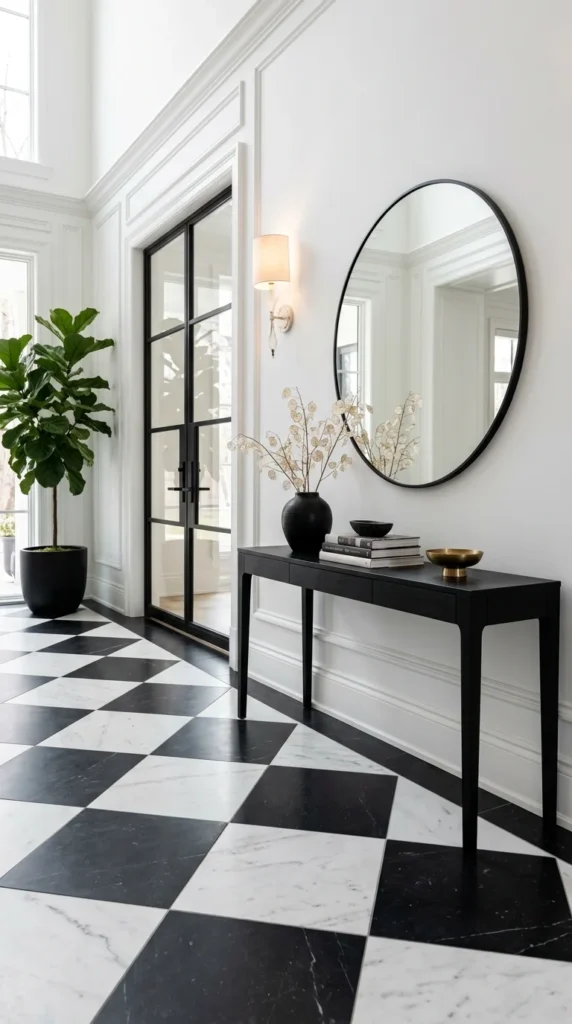
The checkerboard pattern has been trending for a few seasons, but for 2026, it is scaling up. We are moving away from the small, kitschy “Grandmillennial” checks and toward massive, architectural floor patterns. This “Big Check” energy grounds a room and provides a sense of historical grandeur reimagined for the modern age.
Using large-scale black and white marble or porcelain tiles in an entryway or kitchen creates an immediate focal point. To keep this look from feeling too traditional, ensure the finishes are matte rather than high-shine. Pair this bold flooring with ultra-minimalist furniture to let the pattern breathe. It’s a daring move that pays off by giving the home a structured, rhythmic foundation.
4. Biophilic Contrast
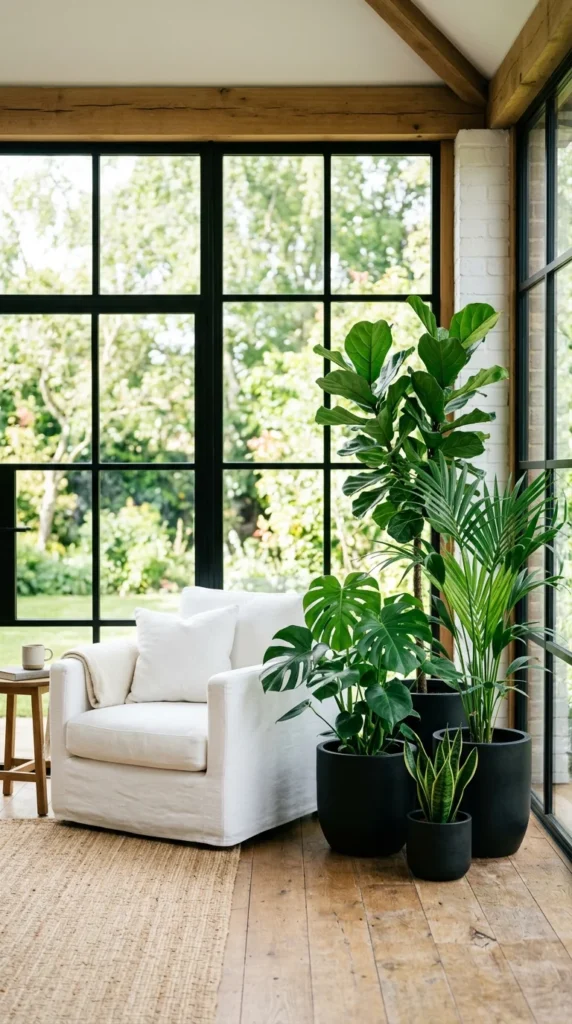
One of the biggest critiques of black-and-white interiors is that they can feel “lifeless.” The 2026 solution is the strategic integration of biophilic design. The deep greens of indoor trees—like the Fiddle Leaf Fig or the Black Olive tree—pop with incredible intensity against a high-contrast backdrop.
The secret here is to treat the plants as part of the architecture. Place a tall, architectural plant in a sleek black pot against a white corner, or use black-framed windows to “frame” the outdoor greenery like a living landscape painting. The organic lines of the plants soften the rigidness of the monochrome palette, creating a space that feels both sophisticated and vital.
5. Dark Kitchens
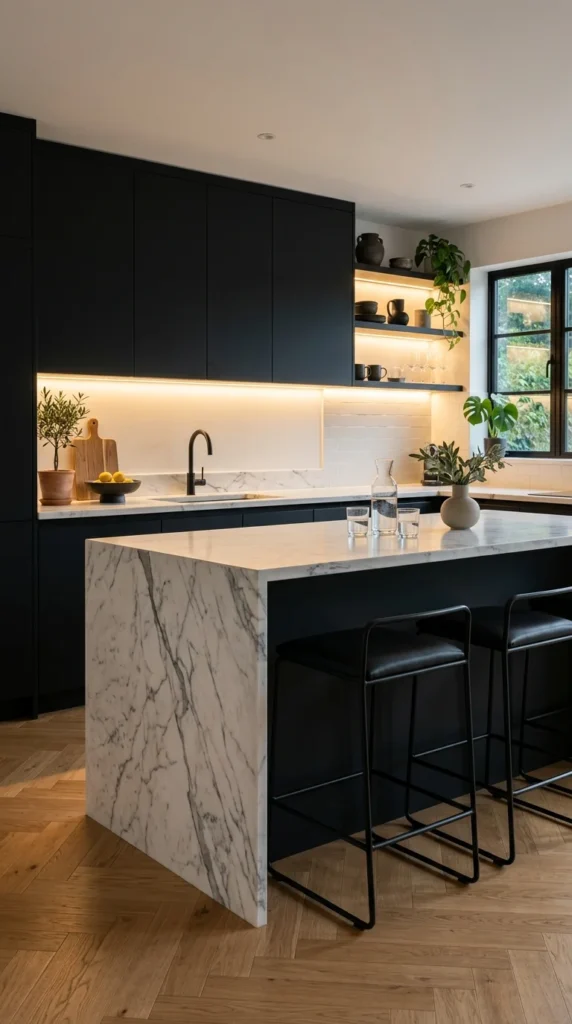
For years, the “all-white kitchen” was the gold standard. In 2026, we are seeing a complete inversion. The “Tuxedo Kitchen” or the “Fully Noir Kitchen” is becoming the ultimate choice for luxury homes. Matte black cabinetry creates a sense of depth and mystery, turning the kitchen into a moody, lounge-like space rather than a utilitarian work zone.
To make this work without making the room feel like a cave, use “Light Interruption.” This involves a stark white marble island with heavy black veining or a bright white ceiling with architectural black track lighting. The result is a high-drama environment that feels incredibly cozy at night and sharp during the day.
6. Architectural Accents
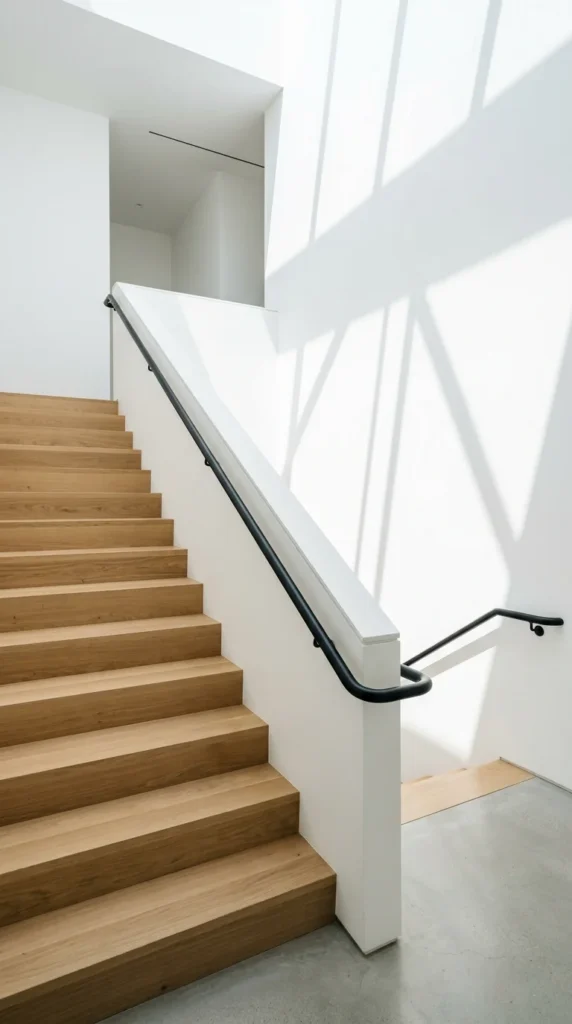
In 2026, black is being used like a pen to outline the “bones” of the home. This trend focuses on thin, precise black lines—handrails, window frames, baseboards, and door frames—against an otherwise all-white environment. It mimics the look of a technical drawing come to life.
This technique is particularly effective in homes with interesting architectural features. By painting a traditional crown molding matte black against a white ceiling, you modernize a classic detail instantly. It provides a “graphic” quality to the home, making every transition from room to room feel intentional and curated.
7. Soft Noir
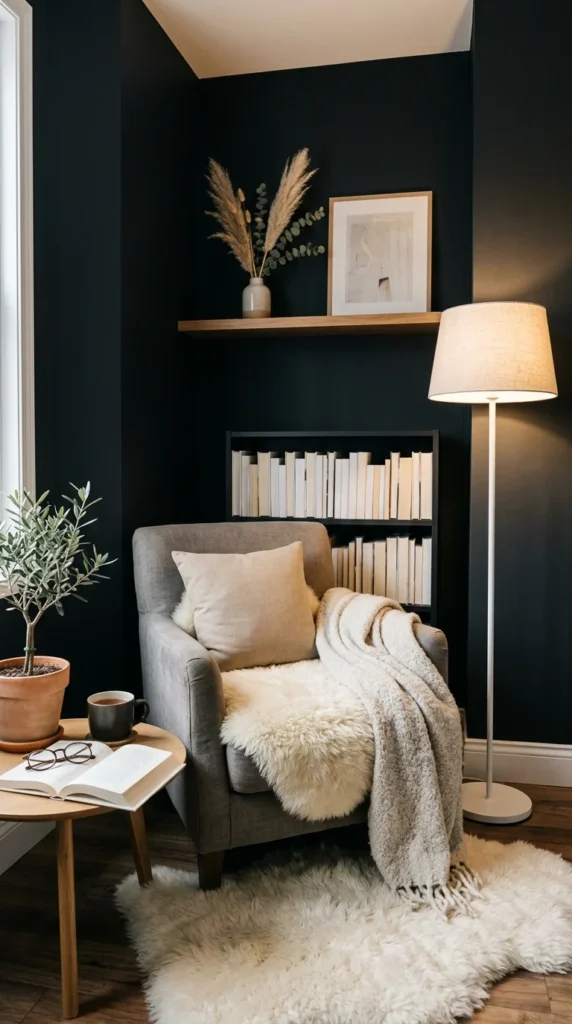
The “Soft Noir” trend is the response to the “Dark Academia” craze, but refined for 2026. Instead of using black as a harsh accent, it is used as the primary wall color to create a “cocooning” effect. The key is to use “off-blacks”—shades infused with a hint of blue, green, or brown—to add warmth.
To prevent the room from feeling oppressive, inject “pockets of light.” This could be a plush white sheepskin rug, a collection of white ceramic vessels, or a large-scale white linen sofa. Soft Noir is particularly popular in bedrooms and media rooms, where the goal is relaxation and focus. It’s a sophisticated way to embrace the dark side without losing the airy feel of a modern home.
8. Sustainable Textures
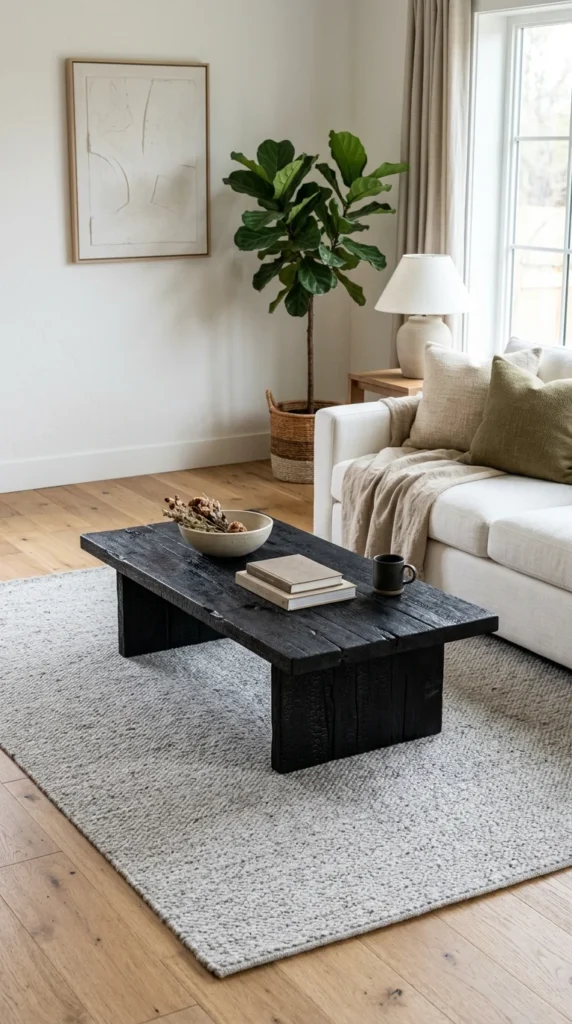
Sustainability is no longer a buzzword; it’s a requirement. In 2026, black-and-white interiors will lean heavily into natural, eco-friendly materials that carry their own unique monochromatic tones. Think of “Shou Sugi Ban” (charred Japanese cedar) for accent walls or furniture, and undyed wool, hemp, and linen for textiles.
These materials bring an “imperfection” to the black-and-white home that makes it feel lived-in and soulful. The blackened grain of the wood and the creamy, off-white flecks of raw wool provide a level of detail that synthetic materials simply cannot replicate. It’s a marriage of high-end aesthetics and environmental consciousness.
9. Layered Graphics
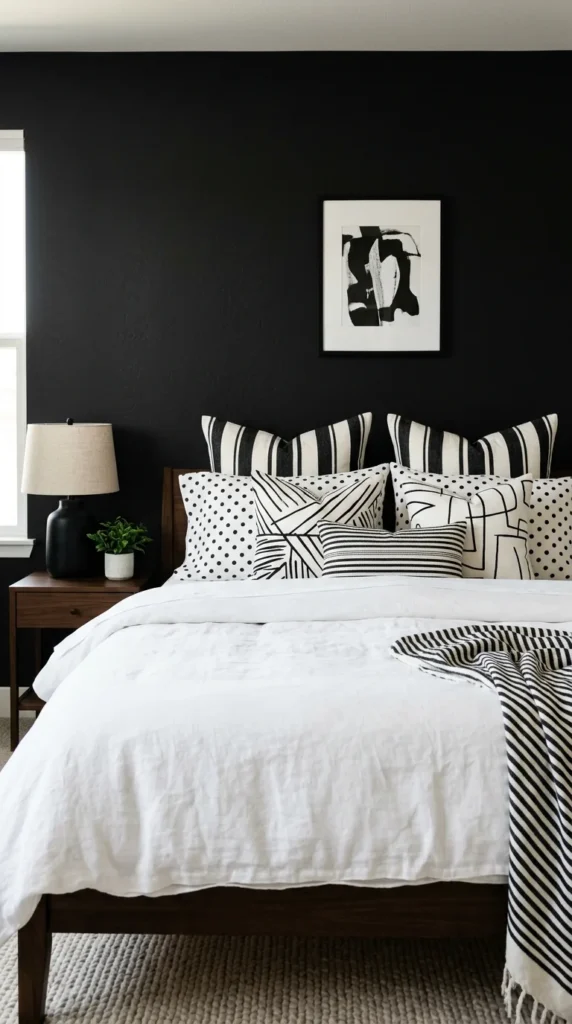
If the oversized checkerboard is the foundation, then layered graphics are the finishing touch. In 2026, we are seeing a move toward “clashing” black-and-white patterns. A pinstriped rug might be topped with a floral monochrome cushion, which sits next to a throw with a bold, geometric “Bauhaus” print.
The trick to making this look cohesive is to keep the color palette strictly to black, white, and a transitional gray. Because the colors are consistent, the varying patterns don’t compete for attention; instead, they create a rich, visual tapestry. This approach is perfect for those who find minimalism a bit too sparse and want to inject personality and playfulness into their home.
10. Artistic Foyer
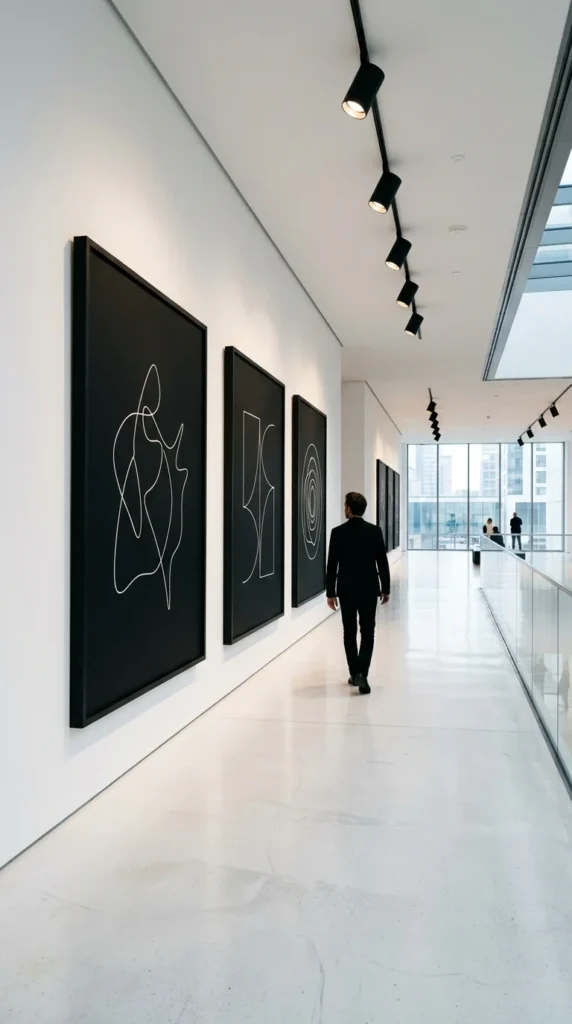
First impressions are everything, and in 2026, the entryway or foyer is being treated as a high-concept art gallery. This idea utilizes a “Gallery White” backdrop with massive, oversized black-and-white photography or minimalist line art.
To elevate this further, consider the lighting. Using black gallery-style spotlights to illuminate white walls creates a dramatic interplay of light and shadow. This setup immediately communicates a sense of sophistication and culture. It tells anyone entering the home that this is a space where design and art are prioritized above all else. By keeping the foyer monochromatic, you create a “palette cleanser” before guests move into the more colorful or textured parts of the home.