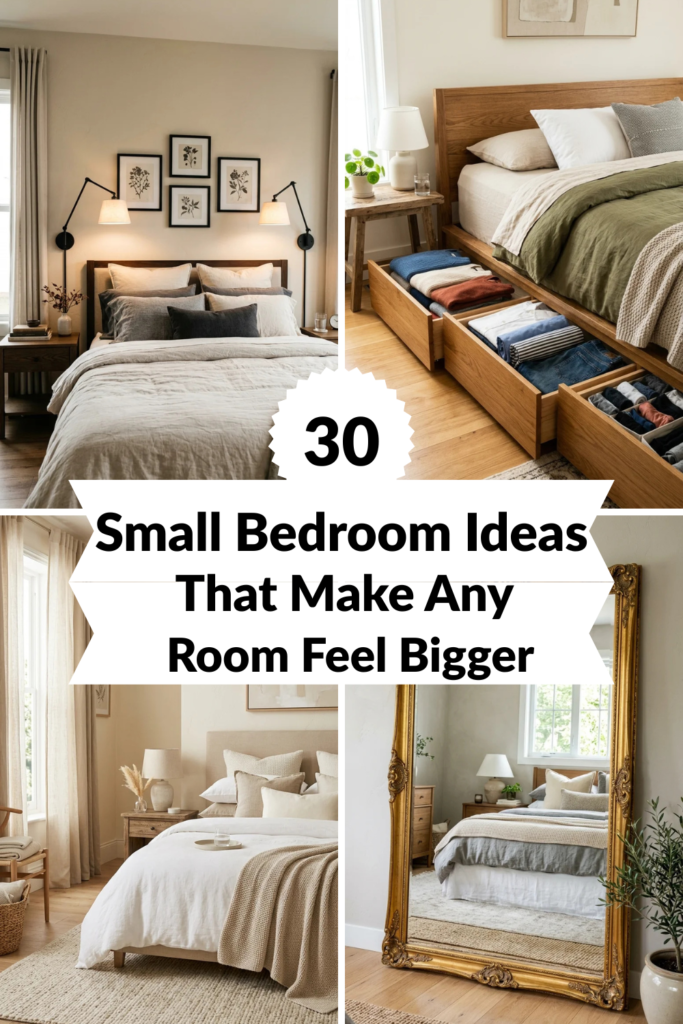

Living in a small bedroom doesn’t mean you have to sacrifice style or comfort. In fact, limited square footage often sparks the most creative design solutions. By playing with light, scale, and multi-functional furniture, you can transform a cramped sleeping quarters into a spacious sanctuary. Here are 30 expert-approved ideas to make your small bedroom feel twice its size.
1. Light Colors
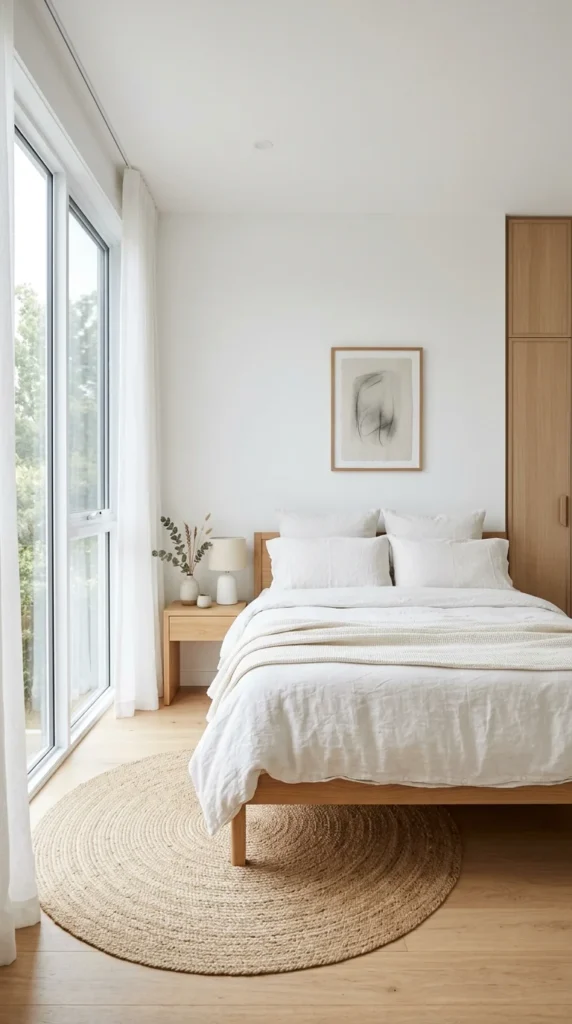
Light colors are the oldest trick in the book for a reason. Hues like white, cream, pale gray, and soft pastels reflect natural light rather than absorbing it. This creates an optical illusion of more space by blurring the boundaries between walls and ceilings. To keep it from feeling clinical, layer different textures like wool, linen, and wood.
2. Wall Mirrors
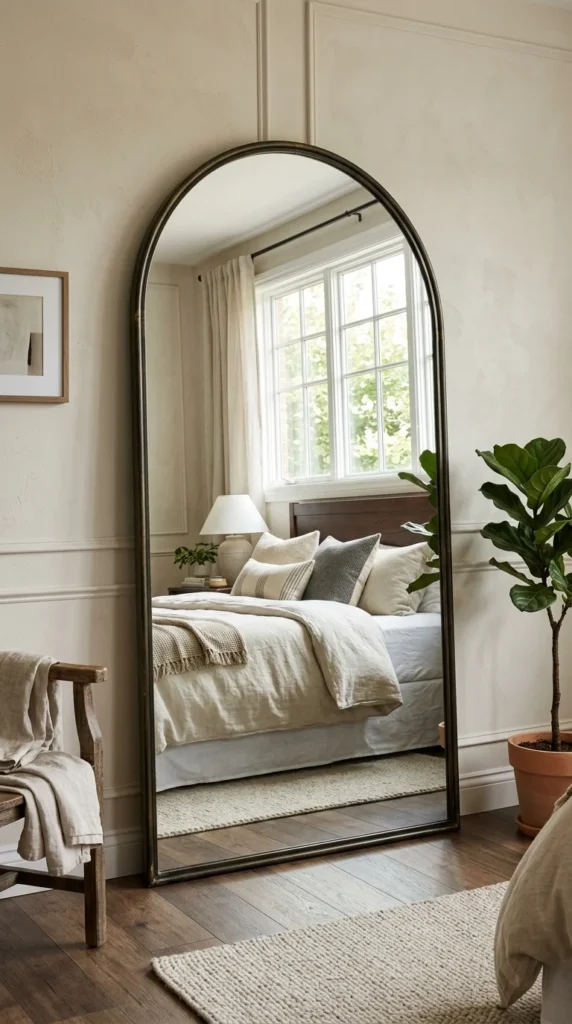
Mirrors are essential for small rooms. A large mirror reflects both light and the room itself, effectively doubling the visual space. Placing a mirror opposite a window is the most effective way to bounce natural light into the darker corners of the room.
3. Floating Shelves
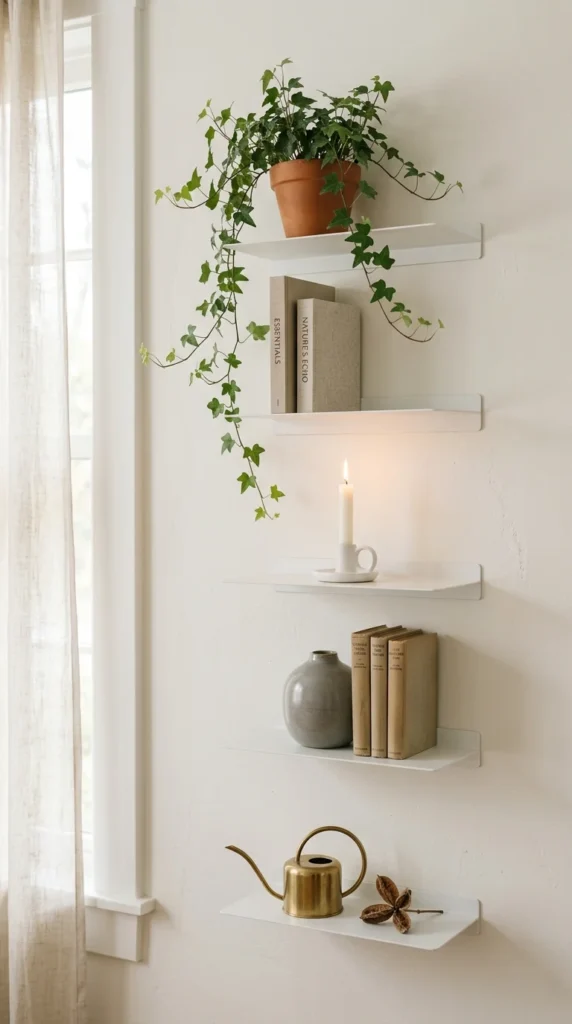
When floor space is at a premium, look to your walls. Floating shelves provide storage and display space without the “heavy” footprint of a traditional bookcase. By keeping the floor visible beneath the shelves, the room feels much more open and less cluttered.
4. Under-Bed Storage
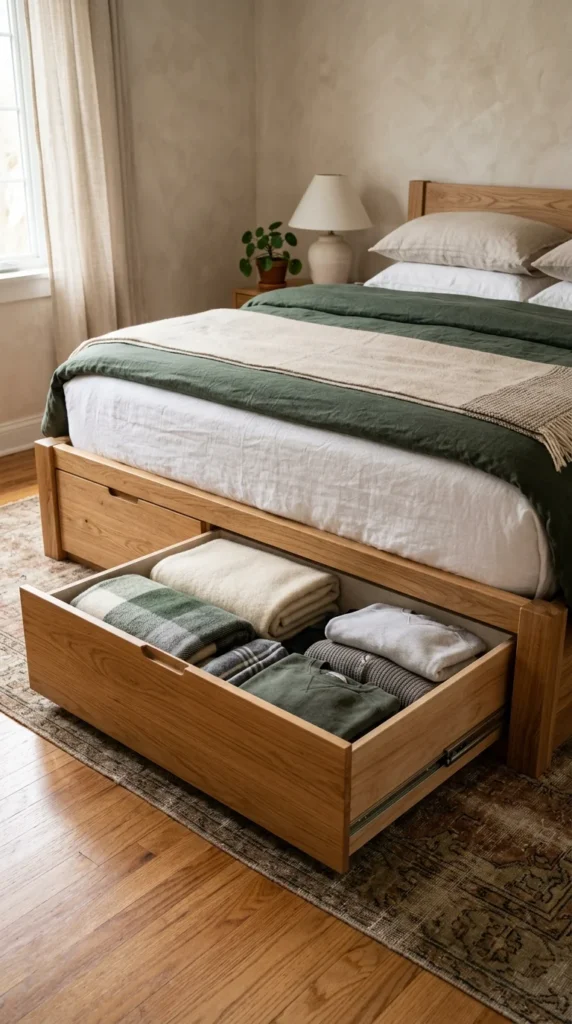
The area under your bed is prime real estate. Opt for a bed frame with built-in drawers or use low-profile decorative bins to store out-of-season clothes, extra linens, or shoes. This eliminates the need for an extra dresser, freeing up valuable floor area.
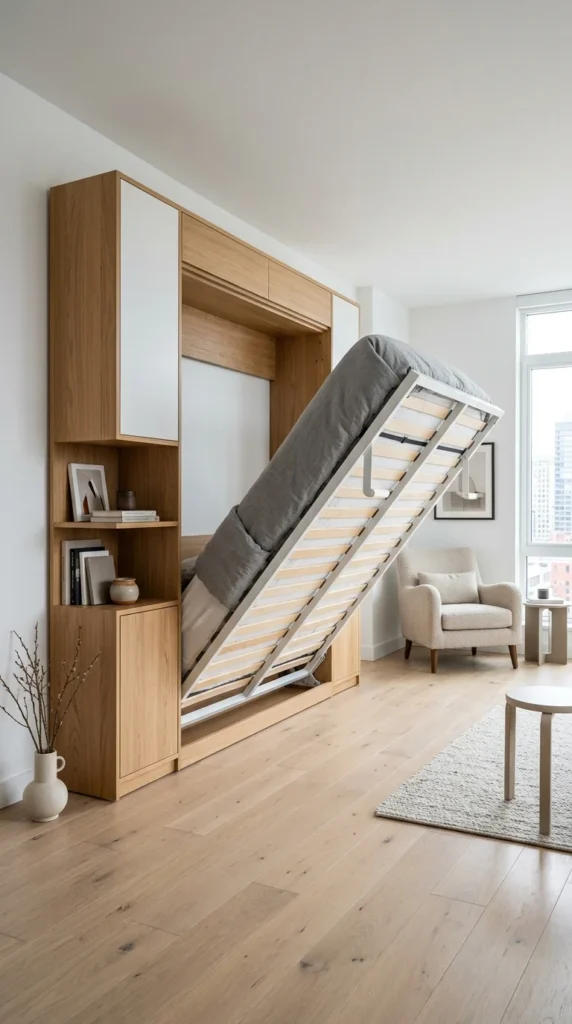
5. Murphy Beds
The area under your bed is prime real estate. Opt for a bed frame with built-in drawers or use low-profile decorative bins to store out-of-season clothes, extra linens, or shoes. This eliminates the need for an extra dresser, freeing up valuable floor area.
5. Murphy Beds
The ultimate space-saver, a Murphy bed (or wall bed), allows you to reclaim your entire bedroom during the day. Modern designs are seamless and can even include integrated desks or sofas that appear when the bed is tucked away.
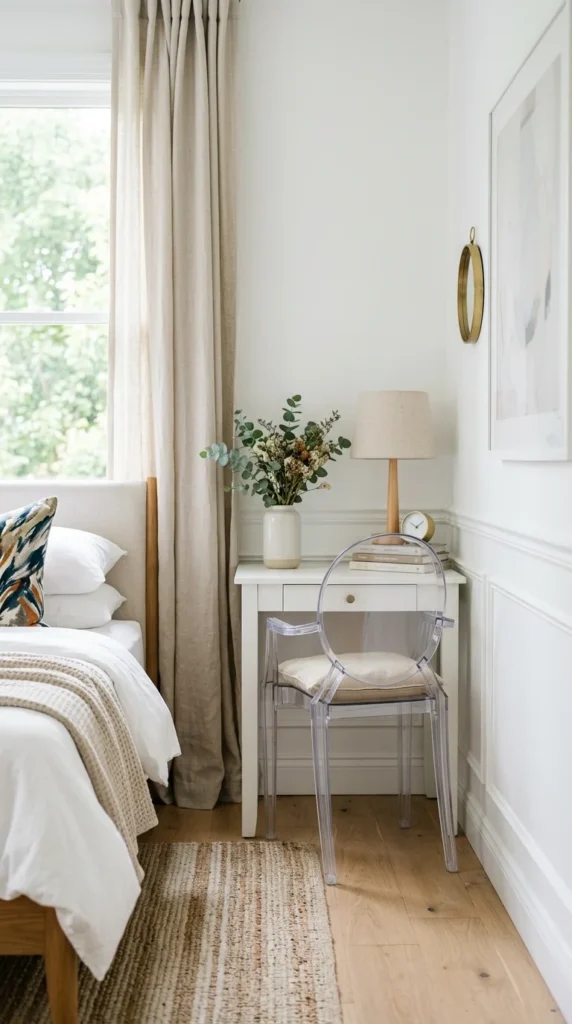
6. Transparent Furniture
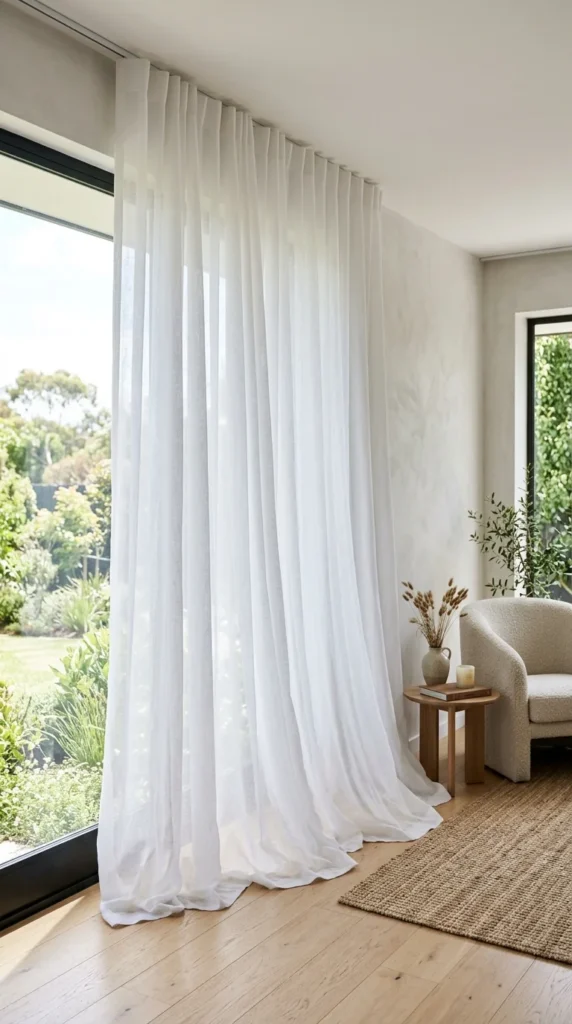
To make your ceilings feel higher, hang your curtain rods as close to the ceiling as possible rather than right above the window frame. Extending the fabric all the way to the floor draws the eye upward, creating a sense of verticality and grandeur.
8. Leggy Furniture
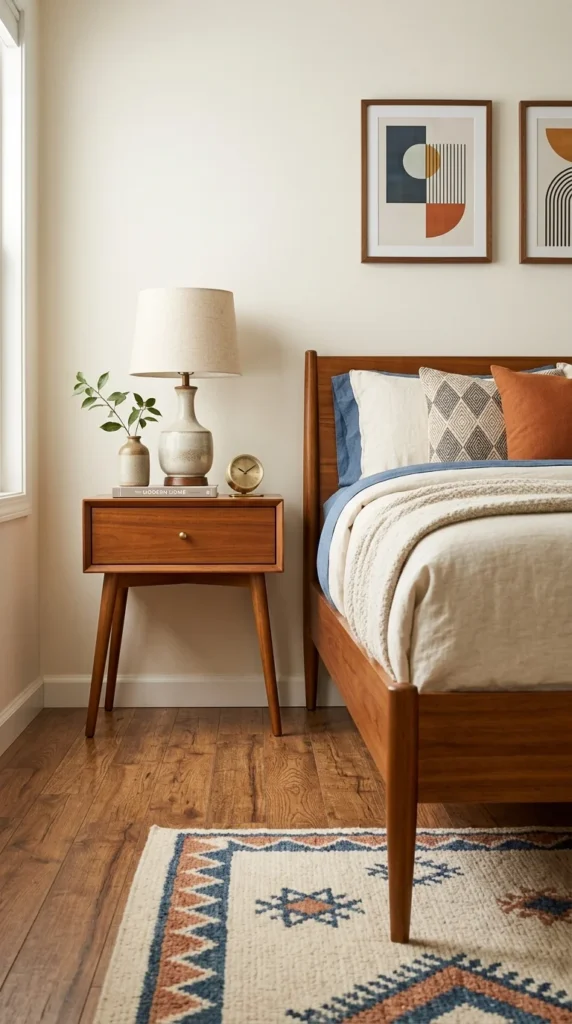
Furniture that sits directly on the floor can look heavy and blocky. Choosing pieces with long, slender legs—like mid-century modern styles—allows light and air to flow underneath, making the room feel significantly less crowded.
9. Wall Sconces
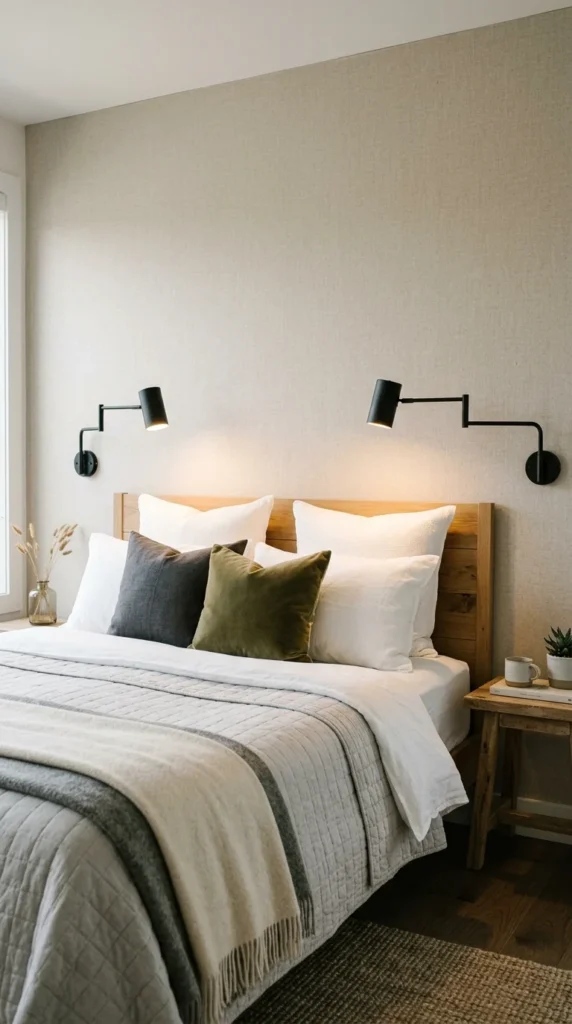
Free up your nightstand by ditching the table lamps. Wall-mounted sconces provide excellent task lighting for reading without taking up an inch of surface space. Swing-arm versions offer even more flexibility, allowing you to direct light exactly where you need it.
10. Multi-Functional Furniture
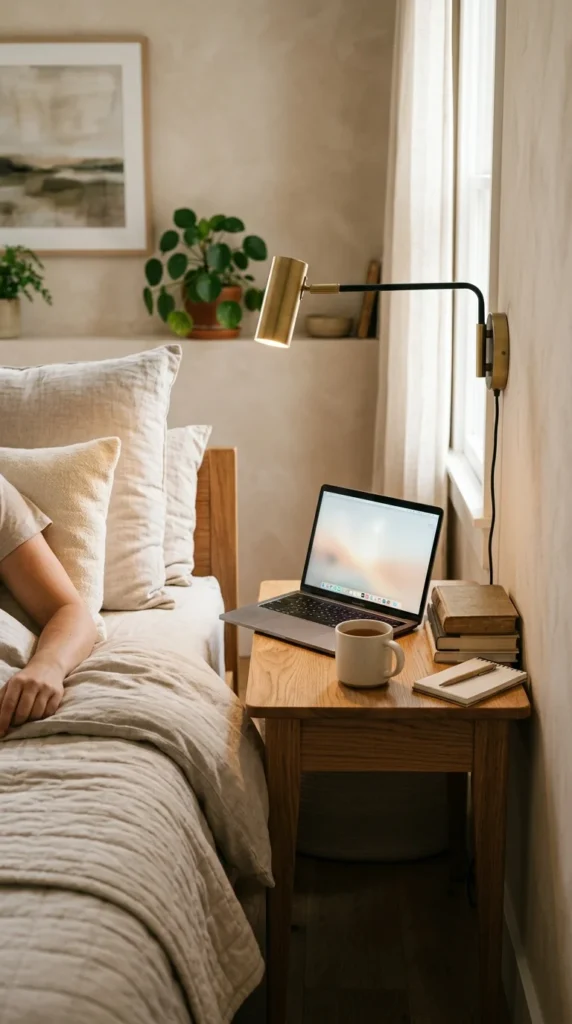
In a small bedroom, every piece of furniture should work double duty. A small desk can serve as a nightstand; a storage ottoman at the foot of the bed can provide seating and a place for extra pillows.
11. Corner Placement
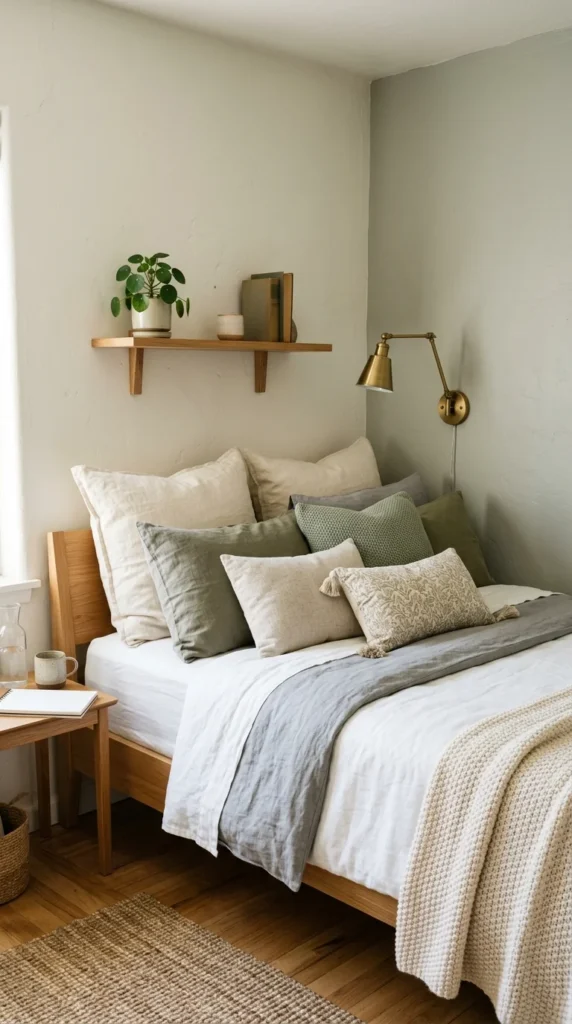
While design rules often suggest centering the bed, pushing it into a corner can open up a significant amount of floor space in a tiny room. This creates a cozy, “nook” feel and allows for a larger walkway or room for a small desk.
12. Vertical Stripes
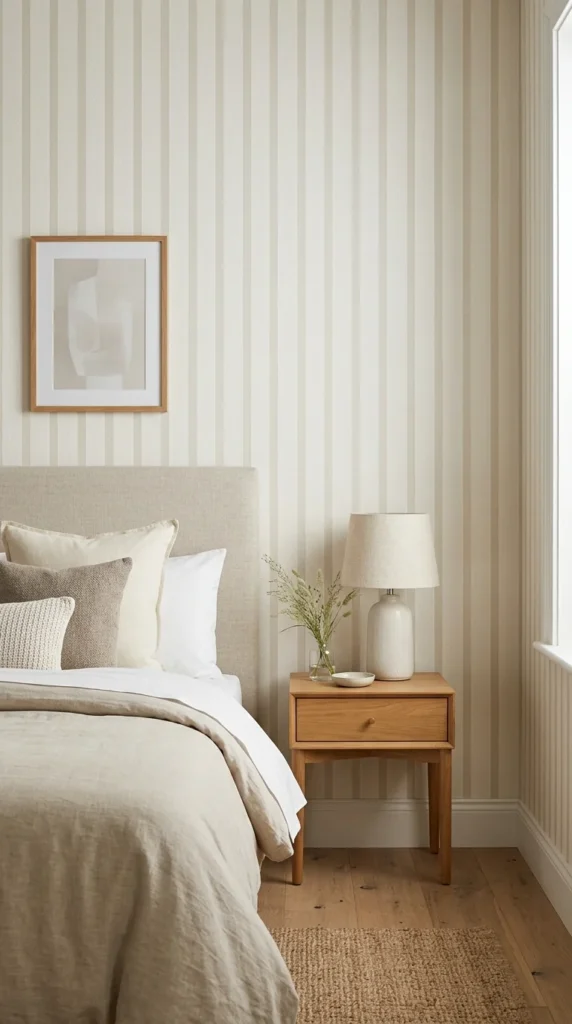
Just like in fashion, vertical stripes draw the eye up. Whether you use wallpaper, paint, or even a tall headboard with vertical slats, this trick creates the illusion of higher ceilings and a more expansive atmosphere.
13. Minimalist Decor
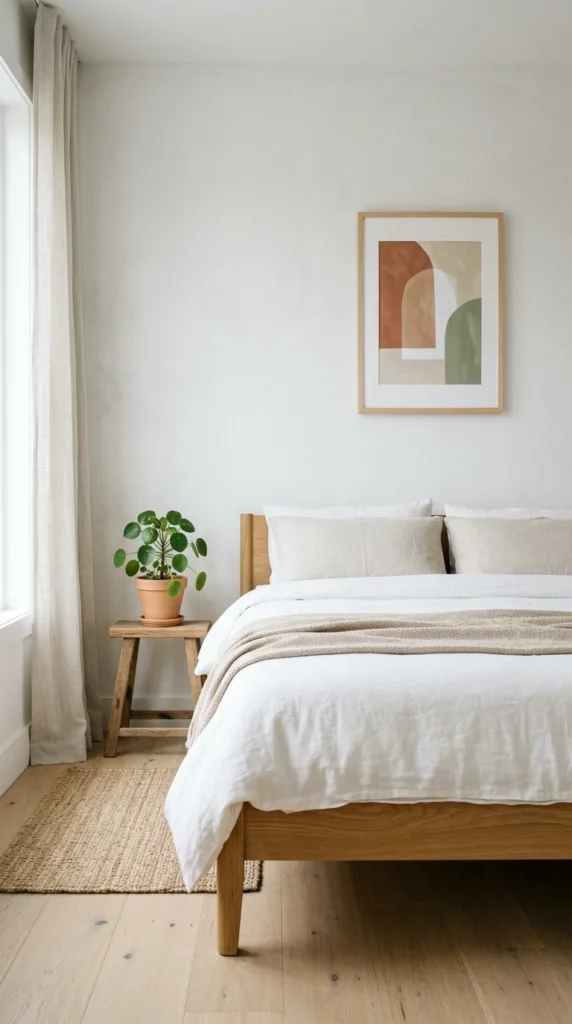
Clutter is the enemy of small spaces. Adopting a minimalist approach—choosing a few high-quality, meaningful pieces over many small knick-knacks—prevents the room from feeling claustrophobic. Remember: “less is more.”
14. Sliding Doors
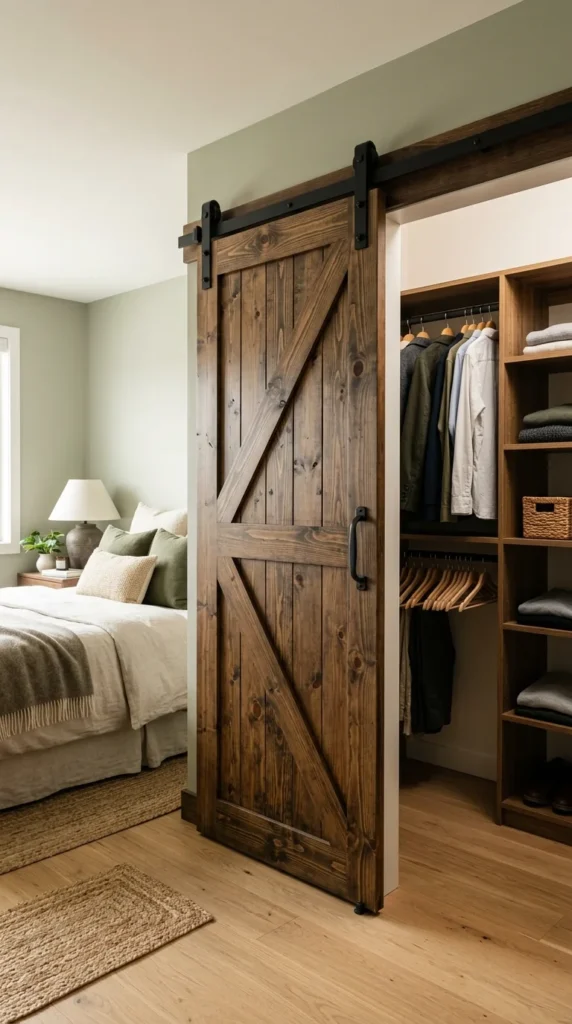
Traditional swinging doors require a “clearance zone” that can’t be used for anything else. Replacing closet or entry doors with sliding “barn” doors or pocket doors saves several square feet of usable space.
15. Monochromatic Palette
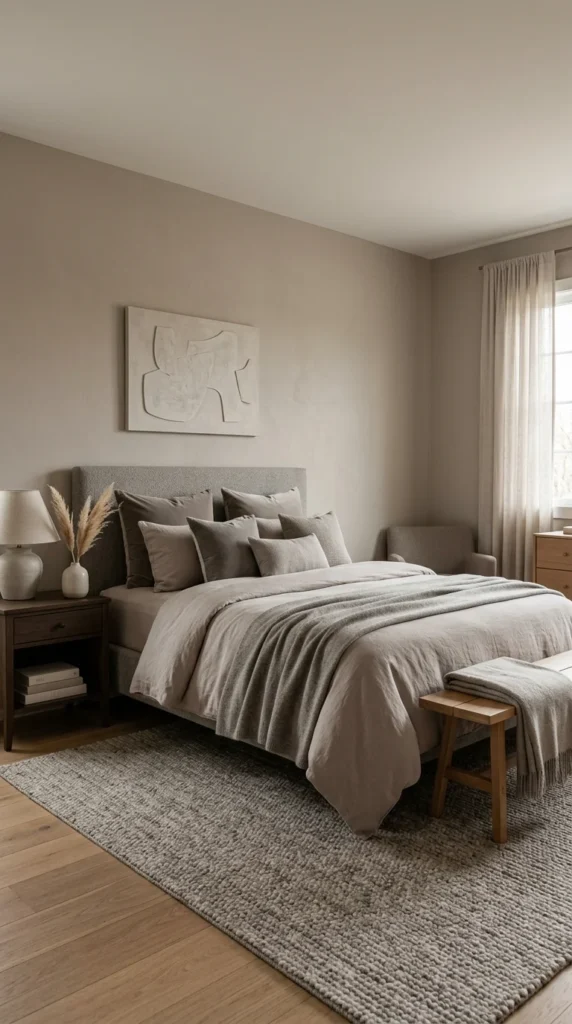
A monochromatic color scheme creates a seamless look where furniture blends into the walls. When there are no sharp visual breaks between different colors, the eye travels smoothly across the room, making the space feel continuous and larger.
16. Oversized Art
It might seem counterintuitive, but one large piece of art works better than a gallery wall of small frames in a tiny room. A large focal point anchors the space and makes it feel more intentional and less cluttered.
17. Built-in Wardrobes
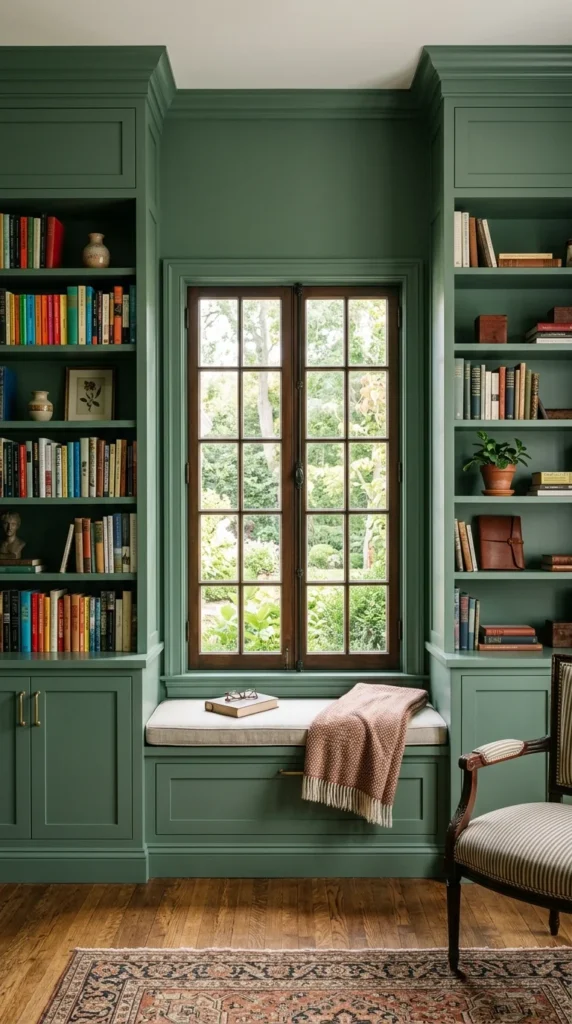
Freestanding wardrobes are often bulky and leave wasted space above them. Built-in units that go from floor to ceiling utilize every inch of available space and look like part of the architecture, creating a streamlined appearance.
18. Glass Closet Doors
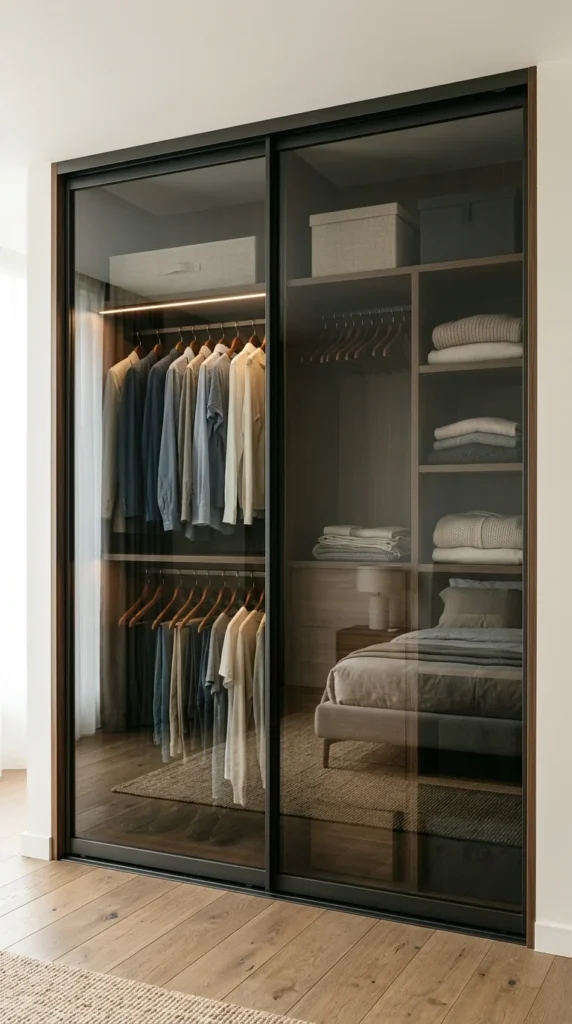
If you keep your closet organized, glass doors can add depth to a room. Much like a mirror, the transparency or slight reflection of glass keeps the “wall” of the closet from feeling like a solid, closing-in barrier.
19. Loft Beds
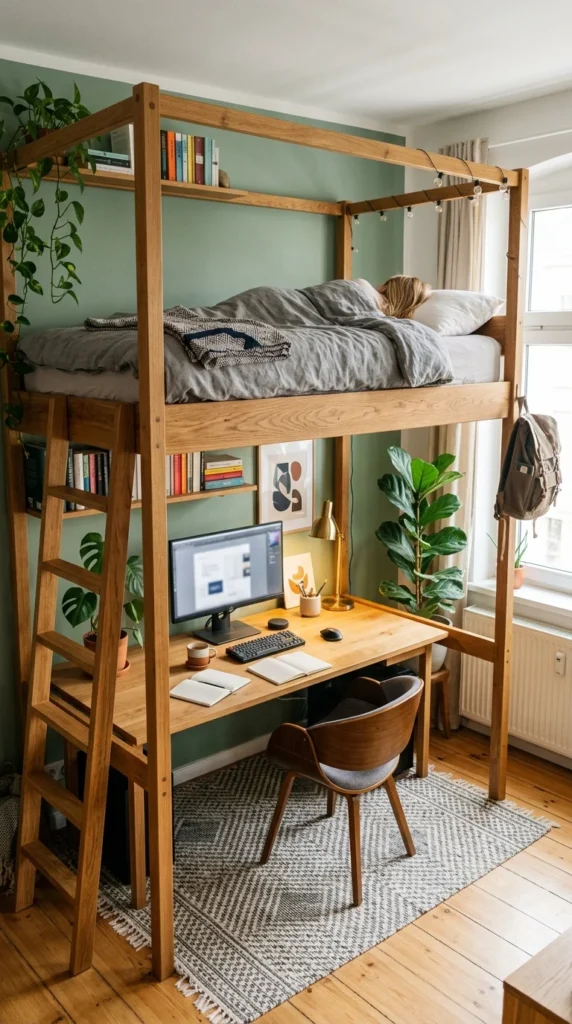
For rooms with high ceilings but small floor plans, a loft bed is a game-changer. By elevating the sleeping area, you create an entire “second floor” underneath for a home office, a cozy reading nook, or extra storage.
20. Thin Headboards
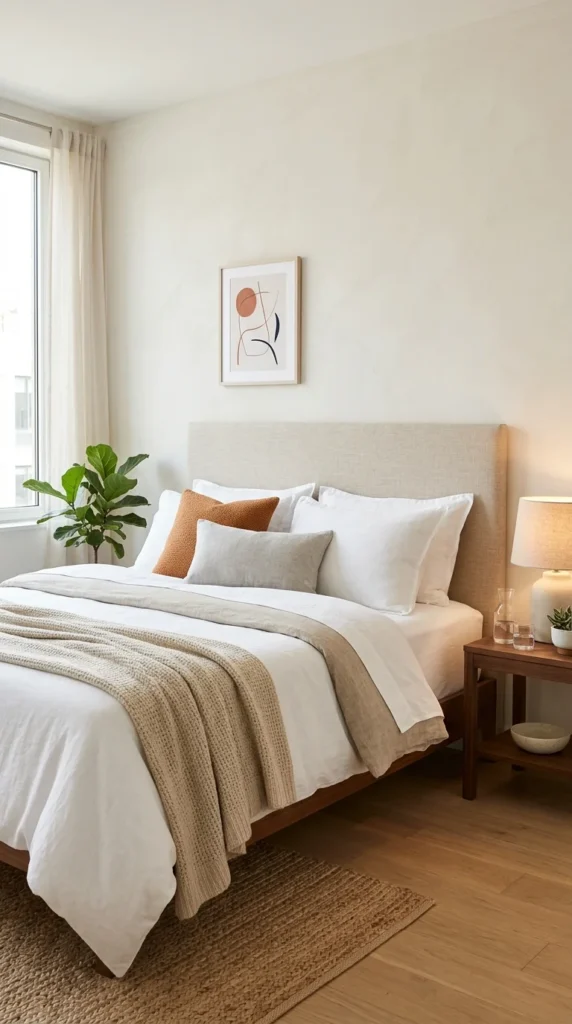
Ornate, thick headboards can take up six inches or more of precious length in a room. Opt for a slim-profile headboard or even a “faux” headboard made of paint or wallpaper to save space without losing the design impact.
21. Low Profile Bed
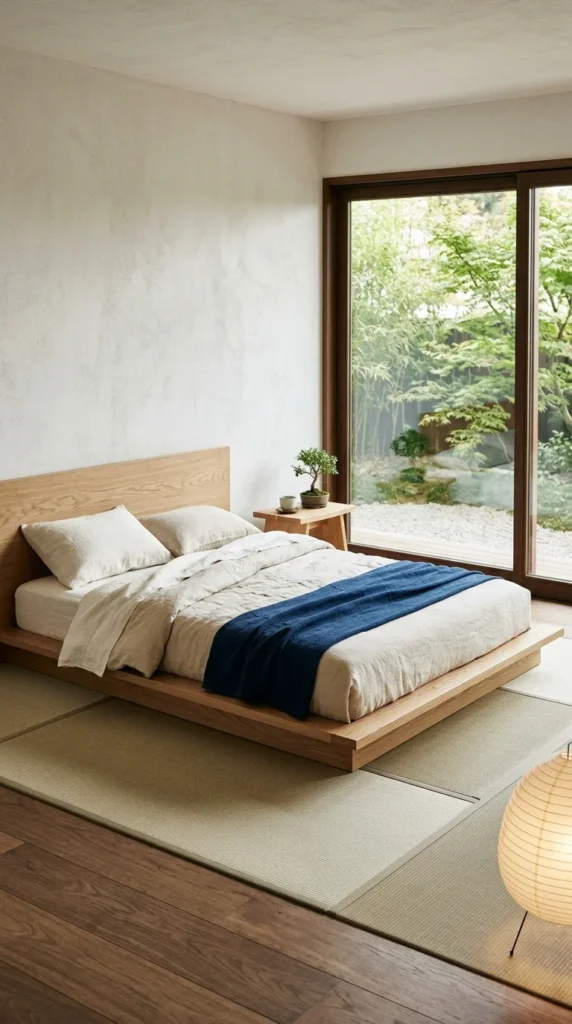
Keeping furniture low to the ground creates more “air” above it. A low platform bed makes the distance between the mattress and the ceiling appear greater, which in turn makes the entire room feel more spacious.
22. Window Ledges
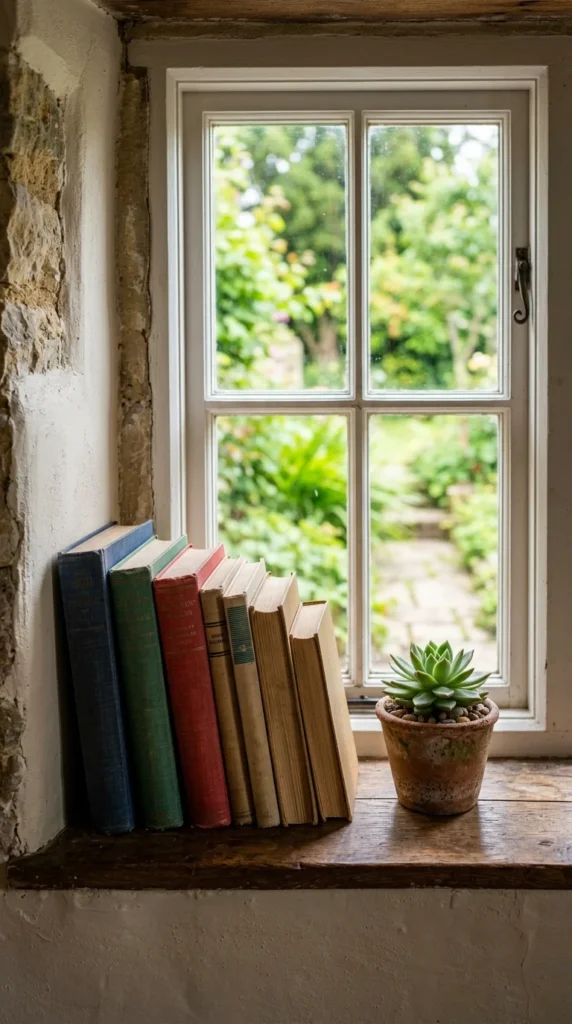
If your room has deep window sills, use them! They can function as a built-in nightstand or a shelf for decor, saving you from having to add more furniture to the floor.
23. Sheer Fabrics
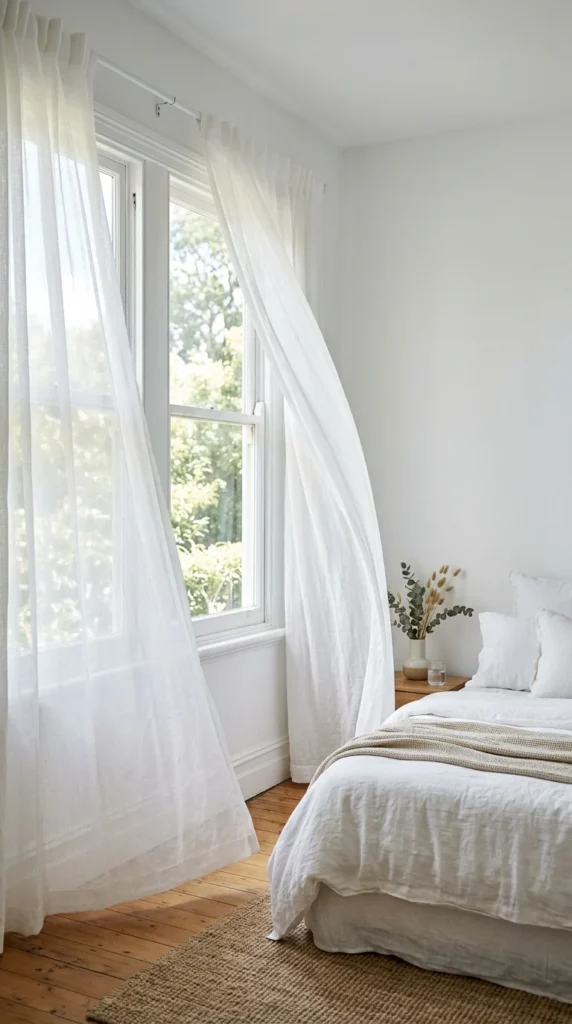
Avoid heavy, dark drapery that blocks out the sun. Sheer curtains provide privacy while allowing maximum light to penetrate the room. This connection to the outside world helps the room feel less enclosed.
24. Wall Hooks
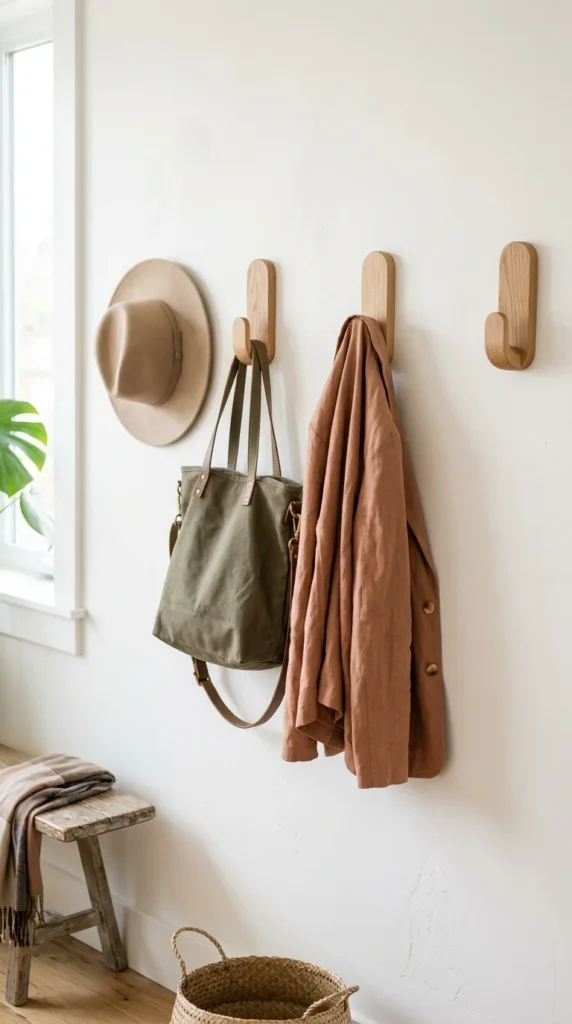
Hooks are a low-profile way to organize items like bags, hats, and coats that might otherwise end up in a heap on a chair. Using vertical space for organization keeps the floor clear and the room tidy.
25. Baskets and Bins
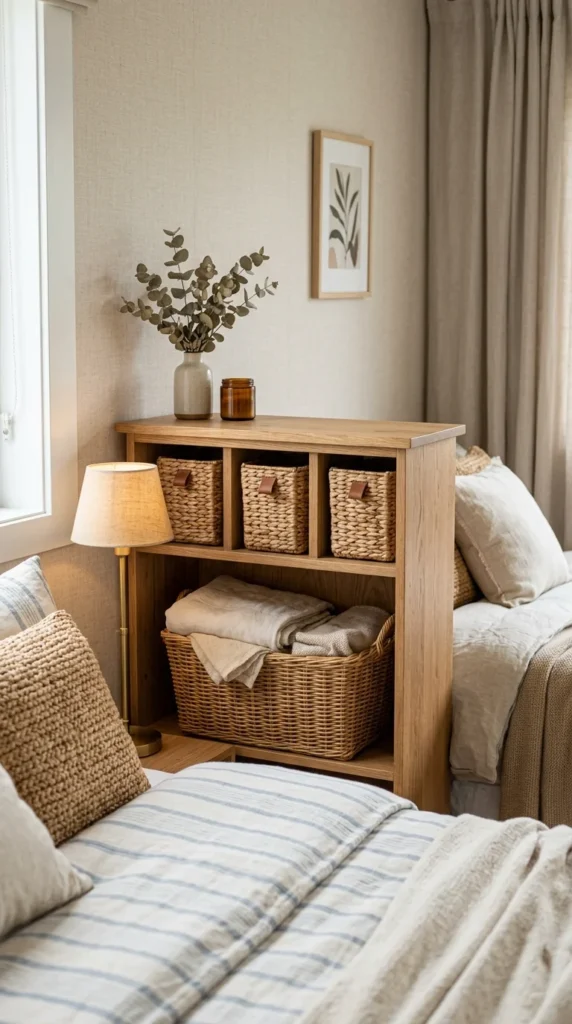
Consistent storage containers prevent “visual noise.” Using matching baskets to hide away cords, electronics, or accessories makes the room look organized and, consequently, larger.
26. Large Rugs
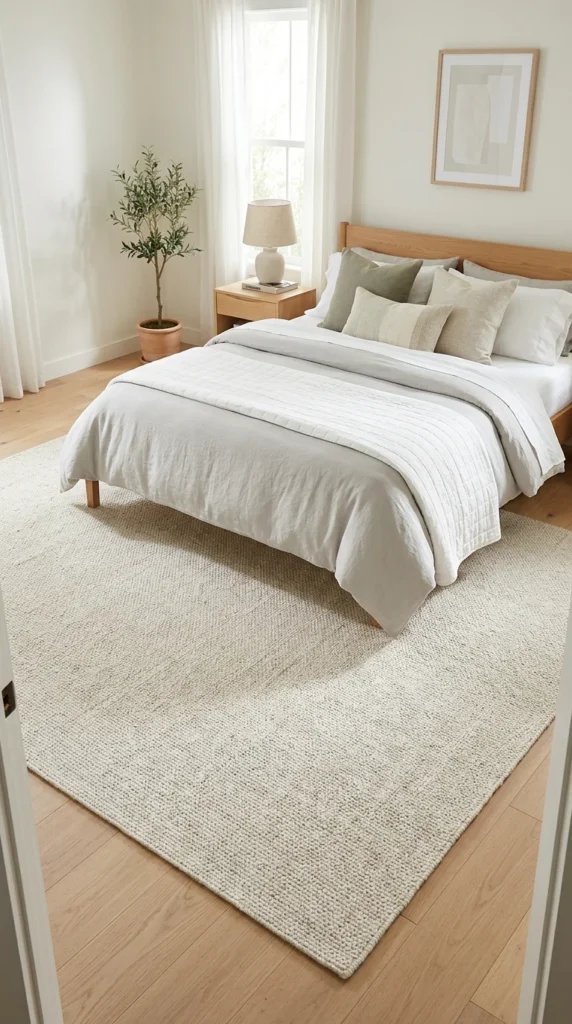
A small rug can make a room feel choppy and small. A larger rug that fits under the bed and extends out into the room “grounds” the space and makes the floor area appear wider than it actually is.
27. Statement Lighting
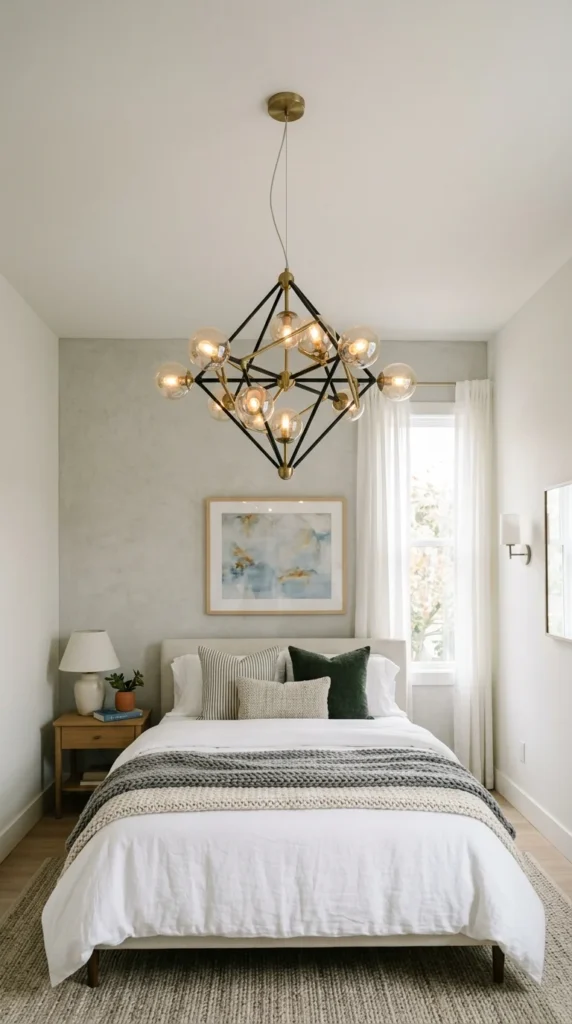
Drawing the eye upward is key. A beautiful pendant light or chandelier acts as a focal point at the highest point of the room, emphasizing the vertical space and adding a touch of luxury.
28. Floating Desks
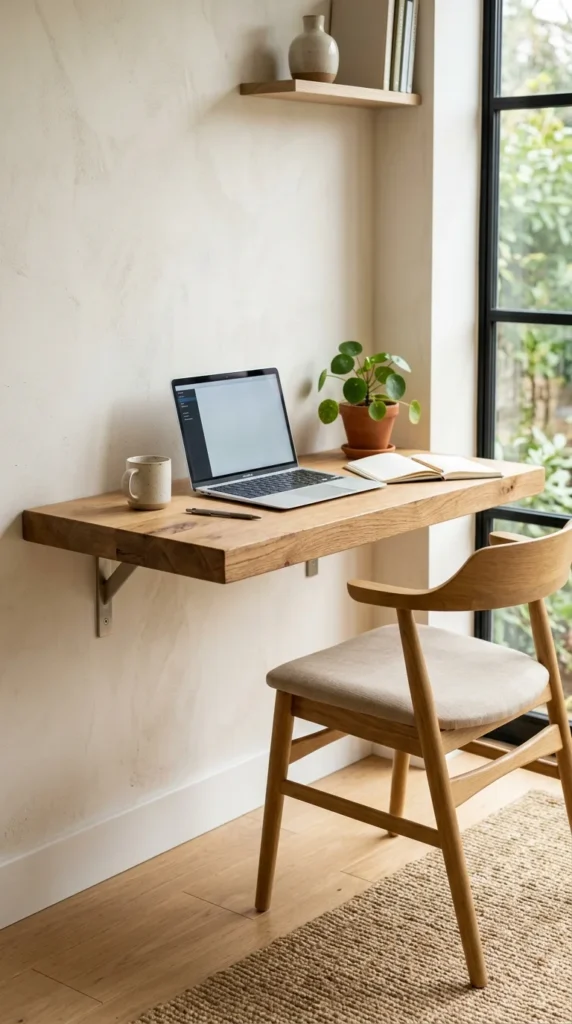
Like floating shelves, a floating desk is a brilliant space-saver. By eliminating the legs, you keep the floor area open, making the room feel less “stuffed” with furniture.
29. Recessed Niches
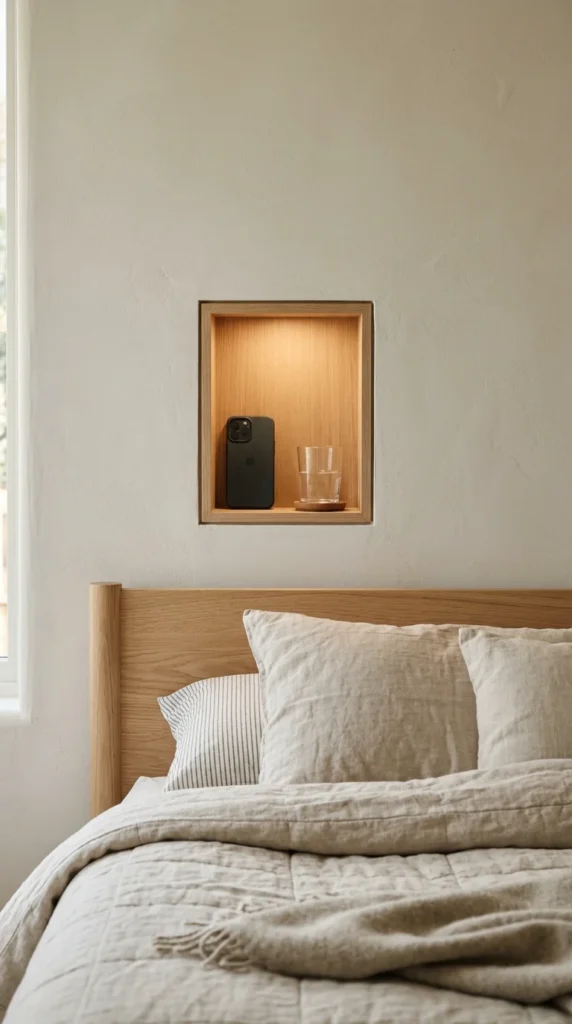
If you’re doing a renovation, consider building niches into the walls. These recessed “shelves” take up zero floor or wall space, providing a perfect spot for books or bedside essentials.
30. Greenery
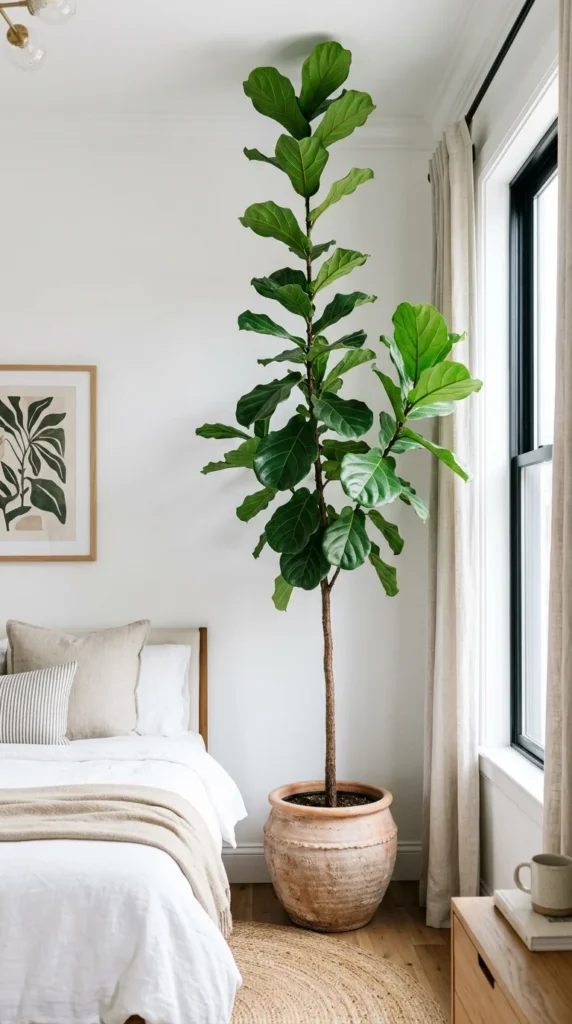
Plants add life and a sense of the outdoors to a small room. Using tall, slender plants like a snake plant or a small tree in the corner adds vertical interest without taking up much square footage.
By implementing just a few of these strategies, you can shift the perspective of your bedroom from “cramped” to “cozy and clever.” It’s all about maximizing light, utilizing vertical space, and choosing pieces that serve more than one purpose. Small rooms may have limited space, but they have unlimited potential for great design.