

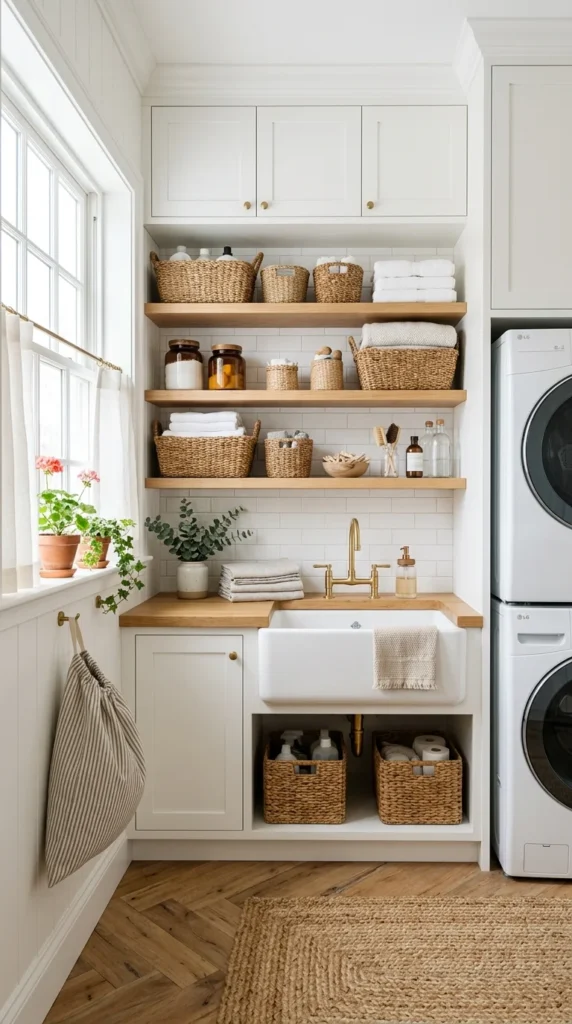
Laundry is often viewed as one of the most monotonous household chores. We spend hours sorting, washing, drying, and folding, yet the space where we perform these tasks is frequently the most neglected room in the house. A cluttered laundry room doesn’t just look messy; it siphons away your time and energy, making the chore feel twice as heavy.
Transforming this utility space into a sanctuary of efficiency isn’t just about aesthetics—it’s about workflow. By implementing strategic organization systems, you can turn a cramped, chaotic mudroom into a streamlined hub that actually makes you look forward to “laundry day.” Whether you are working with a tiny closet or a sprawling basement suite, these ten organization ideas will revolutionize how you handle your linens.
1. Vertical Shelving
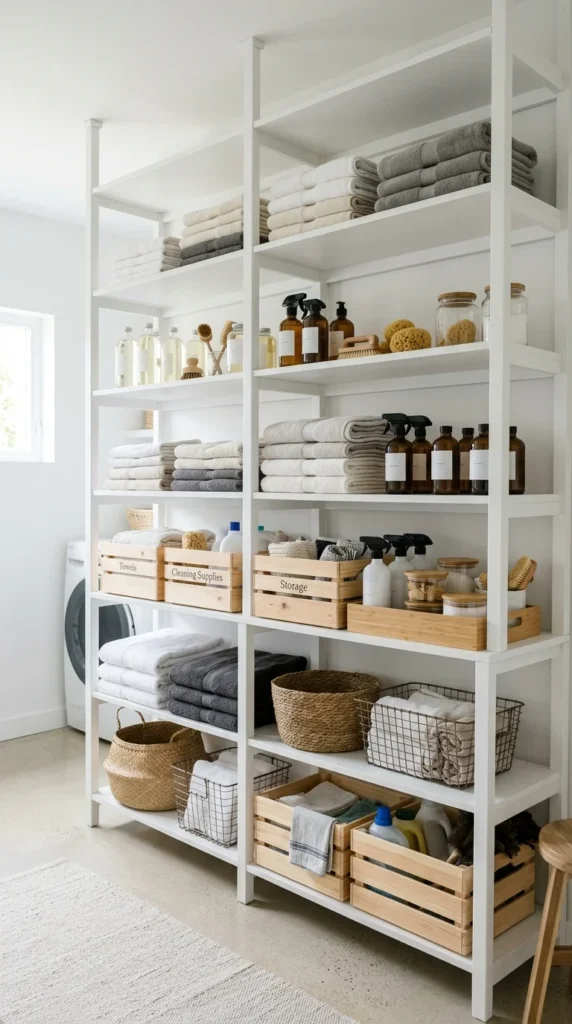
When square footage is limited, the only way to go is up. Vertical shelving utilizes the often-ignored space between the top of your machines and the ceiling. By installing floor-to-ceiling shelves, you create a massive amount of storage for items that aren’t used daily, such as seasonal blankets, extra paper towels, or bulk-purchased cleaning supplies.
To make the most of vertical shelving, place the items you use most frequently at eye level. Higher shelves should be reserved for lightweight items or things kept in labeled bins. Using open shelving instead of closed cabinets can also make a small room feel larger and more airy, provided you keep the contents organized. Consider using adjustable tracks so you can move the shelves as your storage needs change over time.
2. Pull-out Drying Racks
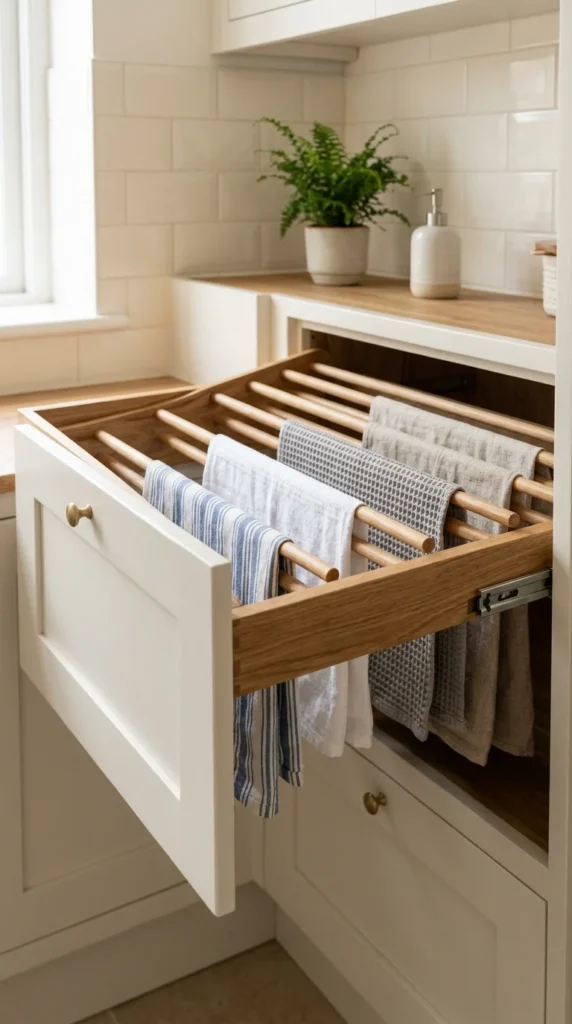
Air-drying delicates or activewear usually involves clunky, folding metal racks that take up half the floor and are a constant tripping hazard. Pull-out drying racks are the sophisticated solution to this problem. These can be built directly into your cabinetry or mounted on the wall to fold down when needed.
The beauty of a pull-out rack is its “now you see it, now you don’t” nature. When the clothes are dry, the rack slides back into a drawer or folds flat against the wall, reclaiming your floor space instantly. This is particularly useful for small apartments or narrow laundry “zones” where every inch of floor space is precious. It also ensures that your expensive athletic gear and silk blouses air-dry safely without cluttering the rest of your home.
3. Slim Rolling Carts
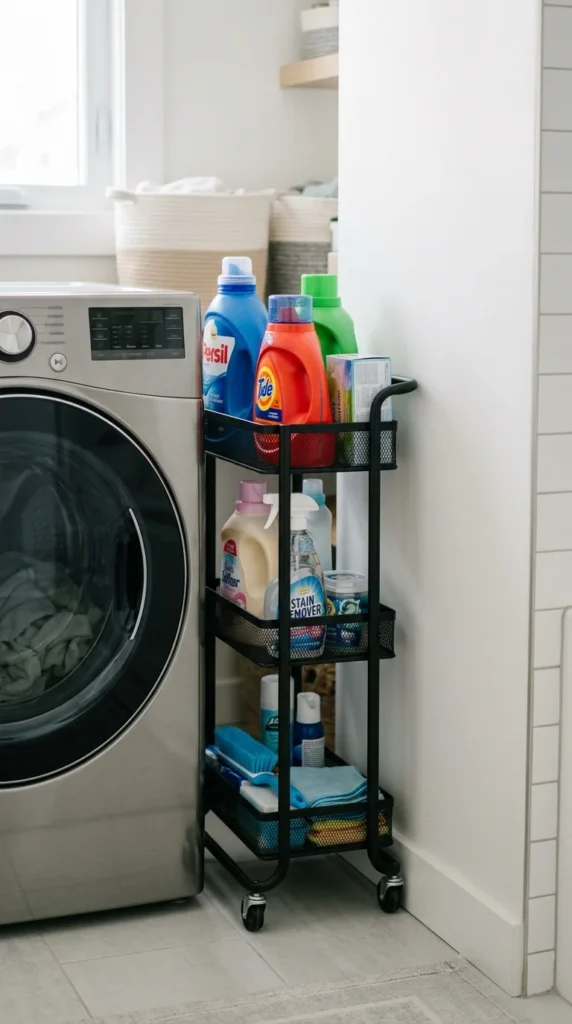
Almost every laundry room has that “dead zone”—the narrow four-to-six-inch gap between the washing machine and the wall. Usually, this space only collects dust and lost socks. A slim rolling cart turns this wasted space into a high-functioning storage unit for detergents, fabric softeners, and stain removers.
These carts are designed to be ultra-narrow and usually feature wheels, allowing you to slide them out with one hand while you’re loading a wash. By keeping your most-used chemicals right next to the machine, you eliminate the need to reach into high cabinets or trek across the room. It keeps the heavy bottles off your countertops and hidden from view, maintaining a clean, minimalist look.
4. Floating Countertops
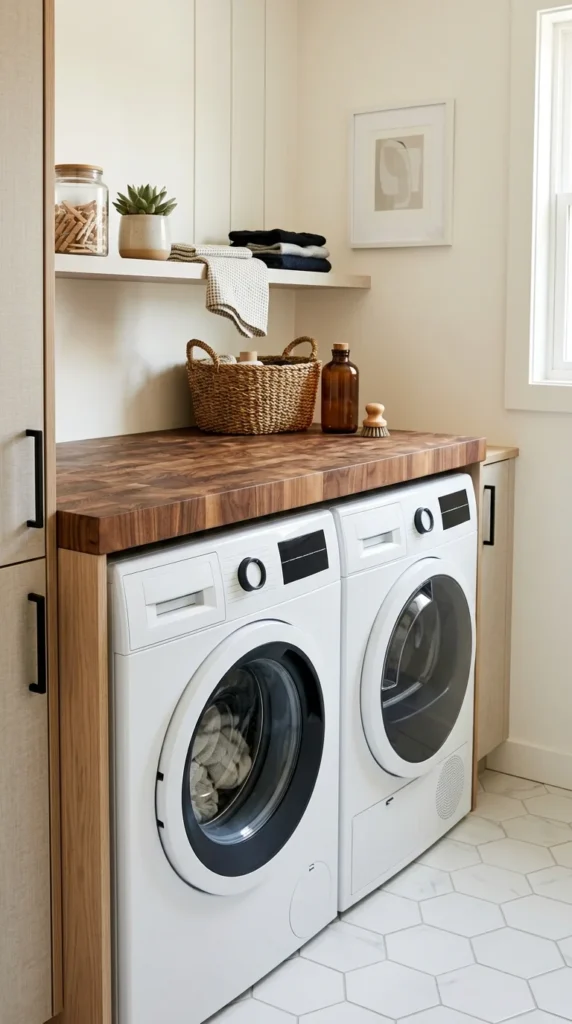
If you have front-loading machines, you are sitting on a goldmine of potential workspace. Installing a floating countertop directly over your washer and dryer creates a continuous, flat surface that is perfect for sorting clothes or folding items as soon as they come out of the dryer.
A butcher block or laminate countertop provides a sturdy area that prevents socks and small items from falling behind or between the machines. It creates a “finished” look that mimics a high-end kitchen, making the laundry room feel like a deliberate part of the home’s design rather than an afterthought. This extra surface area is a game-changer for those who find themselves folding laundry on the living room couch or the bed.
5. Uniform Glass Jars

The visual noise of mismatched plastic packaging, cardboard boxes, and neon-colored jugs can make a laundry room feel chaotic even if it’s clean. Decanting your supplies into uniform glass jars is one of the easiest ways to elevate the entire aesthetic of the room while staying organized.
Clear jars allow you to see exactly how much product you have left at a single glance, preventing those mid-cycle “out of detergent” realizations. Use large jars for laundry pods and scent boosters, and smaller ones for clothespins or lost buttons. Not only does this create a serene, spa-like environment, but it also encourages you to keep the space tidy. Pair them with a scoop or a set of tongs for a touch of functional elegance.
6. Wall-Mounted Organizers
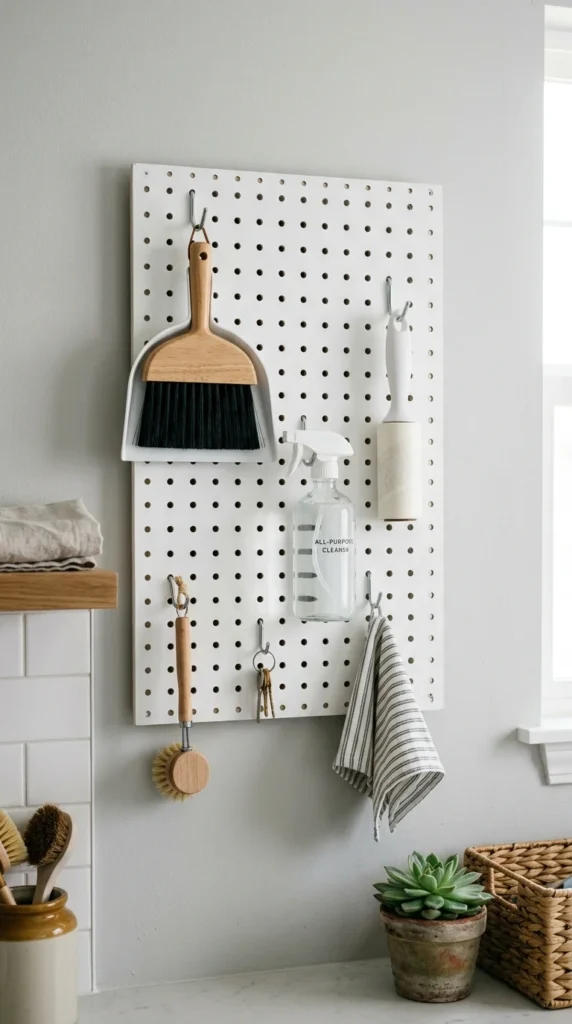
Walls are the most underutilized assets in a laundry room. A pegboard or a system of hooks can hold everything from lint rollers and scrub brushes to spray bottles and small dustpans. By getting these items off the counters and out of the drawers, you free up space for actual work.
Wall-mounted organizers are particularly effective for long, awkward items like mops and brooms. Utilizing a “zone” on the wall for these tools ensures they have a dedicated home and aren’t leaning against the corner of the room where they can fall over. You can even mount a small “lost and found” basket on the wall for those stray socks that emerge from the dryer without a partner.
7. Folding Stations
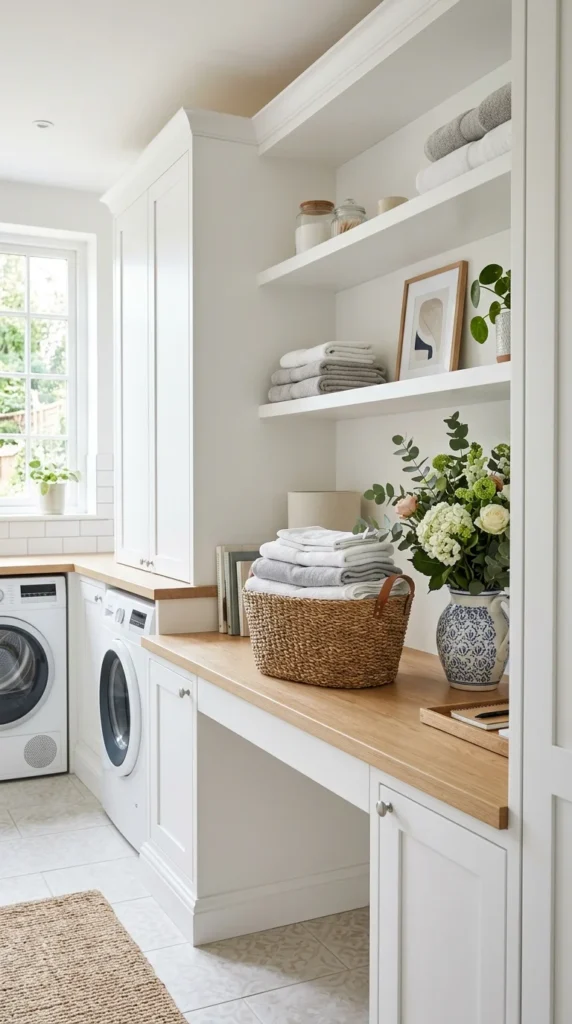
A dedicated folding station is the ultimate luxury in laundry organization. This doesn’t have to be a separate room; it can be a small desk or a section of a countertop designed specifically for the task. The key to a successful folding station is having everything you need within arm’s reach: a place to stack folded clothes, a hanging rod for items that need to go on hangers, and a small bin for trash or lint.
Having a designated spot for folding encourages you to finish the job immediately. When you have a clear, clean surface ready to go, you’re less likely to leave a basket of clean clothes sitting for three days. It turns the chore into a focused activity, especially if you position the station near a window or under bright, clear lighting.
8. Hidden Ironing Boards
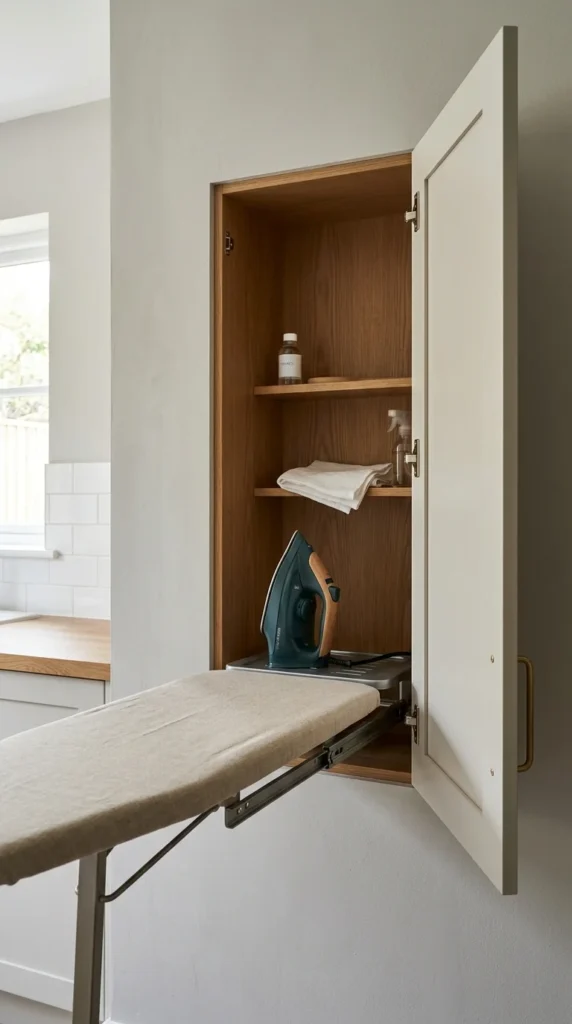
The traditional ironing board is perhaps the most awkward item to store in any home. It’s tall, heavy, and difficult to lean against a wall without it sliding down. A hidden, built-in ironing board solves this problem by stowing the board inside a shallow cabinet or even a drawer.
When you need to press a shirt, you simply open the door and fold the board down. Many of these units even come with built-in outlets and heat-resistant shelves for the iron itself, keeping all your pressing tools in one consolidated location. This eliminates the “set-up” time that often makes people avoid ironing altogether, making it easier to maintain a crisp, professional wardrobe.
9. Labeled Canvas Bins
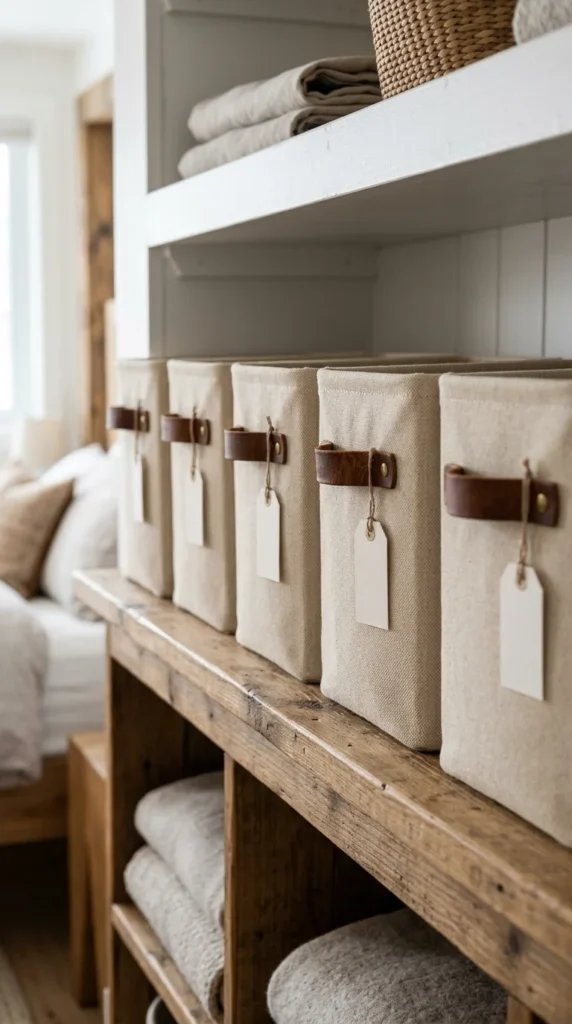
Sorting is the backbone of laundry efficiency. Instead of one giant, overflowing hamper, use a system of labeled canvas bins to sort clothes as they become dirty. You can label bins by color (Whites, Darks, Lights), by person, or by washing instruction (Delicates vs. Towels).
Canvas bins are ideal because they are breathable, lightweight, and often machine-washable themselves. By pre-sorting your laundry into these bins, the actual act of starting a load takes seconds. Furthermore, once the clothes are clean and folded, these same bins can be used to transport items back to their respective bedrooms. Clear labeling ensures that everyone in the household knows exactly where their dirty clothes should go, distributing the workload.
10. Pedestal Storage
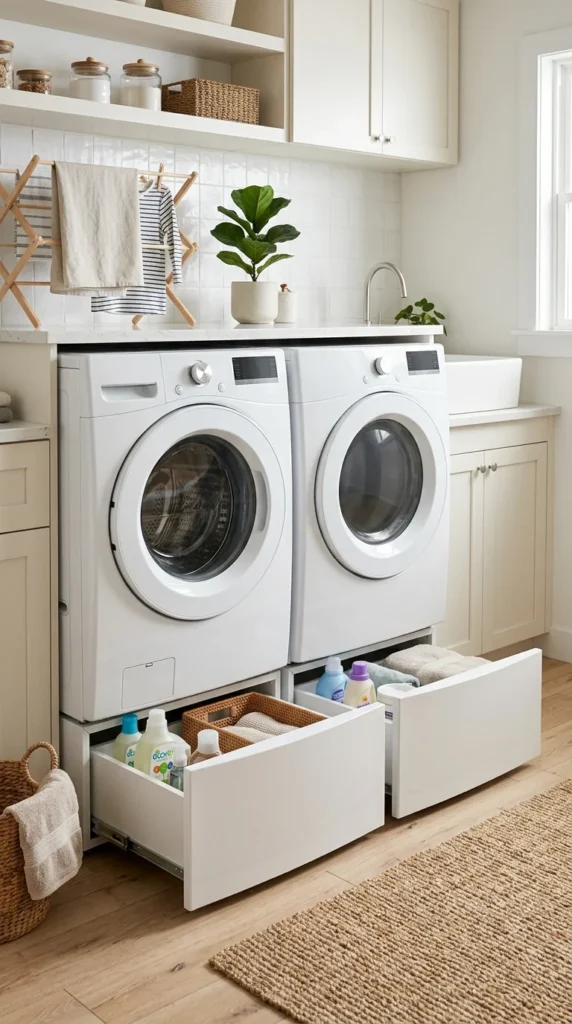
Front-loading washers and dryers are often positioned low to the ground, requiring a lot of bending and crouching. Pedestals raise the machines to a more ergonomic height, making the loading and unloading process much easier on your back. But the real secret to pedestals is the storage they provide.
Most pedestals are designed as large drawers. This is the perfect place to store heavy items that you don’t want to lift to a high shelf, such as gallon-sized jugs of bleach or heavy boxes of powdered detergent. It’s also a great spot for “hidden” storage of items you don’t use often, like iron cleaners or extra dryer vent kits. By utilizing the space directly underneath the machines, you maximize every cubic inch of the room’s footprint.