

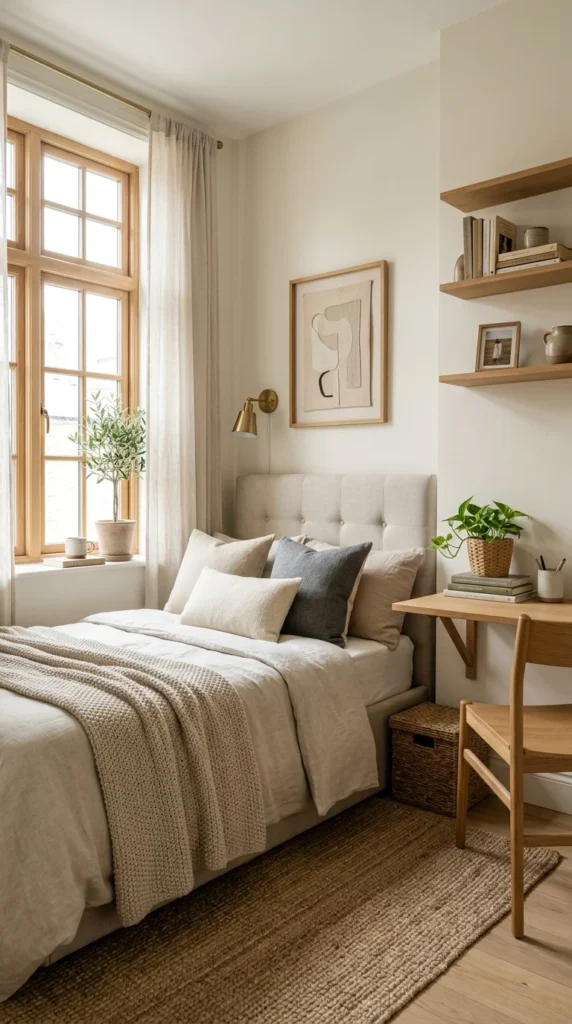
Living in a small space doesn’t mean you have to sacrifice style or comfort. In fact, some of the most charming and cozy bedrooms in the world are those that occupy a limited footprint. The secret lies in a blend of clever organization, strategic furniture choices, and visual tricks that fool the eye into seeing more room than actually exists.
Whether you are dealing with a tiny studio apartment or a guest room that feels more like a closet, there are countless ways to transform a cramped quarters into a sanctuary. Here are 10 expert-approved decor ideas to help you maximize every square inch of your small bedroom.
1. Floating Shelves
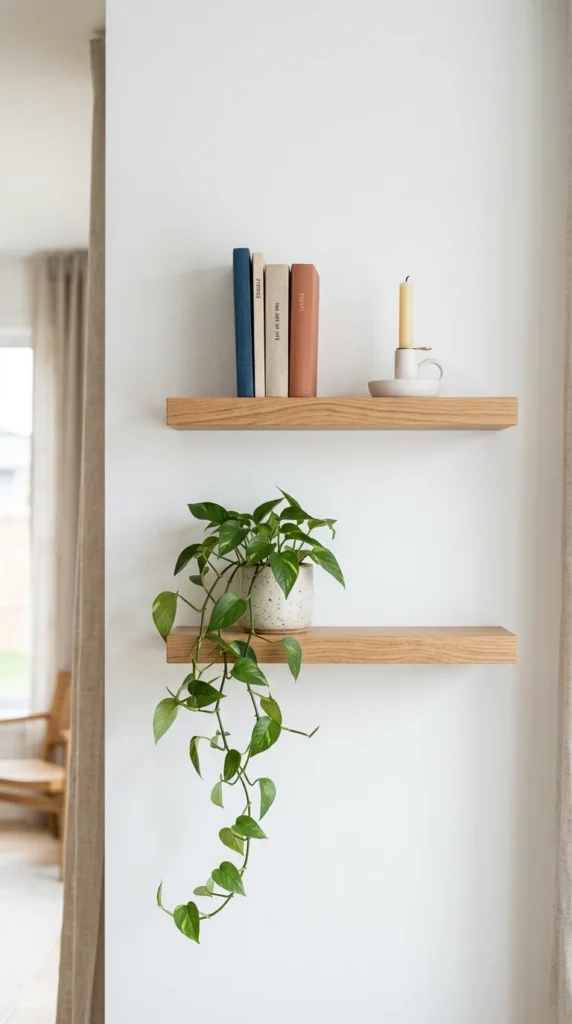
When floor space is at a premium, the only way to go is up. Floating shelves are a game-changer for small bedrooms because they provide necessary storage and display space without the “heavy” footprint of a traditional bookcase. By keeping the floor clear, you maintain a sense of openness that makes the room feel larger.
Use floating shelves to house your nighttime reads, decorative objects, or even a small jewelry box. For a cohesive look, try painting the shelves the same color as your walls so they blend in seamlessly, or opt for natural wood tones to add warmth and texture to a modern space.
2. Storage Beds
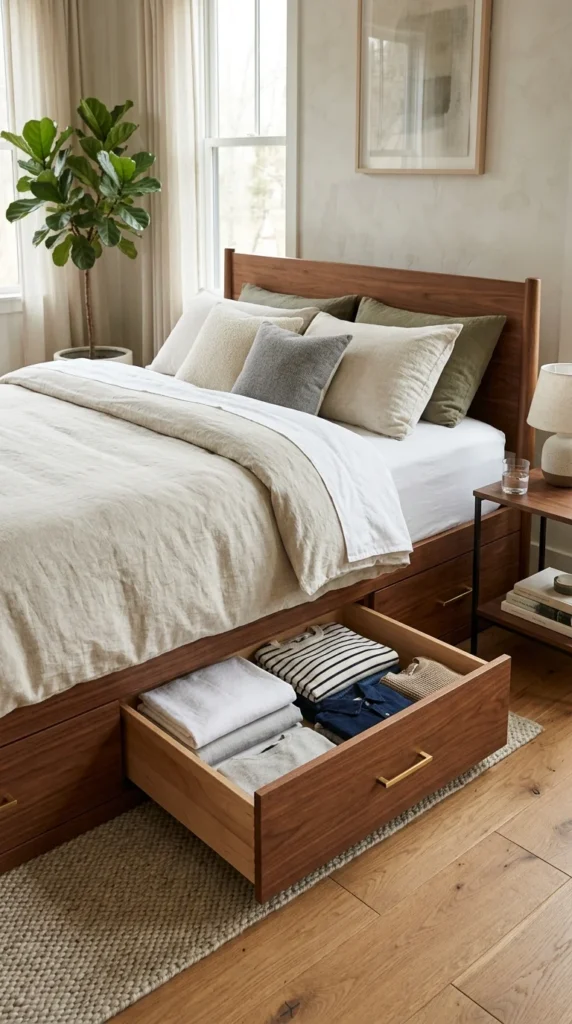
The area under your bed is often a graveyard for dust bunnies, but in a small room, it is prime real estate. Investing in a bed with built-in storage—either drawers or a hydraulic lift mechanism—allows you to stow away off-season clothing, extra linens, or shoes without needing an extra dresser.
If you aren’t in the market for a new bed, you can achieve a similar effect with low-profile rolling bins hidden behind a stylish bed skirt. The goal is to eliminate visual clutter by tucking away items that don’t need to be on display.
3. Oversized Mirrors
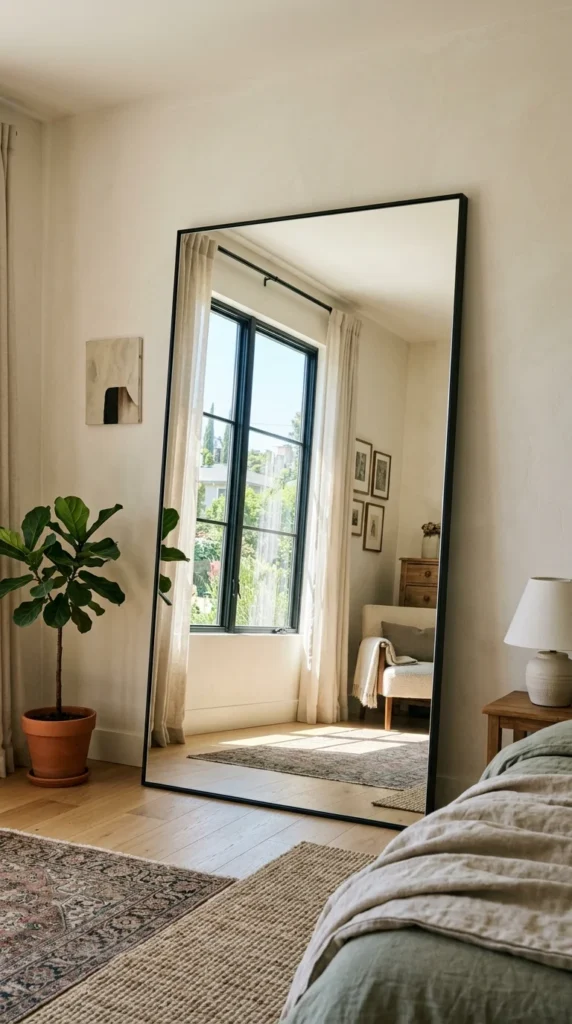
Interior designers have used mirrors to expand spaces for centuries. A large mirror reflects light and the view of the room, effectively “doubling” the visual space. In a small bedroom, don’t be afraid to go big. A floor-to-ceiling leaning mirror or a large wall-mounted piece above the headboard can transform a dark, cramped corner into a bright, airy focal point.
Positioning the mirror opposite a window is the most effective way to bounce natural light throughout the room, making even the smallest “shoebox” bedroom feel like it has room to breathe.
4. Light Palettes
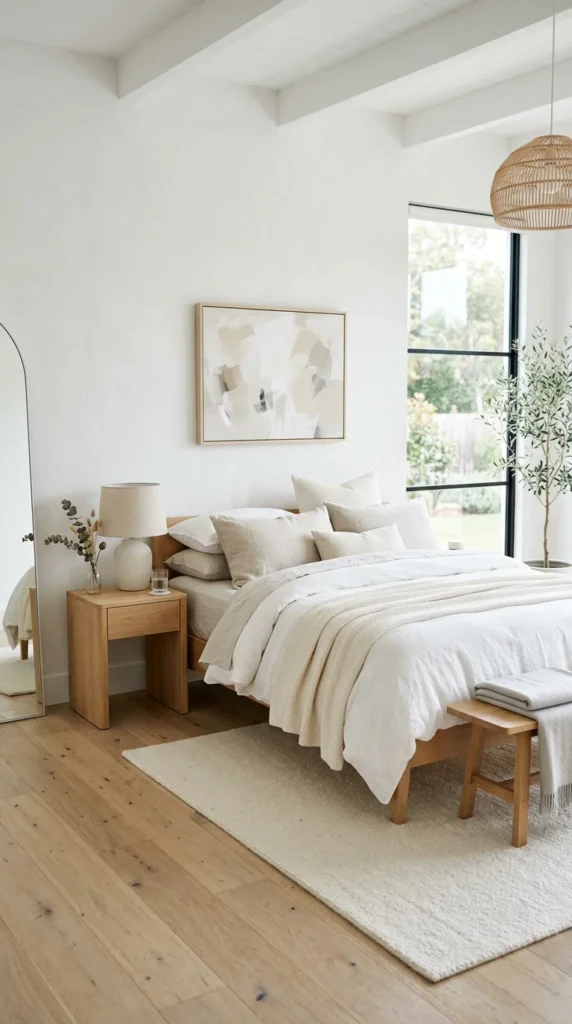
Color has a profound impact on how we perceive space. While dark, moody colors can be cozy, they often make walls feel like they are closing in. To maximize a small bedroom, stick to a light and neutral color palette. Shades of white, soft cream, pale grey, or even very light pastels reflect more light and keep the atmosphere feeling fresh.
To prevent a light-colored room from feeling flat or clinical, introduce different textures. Think chunky knit throws, linen pillows, a jute rug, or a velvet headboard. These layers add depth and interest without overwhelming the physical space.
5. Wall Sconces
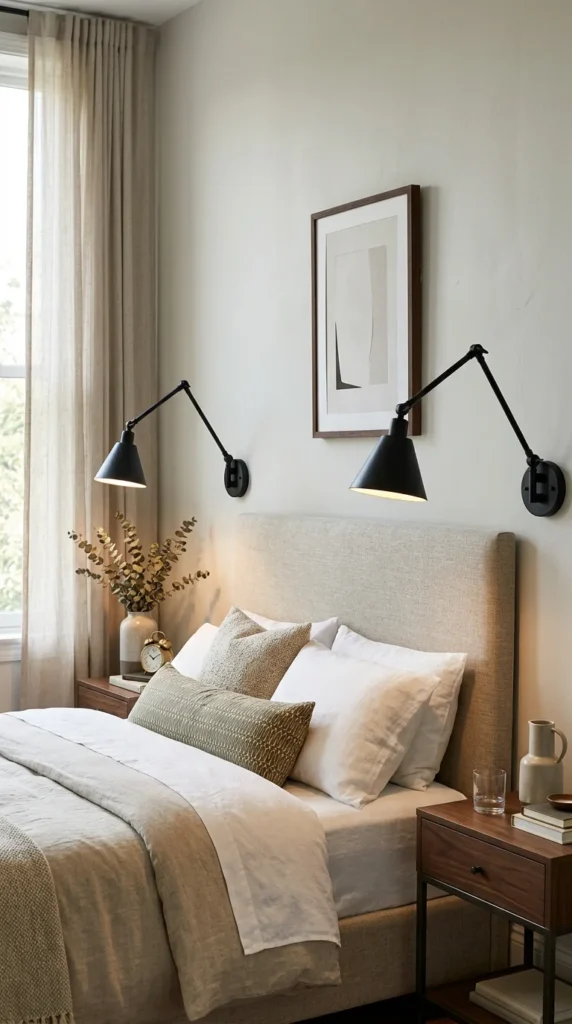
Bedside tables in small rooms are often tiny, leaving very little room for a traditional table lamp. By switching to wall-mounted sconces, you free up the entire surface of your nightstand for essentials like your phone, a glass of water, or a book.
Swing-arm sconces are particularly useful in small spaces because they can be adjusted for reading in bed and then pushed back against the wall when not in use. They also add a sophisticated, hotel-like vibe to the room, proving that functional choices can also be high-fashion.
6. Multi-purpose Desks
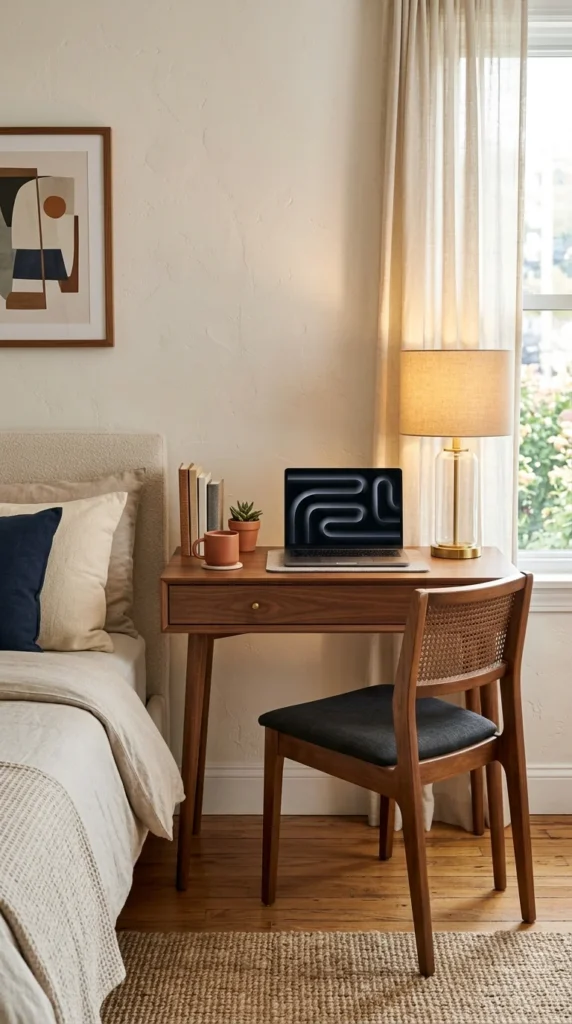
If your bedroom also needs to function as a home office, furniture that serves two purposes is essential. Rather than trying to cram both a nightstand and a desk into the room, replace one nightstand with a sleek desk.
Choose a desk with a slim profile and thin legs to maintain a sense of “airiness” under the furniture. During the day, it’s a productive workspace; at night, it’s the perfect spot for your bedside lamp and evening essentials. This “zoning” technique ensures every piece of furniture is earning its keep.
7. Vertical Lines
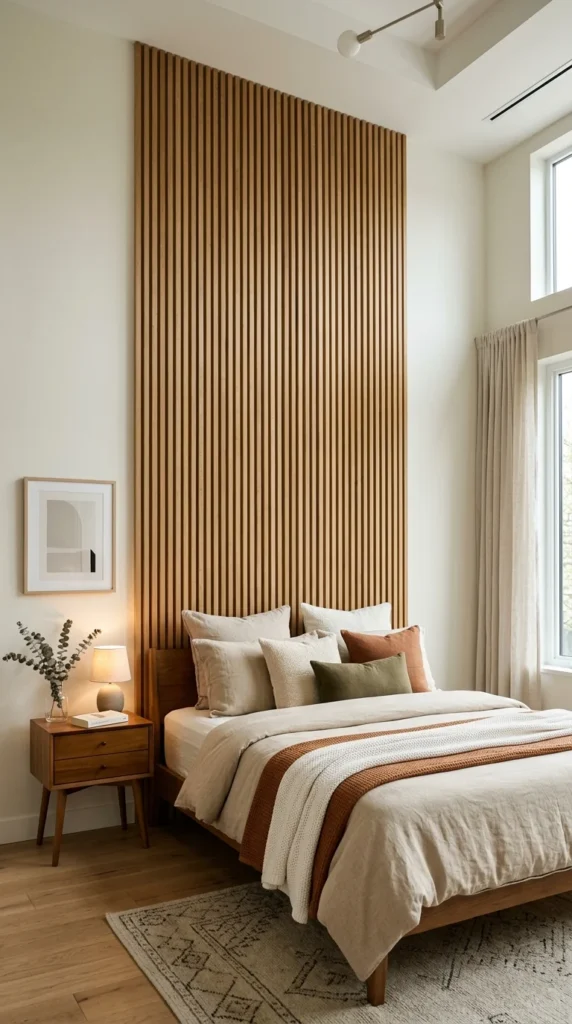
Just as vertical stripes on clothing can make a person look taller, vertical elements in a room can make the ceilings feel higher. You can achieve this effect through several decor choices: a tall, narrow headboard, floor-to-ceiling shelving, or even wallpaper with a subtle vertical pattern.
Drawing the eye upward distracts from a narrow floor plan and emphasizes the height of the room. When you focus on the verticality of a space, the horizontal limitations become much less noticeable.
8. Sliding Doors
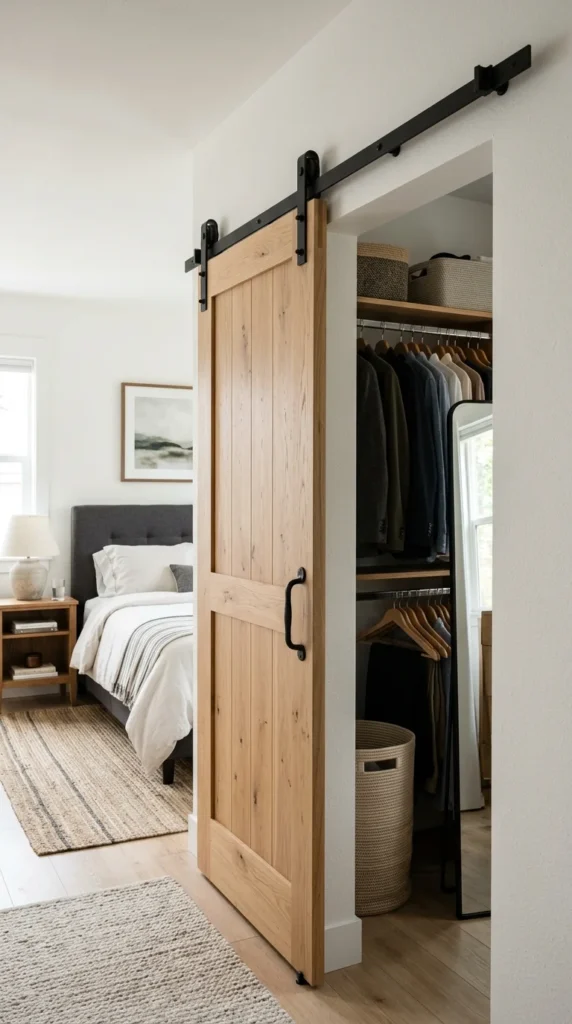
Traditional doors require a “swing zone,” which is a significant amount of floor space that must remain clear so the door can open and close. In a small bedroom, this can be a major hindrance to furniture placement.
Replacing a standard closet or entry door with a sliding barn door or a pocket door can reclaim several square feet of usable space. Not only is this a practical solution, but it also adds a unique architectural element to the room that can serve as a piece of decor in itself.
9. Transparent Furniture
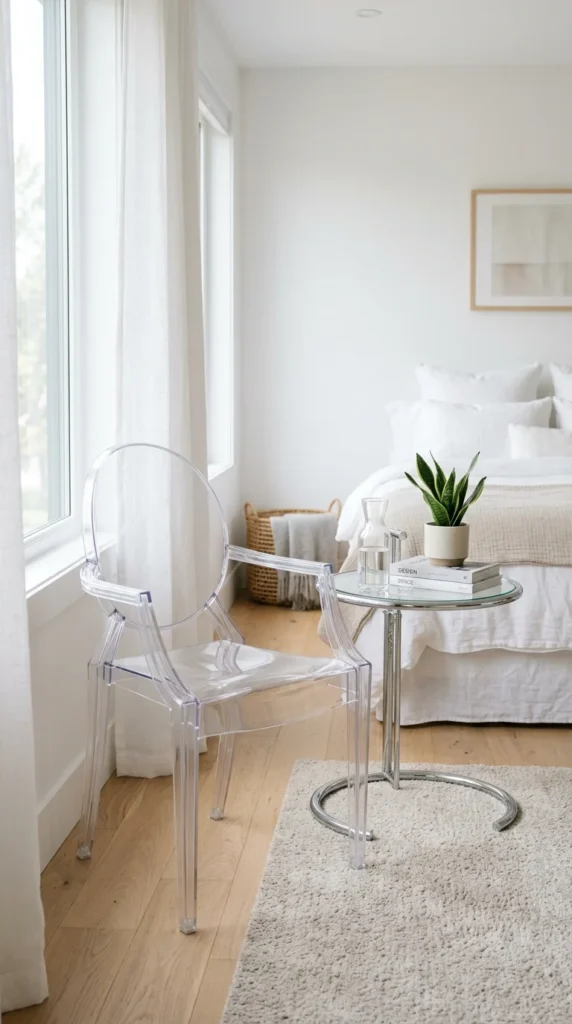
One of the cleverest tricks for small-space decorating is using “invisible” furniture. Pieces made from clear acrylic or glass provide the function you need without taking up any visual weight. A “ghost chair” at a desk or a glass-topped nightstand allows the eye to travel right through the object to the walls and floor beyond.
This lack of visual obstruction prevents the room from feeling “stuffed” with furniture, allowing you to have all the pieces you need for a functional bedroom while maintaining an open, minimalist aesthetic.
10. High Curtains
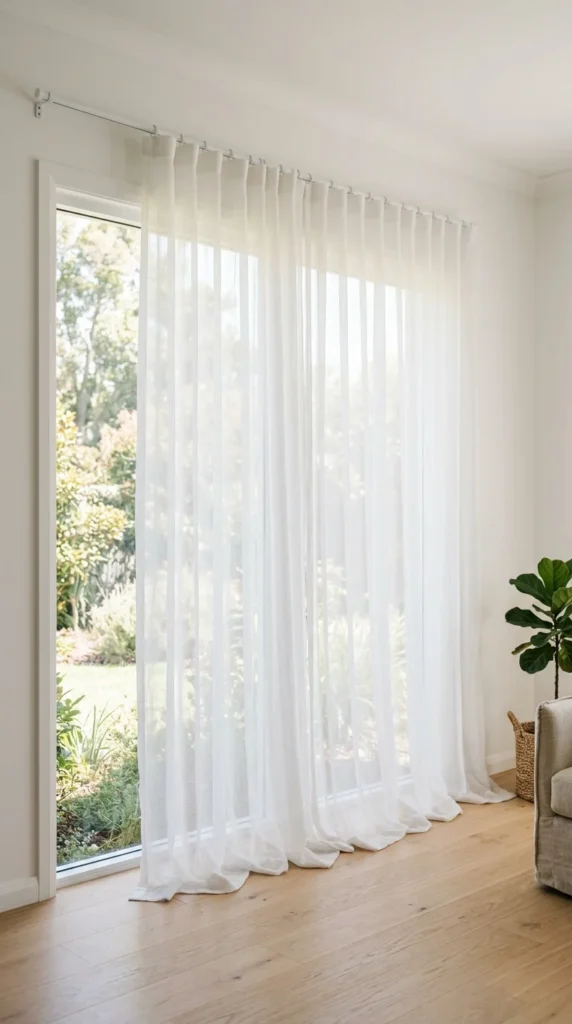
A common mistake in small bedrooms is hanging curtain rods directly above the window frame. To make your room feel grander and your windows larger, mount your curtain rod as close to the ceiling as possible and extend it several inches wider than the window itself.
When the curtains are open, they should frame the window rather than block the glass, allowing maximum natural light to enter. The long, flowing lines of the fabric create an illusion of height and luxury, giving even the smallest bedroom a sense of “stature” and elegance.