
Walls are more than just structural boundaries; they are the blank canvases of your home. Whether you are living in a cozy studio apartment or a sprawling estate, the way you treat your vertical space defines the personality, mood, and style of your interior. Bare walls can feel cold and unfinished, while thoughtfully decorated walls can make a room feel curated, warm, and infinitely more expensive.
Decorating your walls is one of the most rewarding DIY projects because the impact is immediate. From the tactile warmth of woven textiles to the sophisticated drama of oversized canvas art, the possibilities are endless. If you’ve been staring at a blank wall wondering where to start, these eleven ideas will provide the inspiration you need to transform your space into a masterpiece.
1. Gallery Walls
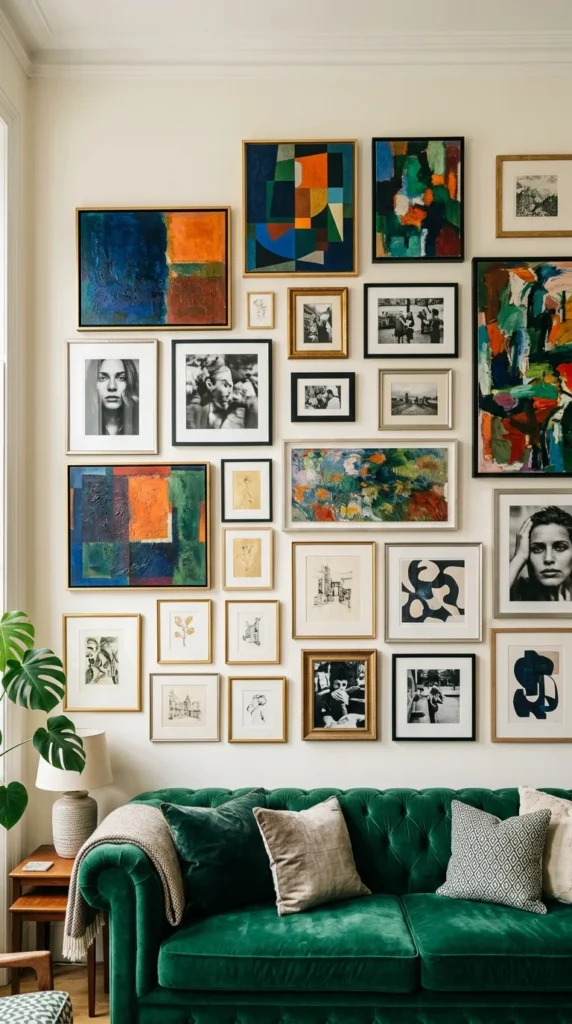
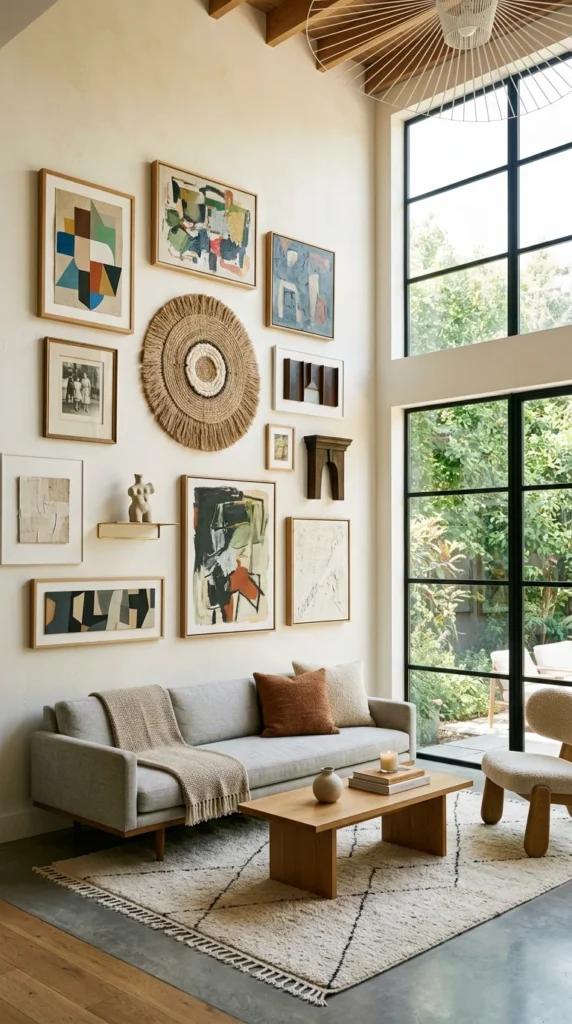
The gallery wall is a timeless classic for a reason: it allows you to showcase your personality through a curated collection of things you love. The secret to a successful gallery wall lies in the balance between variety and cohesion. You can opt for a “grid” style, where identical frames are spaced perfectly apart for a clean, museum-like feel, or go “eclectic” with a mix of frame finishes, sizes, and even 3D objects.
To execute this perfectly, start by laying your frames out on the floor. Play with the arrangement until the visual weight feels distributed. A tip from the pros: keep the spacing between frames consistent (usually two to three inches) to ensure the collection looks like a singular installation rather than a cluttered mess.
2. Oversized Art
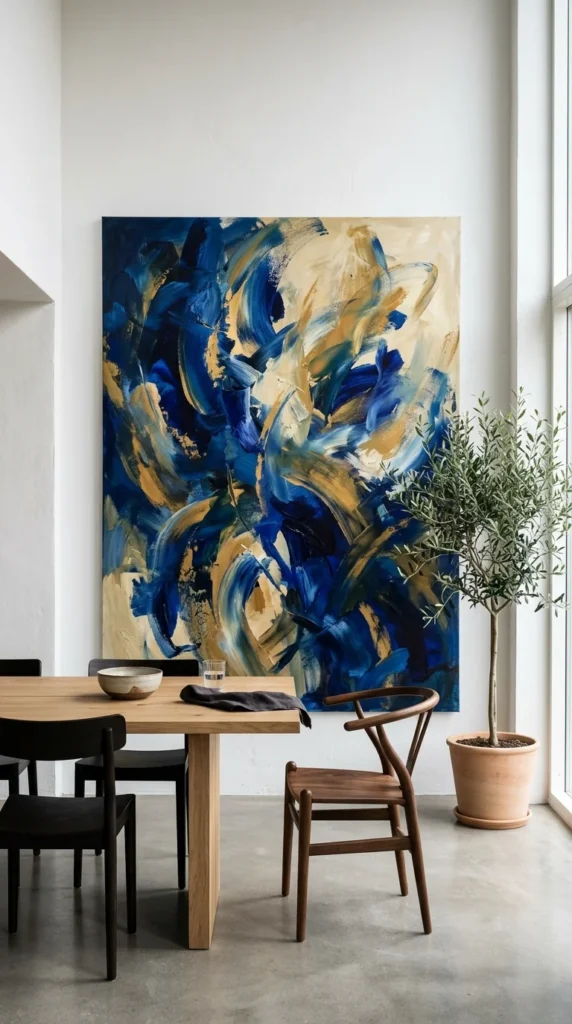
If the thought of measuring ten different frames for a gallery wall sounds exhausting, oversized art is your best friend. A single, large-scale piece of art can anchor a room and provide a sense of grandeur. This approach works particularly well in dining rooms, bedrooms, or over a large sectional sofa.
When choosing oversized art, consider the “rule of thirds.” The piece should take up roughly two-thirds to three-quarters of the wall space above your furniture. Whether it’s an abstract oil painting, a high-resolution landscape photograph, or a textile piece, the sheer scale will draw the eye and make a bold statement that smaller pieces simply cannot match.
3. Floating Shelves
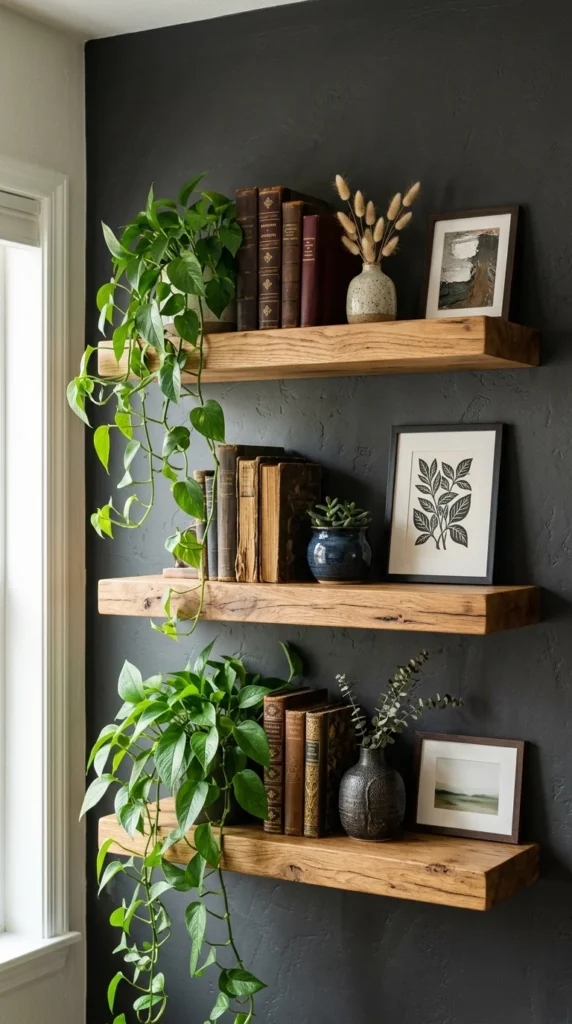
Floating shelves offer the perfect marriage of form and function. They add architectural interest to a flat wall while providing a platform to display your favorite treasures. Because you can swap out the items on the shelves whenever you like, this is a great option for those who love to redecorate with the seasons.
To style floating shelves like a professional, vary the heights of your objects. Use “anchors” like large books or vases, and “fillers” like small succulents or candles. Don’t be afraid of “negative space”—leaving a little room between items prevents the shelves from looking overcrowded and allows each piece to breathe.
4. Textile Hangings
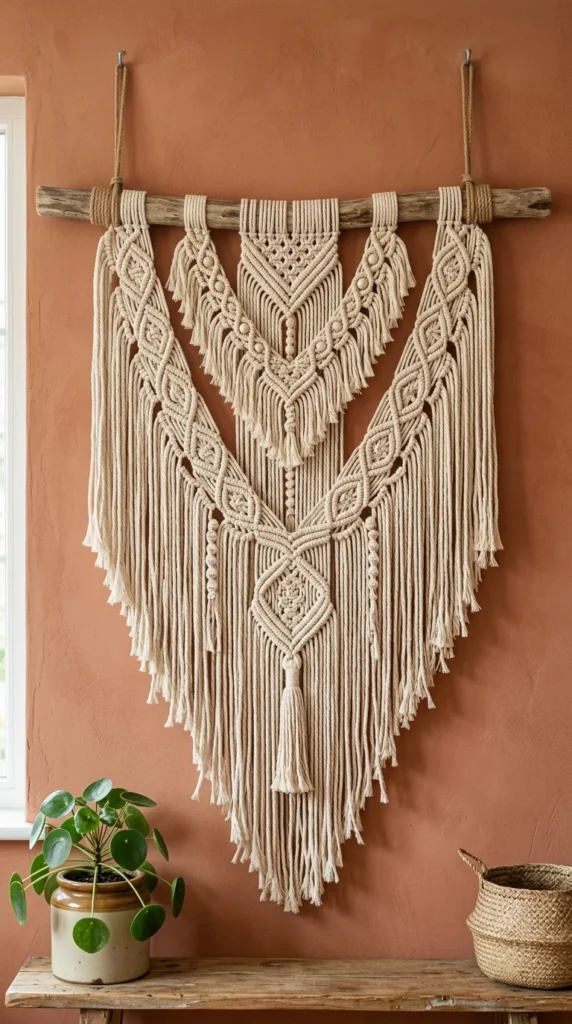
Textiles bring a layer of softness and acoustic warmth that hard-surfaced art cannot provide. In a room with lots of flat surfaces—like a bedroom with a wooden bed frame and metal lamps—a large tapestry, a vintage rug, or a macrame hanging can instantly make the space feel cozier and more inviting.
Hanging a rug on the wall is a centuries-old tradition that is making a huge comeback in modern bohemian and global-inspired interiors. Not only does it look stunning, but it also helps dampen sound, making it a functional choice for high-ceilinged rooms or apartments with thin walls.
5. Mirror Arrangements
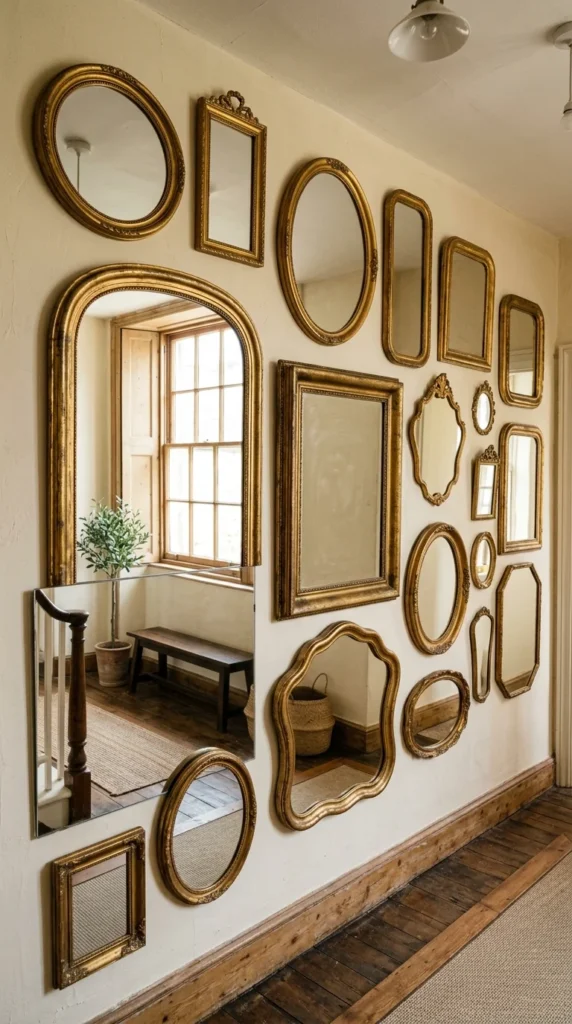
Mirrors are the oldest trick in the interior design book for making a room feel larger and brighter. Instead of hanging one standard mirror, try creating a “mirror wall.” By grouping different shapes and sizes together, you create a dynamic display that acts as both art and a light-reflecting tool.
Place your mirror arrangement opposite a window to maximize the amount of natural light reflected into the room. This is particularly effective in small entryways or narrow hallways where you want to create the illusion of more depth.
6. Living Walls
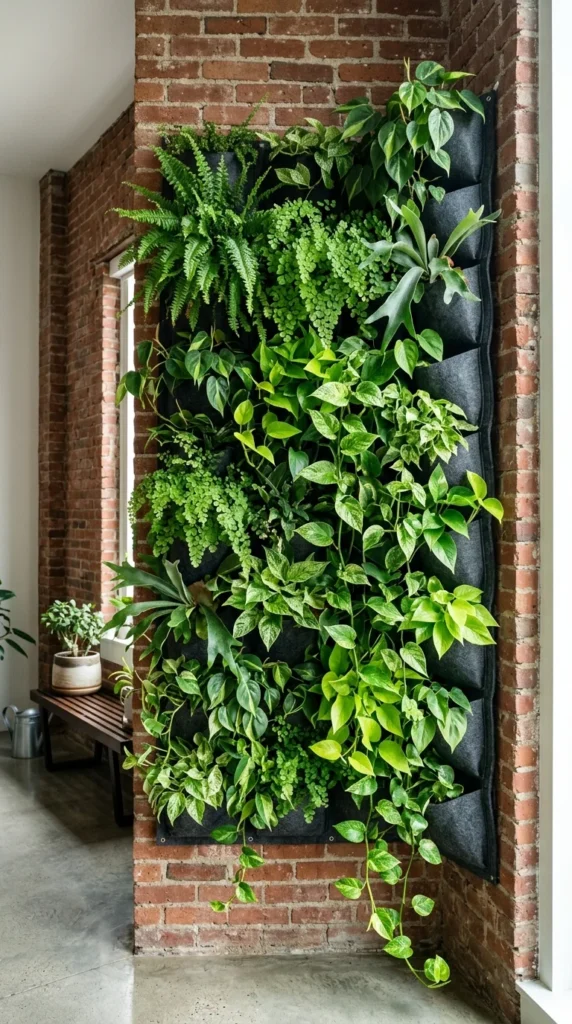
Biophilic design—the practice of bringing the outdoors in—is more popular than ever. A “living wall” or a vertical garden is the ultimate way to breathe life into your home. Using wall-mounted planters or a dedicated modular system, you can grow a variety of indoor plants directly on your wall.
If you don’t have a green thumb, you can achieve a similar look with “preserved moss art,” which requires zero maintenance but provides that same organic, vibrant green aesthetic. Living walls work beautifully in kitchens, home offices, or any space where you want to boost your mood and air quality.
7. Statement Wallpaper
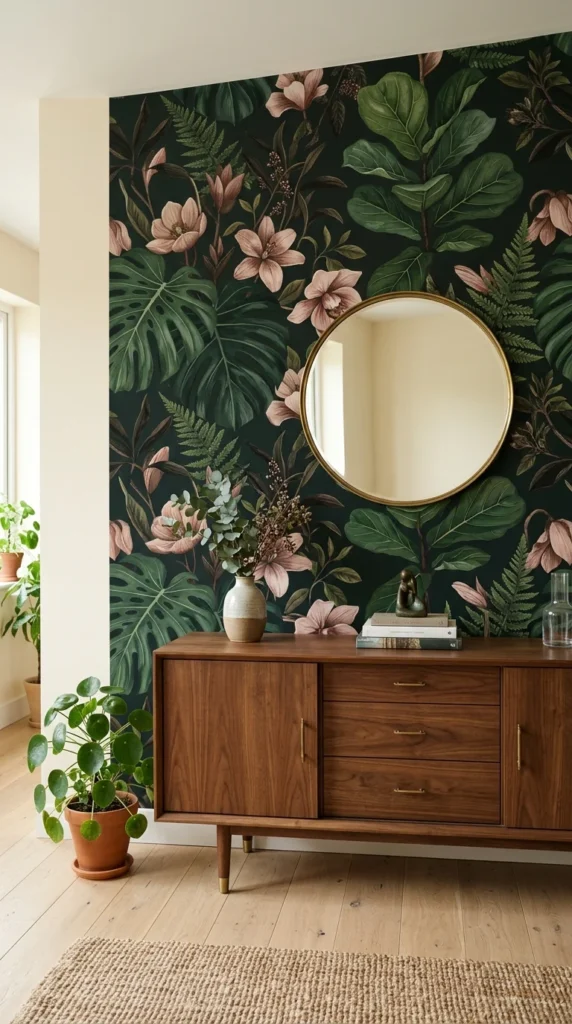
Wallpaper has evolved far beyond the repetitive floral patterns of the past. Modern statement wallpapers feature massive murals, textured grasscloths, and bold geometric designs that can transform a room in a single afternoon.
Using wallpaper on just one “accent wall” allows you to experiment with bold patterns without overwhelming the space. If you are a renter, peel-and-stick wallpaper is a fantastic invention that allows you to copy this look and remove it easily when you move out.
8. Woven Baskets
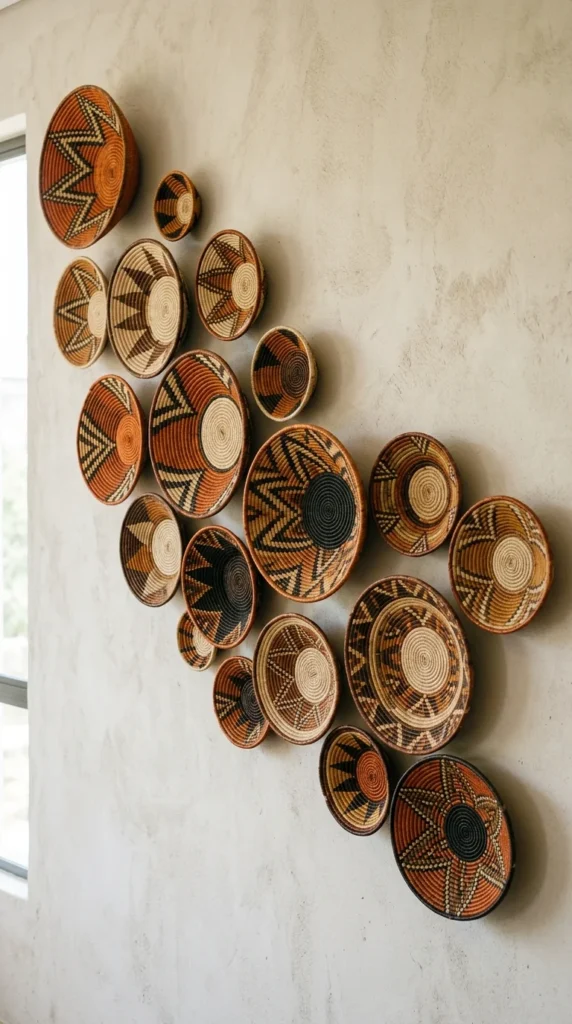
Woven baskets are a fantastic way to add texture, color, and a sense of global craftsmanship to your walls. They are lightweight, easy to hang, and offer a three-dimensional quality that flat art lacks. This look works exceptionally well in dining rooms or breakfast nooks, adding a warm, artisanal feel to the space.
When arranging baskets, try to create a sense of movement. Start with the largest basket as your focal point and “branch out” with smaller ones, overlapping edges slightly to create a cohesive, flowing installation.
9. Picture Ledges
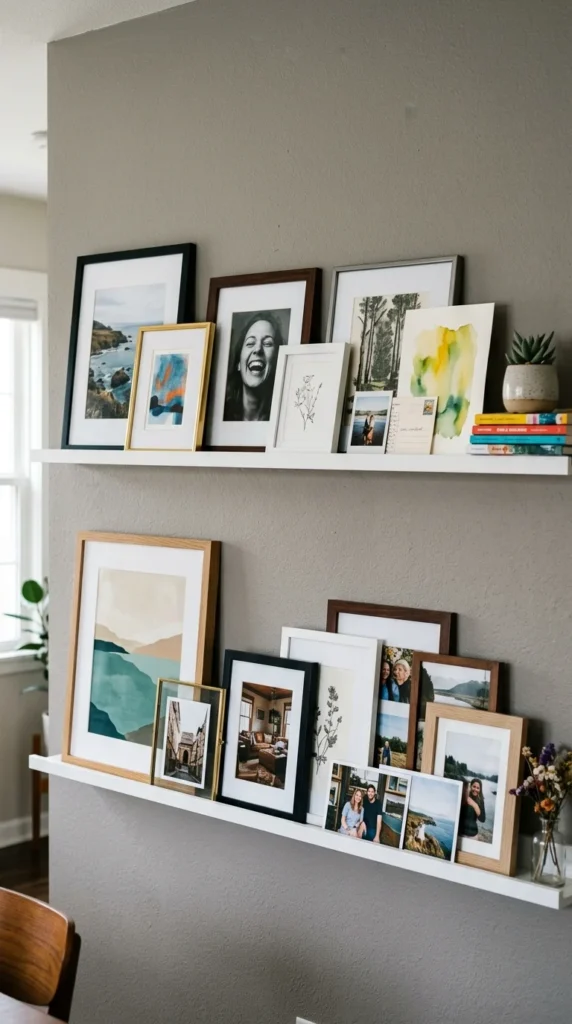
If you are someone who constantly changes their mind about art, picture ledges are the solution. Unlike traditional hooks, ledges allow you to lean art against the wall. This means you can swap, move, and layer frames without ever having to pick up a hammer or drill another hole.
Layering is the key here. Place larger frames in the back and smaller ones in front. You can even add small decorative objects, like a sculptural brass figure or a tiny bud vase, to the ledge to add depth and interest.
10. Architectural Molding
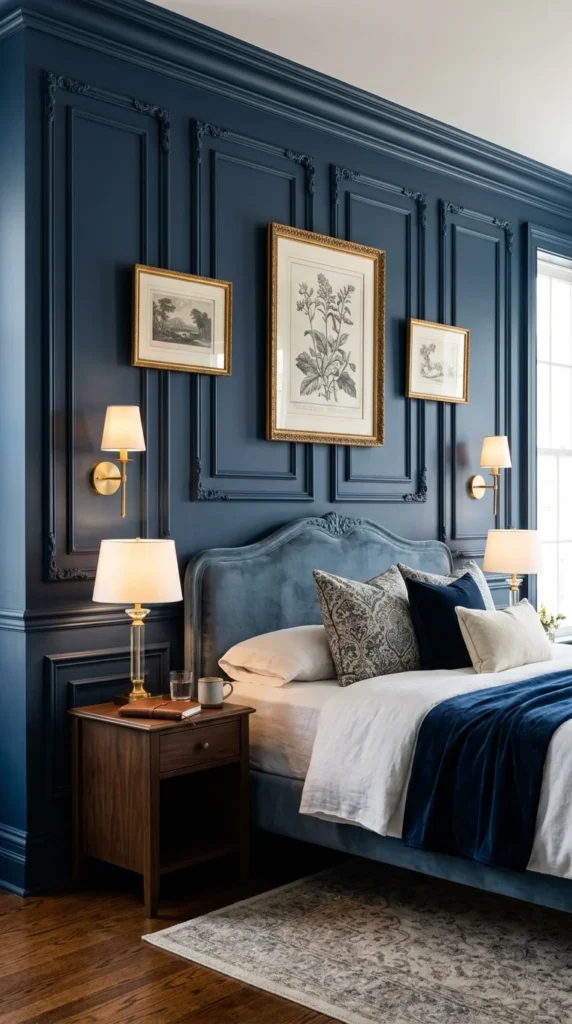
Sometimes, the best wall decor isn’t something you hang on the wall, but something you build into it. Adding architectural details like wainscoting, shiplap, or picture frame molding can give a room a sense of history and character.
Modern molding projects are surprisingly DIY-friendly. With some inexpensive wood trim, a miter saw, and some construction adhesive, you can create a high-end, custom look that adds significant value to your home. Painting the molding the same color as the wall creates a subtle, sophisticated texture, while a contrasting color makes a bold architectural statement.
11. Sconce Lighting
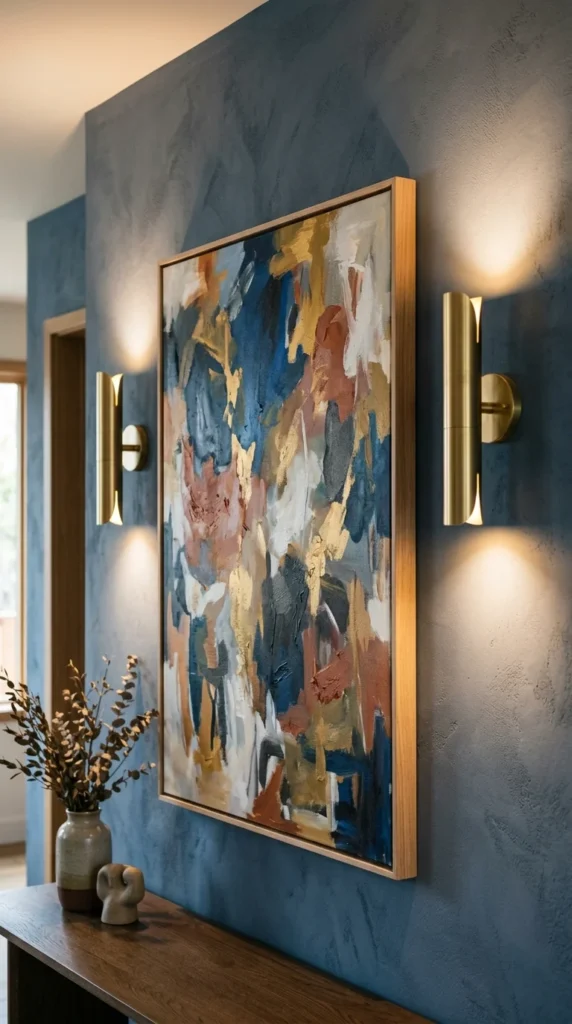
Lighting is often overlooked as a decorative element, but wall sconces are essentially functional sculptures. A beautiful sconce can act as a piece of art during the day and provide mood-enhancing “layering” of light in the evening.
You don’t even need to hire an electrician to get this look; many companies now offer “plug-in” sconces with stylish fabric cords, or even battery-operated LED versions that can be mounted anywhere. Positioning sconces next to art or above a bedside table adds symmetry and a polished, “designer” finish to the room.