

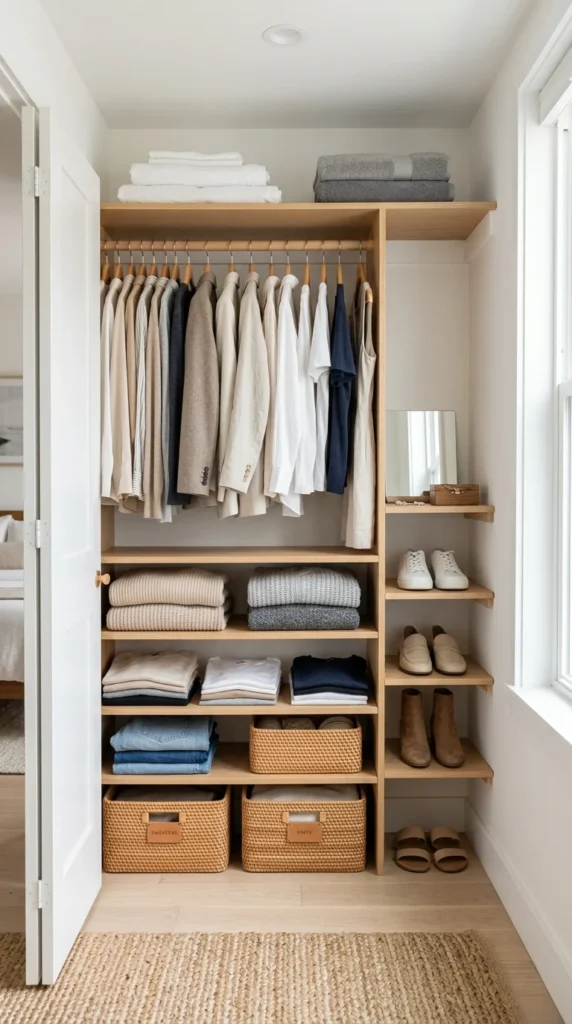
We have all been there: staring into a cramped, overflowing closet where finding a favorite sweater feels like an archaeological dig. When square footage is at a premium, your closet often becomes the first victim of clutter. However, a small closet doesn’t have to mean a small amount of storage. By shifting your mindset from horizontal to vertical and utilizing every square inch of “dead space,” you can effectively double—or even triple—your storage capacity.
Whether you are dealing with a tiny reach-in or a narrow walk-in, these 12 genius organization ideas will transform your cluttered chaos into a streamlined boutique experience.
1. Double Rods
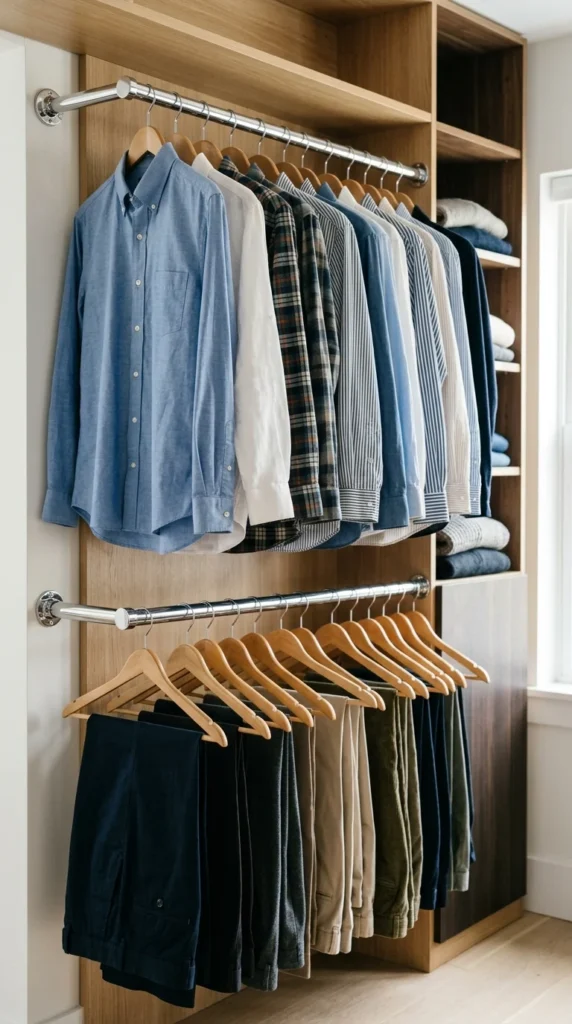
The single most effective way to instantly double your hanging space is to install a second closet rod. Most standard closets have one rod with three to four feet of empty, wasted space beneath the hanging clothes. By adding a lower rod, you separate your wardrobe into “tops” and “bottoms.”
This system works exceptionally well for shirts, skirts, and folded-over trousers. If you are a renter and cannot drill into the walls, look for “hang-from-rod” extenders. These are tension-based or hook-based rods that simply loop over your existing bar, providing a second tier of storage without a single screw.
2. Cascading Hangers
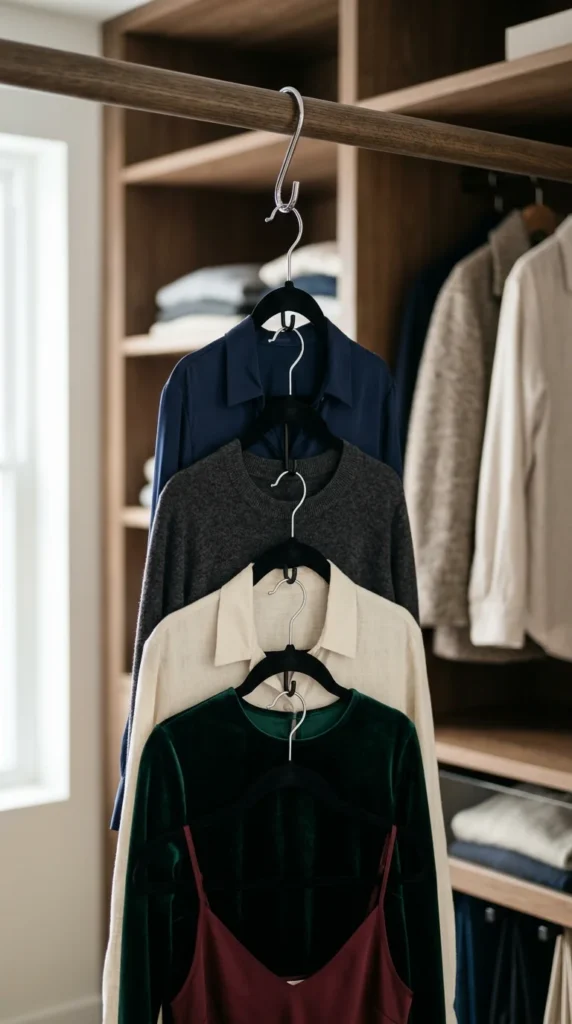
Horizontal rod space is the most valuable real estate in a closet. To maximize it, you must think vertically. Cascading hangers (sometimes called “space-saving hangers” or “wonder hangers”) allow you to stack multiple garments on top of one another while only using one hook on the main rod.
This is a game-changer for items you have in abundance, such as tank tops, light jackets, or sundresses. By dropping the clothes down vertically, you clear up inches of horizontal space that can be used for bulkier items like coats or blazers.
3. Door Organizers
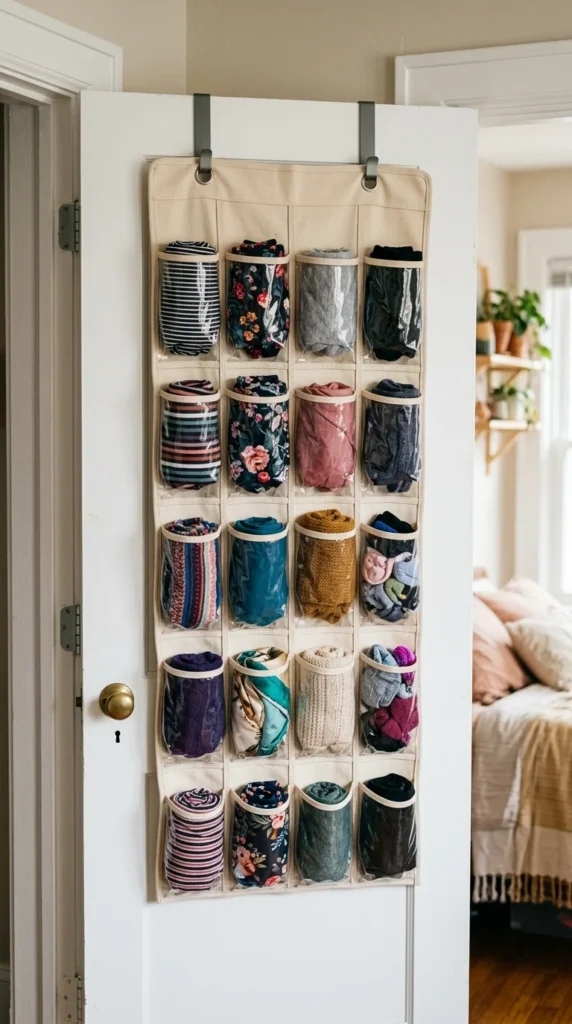
The back of the closet door is frequently overlooked, yet it offers several square feet of flat storage space. Over-the-door organizers are not just for shoes; they are versatile hubs for all your small accessories.
Use clear-pocket organizers to store rolled-up leggings, belts, hosiery, or even jewelry. If you prefer a more industrial look, install a metal rack system or a pegboard on the door. This allows you to hang hats, handbags, and umbrellas, keeping them off the floor and easily accessible as you head out the door.
4. Shelf Dividers
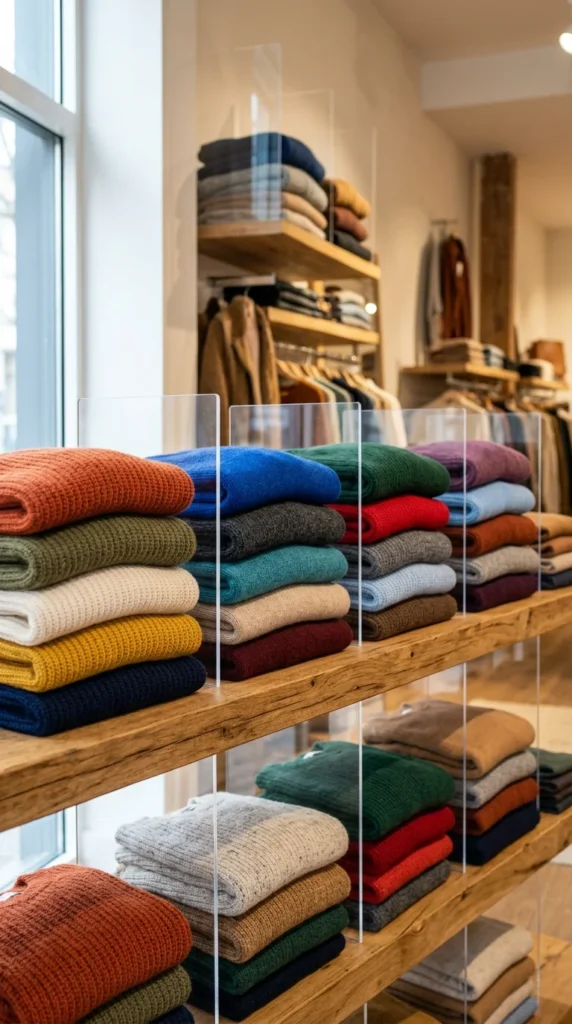
If you have open shelving in your closet, you know the struggle of the “sweater slide.” You pull one cardigan from the bottom, and the entire stack topples over. Shelf dividers are the solution to this architectural nightmare.
Usually made of clear acrylic or wire, these dividers slide onto your existing shelves to create “bins” without the bulk of actual boxes. They keep your folded stacks of jeans, sweaters, and sweatshirts perfectly upright. This not only looks much cleaner but also allows you to stack items higher than you would otherwise, utilizing the full height of the shelf.
5. Transparent Bins
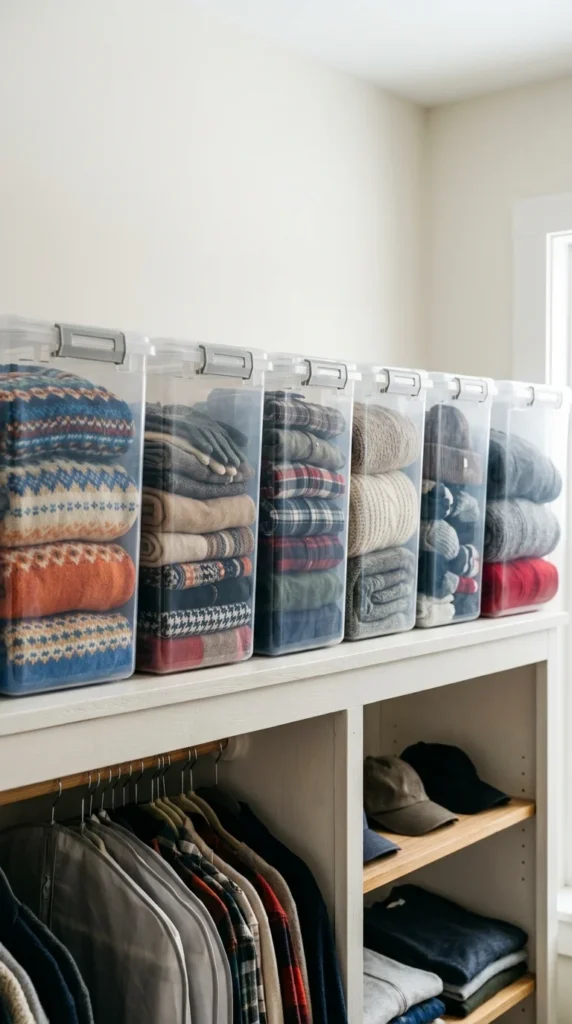
Visibility is the enemy of clutter. When you can’t see what you own, you buy duplicates or forget about items tucked away at the back. Transitioning your seasonal storage to transparent plastic bins ensures that you always have a visual inventory of your wardrobe.
Use these for items you don’t use daily, such as bathing suits in the winter or heavy wool socks in the summer. Labeling them is a bonus, but the transparency does most of the work. Square or rectangular bins are better than round ones, as they sit flush against each other and maximize every inch of shelf depth.
6. Shoe Racks
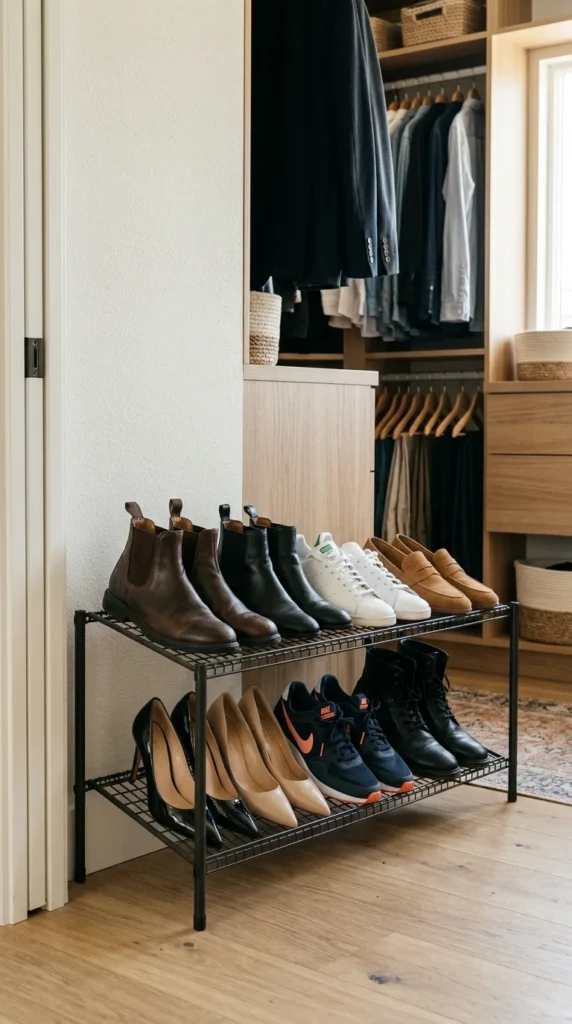
The floor of a small closet is often a “death zone” where shoes go to be stepped on and lost. A simple floor-based shoe rack can transform this pile into a structured system.
For the most efficient use of space, look for stackable or expandable racks. If you have a lot of vertical space under your hanging clothes, a multi-tier rack can hold 15-20 pairs of shoes in the same footprint that 5 pairs would occupy on the floor. For heels, consider a tension rod near the floor; you can “hook” the heels over the rod for a professional, display-like look.
7. S-Hooks
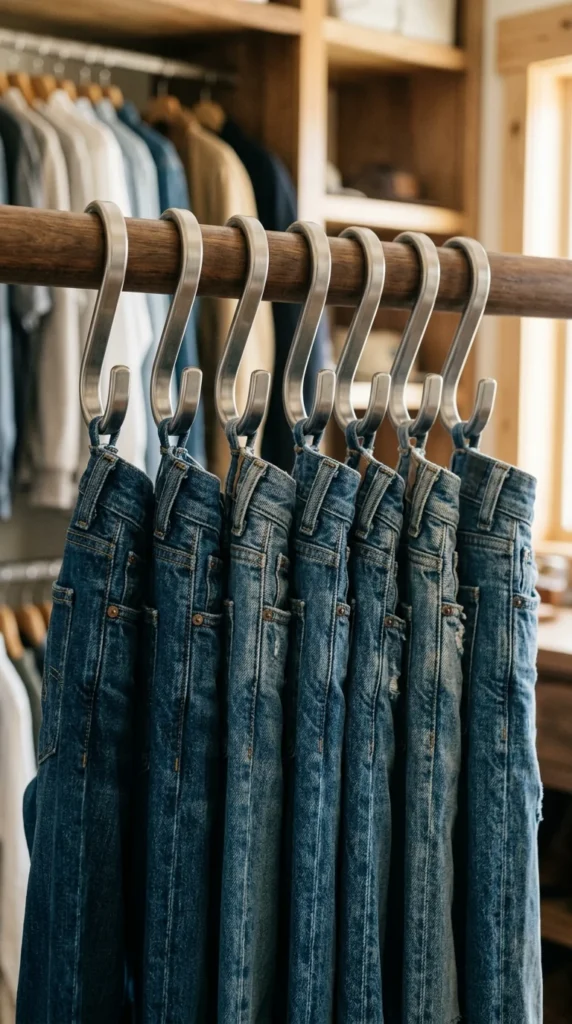
S-hooks are one of the most underrated tools in the organization world. Originally intended for kitchens, they are perfect for the closet. Instead of folding bulky jeans—which takes up massive shelf space—hang them by their belt loops on S-hooks.
This method allows you to see every pair of denim you own at a glance and prevents the creases that come from folding. S-hooks are also fantastic for organizing handbags. By hanging bags by their straps, you protect their shape and keep them from being crushed at the bottom of the closet.
8. LED Lighting
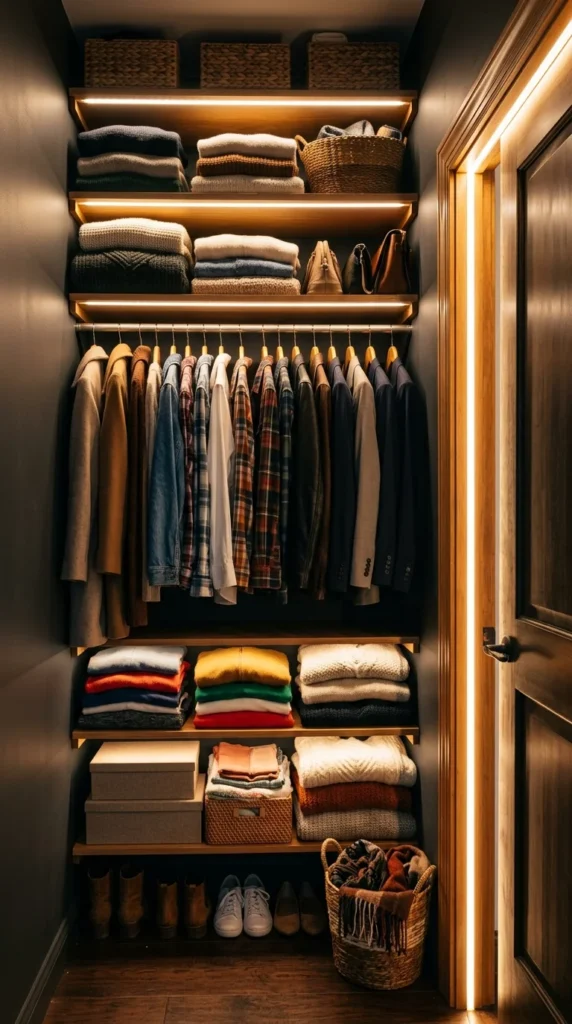
It might seem strange to list lighting as a storage idea, but a well-lit closet feels larger and is easier to keep organized. In a dark closet, items get pushed into corners and forgotten, creating “dead zones” that serve no purpose.
Battery-operated, motion-sensor LED strips are an inexpensive way to upgrade a rental closet. When you can see the back corners clearly, you are more likely to utilize that space. High-quality lighting also gives the closet a luxury feel, which encourages you to maintain the organization you’ve worked so hard to achieve.
9. Drawer Inserts
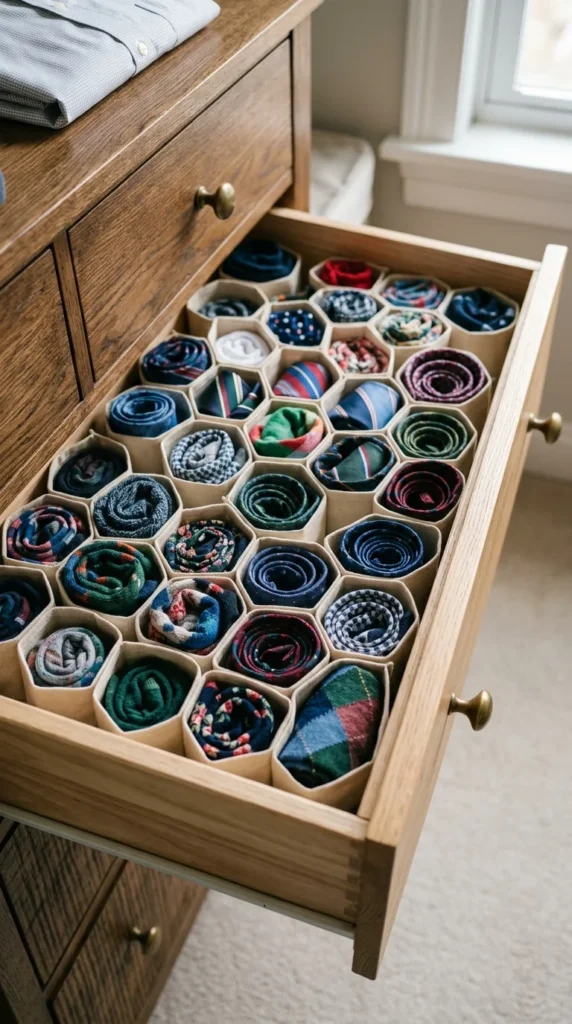
If your closet includes a built-in chest of drawers, the interior of those drawers can quickly become a jumbled mess. Drawer inserts or “honeycomb” dividers allow you to assign a specific home to every small item.
Roll your socks, ties, and undergarments instead of folding them flat. Rolling items allows you to see everything at once (the “file-folding” method) and prevents you from digging through layers to find a specific pair of socks. This micro-organization ensures that no space is wasted and everything remains in its designated spot.
10. High Baskets
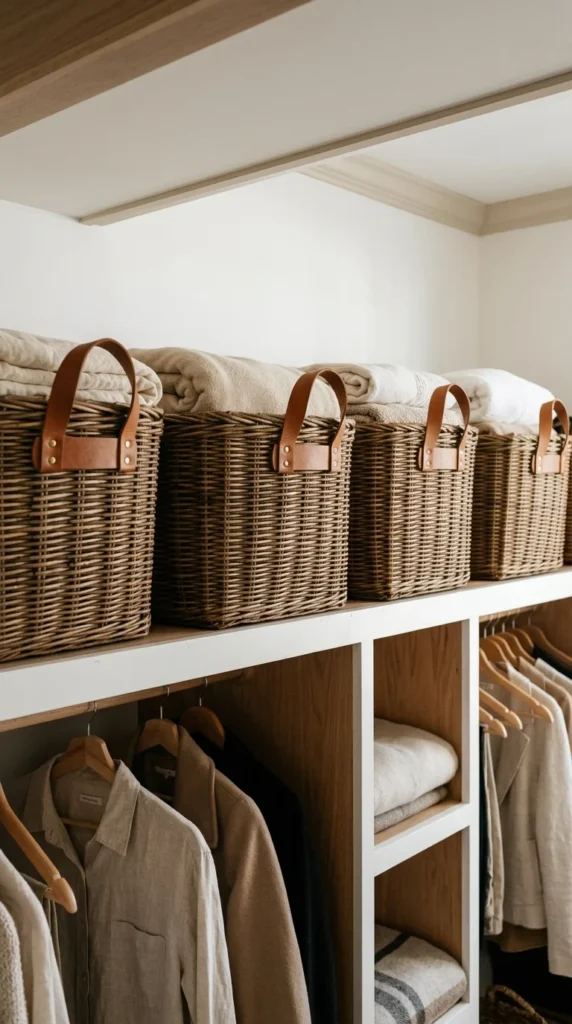
The very top shelf of a closet—the one that requires a step stool to reach—is often a graveyard for random items. To make this space functional, use large, deep baskets.
Wicker or fabric baskets provide a uniform look that hides the visual clutter of miscellaneous items. These are perfect for storing “long-term” items like extra bed linens, out-of-season blankets, or travel gear. Because they have handles, you can easily pull the entire basket down, find what you need, and slide it back into place without disturbing the rest of the shelf.
11. Uniform Hangers
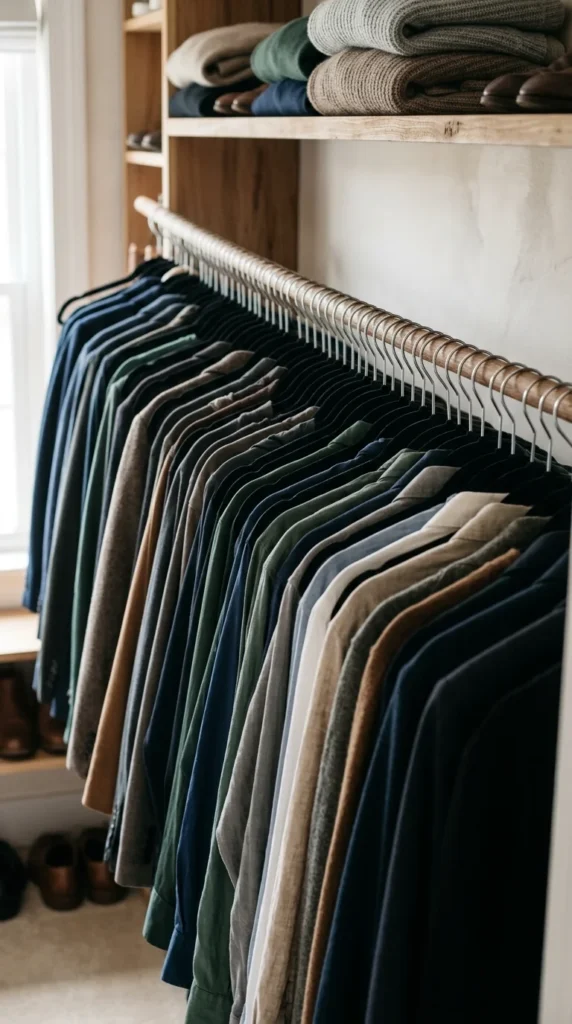
Mismatched hangers are one of the biggest space-wasters in a closet. Thick plastic or wooden hangers take up significantly more room than necessary. Switching to uniform, slim-profile velvet hangers can reclaim up to 20-30% of your rod space immediately.
Velvet hangers have a non-slip grip, which prevents clothes from sliding off and ending up on the floor. The uniform look also reduces visual noise, making the closet feel more spacious and organized. When all your clothes sit at the same height and depth, it’s much easier to browse your wardrobe.
12. Corner Shelving
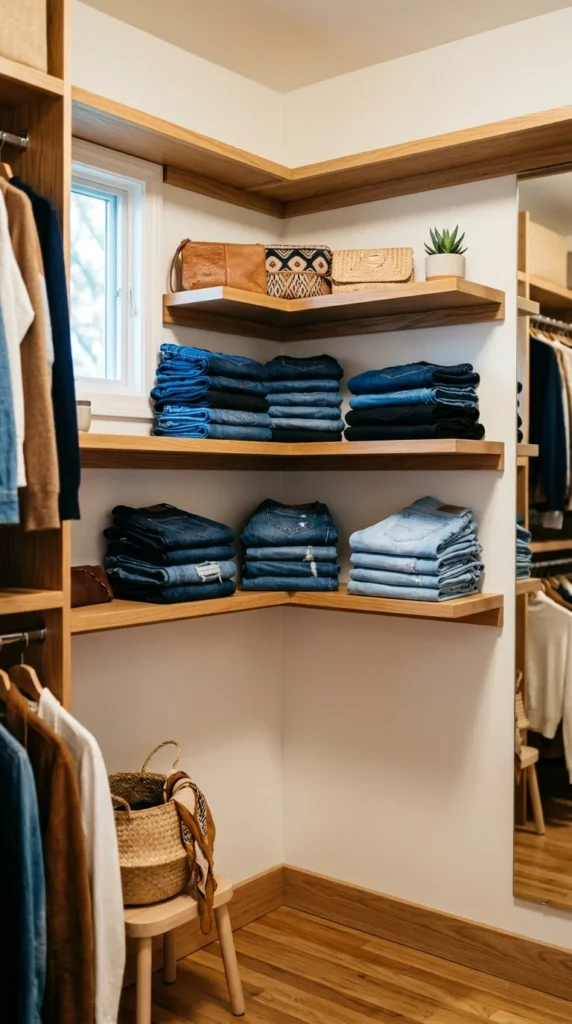
Corners are the most difficult areas to organize in any small closet. Often, the rod just stops, leaving a “black hole” in the corner where things are thrown and never seen again.
Installing specialized corner shelving or a “lazy susan” for shoes can reclaim this lost territory. If a permanent shelf isn’t an option, use a hanging fabric organizer designed for corners. By filling the 90-degree angle with structured storage, you turn a design flaw into one of the most high-capacity areas of your closet.