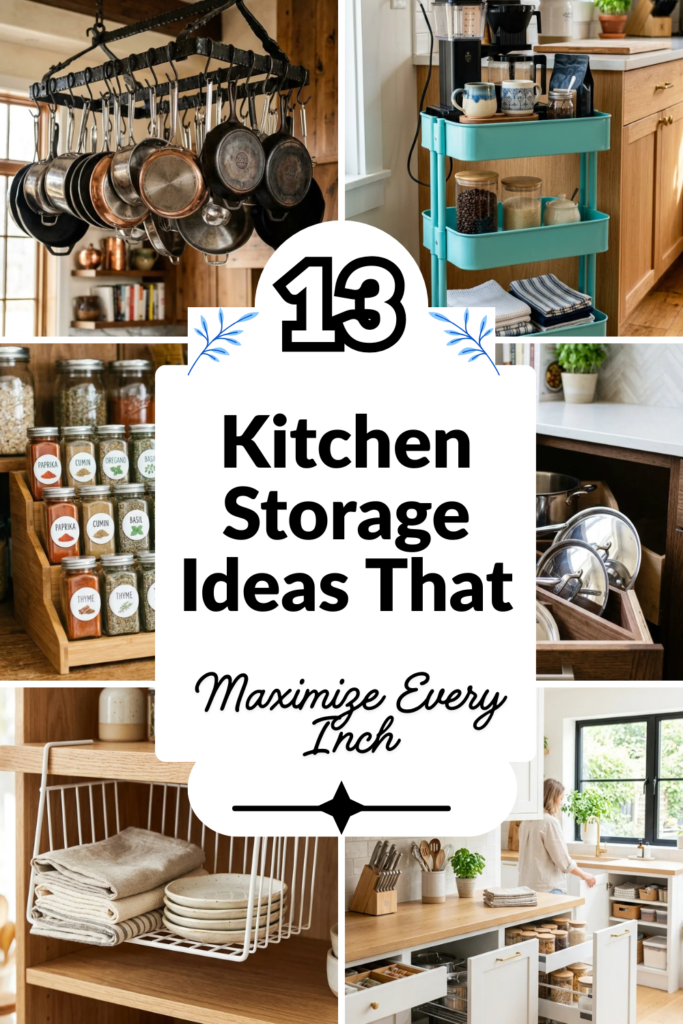

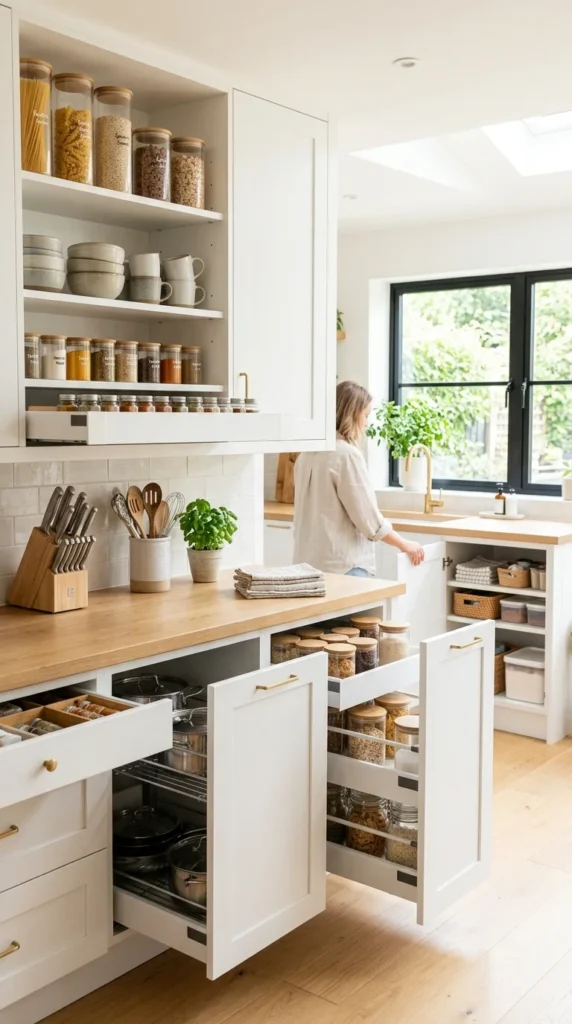
The kitchen is the heart of the home, but it is often the most cluttered room in the house. Between small appliances, cookware, dry goods, and a mountain of utensils, space disappears quickly. Whether you are living in a tiny studio apartment or a sprawling suburban home, the challenge remains the same: how do you fit everything you need into the space you have?
Maximizing every inch of your kitchen isn’t just about cleaning; it’s about engineering your environment to work for you. By utilizing vertical space, reclaiming hidden nooks, and optimizing existing cabinets, you can transform a chaotic cooking area into a streamlined culinary sanctuary. Here are 13 genius kitchen storage ideas to help you reclaim your space.
1. Pull-Out Pantries
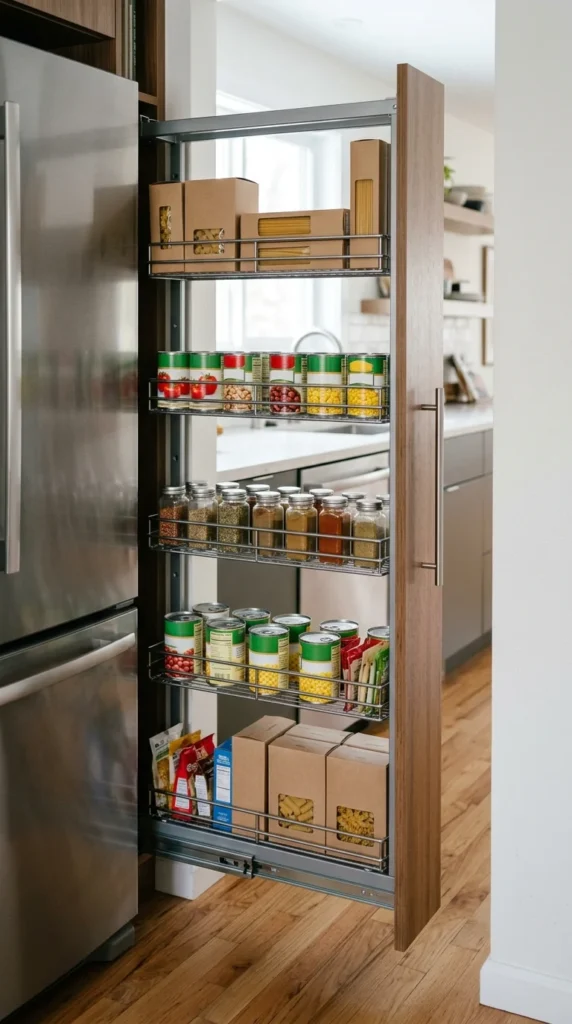
In many kitchens, there is a “dead zone” of six to ten inches between the refrigerator and the wall. A pull-out pantry is the ultimate solution for this wasted real estate. These slim, vertical units slide out on tracks, providing multiple levels of shelving that are perfect for storing spices, oils, canned goods, and dry snacks.
The beauty of a pull-out pantry is accessibility. Unlike deep, dark cabinets where items get lost in the back, everything in a pull-out pantry is visible from both sides. This makes inventory management a breeze and ensures you never buy a third jar of paprika because you couldn’t find the first two.
2. Magnetic Strips
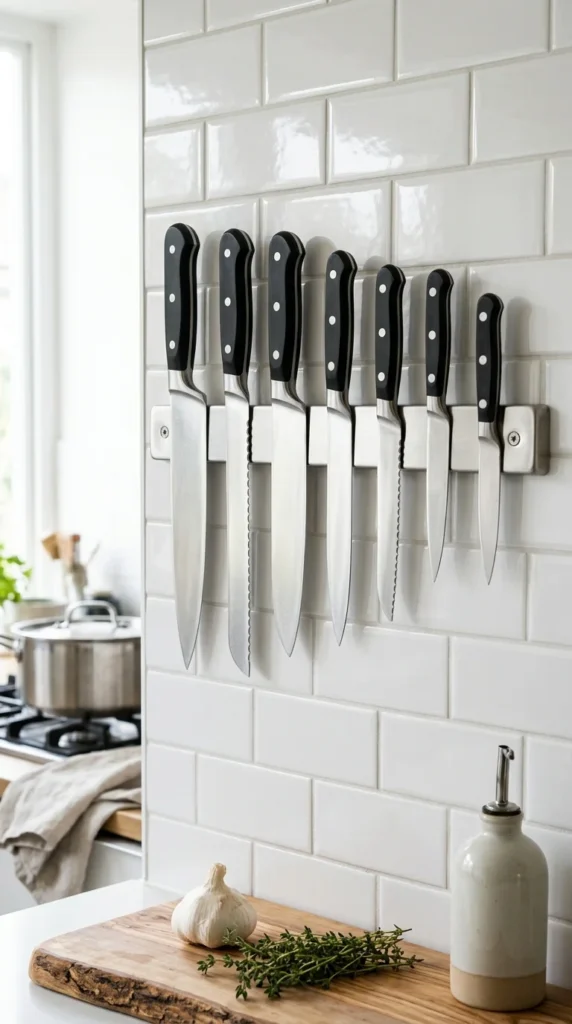
Countertop knife blocks are notorious space-wasters. They take up valuable “prep real estate” and can be difficult to clean. A magnetic knife strip moves your blades to the wall, keeping them safe, dry, and within arm’s reach.
Beyond knives, magnetic strips can be used to hold metal spice tins, mason jar lids, or even small metal kitchen tools like whisks and tongs. By moving these items to a vertical surface, you free up drawer space for larger, more awkward items that can’t be hung.
3. Floating Shelves
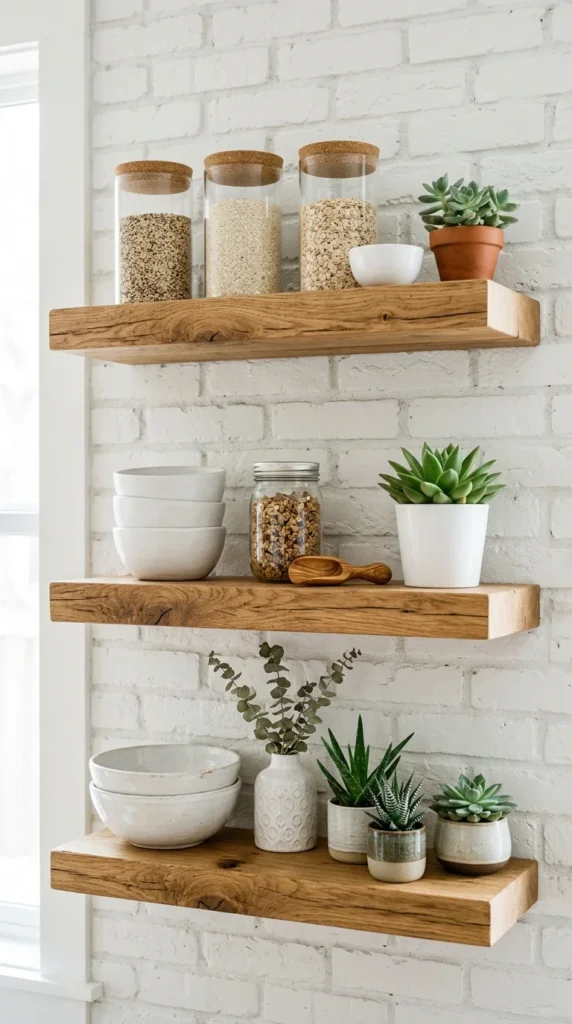
While upper cabinets provide a lot of storage, they can make a small kitchen feel cramped and dark. Floating shelves offer a more open, airy alternative while still providing plenty of storage for daily essentials.
To maximize floating shelves, use them for items you use every day, such as coffee mugs, dinner plates, or frequently used cookbooks. By keeping these items out in the open, you eliminate the need to constantly open and close cabinet doors. Just remember to keep them organized—since everything is on display, neatness is key to maintaining a clean aesthetic.
4. Pegboard Walls
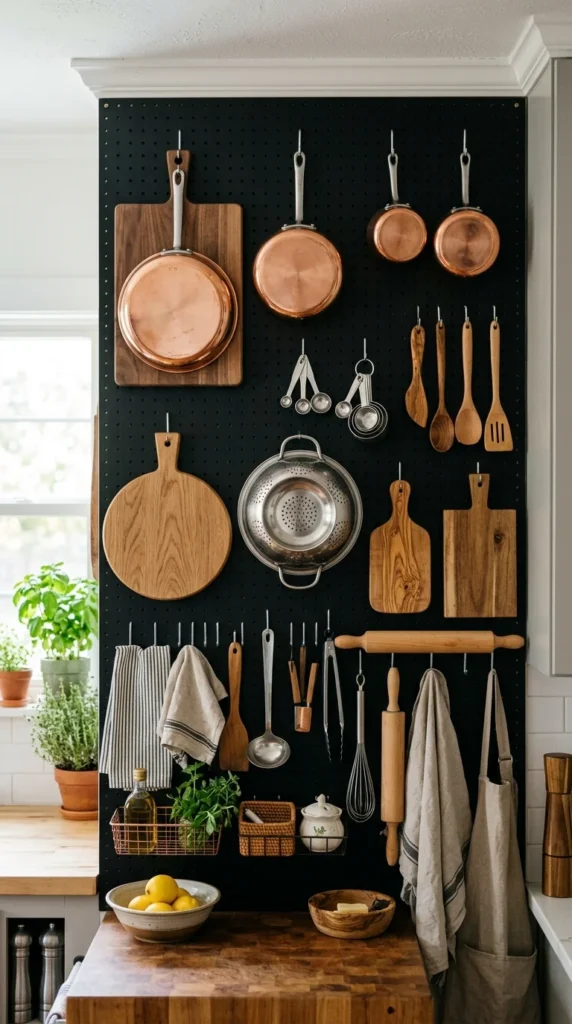
Inspired by workshops and garages, the kitchen pegboard is a versatile storage powerhouse. It allows you to customize your storage layout based on your specific tools. If you buy a new oversized sauté pan, you simply move a few hooks to accommodate it.
Pegboards are particularly effective for heavy cookware that takes up too much room in drawers. By hanging your pots and pans, you prevent them from scratching each other in a stack. Plus, it adds a professional, “chef’s kitchen” vibe to your space that is both functional and stylish.
5. Under-Shelf Baskets
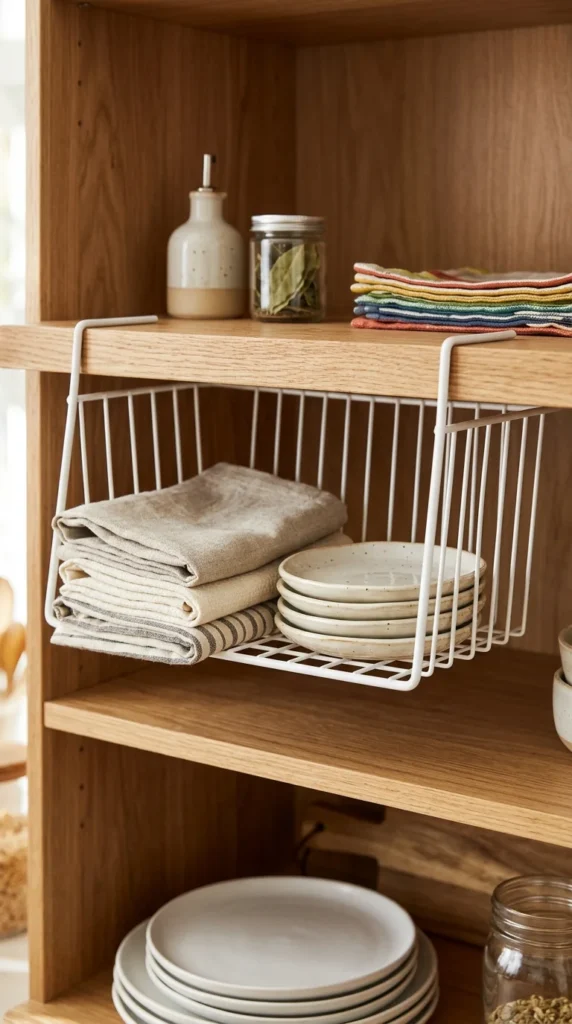
We often focus on the horizontal surface area of our shelves, but we ignore the empty air directly beneath them. Under-shelf baskets are clip-on wire units that instantly create a second “mini-shelf” without the need for tools or drilling.
These are perfect for “flat” items that don’t stack well, such as aluminum foil boxes, plastic wrap, tea towels, or even bags of bread. By utilizing the vertical gap between the top of your items and the shelf above, you can effectively double the storage capacity of a standard cabinet.
6. Corner Drawers
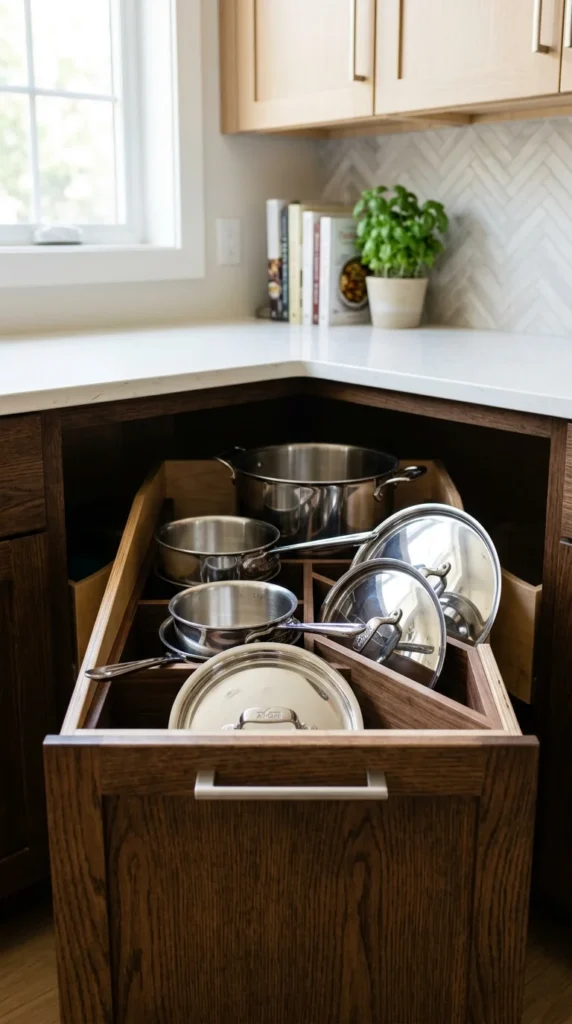
The “blind corner” cabinet is where tupperware lids and old Tupperware go to die. Traditional “Lazy Susans” are a common fix, but corner drawers are a more modern and efficient alternative. These drawers are built with a 90-degree angle to fit perfectly into the corner.
When pulled out, they reveal deep storage that would otherwise be unreachable. This design eliminates the need to crawl on the floor with a flashlight to find a lost pot. It’s a high-end custom solution that makes every cubic inch of your cabinetry functional.
7. Toe Kick Drawers
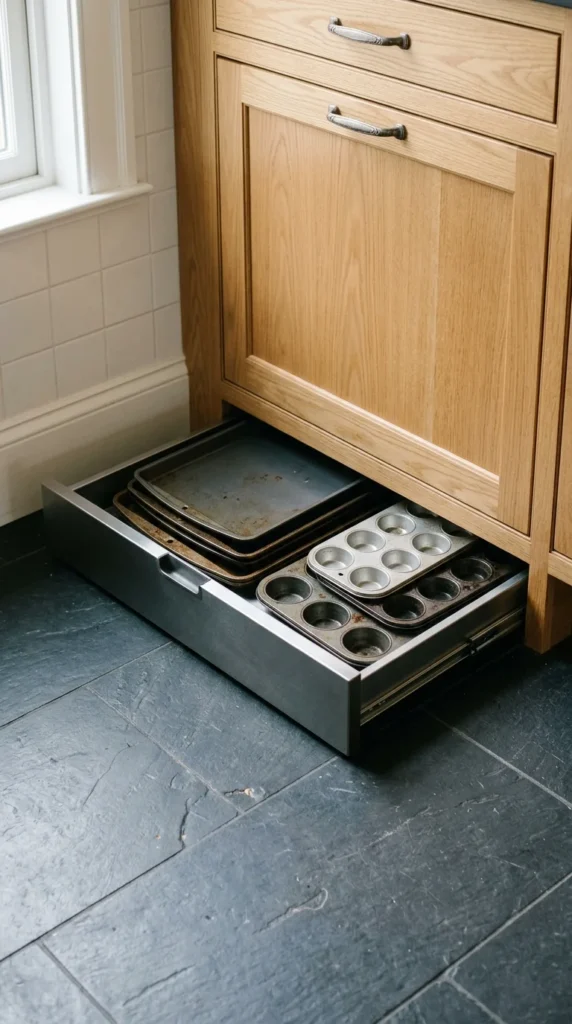
The toe kick is the recessed space between the bottom of your cabinets and the floor. Usually, this space is just a hollow void. By installing toe kick drawers, you can gain several extra inches of storage throughout the entire perimeter of your kitchen.
Because these drawers are very shallow, they are ideal for flat items like baking sheets, pizza stones, or even a hidden step stool. They are typically operated by a “touch-to-open” mechanism, allowing you to open them with your foot when your hands are full.
8. Tension Rods
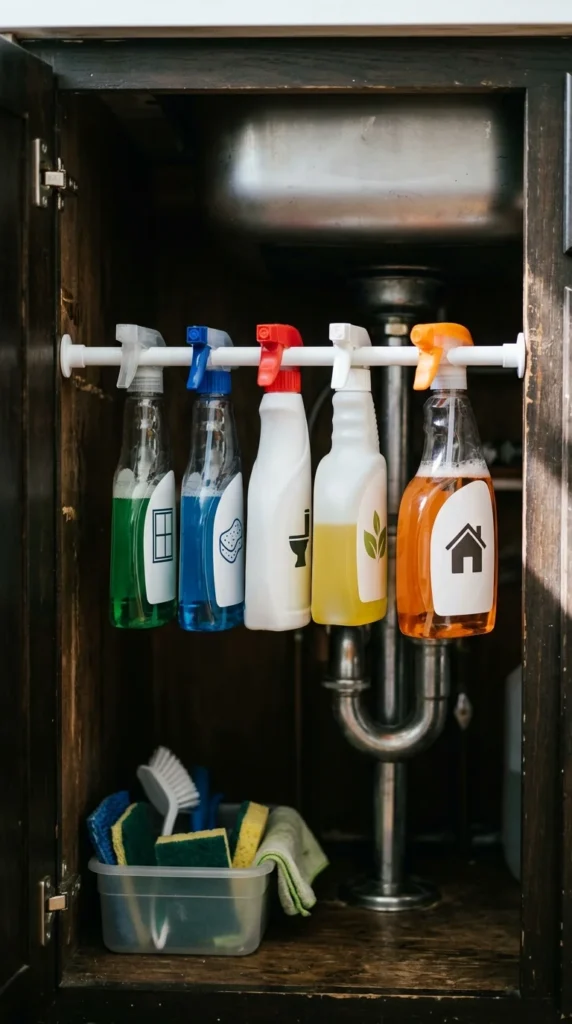
The area under the kitchen sink is often a chaotic mess of pipes and cleaning supplies. A simple, inexpensive tension rod can change that. By stretching a rod from one side of the cabinet to the other, you create a hanging rack for spray bottles.
This clears up the floor of the cabinet for bins and buckets, while keeping your most-used cleaners right at eye level. You can also use tension rods inside drawers to create dividers for vertical storage of pot lids or baking pans.
9. Rolling Carts
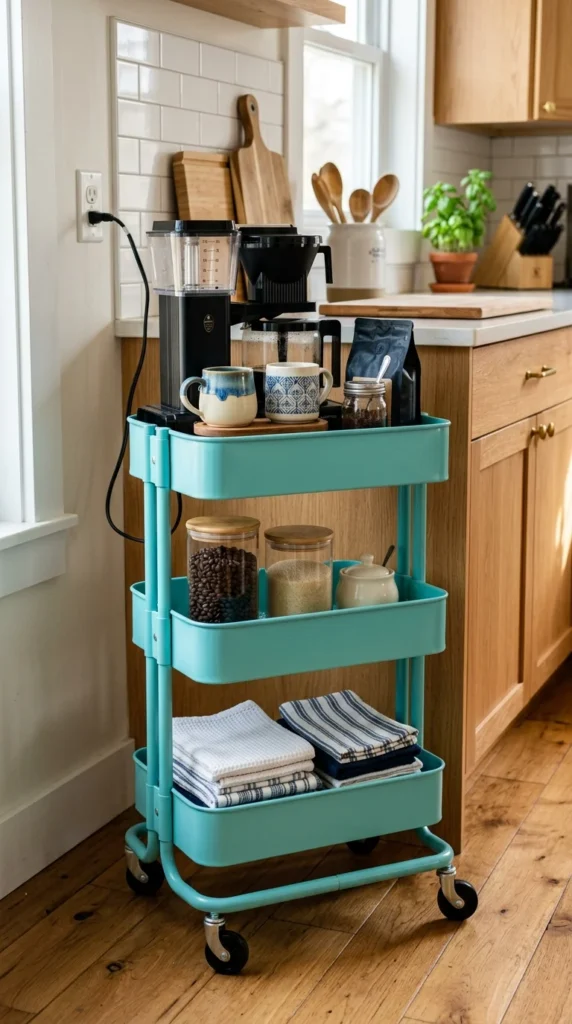
If your kitchen lacks permanent counter space or cabinetry, a rolling cart is your best friend. These mobile units can act as a portable coffee station, a bar cart, or a prep island.
The beauty of a rolling cart is its flexibility. When you’re cooking a big meal, you can pull it into the center of the room for extra workspace. When you’re finished, you can tuck it away into a corner or even into a closet. It’s a “pop-up” storage solution that grows and shrinks with your needs.
10. Drawer Dividers
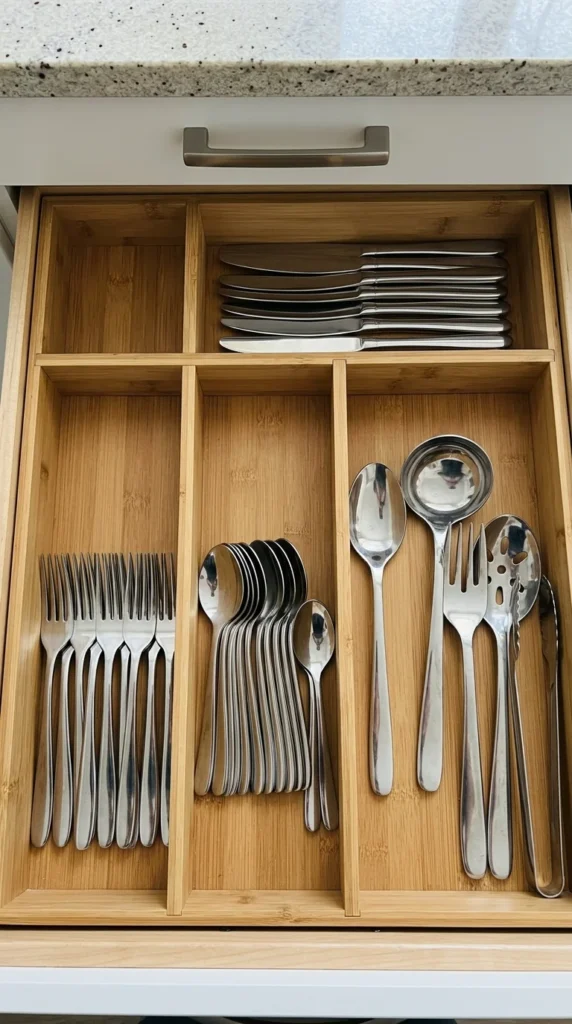
Deep, wide drawers are great, but without organization, they become “junk drawers” instantly. Drawer dividers allow you to compartmentalize your storage, giving every item a specific home.
Beyond just cutlery, use deep dividers for cooking utensils, “junk” items like batteries and pens, or even for folded kitchen towels. When everything has a designated slot, you spend less time rummaging and more time actually cooking.
11. Over-the-Sink Racks
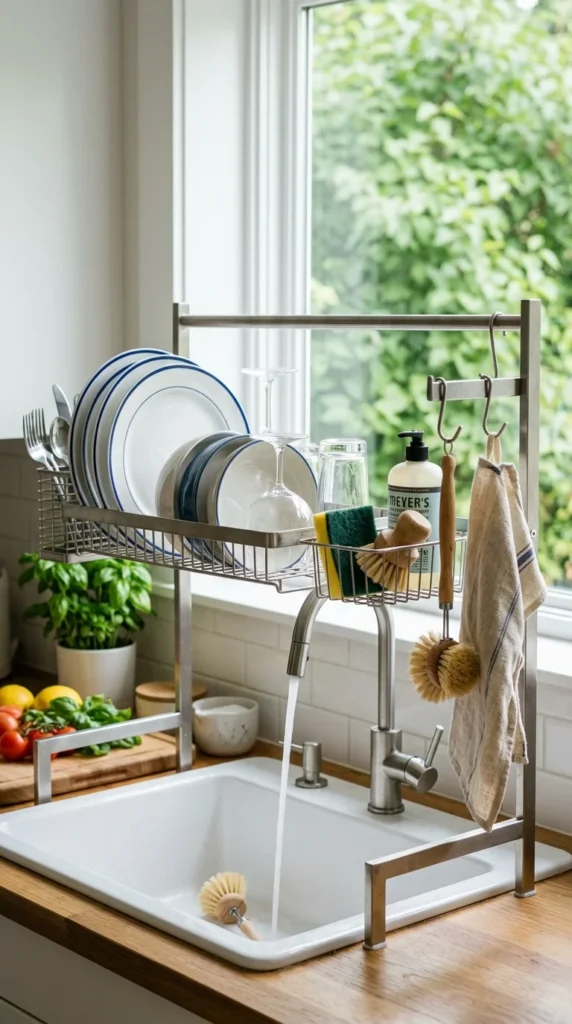
In small kitchens, the dish drying rack is often the biggest “space hog” on the counter. An over-the-sink rack solves this by moving the drying process into the air. Water drips directly into the sink, eliminating the need for a soggy drain mat.
Many of these racks are modular, allowing you to attach baskets for fruit, holders for cutting boards, and hooks for utensils. By moving your drying dishes off the counter, you reclaim several square feet of workspace for meal prep.
12. Tiered Organizers
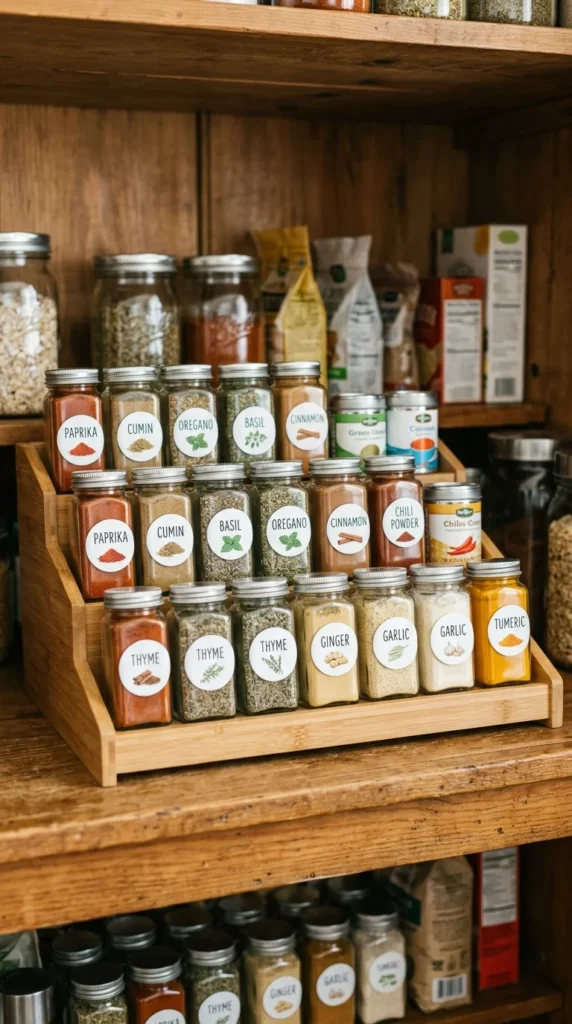
When items are stored on a flat shelf, the things in the back are hidden by the things in the front. Tiered organizers—often called “stadium seating” for your pantry—elevate the back rows so you can see every label clearly.
This is especially effective for spices, canned goods, and medicine bottles. For deeper cabinets, a “Lazy Susan” (turntable) serves a similar purpose, allowing you to rotate the shelf to bring items from the back to the front with a simple flick of the wrist.
13. Ceiling Racks
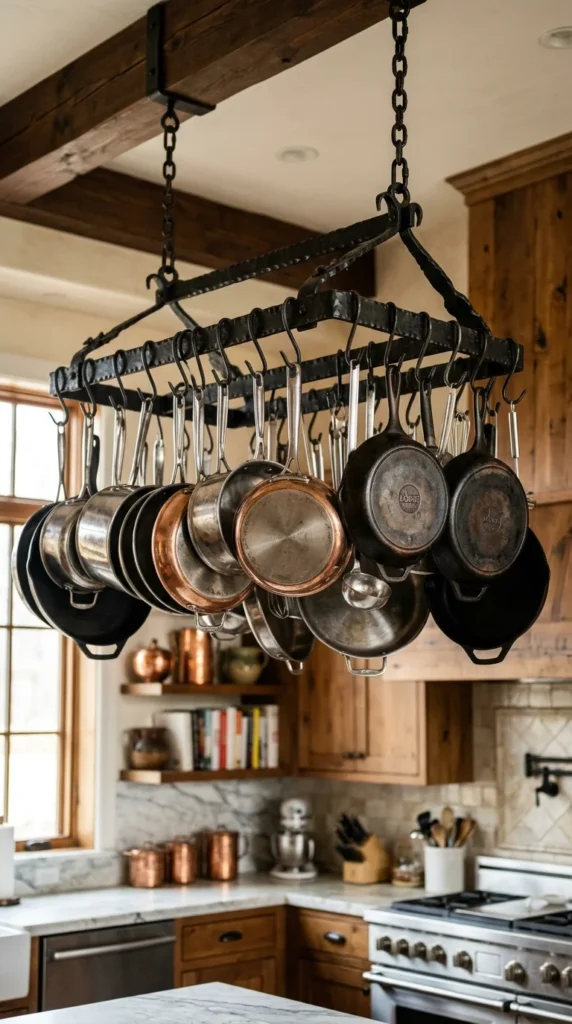
If you have high ceilings and have run out of wall and cabinet space, look up. A ceiling-mounted pot rack is a classic storage solution that turns your cookware into a focal point of the room.
Hanging your pots and pans overhead keeps them within reach of the stove while freeing up massive amounts of cabinet space for items you don’t want on display. It’s an efficient use of vertical space that adds character and a sense of “culinary scale” to any kitchen.