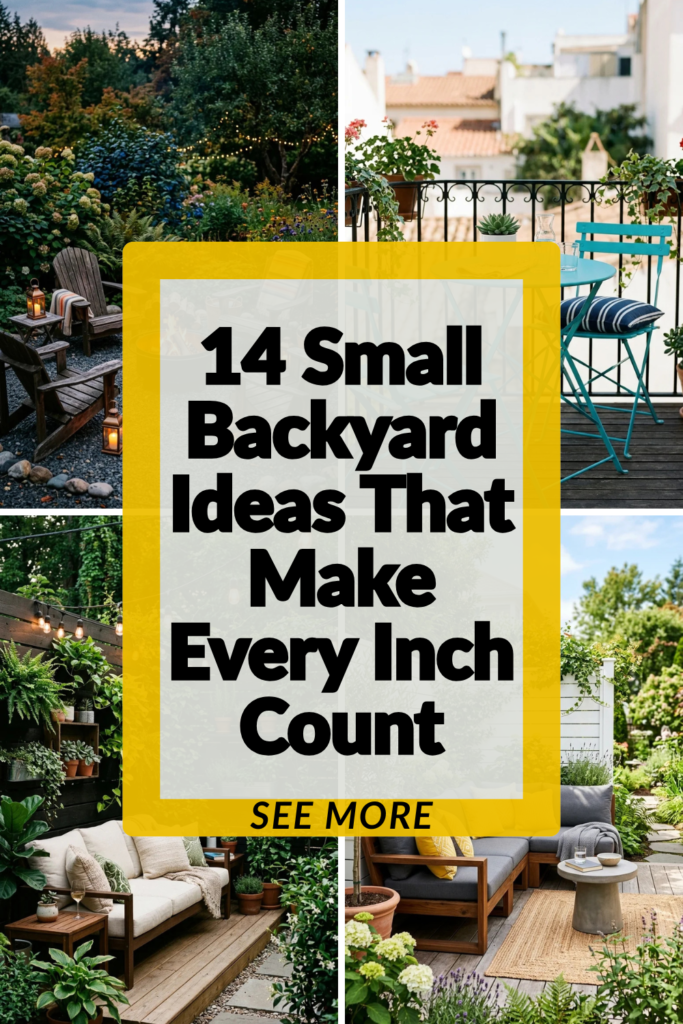

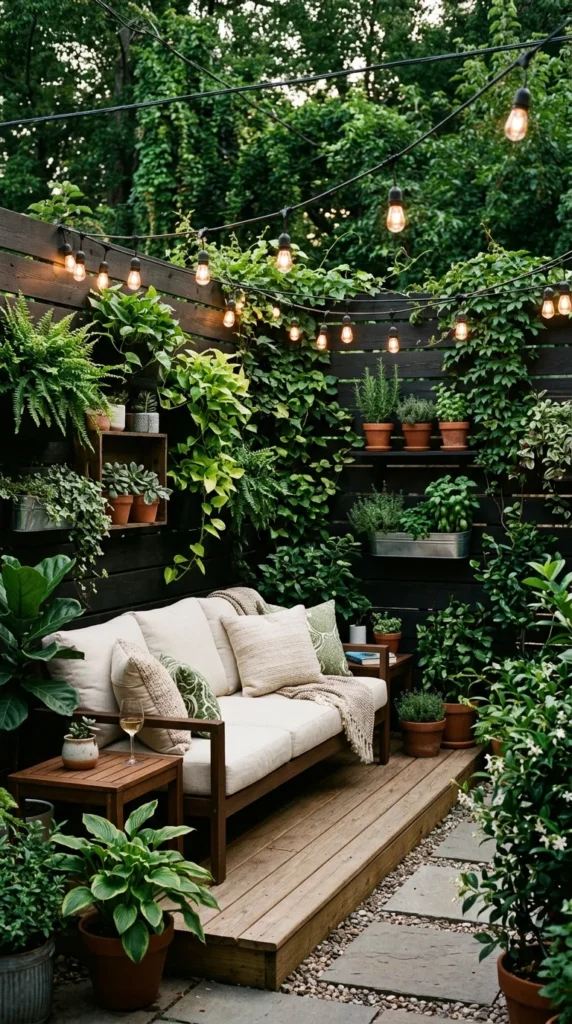
Having a small backyard doesn’t mean you have to sacrifice style, comfort, or functionality. In fact, limited space often inspires the most creative and intimate designs. Whether you’re dealing with a narrow side yard, a tiny patio, or a petite patch of grass, the key is to prioritize smart layouts and multi-functional elements. By thinking vertically, choosing the right scale of furniture, and using visual tricks to expand the horizon, you can transform a cramped outdoor area into a breathtaking retreat. Here are 14 innovative ideas to help you maximize every square inch of your outdoor space.
1. Vertical Gardens
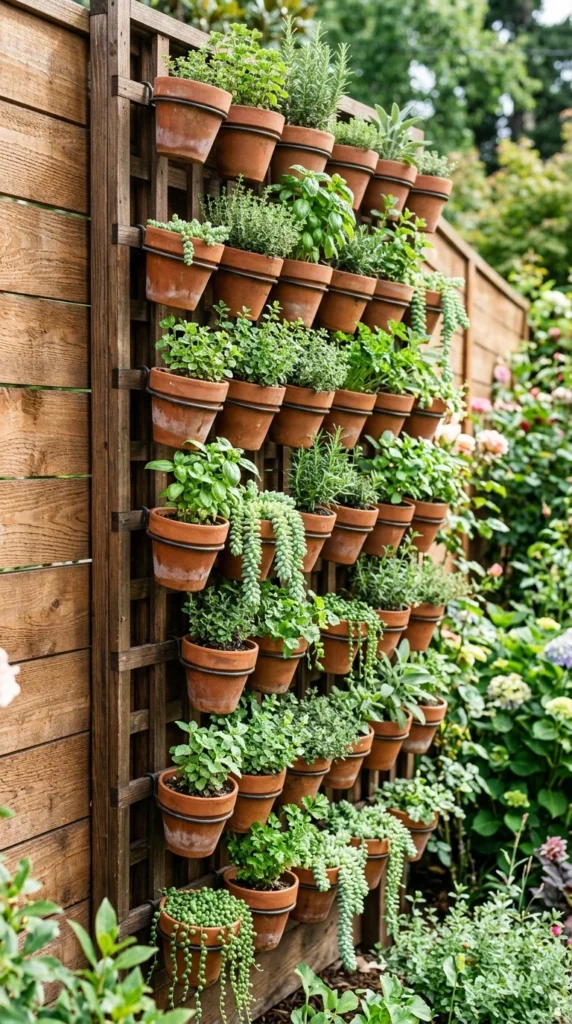
When floor space is at a premium, the only way to go is up. Vertical gardening is a game-changer for small backyards. Instead of spreading planters across your deck, use your walls and fences as a canvas for greenery. You can install a living wall system, hang pockets made of felt, or simply lean a wooden ladder against a wall to hold potted plants. This approach not only provides a lush, botanical feel but also acts as a natural privacy screen. For an edible twist, use these vertical spaces to grow a kitchen garden filled with basil, mint, and rosemary, keeping your ingredients within arm’s reach of the grill.
2. Multi-Functional Furniture
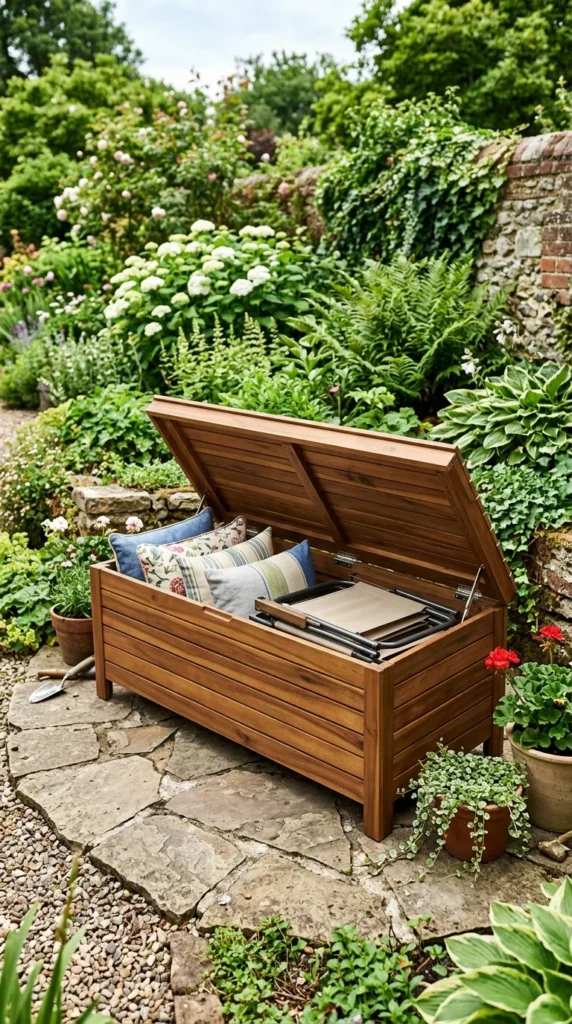
In a small space, every piece of furniture must earn its keep. Look for items that serve at least two purposes. A storage bench is perhaps the most classic example, providing comfortable seating while hiding away bulky items like gardening tools, outdoor pillows, or sports equipment. Other options include ottomans that double as coffee tables or stools that can be tucked under a table when not in use. By reducing the number of individual pieces in your yard, you create a cleaner, more open environment that feels organized rather than cluttered.
3. String Lighting
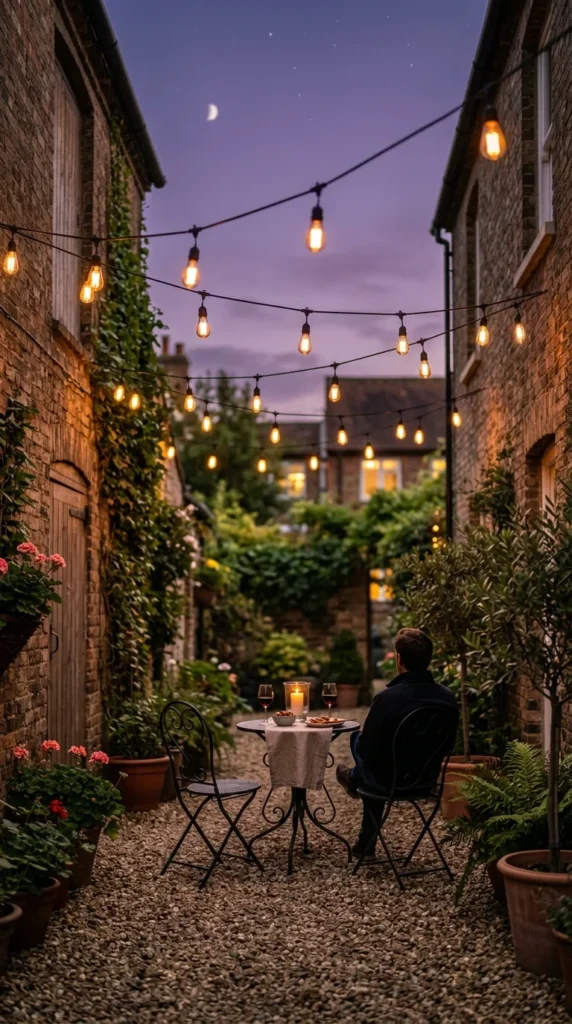
Lighting is one of the most effective ways to change the perception of space. Heavy, ground-based lamps can take up valuable real estate, but string lights utilize the “ceiling” of your outdoor room. By hanging lights overhead, you draw the eye upward, highlighting the height of your space and creating a warm, magical ambiance. This glow blurs the boundaries of the yard at night, making the area feel much more expansive than it actually is. Opt for shatterproof LED bulbs for a durable and energy-efficient solution that lasts all season long.
4. Corner Seating
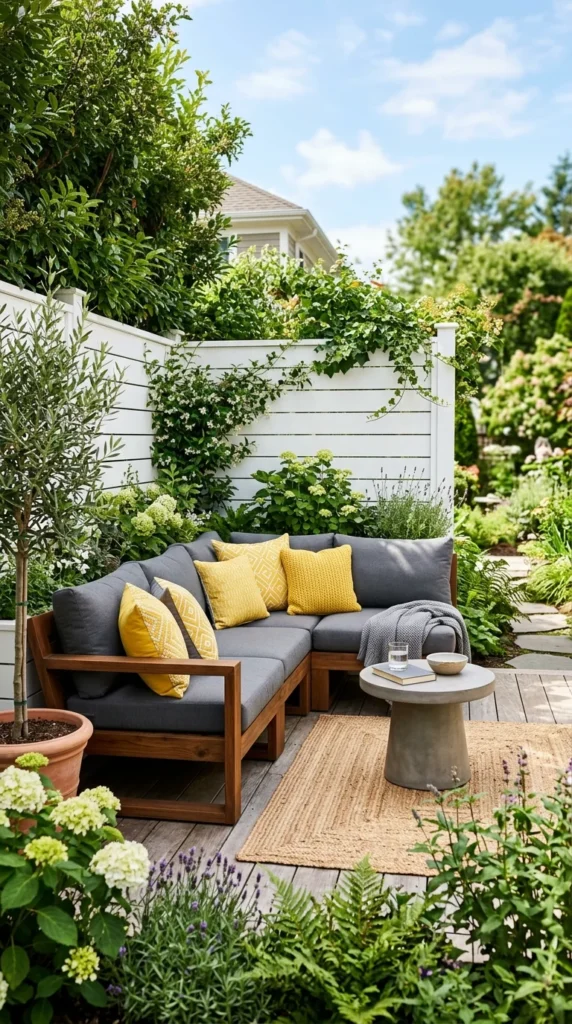
Corners are often the most underutilized parts of a yard. Instead of leaving them empty or filling them with a single potted plant, install a built-in corner bench or a sectional sofa. An L-shaped seating arrangement maximizes the number of guests you can accommodate without interrupting the flow of the yard. By pushing the seating to the very edge of the property, you leave the center of the yard open, which creates a sense of flow and makes the space feel more substantial.
5. Tiered Landscaping
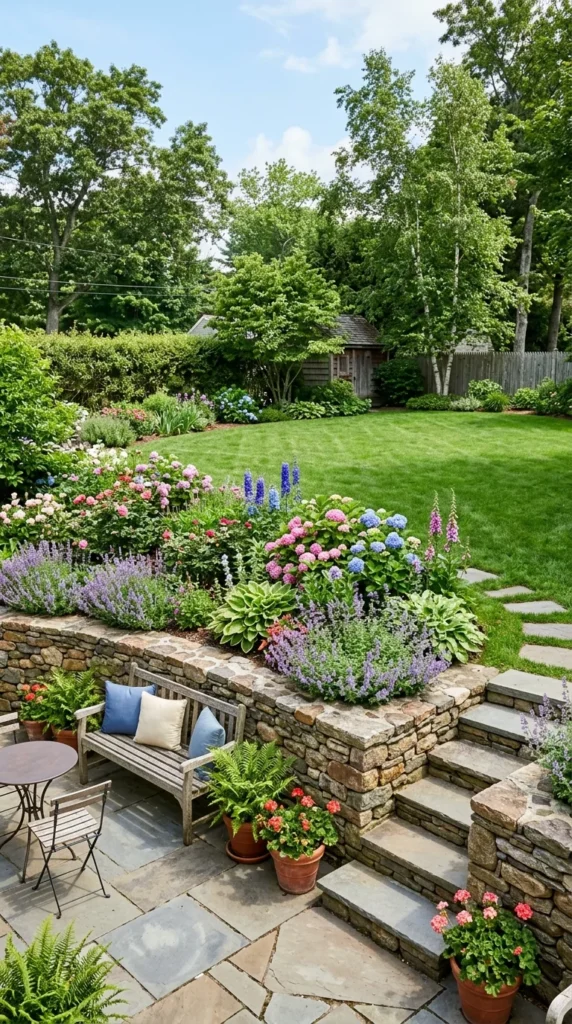
Level changes are a brilliant architectural trick to make a small yard feel larger. By creating tiers—even if they are only a few inches high—you define different “rooms” within the space. You might have a lower level for dining and a slightly raised platform for lounging or a garden bed. This depth prevents the eye from taking in the entire space in one glance, making the journey through the yard feel longer and more interesting. Use materials like stone, timber, or even corten steel to create these distinctive boundaries.
6. Mirrors
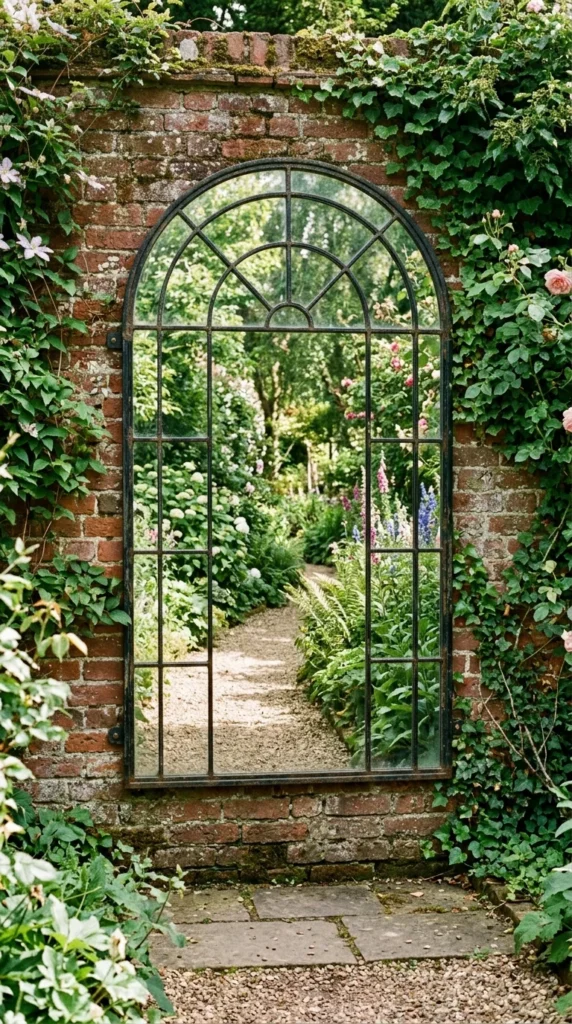
Mirrors aren’t just for the indoors. A well-placed outdoor mirror can double the visual size of your backyard by reflecting light and greenery. Choose a mirror with a weatherproof frame and position it where it will reflect the most attractive parts of your garden. Some homeowners even use “window-pane” style mirrors to create the illusion that there is another garden just beyond the wall. It’s a classic trick used by landscape designers to add depth and a touch of whimsy to narrow or enclosed spaces.
7. Foldable Tables
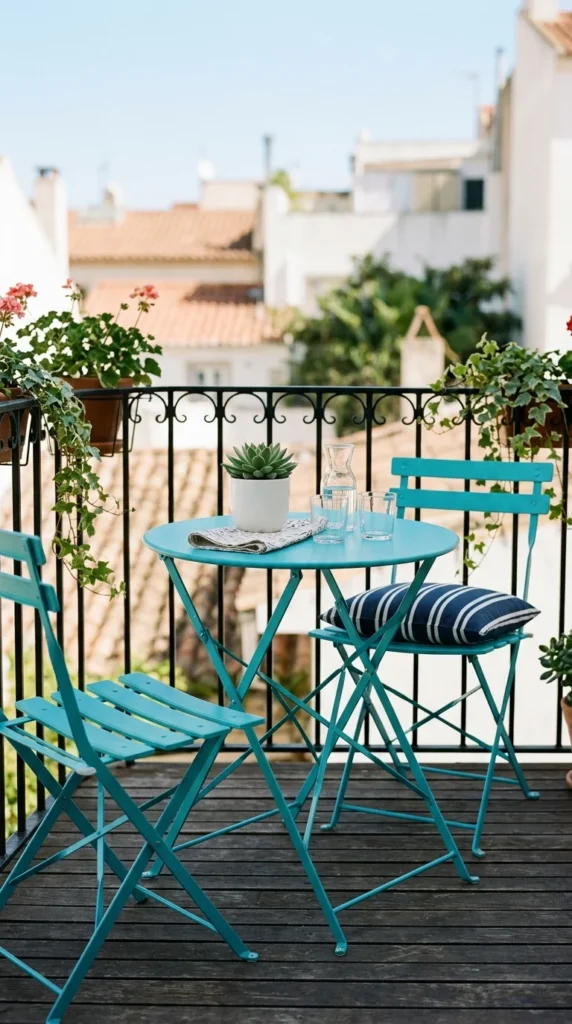
If you only use your outdoor dining area occasionally, don’t let a massive table dominate the space 24/7. Foldable bistro sets or “murphy-style” tables that attach to a wall and fold down when needed are perfect for small footprints. These pieces allow you to enjoy an alfresco breakfast and then quickly clear the deck for a yoga session or a play area. Look for lightweight materials like powder-coated aluminum or treated acacia wood that are easy to move but durable enough to withstand the elements.
8. Potted Clusters
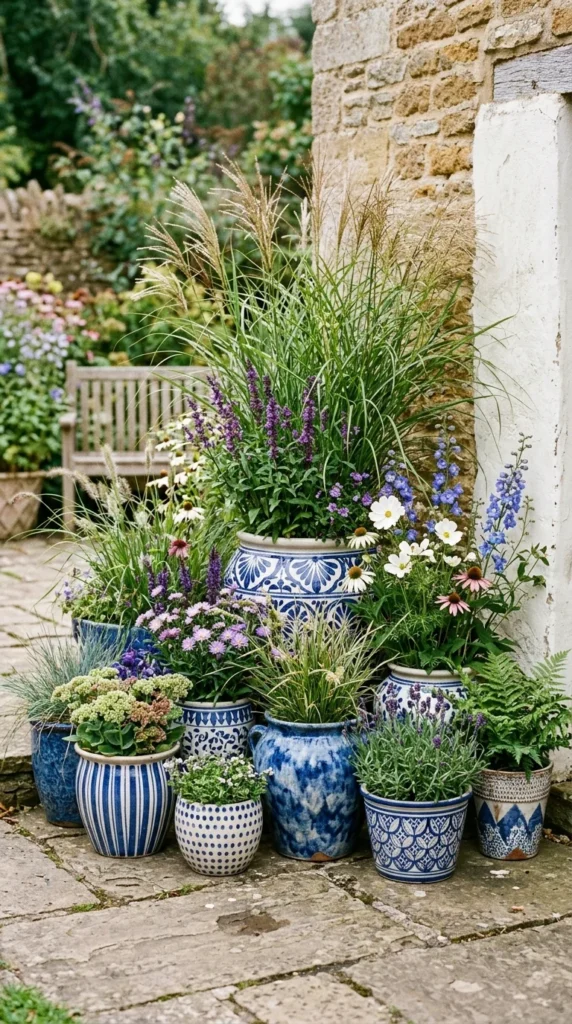
Large, permanent flower beds can restrict how you use your space. Instead, use “movable landscaping” in the form of potted plants. Clustering pots of various heights and textures creates a focal point that is easy to rearrange. If you’re hosting a larger party, you can simply move the pots to the perimeter to open up more standing room. This flexibility is essential for small-scale living. Furthermore, containers allow you to control the soil quality and drainage perfectly, making it easier to grow temperamental plants in a small area.
9. Fire Pits
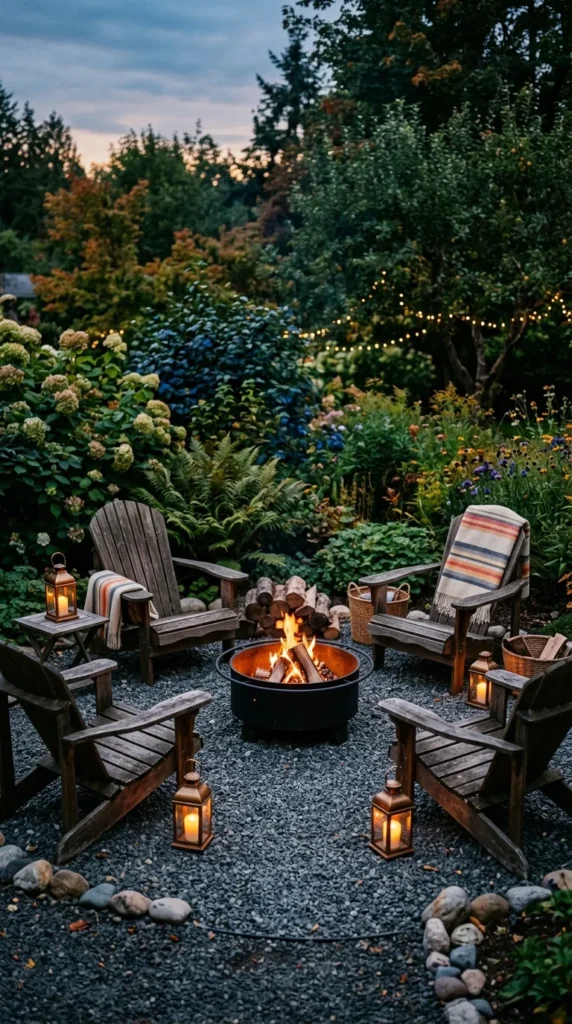
A fire pit serves as a natural gathering point, drawing people together and providing a cozy atmosphere. For small yards, opt for a compact, portable fire bowl or a slim smokeless fire pit. Because the fire pit creates a central destination, it gives the backyard a clear purpose. Even a tiny patch of gravel can become a sophisticated “fire lounge” with the right setup. During the day, some fire pits come with covers that allow them to function as extra coffee tables, maintaining that all-important multi-functionality.
10. Artificial Turf
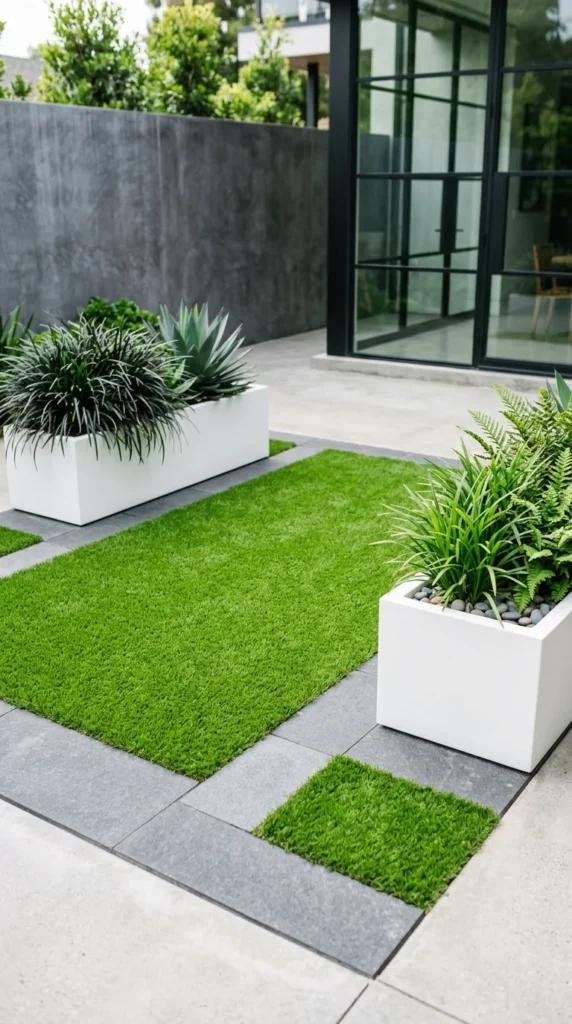
Maintaining a tiny patch of real grass can be more trouble than it’s worth. Between the mower, the trimmer, and the struggle to keep it green in high-traffic areas, many small-yard owners are turning to high-quality artificial turf. A small “rug” of synthetic grass provides a soft, evergreen surface that looks pristine year-round with zero maintenance. It adds a pop of vibrant color and a soft texture underfoot, making the yard feel like a clean, intentional extension of your indoor living space.
11. Living Fences
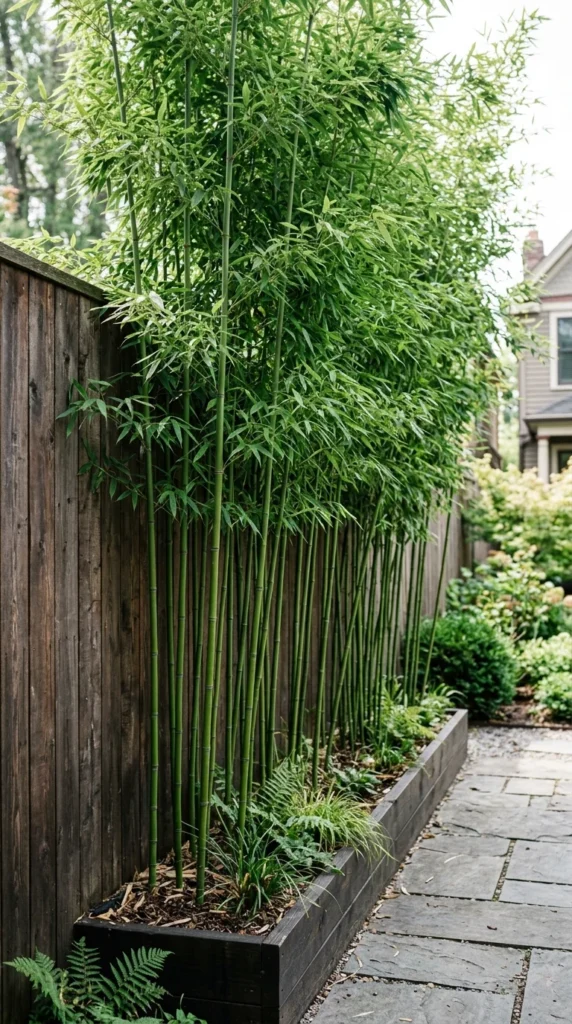
Standard wooden fences can sometimes feel claustrophobic in a small yard. A “living fence” of tall, narrow plants offers privacy while softening the hard edges of your property. Bamboo, arborvitae, or even tall ornamental grasses provide a sense of seclusion without the “boxed-in” feeling of a solid wall. These plants add movement and sound to the garden as they rustle in the breeze, contributing to a tranquil, spa-like atmosphere that makes the small space feel like a private sanctuary.
12. Built-in Benches
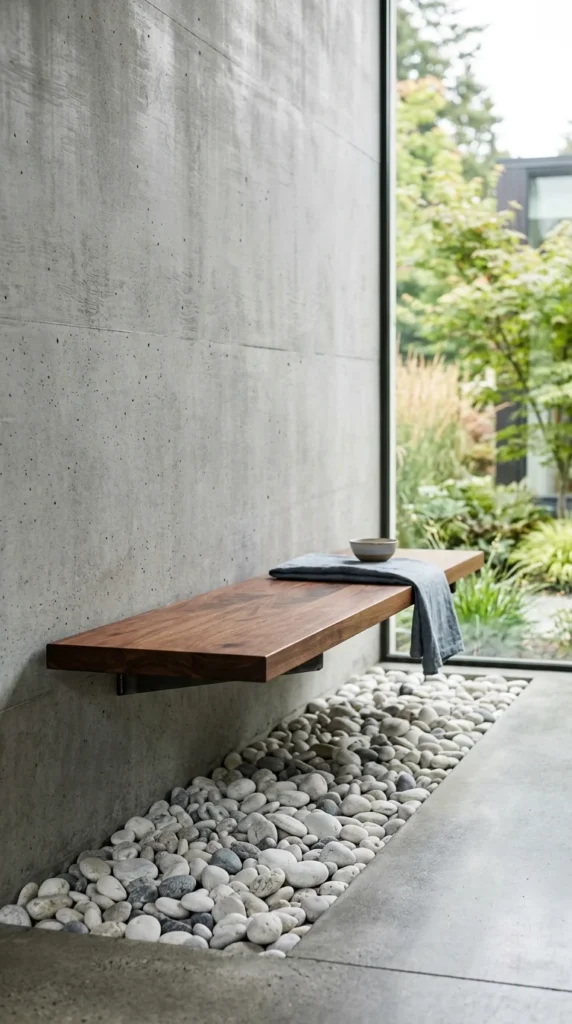
Legs on furniture take up floor space and create visual clutter. By choosing built-in or “floating” benches, you keep the ground clear, which makes the floor area appear larger. This design choice also creates a modern, streamlined look. You can build these benches along the perimeter of a deck or patio, providing ample seating for guests without the need for bulky chairs that are difficult to navigate around in a tight space.
13. Water Features
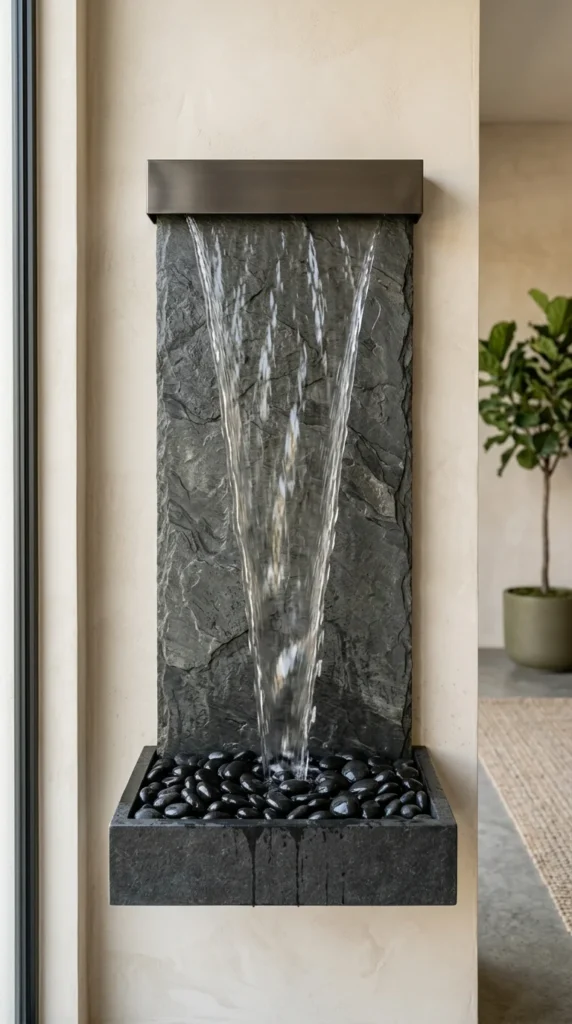
The sound of trickling water is a powerful tool for small backyards, especially in urban environments. A small wall-mounted fountain or a compact “bubbler” doesn’t take up much space but provides a significant sensory impact. The sound helps to mask neighborhood noise or traffic, creating a “sound cocoon” that makes your small yard feel like a world of its own. Additionally, the reflection of light on moving water adds a dynamic element that keeps a small space from feeling static.
14. Color Zoning
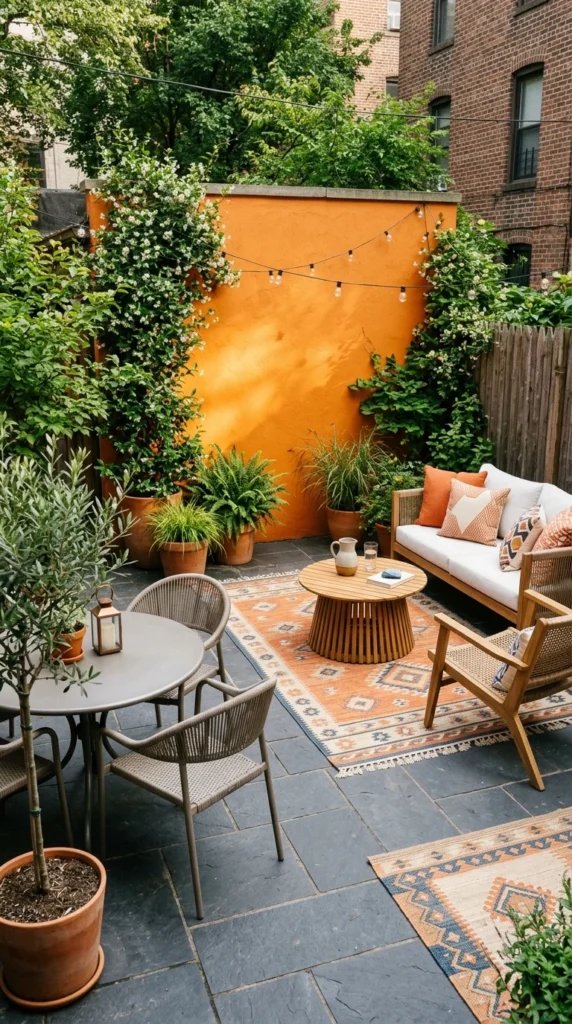
Using color is a strategic way to define different areas of a small yard without using physical barriers like walls or fences. You might paint a specific section of your fence a bold accent color to highlight a seating nook, or use a brightly colored outdoor rug to anchor a dining area. These “zones” trick the brain into seeing several distinct spaces rather than one small square. Consistent color palettes—such as using blue accents in both your plants and your pillows—help tie the space together, creating a cohesive and professionally designed look.