

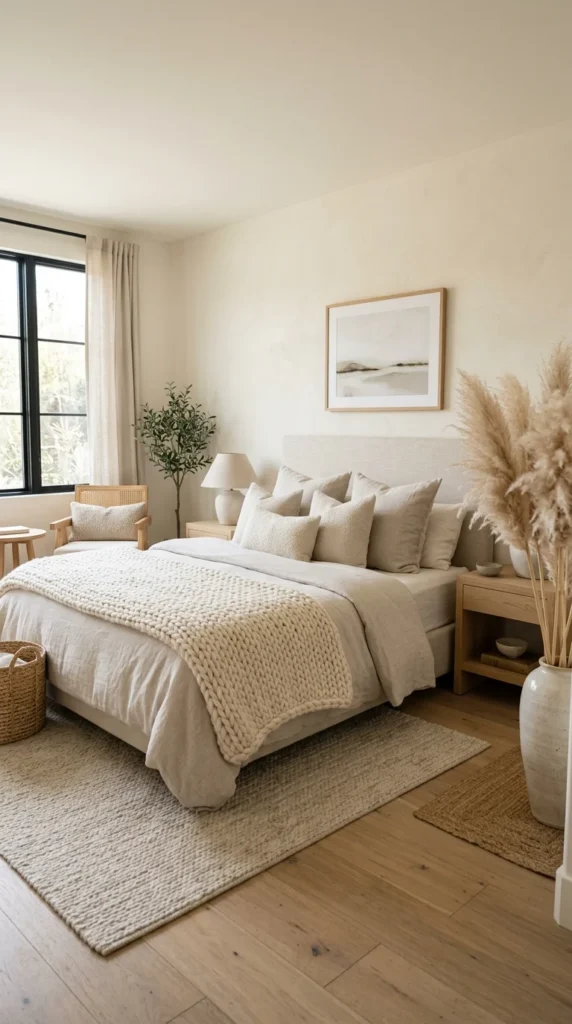
In the fast-paced world we live in, the bedroom should be more than just a place to sleep; it should be a sanctuary. Neutral bedrooms are often misunderstood as “boring” or “plain,” but when executed with intention, they become the ultimate canvas for relaxation. By stripping away jarring colors and high-contrast patterns, you allow the mind to decompress. The secret to a successful neutral retreat lies in the interplay of textures, the warmth of natural materials, and the subtle variations of tone. Whether you prefer the crispness of a white-on-white aesthetic or the grounding feel of earthy beiges, these 15 ideas will help you transform your sleeping quarters into a high-end spa-like haven.
1. Layered Textiles
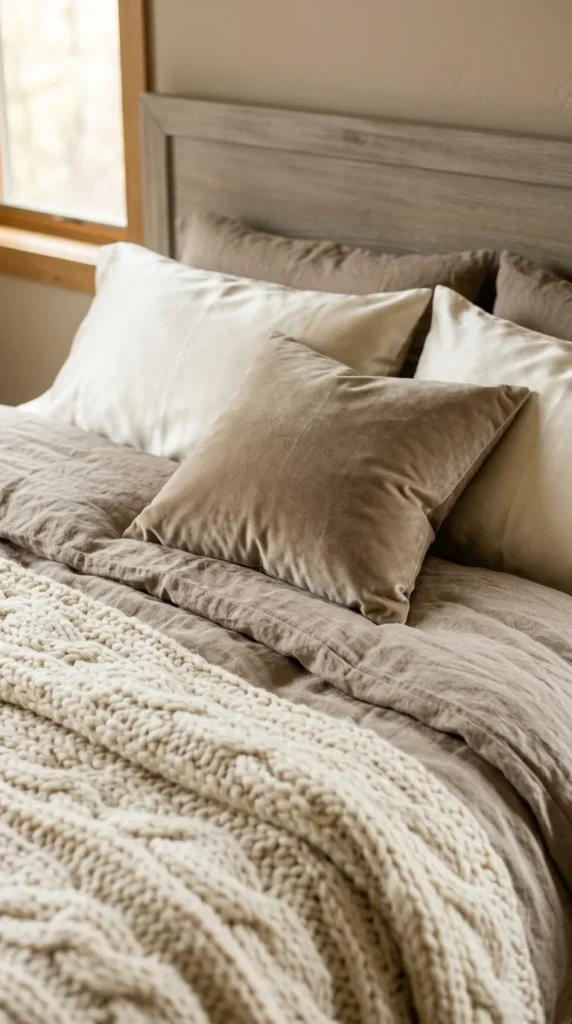
The primary critique of neutral rooms is that they can feel flat. The antidote to this is texture. Layering different fabrics creates visual depth and tactile interest that replaces the need for bright colors. Start with a base of breathable linen sheets, add a heavy-duty cotton duvet, and finish with a chunky wool throw. Mixing materials like velvet, silk, and boucle within the same color family adds a sophisticated richness that invites you to dive right in.
2. Warm Wood
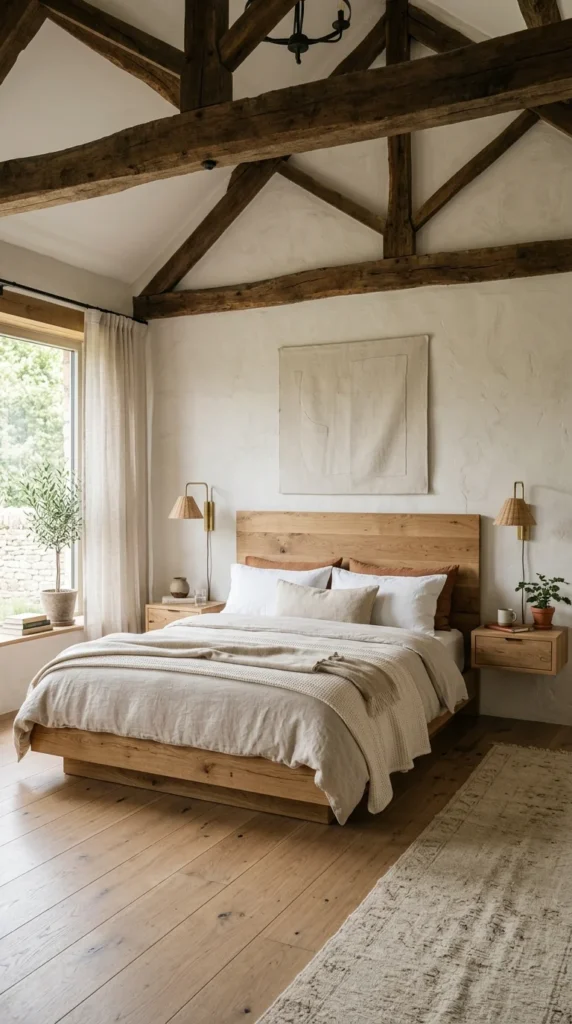
Neutrals can sometimes feel cold if they lean too heavily into grey. Incorporating warm wood tones is the easiest way to ground the space and add organic warmth. Think light oak, walnut, or reclaimed timber. The natural grain of the wood acts as a “pattern,” providing organic detail that breaks up solid blocks of cream or beige. From a statement headboard to simple floating shelves, wood brings an element of nature indoors.
3. Soft Greige
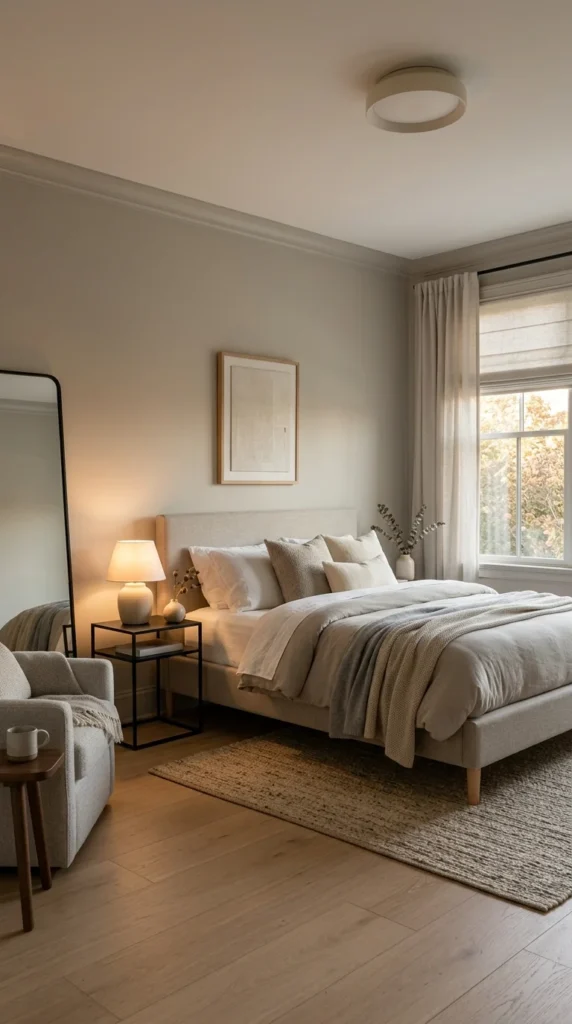
If you can’t decide between the coolness of grey and the warmth of beige, “greige” is your perfect middle ground. This sophisticated hue adapts to the lighting throughout the day, looking crisp in the morning sun and cozy under evening lamps. It provides a contemporary backdrop that feels cleaner than traditional tan but warmer than clinical grey. It’s the ultimate “quiet luxury” paint choice for a relaxing retreat.
4. Woven Accents
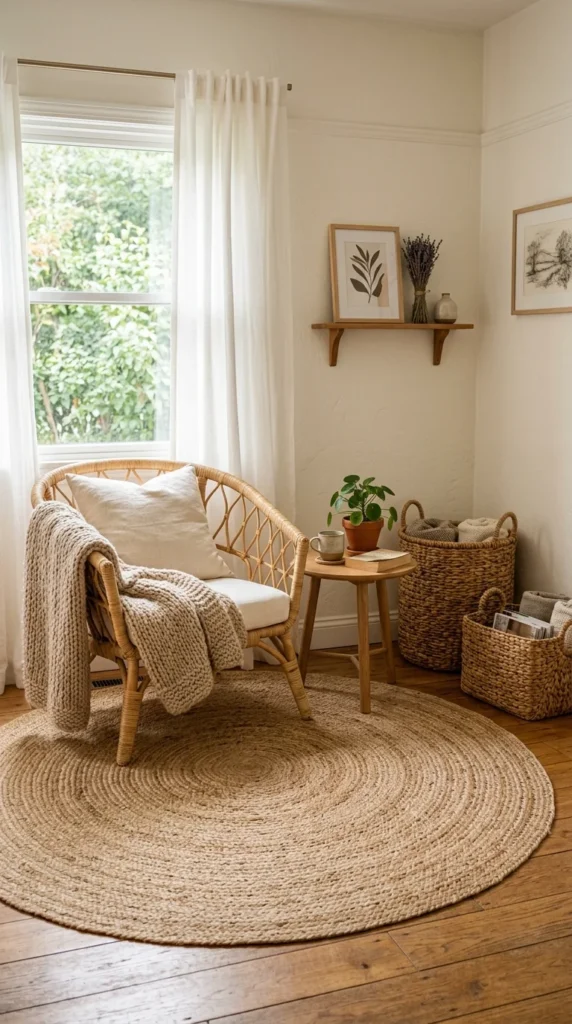
To lean into a more bohemian or coastal neutral vibe, look to woven materials. Rattan, jute, seagrass, and wicker add an artisanal quality to a bedroom. A large jute rug provides a textured foundation for the feet, while rattan bedside lamps or a wicker bench at the end of the bed introduce a relaxed, vacation-like atmosphere. These materials are inherently neutral and pair beautifully with white linens.
5. Statement Headboards
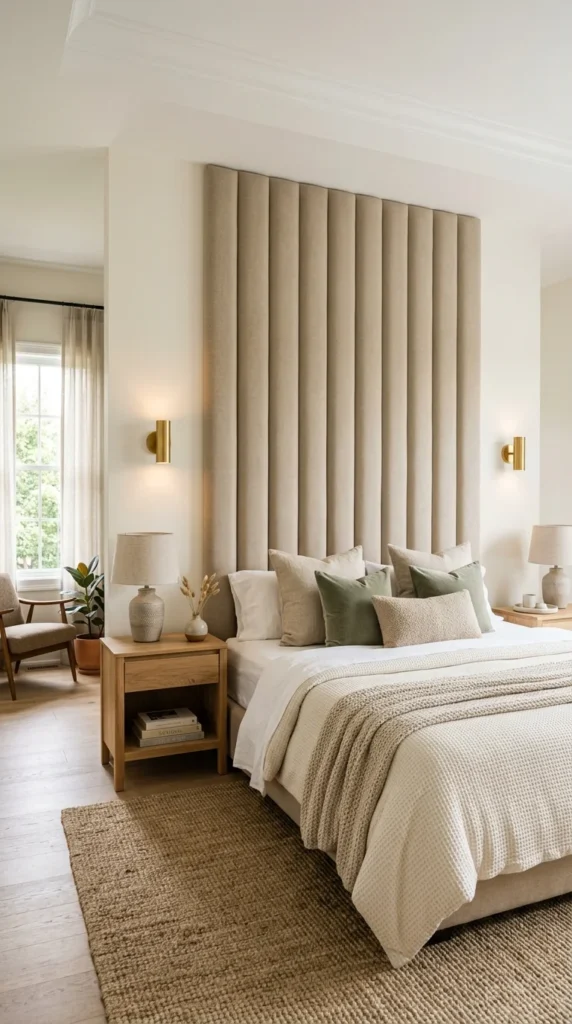
In a room without bold colors, you need a focal point to anchor the design. An oversized or uniquely shaped headboard in a neutral fabric—like linen or mohair—creates a sense of grandeur. Whether it’s a tall winged design or a modern fluted upholstery, the headboard provides a soft “hug” for the bed, making the entire room feel more intentional and luxurious.
6. Minimalist Art
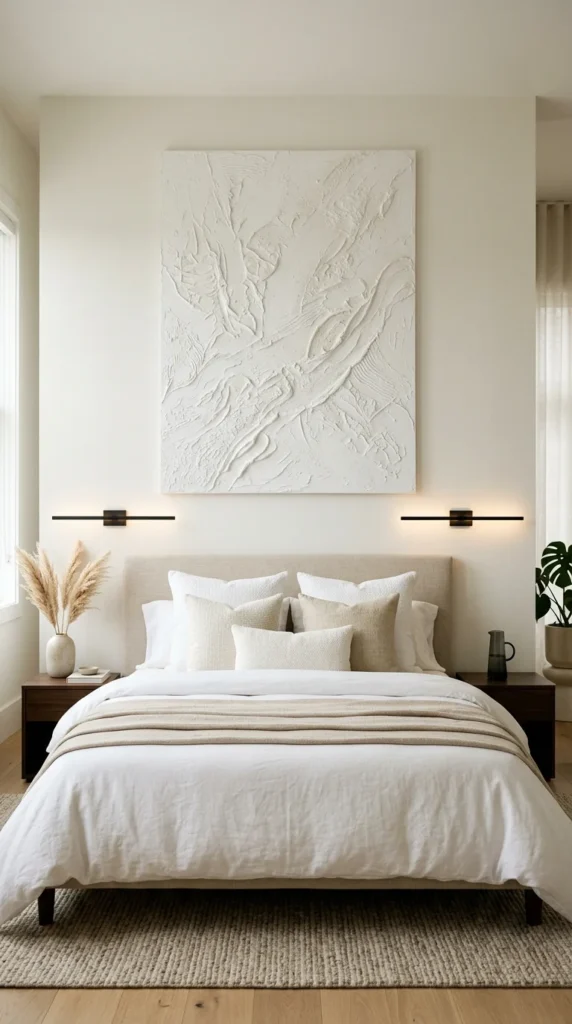
Empty walls can make a room feel unfinished, but loud art can disrupt the peace. Opt for minimalist pieces that focus on form and texture rather than color. Plaster art, line drawings, or monochromatic photography are excellent choices. Large-scale art with plenty of negative space maintains the “breathable” feel of a neutral room while giving the eyes a place to rest.
7. Ambient Lighting
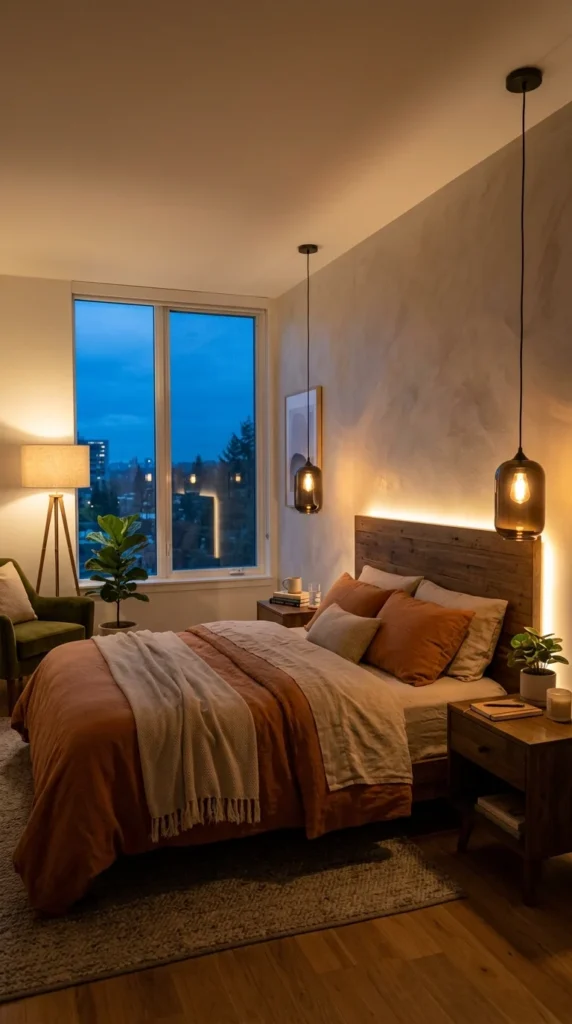
Lighting is the “vibe-setter” of any neutral space. Avoid harsh overhead lights which can make neutral tones look washed out or yellow. Instead, layer your lighting. Use warm-toned bulbs in bedside sconces, floor lamps, and even small accent lights on dressers. The goal is to create “pools” of light that highlight the different textures in the room, creating a cozy, cave-like glow as the sun sets.
8. Monochromatic Palettes
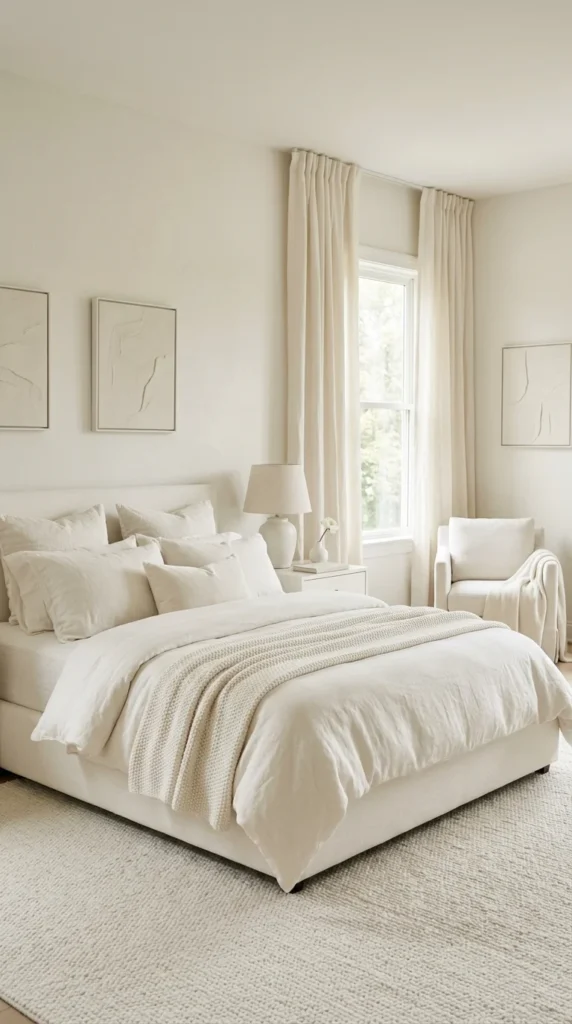
Going monochromatic is a bold design move that yields high rewards. By staying within one narrow color family—such as shades of “Bone” or “Cloud”—you create a seamless environment where the boundaries of the room seem to disappear. This lack of visual interruption is incredibly soothing for the brain, making it one of the most effective ways to design for sleep and relaxation.
9. Indoor Greenery
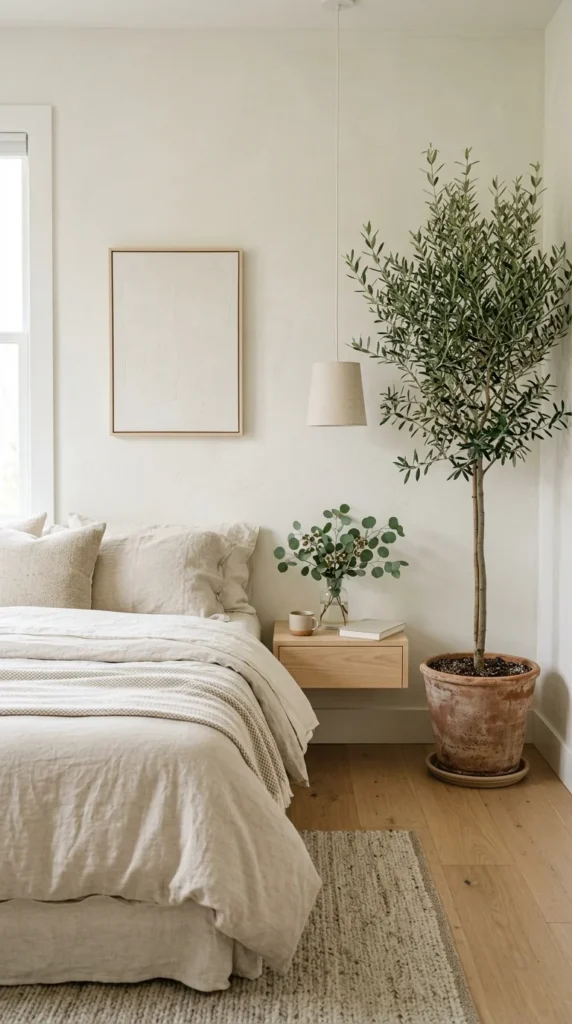
Plants are the “natural” exception to the neutral rule. The muted greens of an olive tree, a fiddle leaf fig, or even dried pampas grass add a living element to the room. The green acts as a soft accent that doesn’t overwhelm the neutral palette but rather enhances it by emphasizing the “organic” theme. Plants also improve air quality, which is a functional bonus for a sleep sanctuary.
10. Mixed Metals
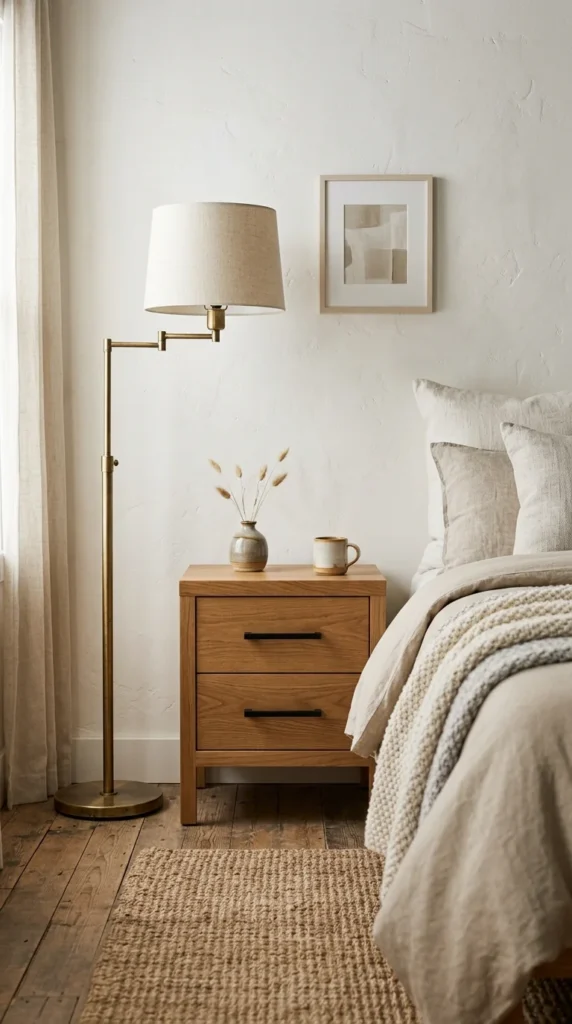
To give a neutral bedroom a polished, high-end look, introduce mixed metals. Brushed brass, matte black, or antique bronze add a touch of “jewelry” to the space. For example, use brass picture frames alongside matte black door handles. These small metallic touches provide a bit of shine and contrast, preventing the room from looking too flat or one-dimensional.
11. Window Treatments
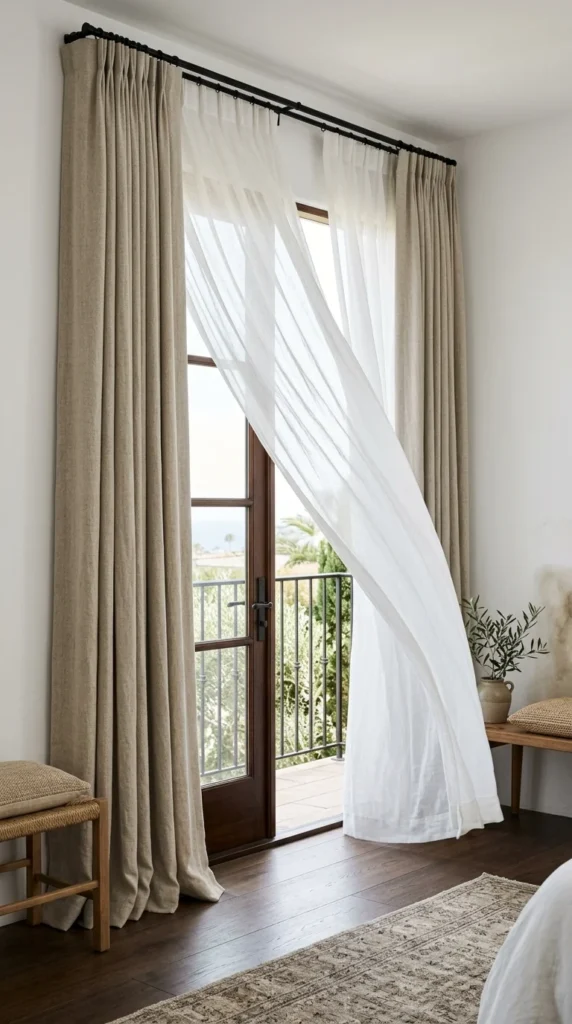
Windows are a major opportunity to add soft vertical lines to your room. Layering sheer curtains with heavier blackout drapes allows you to control both light and privacy while adding a sense of softness. Let the curtains hit the floor or even “puddle” slightly for a romantic, high-end hotel feel. The fabric helps soften the hard angles of the window frame and the walls.
12. Cozy Nooks
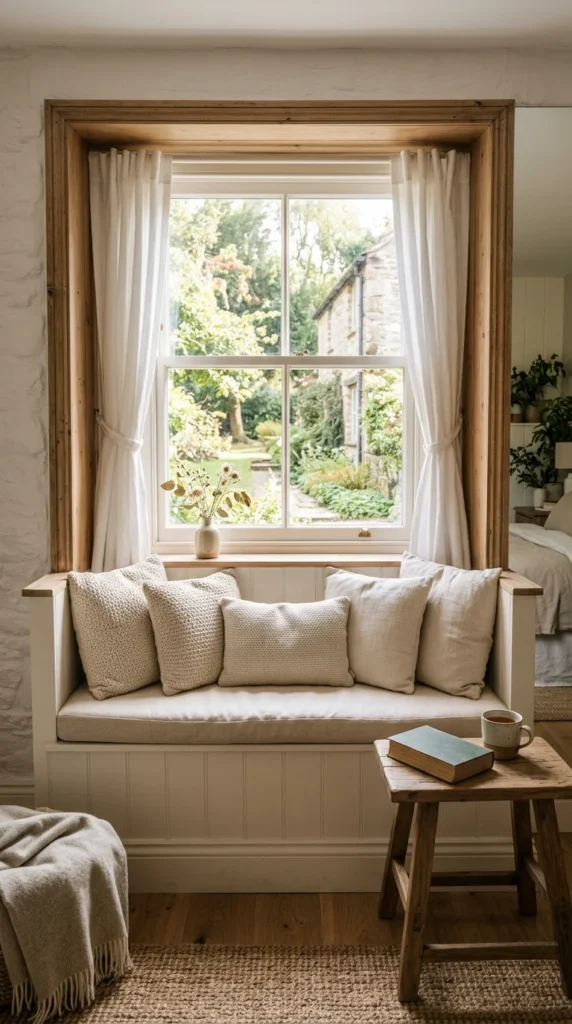
A relaxing retreat should have a space for more than just sleeping. If space permits, create a small reading nook or a seating area. A single bouclé swivel chair or a simple wooden bench with a sheepskin throw provides a dedicated spot for morning meditation or evening reading. This separates the “active” relaxation from the “passive” sleep, making the bedroom feel like a multi-functional suite.
13. Vintage Elements
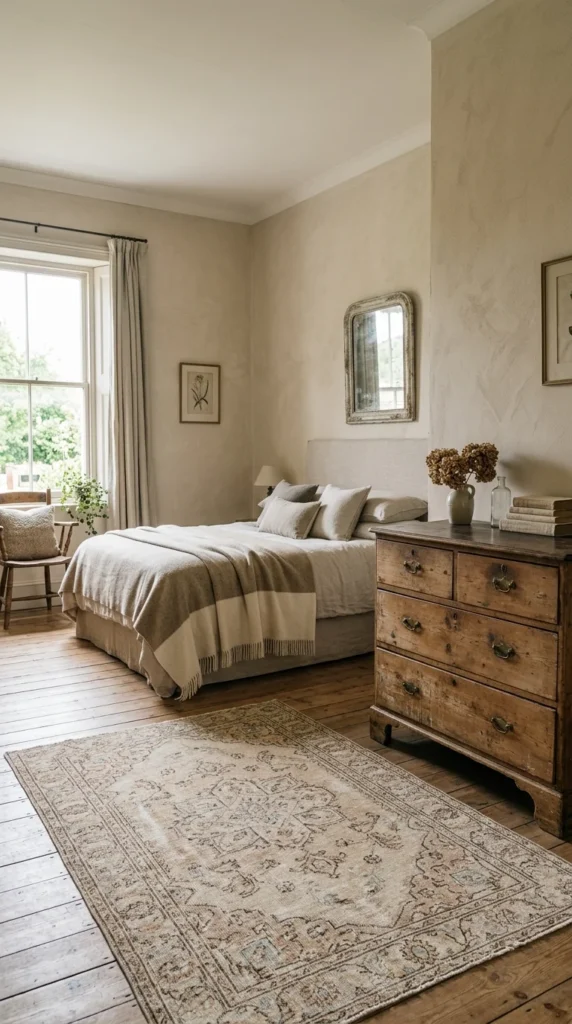
To keep a neutral room from feeling like a sterile showroom, add pieces with history. A vintage rug with a faded, low-contrast pattern or a distressed antique mirror adds character and “soul.” These “imperfect” elements provide a beautiful contrast to modern, clean-lined furniture, giving the room a curated, lived-in feel that is deeply comforting.
14. Architectural Details
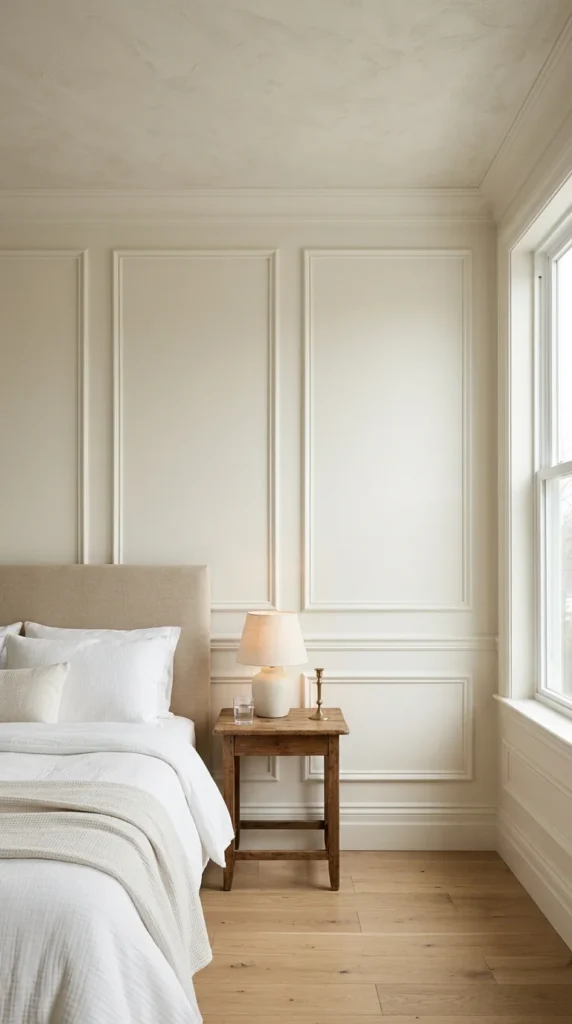
When you remove color, the “bones” of the room become more important. Adding architectural details like shiplap, picture frame molding, or even a textured plaster finish to the walls adds a layer of sophistication. These details catch the shadows and highlights of the room’s lighting, providing architectural interest that feels classic and timeless without the need for additional decor.
15. Luxe Bedding
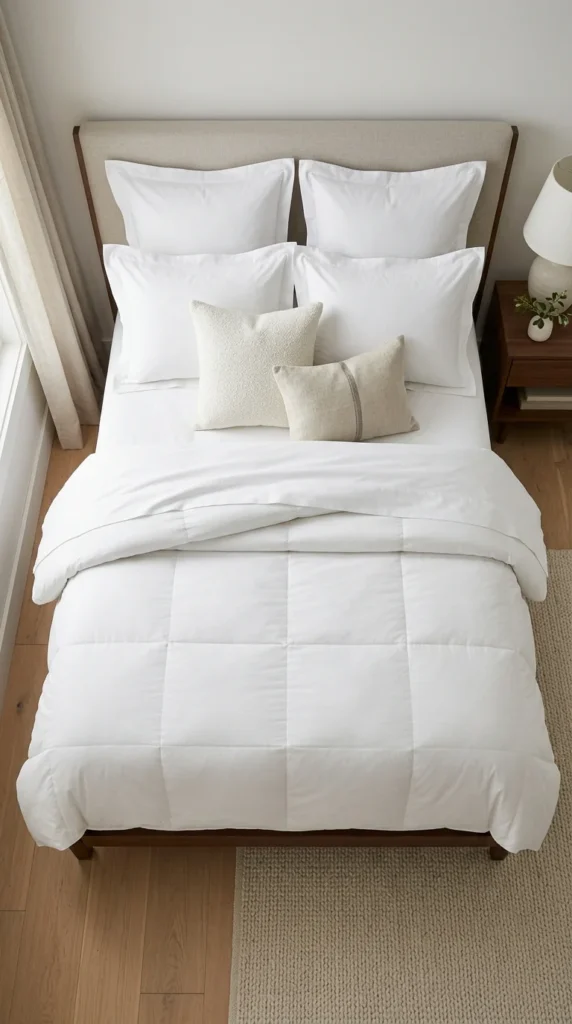
At the end of the day, the bed is the heart of the room. Investing in high-quality, luxe bedding is the final step in creating a neutral retreat. Look for high-thread-count Egyptian cotton, organic bamboo, or heavy-weight linen. Opt for a plush down or down-alternative insert that gives the bed that “cloud” look. In a neutral room, the quality of the fabric is on full display, so choose materials that feel as good as they look.