
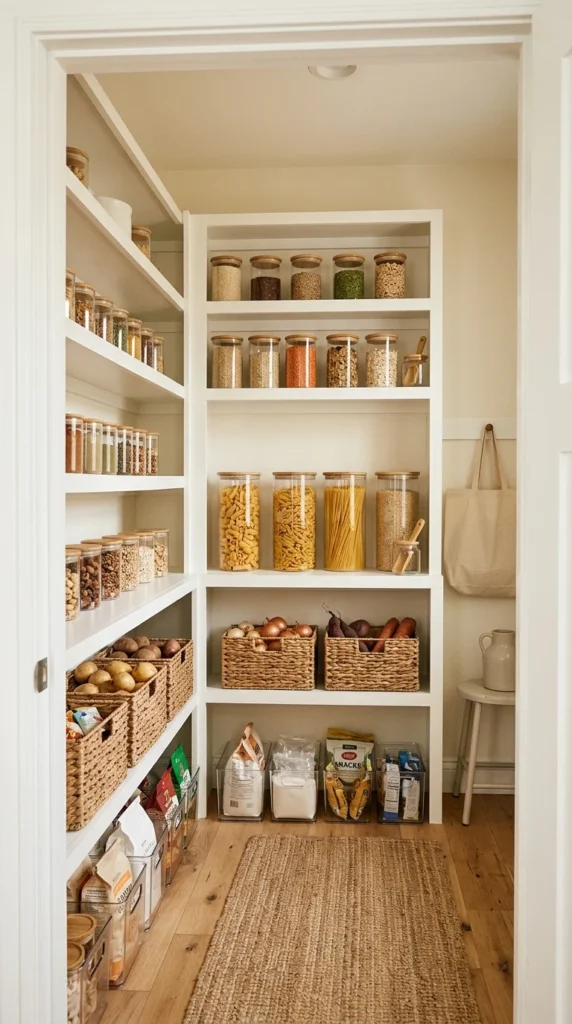
A small pantry doesn’t have to mean a big mess. In fact, limited square footage often forces us to be more creative, intentional, and disciplined with our storage solutions. Whether you are dealing with a tiny reach-in closet, a single kitchen cabinet, or a narrow “nook” pantry, the goal remains the same: visibility and accessibility. When you can see what you have, you stop overbuying, reduce food waste, and make meal prep a breeze.
The secret to a functional small pantry lies in verticality and micro-categorization. By utilizing every inch of air space between shelves and the often-neglected backs of doors, you can effectively double your storage capacity. Here are 20 expert-approved ideas to transform your cramped pantry into a streamlined culinary hub.
1. Clear Bins
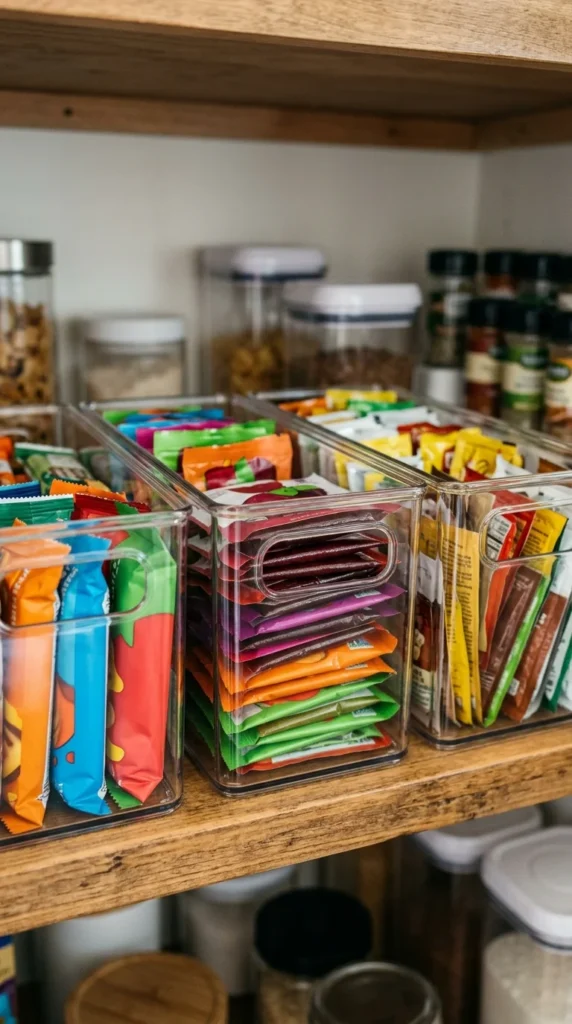
Visibility is the number one rule of organization. Clear acrylic bins allow you to see exactly how many granola bars or oatmeal packets you have left at a glance. They act as “drawers” for your shelves; instead of reaching into the dark depths of a cabinet to find a bag of chips, you simply slide the bin out. This prevents items from getting lost in the back and expiring. For a small pantry, choose narrow, deep bins that utilize the full depth of your shelving.
2. Lazy Susans
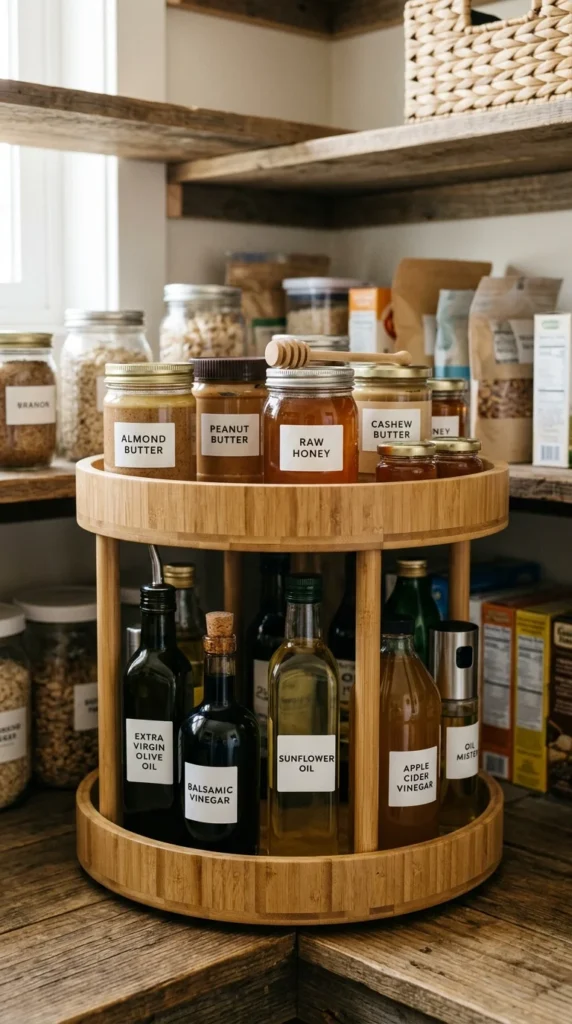
Corners are where pantry dreams go to die. Items pushed into a corner are rarely seen again until your next big move. A Lazy Susan (or turntable) is the ultimate fix for deep corners or high shelves. With a quick flick of the wrist, you can bring the balsamic vinegar or the extra jar of peanut butter right to the front. Look for models with a high “lip” to prevent tall bottles from tipping over during rotation.
3. Door Racks
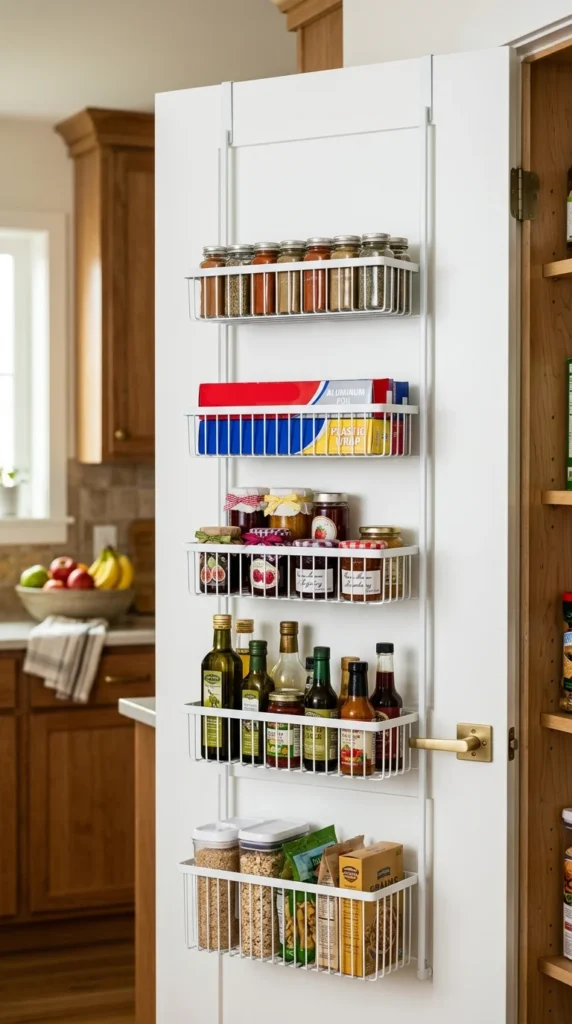
If you aren’t using the back of your pantry door, you are wasting prime real estate. Over-the-door rack systems provide several extra layers of shelving without taking up any floor or shelf space. These are perfect for storing lighter items like spices, cling wrap, boxed mixes, or even “grab-and-go” snacks for the kids. Ensure you choose a rack that can be mounted or securely hooked so it doesn’t rattle every time the door opens.
4. Tiered Shelves
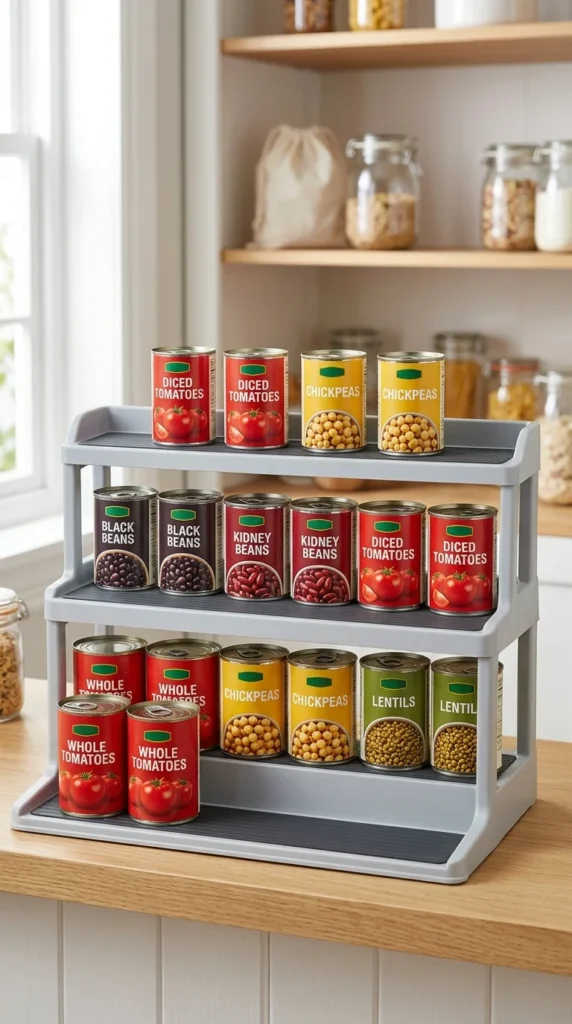
Canned goods are notorious for being stacked on top of one another, making it impossible to see what’s on the bottom or in the back. Tiered “stadium seating” style shelves raise the back rows higher than the front rows. This simple elevation ensures that the label of the back can is just as visible as the front one, preventing you from buying a fourth can of pumpkin puree when you already had three hiding in the shadows.
5. Stackable Containers
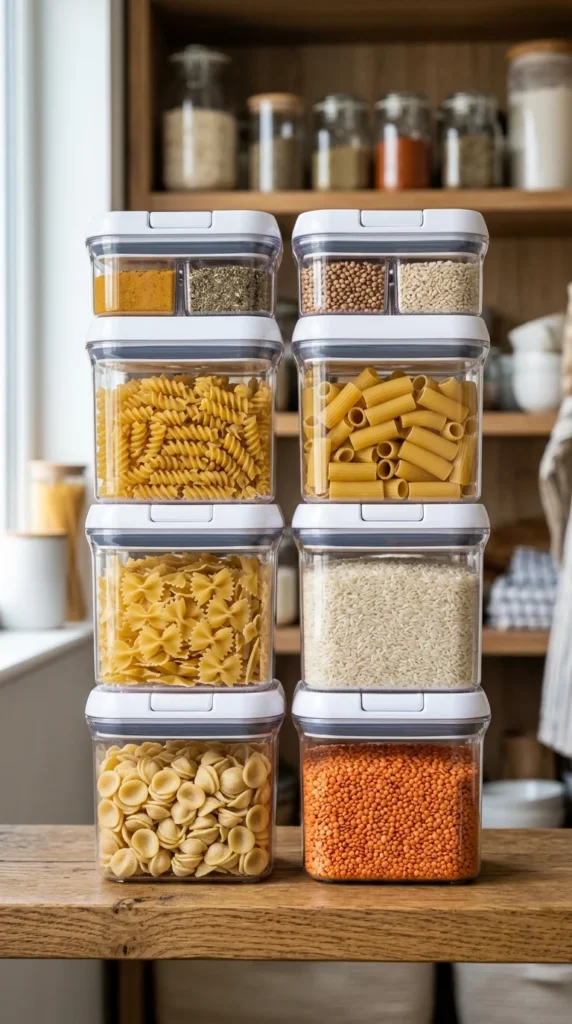
Cardboard packaging is the enemy of a small pantry. It’s bulky, irregularly shaped, and often half-empty. Decanting your dry goods—like flour, sugar, cereal, and pasta—into stackable, airtight containers is a game-changer. These containers eliminate “dead air” in the pantry and keep food fresher for much longer. Because they are modular, you can stack them to the very top of your shelf, maximizing the vertical gap that usually goes unused.
6. Under-Shelf Baskets
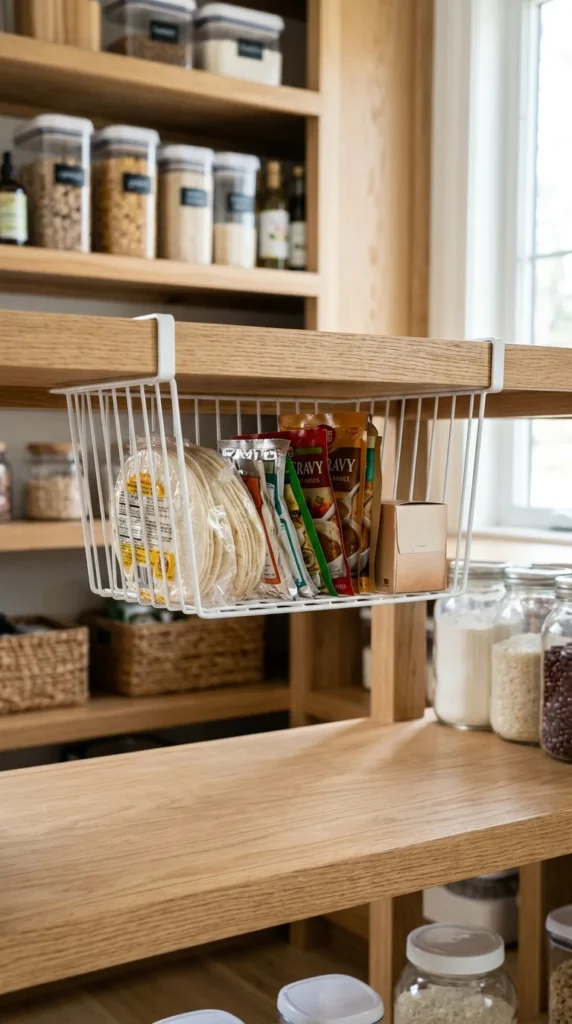
In many pantries, the distance between shelves is too tall, leaving 6 to 10 inches of empty air above your items. Under-shelf baskets slide onto your existing shelves to create a “floating” drawer. This is the perfect spot for flat or lightweight items that otherwise get crushed or lost, such as bread, tortillas, napkins, or loose tea bags. It’s an instant way to add a “new” shelf without any tools.
7. Chalkboard Labels
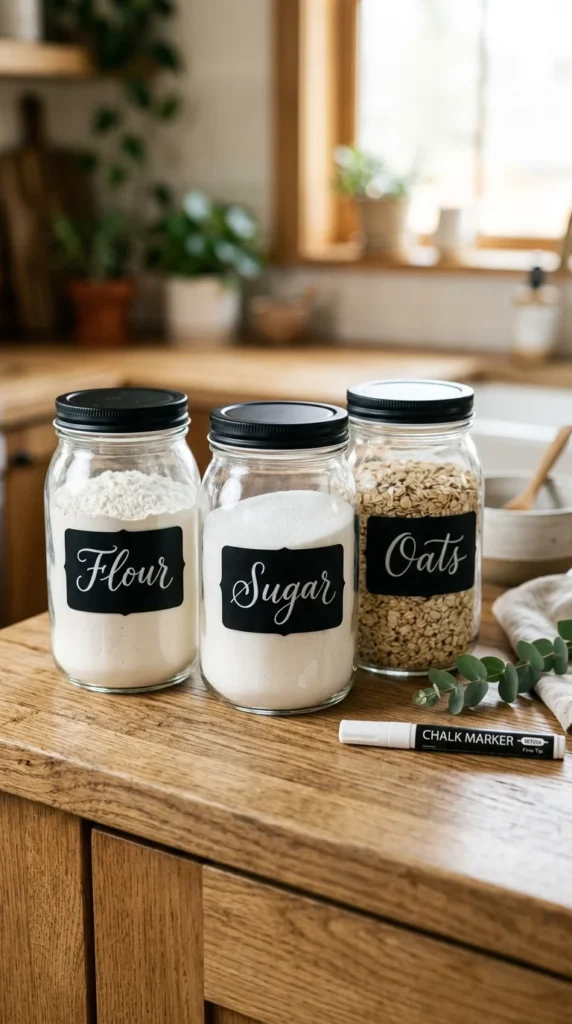
Labels are the “operating system” of your pantry. They tell everyone in the household exactly where things belong, which is the only way to maintain organization long-term. Chalkboard labels are particularly useful because they are erasable. If you switch from white rice to quinoa, you don’t need a new label; you just wipe and rewrite. They also add a charming, cohesive aesthetic that makes your pantry feel like a boutique market.
8. Pull-Out Drawers
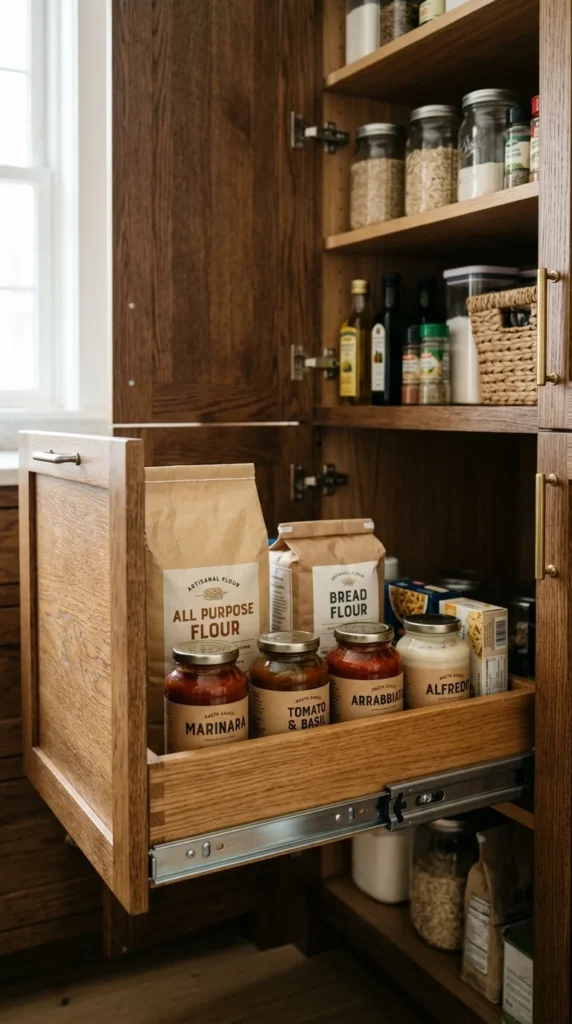
Deep cabinets are a blessing and a curse. While they hold a lot, the items in the back are essentially inaccessible. Installing aftermarket pull-out drawers (or “roll-outs”) transforms deep cabinets into functional storage. Instead of getting on your hands and knees to find the slow cooker or the bulk bag of rice, you simply pull the drawer toward you. This is especially helpful for lower shelves where visibility is lowest.
9. Tension Rods
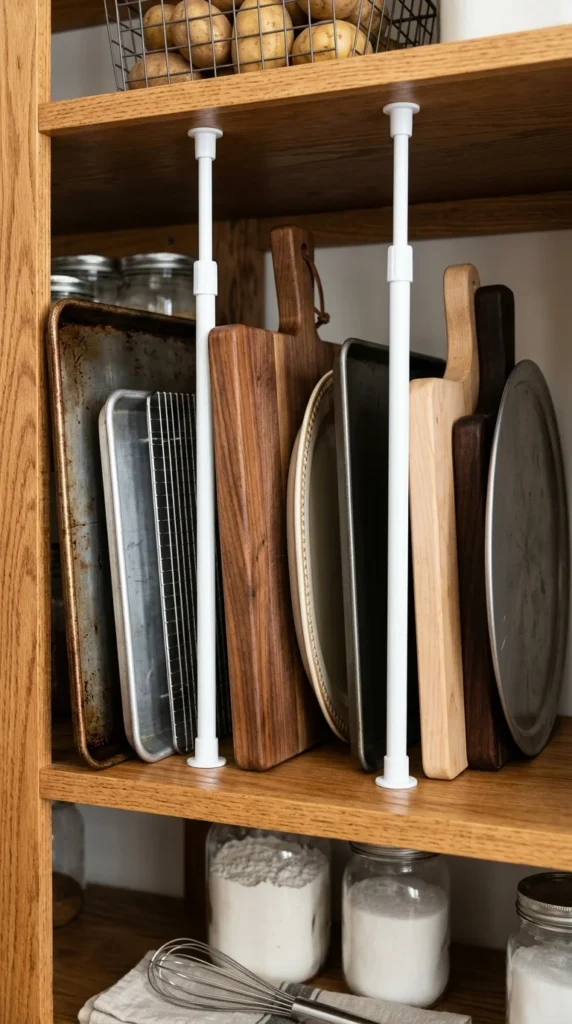
Tension rods aren’t just for curtains. If you store baking sheets, muffin tins, or large platters in your pantry, you know they are a nightmare to stack. Placing small tension rods vertically between two shelves creates “stalls” that allow you to store these flat items upright. This “file-sorting” method makes it easy to grab one tray without having to move a heavy stack of five others.
10. Magazine Files
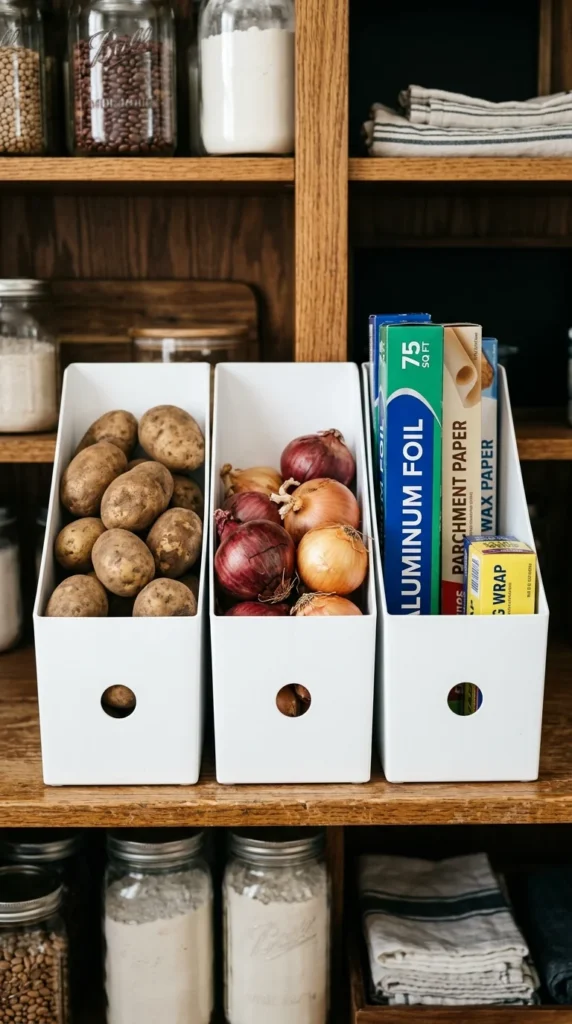
Magazine files are one of the most underrated pantry tools. They are the perfect size for holding narrow items like boxes of wrap, parchment paper, or even root vegetables. Because they are upright and sturdy, they keep these awkward items from flopping over. Using them for onions and potatoes also provides the necessary airflow to keep produce fresh while keeping the “skin” debris contained within the holder.
11. Command Hooks
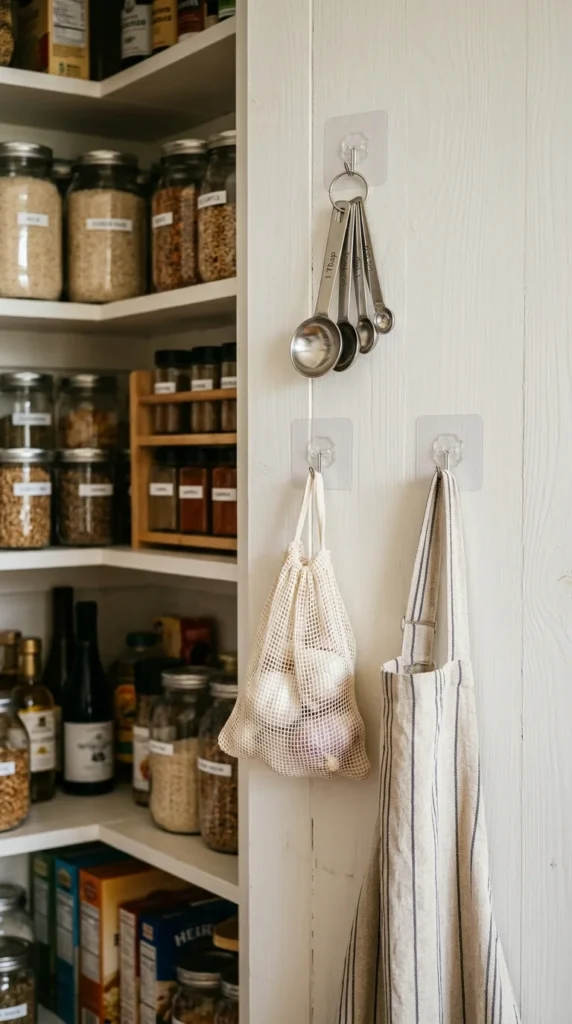
The side walls of a pantry are often overlooked. Adhesive “Command” hooks are perfect for hanging small, lightweight items that usually clutter up drawers. You can hang measuring spoons, oven mitts, or even small bags of produce like garlic or ginger. By moving these items to the walls, you free up shelf space for larger, heavier containers.
12. Pegboards
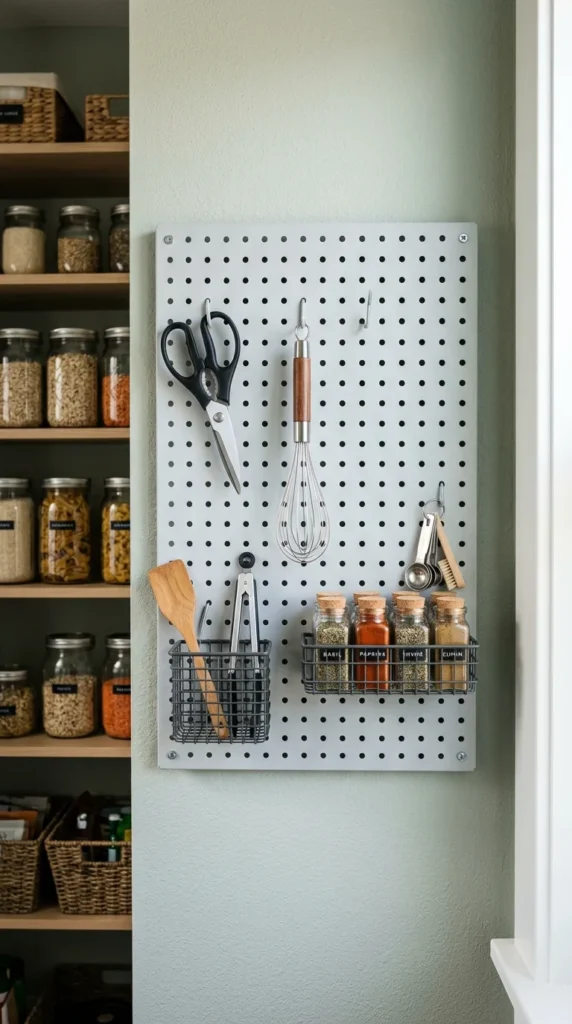
For the ultimate customizable pantry wall, install a pegboard. Much like a garage workshop, a pantry pegboard allows you to move hooks and baskets around as your needs change. It’s an excellent solution for oddly shaped items like colanders, funnels, or large ladles that don’t fit well in bins. It also adds an industrial-chic look to your storage space.
13. Spice Racks
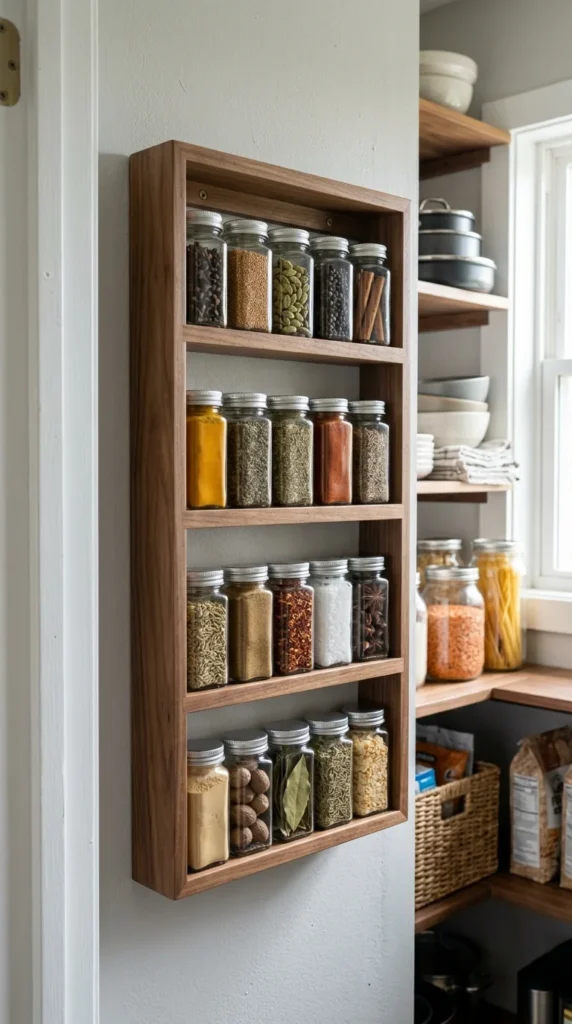
Spices are small but can create a massive amount of visual clutter. Instead of letting them take up a whole shelf or getting lost in a deep bin, use a dedicated spice rack. Wall-mounted versions are best for small pantries because they use “zero” shelf space. If you prefer to keep them on a shelf, use a tiered expander so you can see the labels of the back jars.
14. Wire Baskets
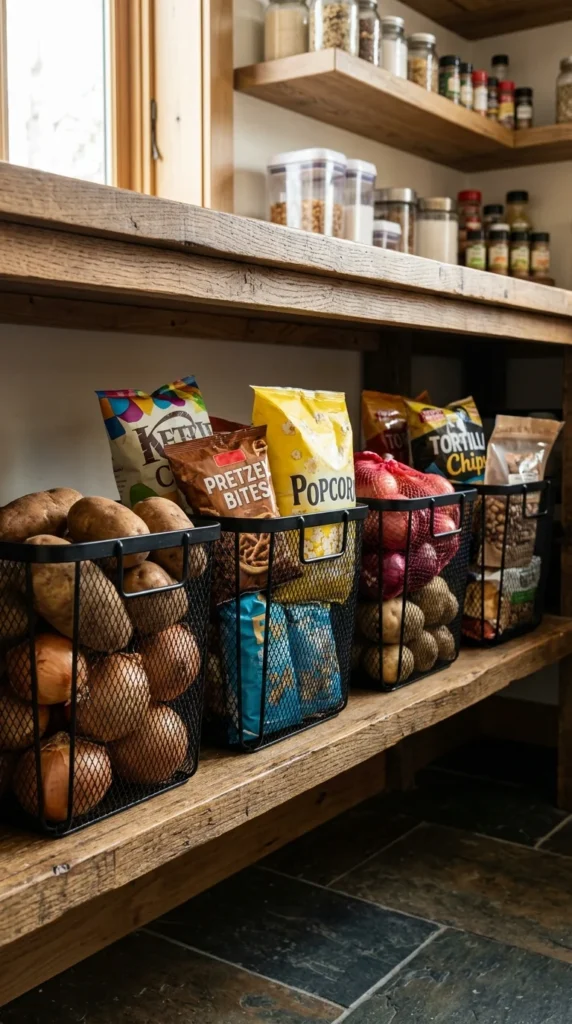
Wire baskets are ideal for items that need to breathe, such as produce, or for bulky items that don’t fit well in rigid plastic bins. They offer a rustic, farmhouse aesthetic while being incredibly durable. Because the wire is open, you can see exactly what is inside from any angle, which is essential when the baskets are stored on lower shelves.
15. Decanting
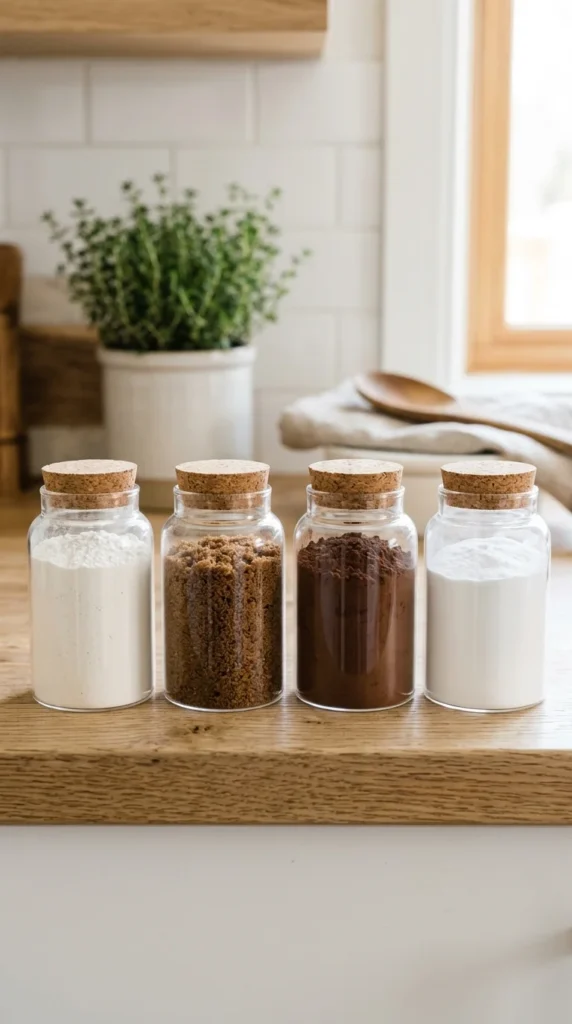
Decanting is the process of removing food from its original packaging and placing it into uniform jars or containers. While it takes a little extra time after a grocery trip, the benefits are worth it. Uniform containers fit together better, eliminating the wasted space caused by half-empty bags and odd-sized boxes. It also creates a cohesive, high-end look that turns a messy pantry into a Pinterest-worthy space.
16. Color Coding
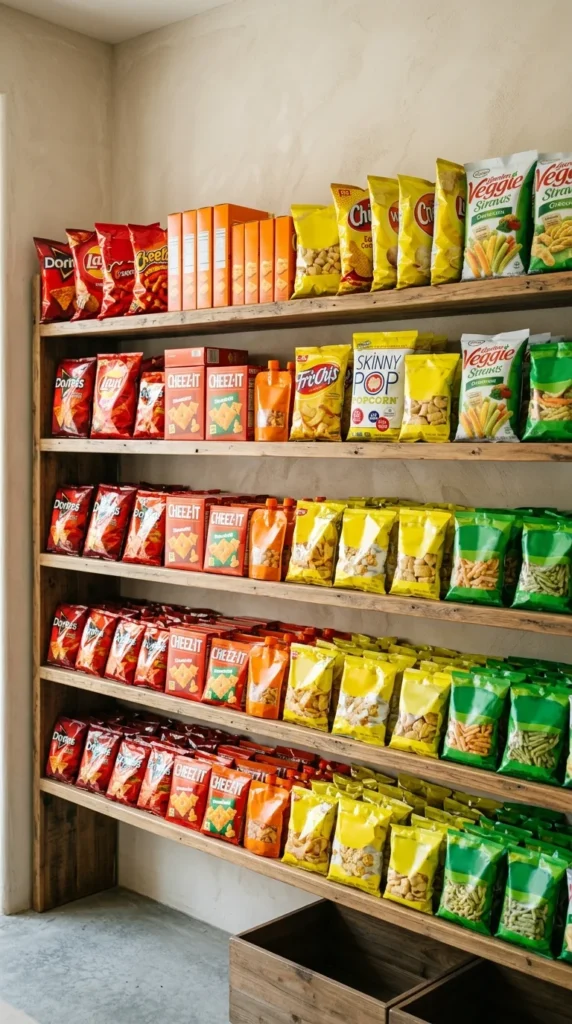
For families with kids, color-coding is a surprisingly effective way to stay organized. Grouping snacks by the color of their packaging makes it easy for children to find what they want and—more importantly—put things back in the right place. It also makes it very easy to spot when you are running low on a specific category just by looking at the “color blocks” on the shelf.
17. Shelf Risers
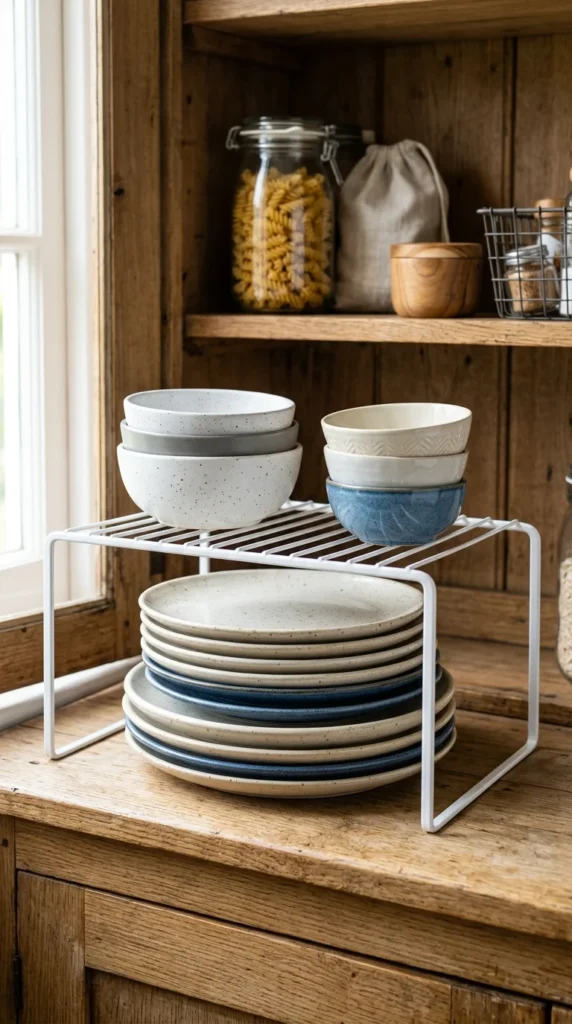
If you have tall shelves but don’t want to stack items directly on top of each other, shelf risers are the answer. These small “tables” sit on your shelf to create a second level of storage. They are perfect for canned goods, jars of jelly, or even small appliances. They give you the flexibility to store different types of items in the same vertical space without creating an unstable “Leaning Tower of Pisa” of cans.
18. Narrow Rolling Carts
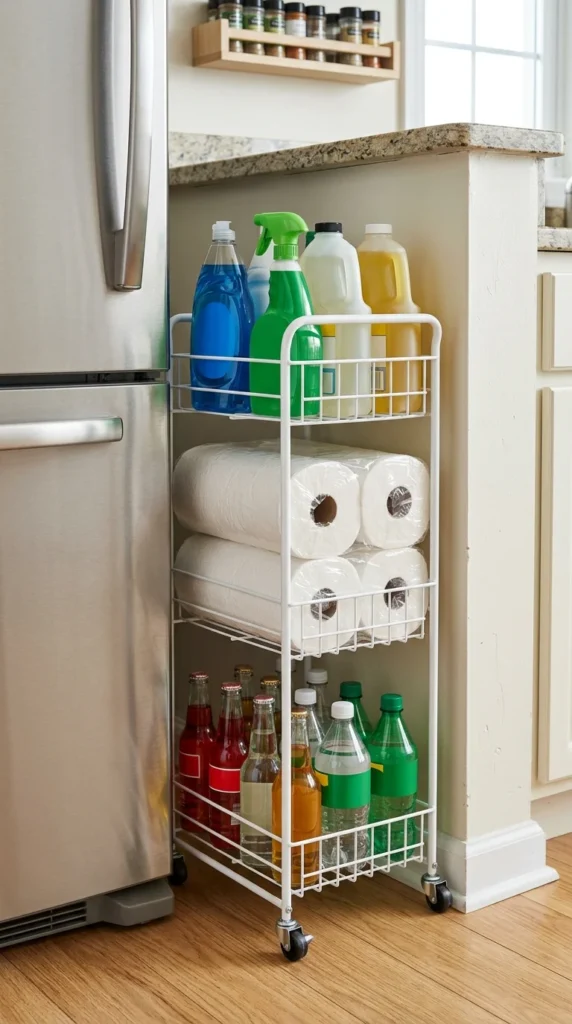
Sometimes the “pantry” isn’t a closet at all, but a gap between the fridge and the wall. A narrow rolling cart can turn a 6-inch wide gap into a massive storage area. These carts are perfect for canned goods, spices, or oils. Because they are on wheels, you can pull the entire “shelf” out to access what you need and then tuck it away so it’s completely out of sight.
19. Floor Bins
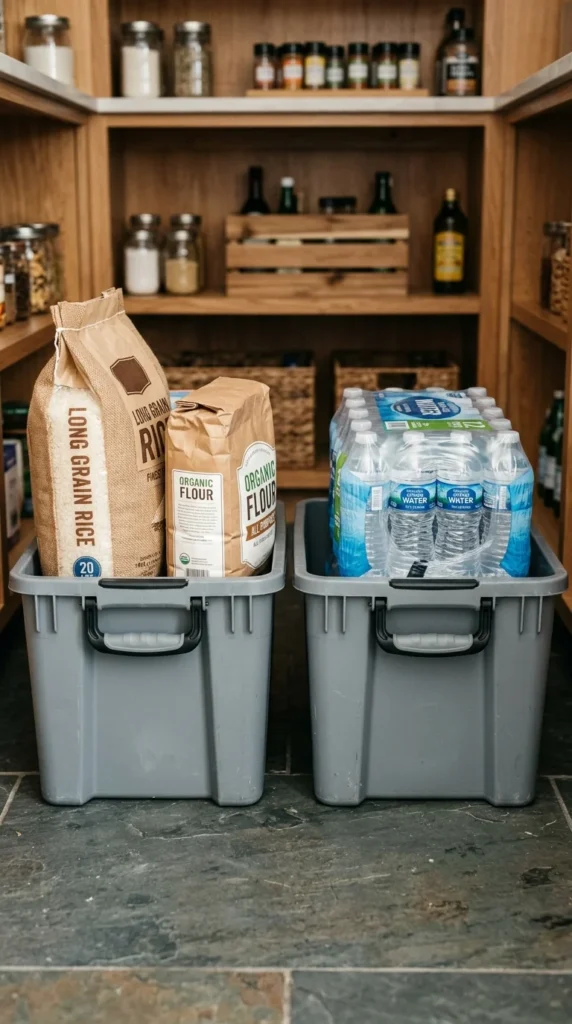
Don’t forget the floor! The bottom of the pantry is the perfect place for heavy, bulky items that you don’t want to lift onto high shelves. Large bins with wheels or smooth bottoms can hold bulk bags of rice, dog food, or extra gallons of water. By keeping these heavy items on the floor in bins, you protect your shelves and make it easy to slide the items out when needed.
20. Uniformity
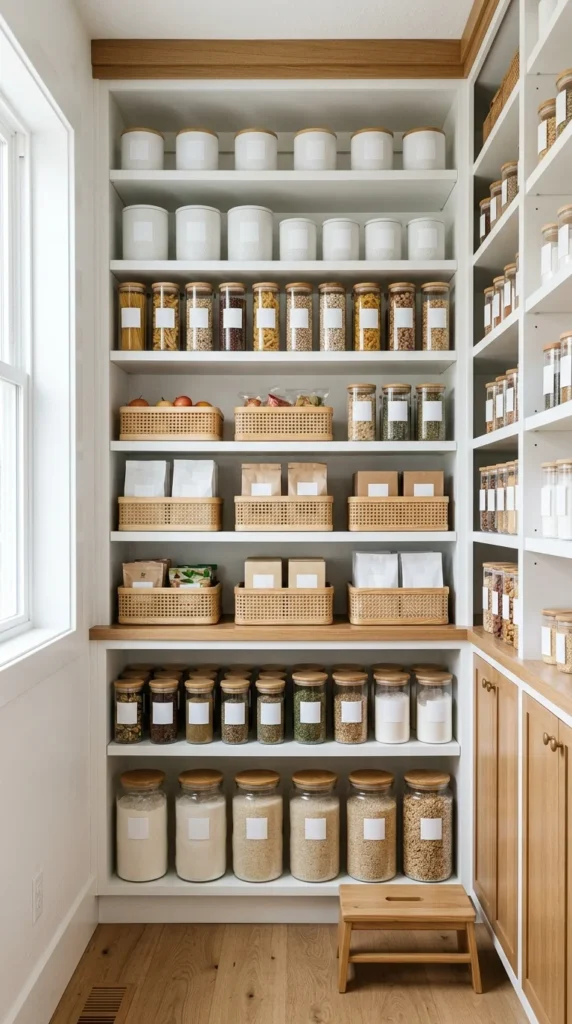
The final secret to a small pantry feeling large is uniformity. When you use the same style of bins, the same labels, and the same color palette throughout the space, the visual “noise” is reduced. A cluttered-looking pantry often isn’t just about the amount of stuff; it’s about the clashing colors and shapes of the packaging. By streamlining your aesthetic, the pantry feels calmer, more spacious, and much more manageable.