
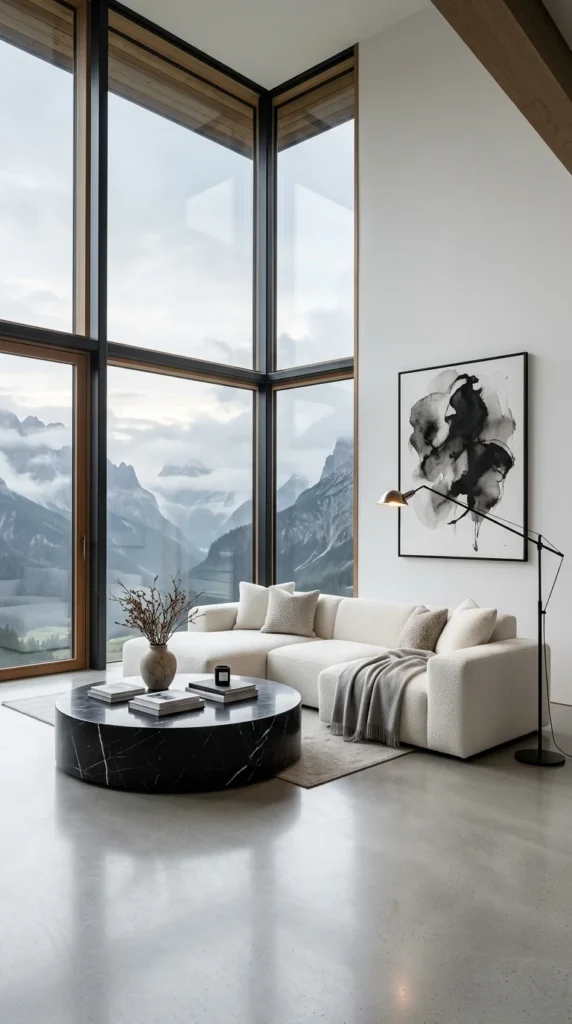
The allure of a monochromatic palette is timeless, yet it is currently undergoing a massive resurgence in the world of high-end interior design. Social media feeds and design portfolios are being dominated by a specific aesthetic: the “New Minimalist.” Gone are the days of sterile, cold rooms that feel like hospitals. Today’s black and white interiors are about depth, texture, and a sophisticated dance between light and shadow.
In this exploration of the eight most-saved black and white interiors right now, we dive into why this binary color scheme remains the ultimate statement of luxury and calm. From the rugged textures of Industrial Noir to the soft curves of Japandi-inspired sanctuaries, these spaces prove that you don’t need a rainbow to create a masterpiece.
1. Nordic Loft
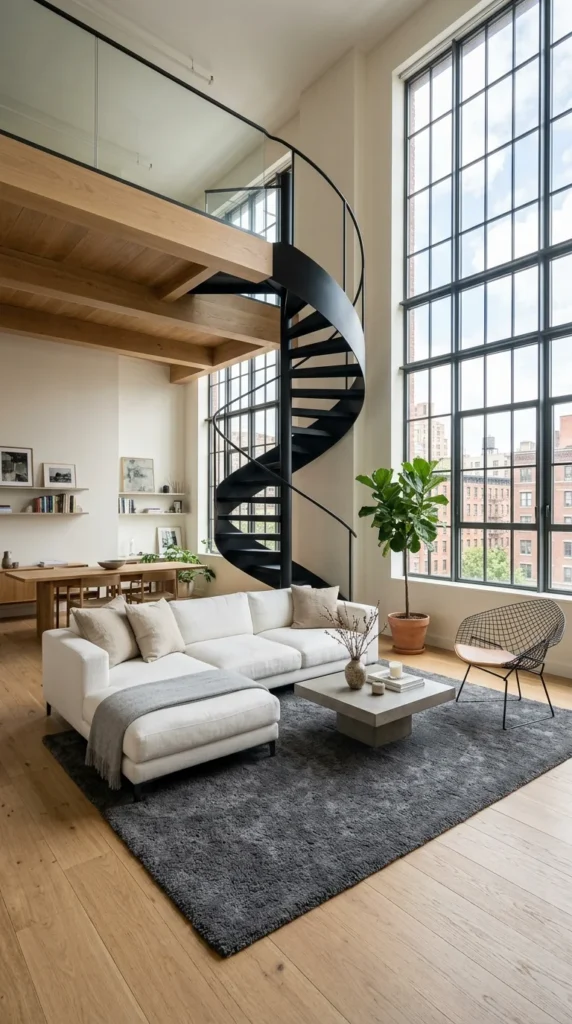
The Nordic Loft aesthetic is all about maximizing natural light while using black as a “visual anchor.” In these spaces, the white isn’t just a color; it’s a canvas for the sun. Designers are currently obsessing over the use of “black accents” to define architectural lines. Think black window mullions, slim black railings, and matte black lighting fixtures that look like ink strokes against a bright sky.
The key to saving this look from feeling too sharp is the introduction of organic textures. A sheepskin throw draped over a black chair or a light wood floor prevents the high-contrast palette from feeling clinical. It’s a masterclass in balance, providing a sense of “Hygge” without the clutter.
2. Industrial Noir
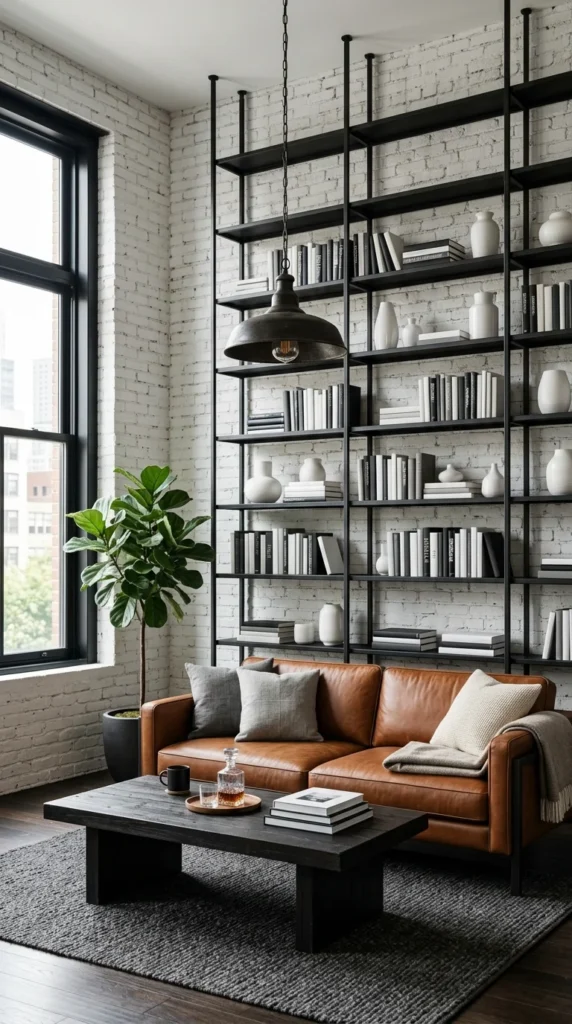
Industrial Noir takes the grit of city living and polishes it with a sophisticated monochromatic lens. This style is currently trending because it offers a “moody” alternative to the bright-and-white trend. By using black as the primary base rather than just an accent, the room gains an immediate sense of intimacy and drama.
What makes these interiors “savable” is the play of light on different surfaces. Matte black metal against glossy white subway tiles or rough-hewn white brick creates a tactile experience that photos capture beautifully. It’s a masculine, bold approach to minimalism that prioritizes structural honesty over decorative fluff.
3. Parisian Chic
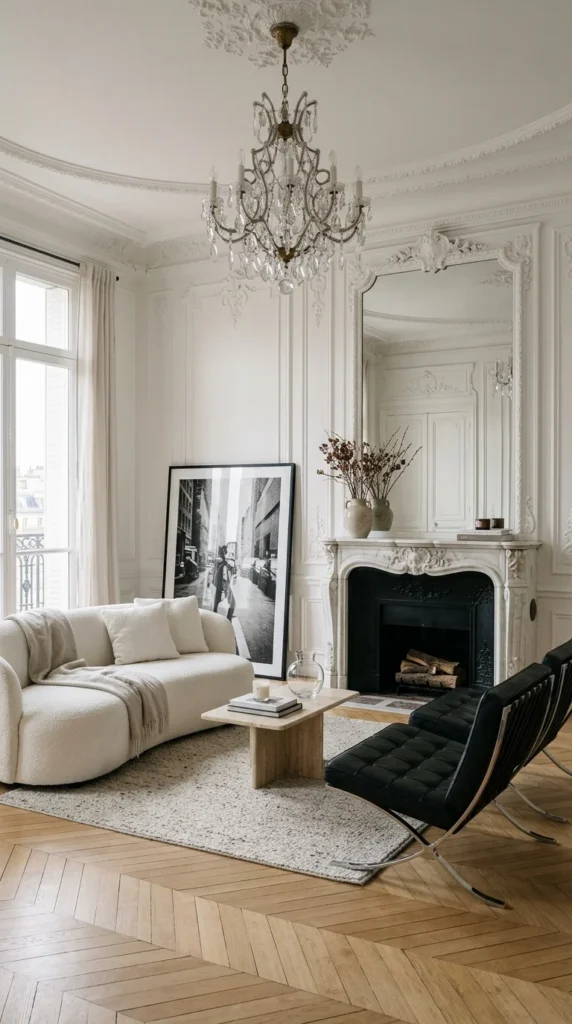
The Parisian take on black and white is perhaps the most romantic. It’s the art of mixing the old with the new. People are saving these images because they represent a “lived-in luxury.” The backdrop is almost always historical—think ornate ceiling medallions and tall French doors—but the furniture is strictly modern and monochromatic.
In these spaces, black is used to provide a “graphic pop.” A black marble mantelpiece or a dark velvet cushion provides the necessary weight to balance the airy, high-ceilinged rooms. This look tells a story of heritage meeting the future, creating a space that feels curated over decades rather than bought in a weekend.
4. Japandi Calm
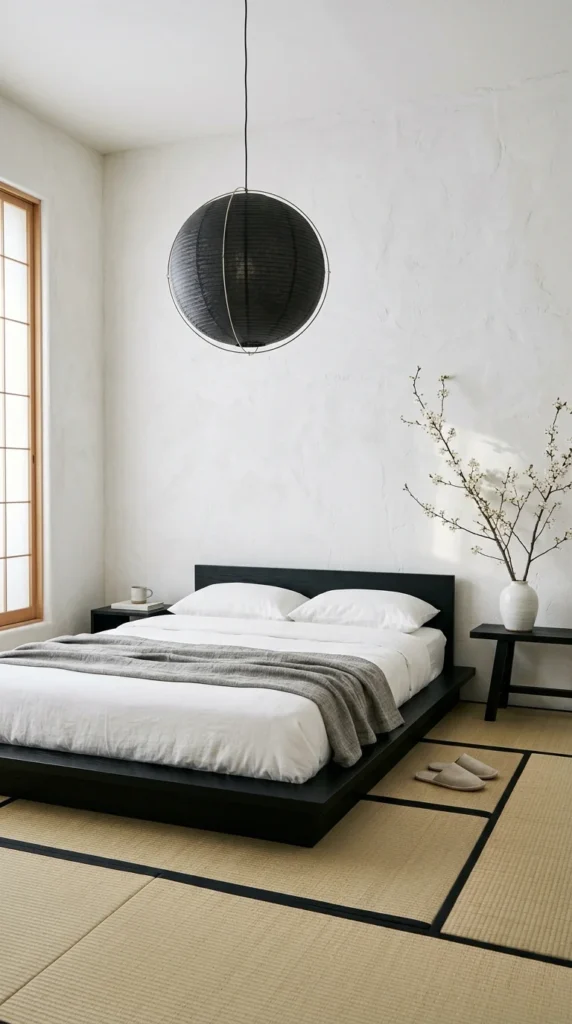
Japandi—the fusion of Japanese functionalism and Scandinavian minimalism—is the reigning king of Pinterest boards. In its black and white form, it creates a sanctuary-like atmosphere. This style focuses heavily on “negative space,” where the absence of objects is just as important as the objects themselves.
The black elements in Japandi interiors are often inspired by “Shou Sugi Ban” (charred wood) or traditional ink wash paintings. By keeping the palette strictly B&W, the focus shifts to the quality of materials—the grain of the wood, the weave of the linen, and the handcrafted nature of the ceramics. It is the ultimate expression of the “quiet luxury” movement.
5. Sculptural Luxe
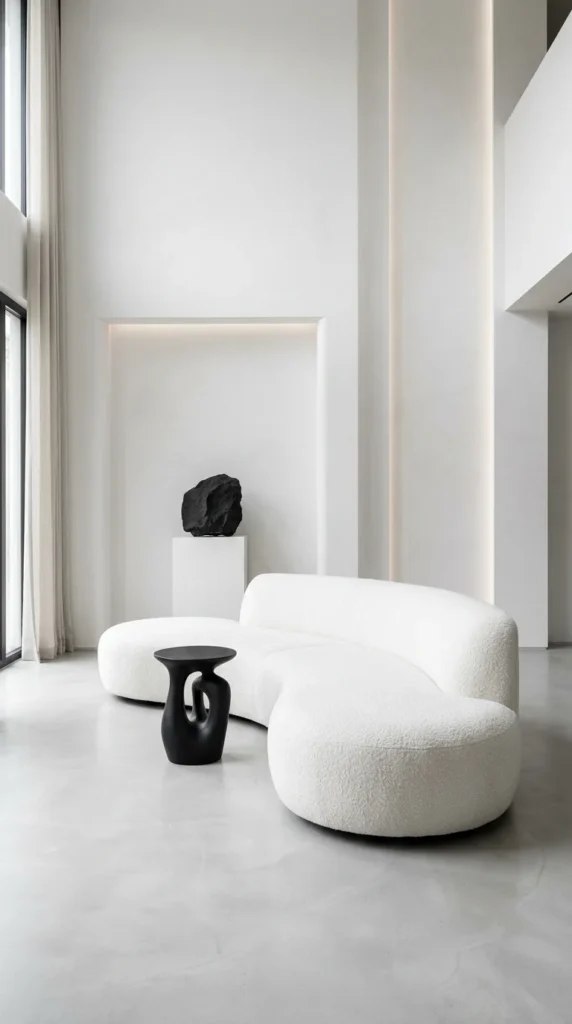
This trend moves away from functional furniture and toward “habitable art.” Sculptural Luxe interiors are characterized by bold, flowing shapes and a total lack of clutter. When you remove color, the silhouette of a chair or the curve of a sofa becomes the star of the show.
Designers are using high-contrast black and white to emphasize these shapes. A white curved wall meeting a black stone floor creates a sharp, architectural line that is incredibly photogenic. These interiors feel futuristic yet grounded, appealing to those who want their home to feel like a private museum of modern design.
6. Coastal Noir
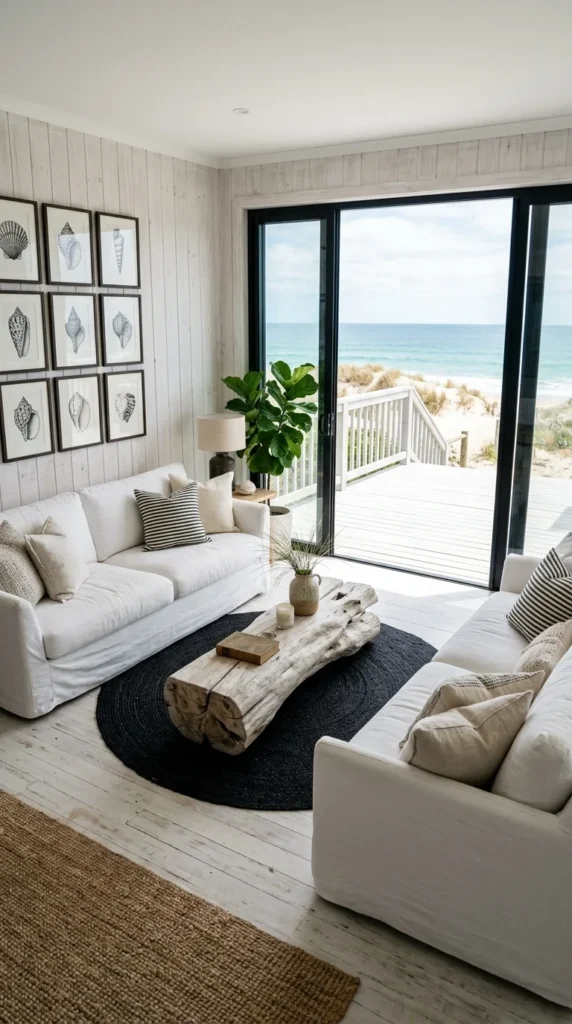
Coastal design is usually associated with blues and tans, but “Coastal Noir” is the sophisticated evolution the design world didn’t know it needed. By swapping the nautical navy for a sharp black, the seaside aesthetic becomes instantly more urban and refined.
This style works because it uses the natural brightness of the coast to soften the black accents. The black isn’t heavy; it’s used in thin lines—thin black frames, black stripes on linen, or a black-painted wooden ceiling fan. It’s a breezy, relaxed take on minimalism that feels grounded and expensive.
7. Mid-Century Monolith
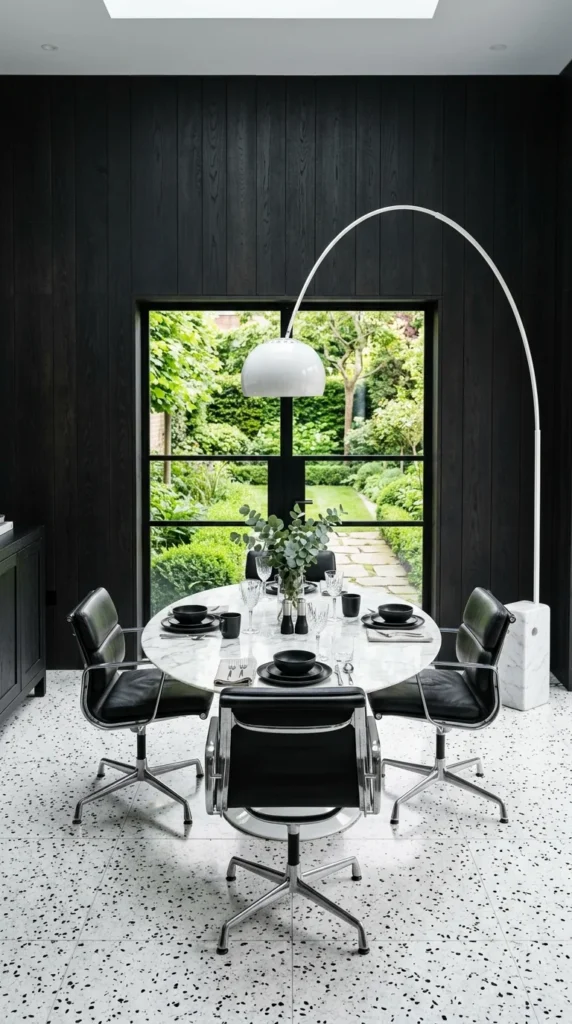
Mid-century modern design is often associated with teak and orange, but the monochromatic version is currently a favorite for high-end office and dining spaces. By taking iconic silhouettes—like the Tulip table or the Eames lounge chair—and rendering them strictly in black and white, the “kitsch” factor of the 1950s is removed.
What remains is pure geometry. The circle of a table, the arc of a lamp, the grid of a bookshelf. These interiors are incredibly popular because they feel timeless. They don’t chase trends; they rely on the enduring power of good proportions and a classic palette that will look just as good twenty years from now as it does today.
8. Organic Flow
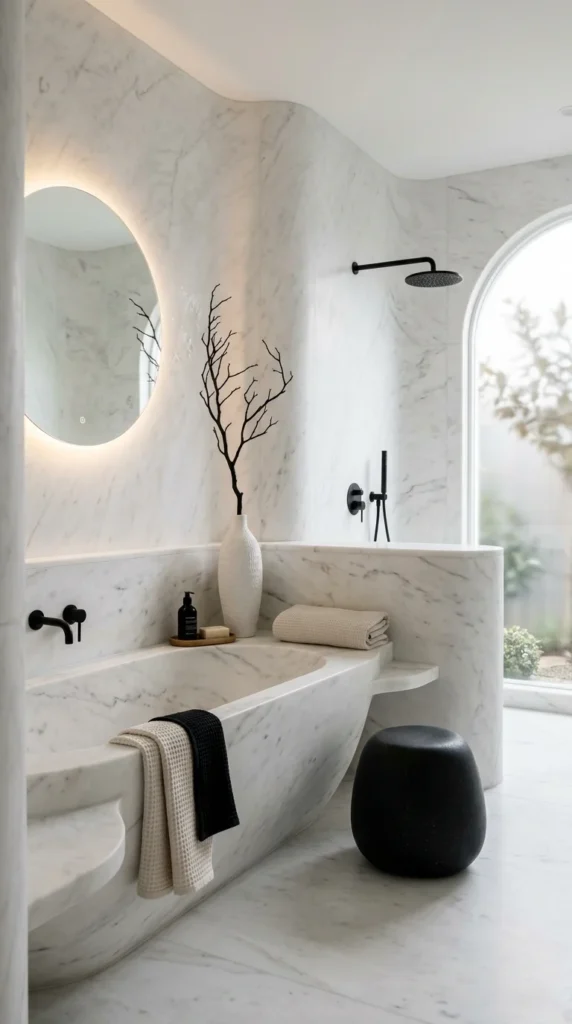
Organic minimalism is the “soft” side of the black and white trend. It focuses on movement and natural forms rather than rigid grids. In these spaces, white is used to create a sense of infinity, while black is used sparingly to draw the eye to specific points of interest.
The “Organic Flow” interior is all about the tactile experience. It uses materials like tadelakt plaster, honed stone, and matte finishes to create a space that feels like a natural cave. The high-contrast palette ensures that even the softest curves have a presence, making the room feel both expansive and incredibly cozy. This is the interior style for those who want to “unplug” from a chaotic world.