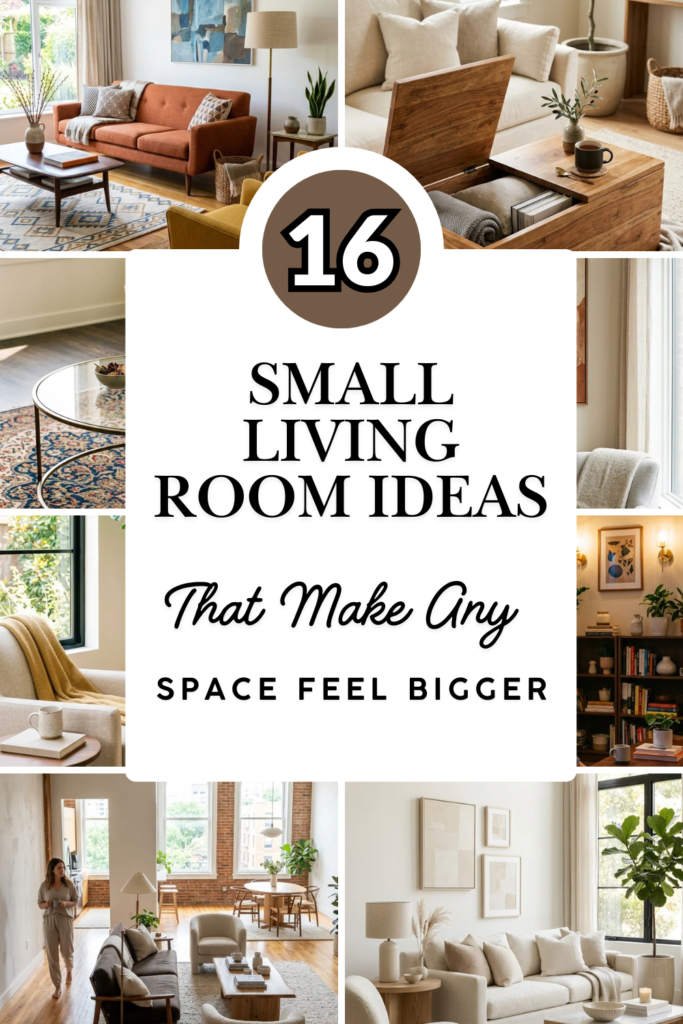

Living in a small space doesn’t mean you have to compromise on style or comfort. In fact, some of the most beautiful homes in the world are cozy apartments and compact bungalows. The secret to mastering small-scale living isn’t about how much square footage you have; it’s about how you use visual tricks to manipulate the perception of space. By using the right colors, furniture shapes, and layout strategies, you can turn a cramped quarters into a grand sanctuary.
Here are 16 expert-backed design ideas to make any small living room feel exponentially larger.
1. Acrylic Furniture
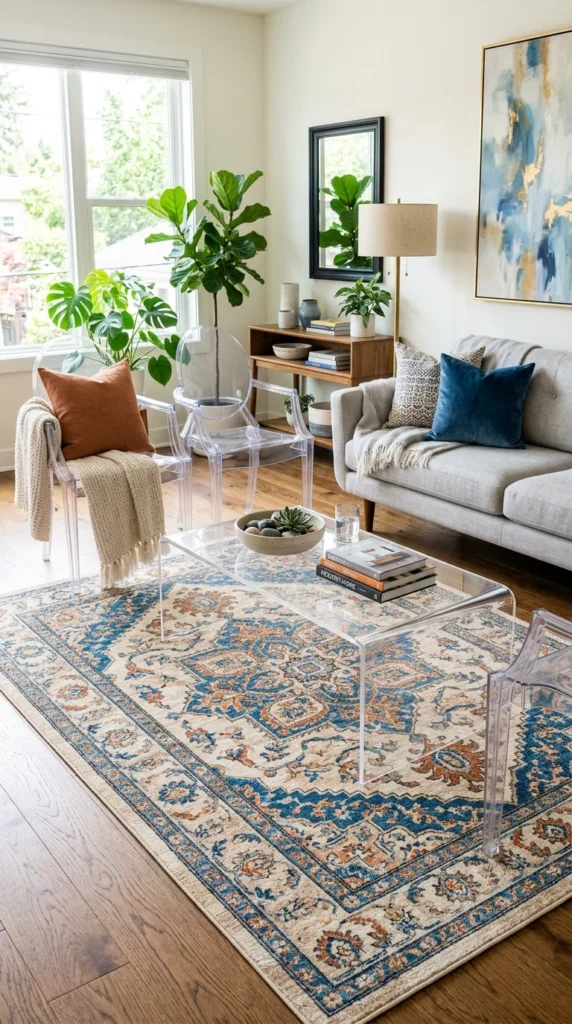
One of the oldest tricks in the interior design book is using “ghost” furniture. Acrylic or lucite pieces—like coffee tables, side chairs, or consoles—are essentially invisible to the eye. Because they are transparent, they don’t take up any “visual weight.” When you can see the floor and the walls through your furniture, the room feels open and unobstructed. It provides the utility you need without the clutter that solid wood or metal pieces might bring.
2. Low Seating
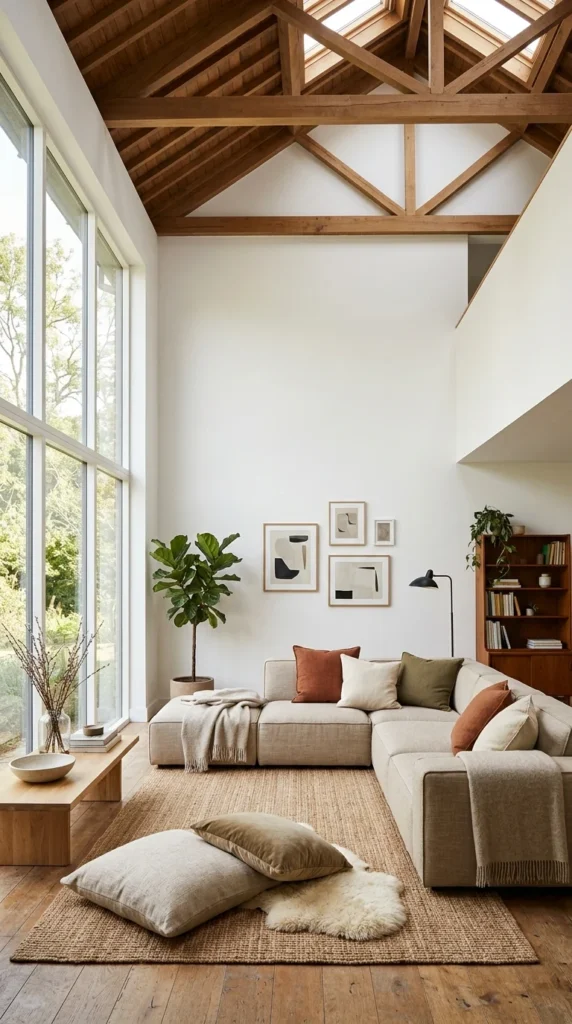
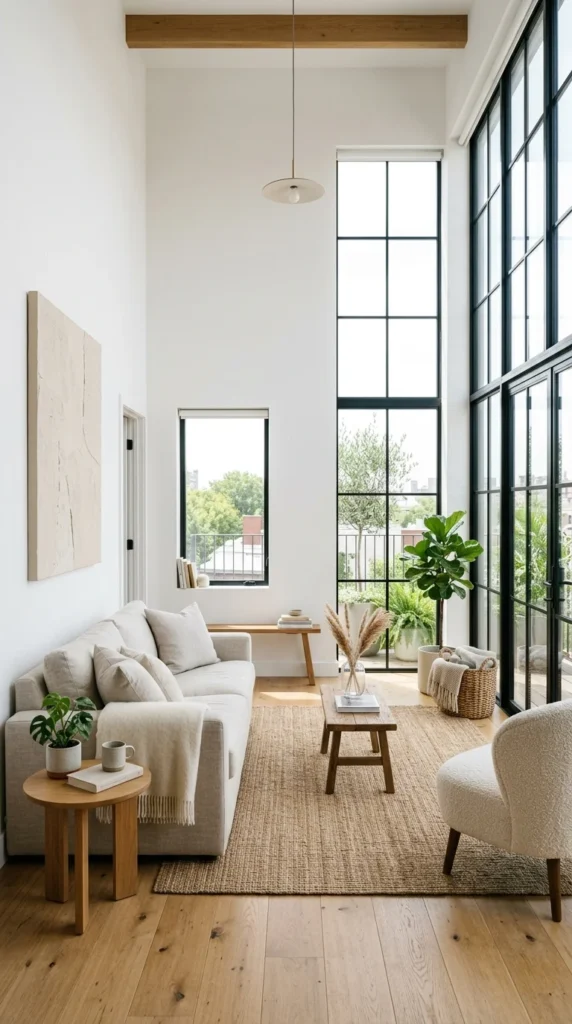
When you are dealing with a room that has a low ceiling, the best way to fight the “boxed-in” feeling is to choose low-profile furniture. By keeping your sofas and chairs close to the ground, you create more “negative space” above them. This trick draws the eye upward and makes the ceilings feel significantly higher than they actually are. Look for mid-century modern designs or Japanese-inspired floor seating to achieve this look.
3. Large Rugs
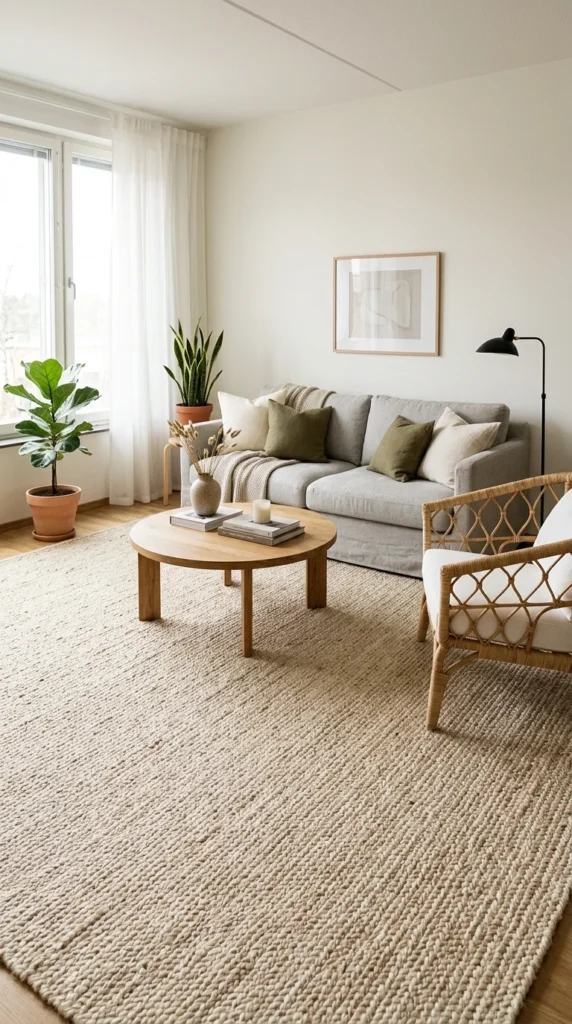
It sounds counterintuitive, but a small rug actually makes a room feel smaller. When a rug is too small, it looks like a “postage stamp” in the middle of the floor, which chops up the space and makes it feel disjointed. An oversized rug that extends under all the major pieces of furniture draws the eye out to the edges of the room, creating a sense of continuity and making the floor plan feel much more expansive.
4. Wall Mirrors
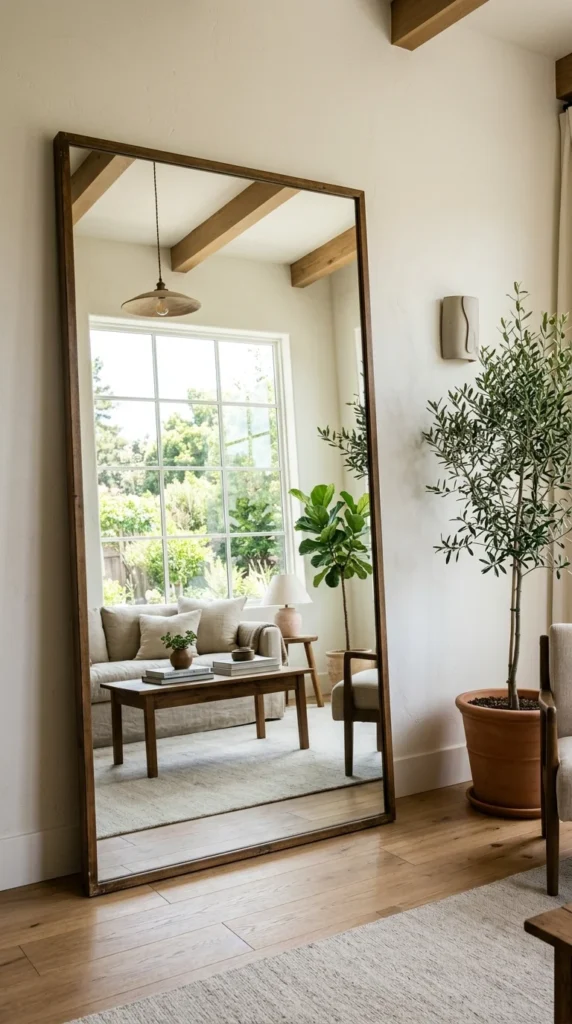
Mirrors are the ultimate weapon for small spaces. They reflect light—both natural and artificial—deep into the room, instantly brightening dark corners. More importantly, they create an optical illusion of depth. Placing a large mirror opposite a window is the most effective placement, as it reflects the view of the outdoors, essentially “opening up” a wall that wasn’t there before.
5. Vertical Storage
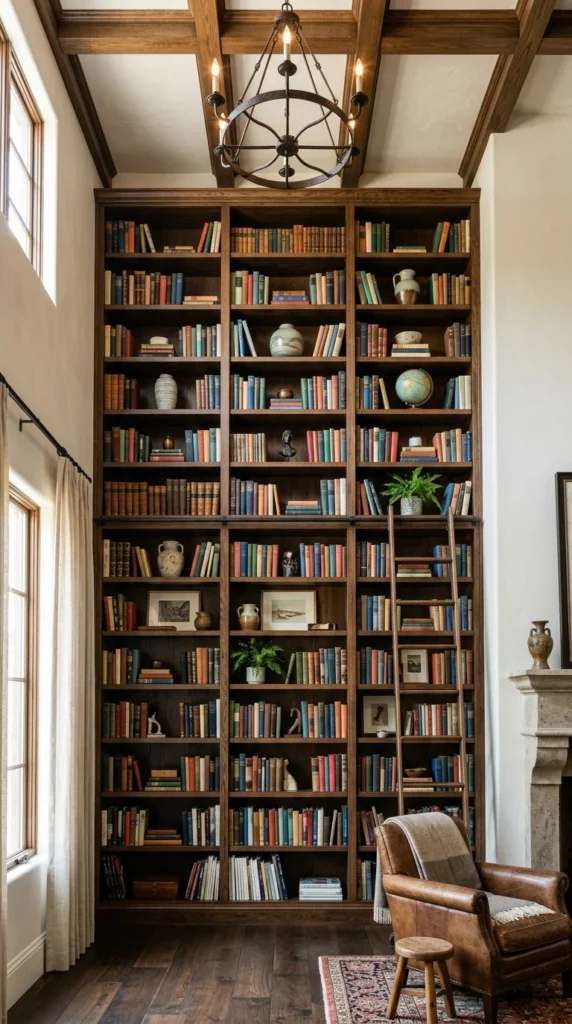
When you run out of floor space, the only way to go is up. Vertical storage—such as tall bookshelves, hanging cabinets, or high-mounted ledges—encourages the eye to travel upward. This emphasizes the height of the room rather than the narrowness of the floor. It also provides a place for clutter, keeping the main living area clear and organized, which is essential for a spacious feel.
6. Sheer Curtains
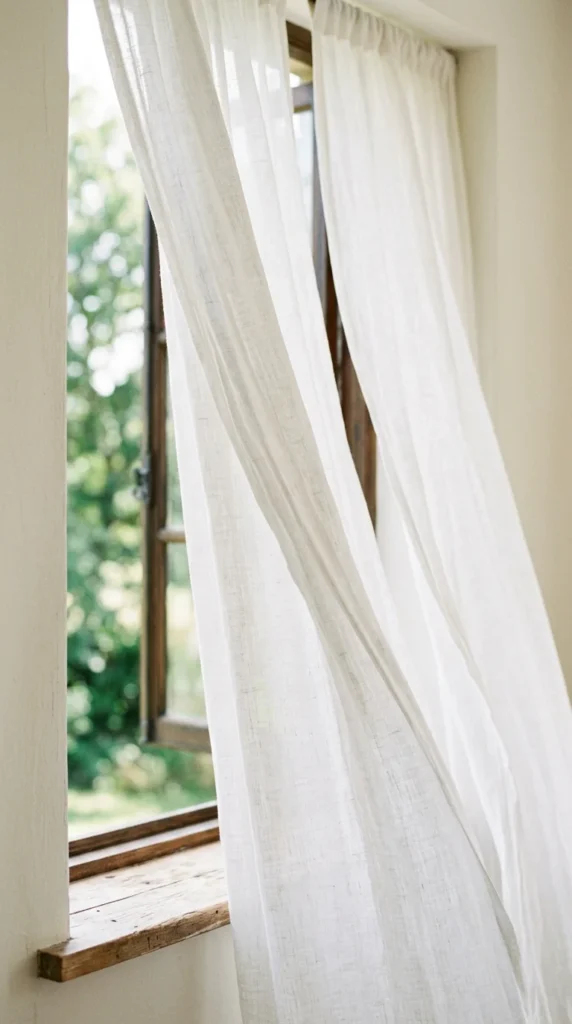
Heavy, dark drapes can act like a wall, closing in the room and absorbing light. To make a space feel bigger, opt for sheer fabrics in light colors like white, cream, or pale gray. Sheer curtains provide privacy while allowing maximum sunlight to filter through. They soften the edges of the room and create a breezy, ethereal atmosphere that feels light and unburdened.
7. Monochromatic Palettes
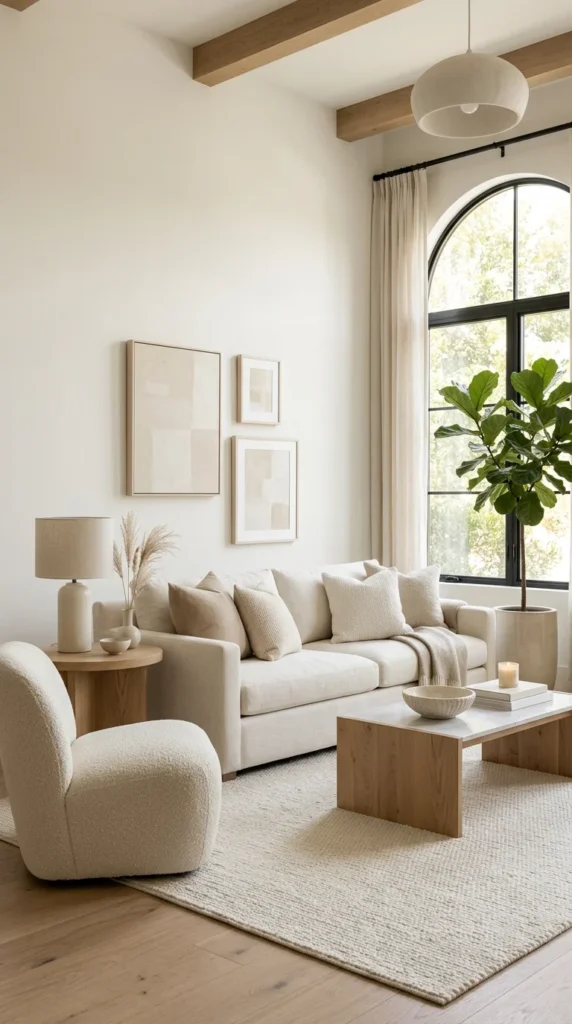
A room with too many contrasting colors can feel busy and fragmented. By sticking to a monochromatic color scheme—using different shades, tones, and textures of a single color—you eliminate the visual boundaries that define where one object ends and another begins. Whites, light grays, and soft blues are popular choices for this technique, as they recede from the eye, making the walls feel further away.
8. Leggy Furniture
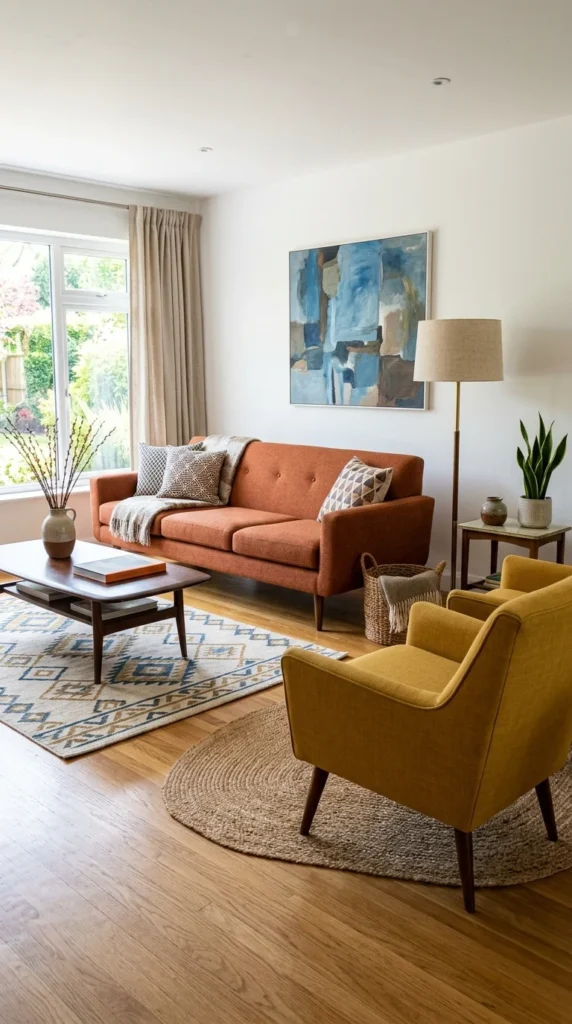
Furniture that sits directly on the floor can look heavy and bulky. “Leggy” furniture—pieces with slim, exposed legs—creates a sense of “airiness.” When you can see the floor extending under the sofa or the credenza, the room feels less crowded. It allows light to circulate under the furniture, which contributes to an overall feeling of lightness and movement within the space.
9. Multifunctional Pieces
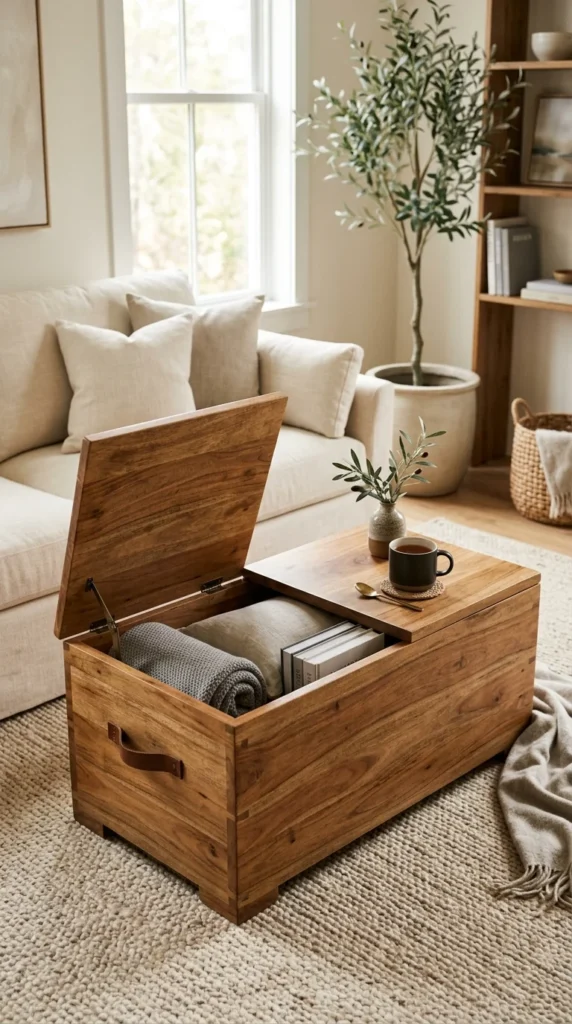
In a small living room, every piece of furniture should earn its keep. Look for items that serve dual purposes: an ottoman that works as a coffee table and a storage bin, or a sofa with a built-in daybed. By reducing the total number of items in the room, you free up physical space and reduce the mental clutter that comes with a packed environment.
10. Strategic
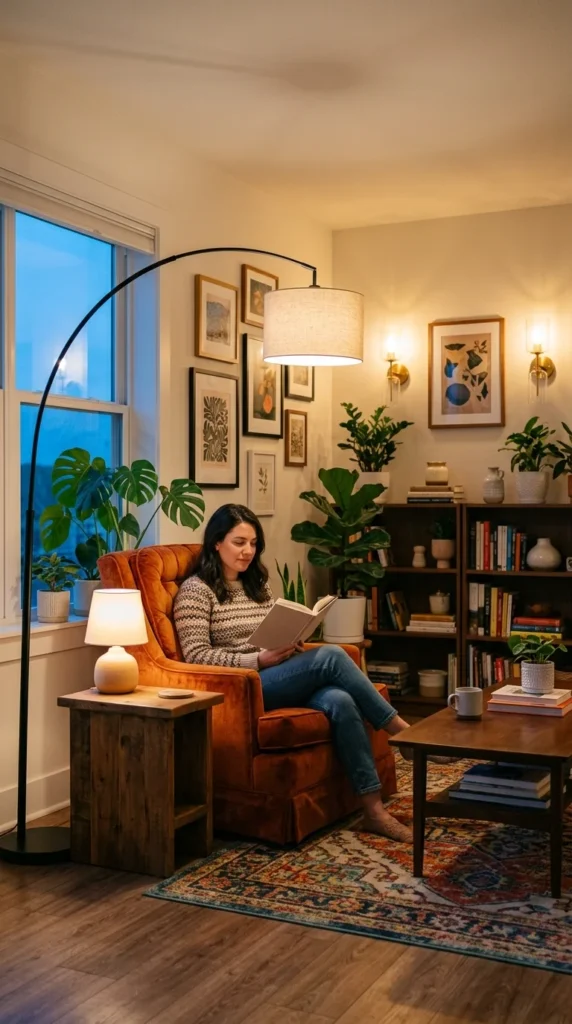
A single overhead light can make a room feel flat and small by creating harsh shadows. To expand the space, use “layered lighting.” Combine floor lamps, table lamps, and wall sconces to spread light evenly throughout the room. Illuminating the corners of the room “pushes” the walls back visually, making the entire perimeter of the space visible and inviting.
11. Minimalist Decor
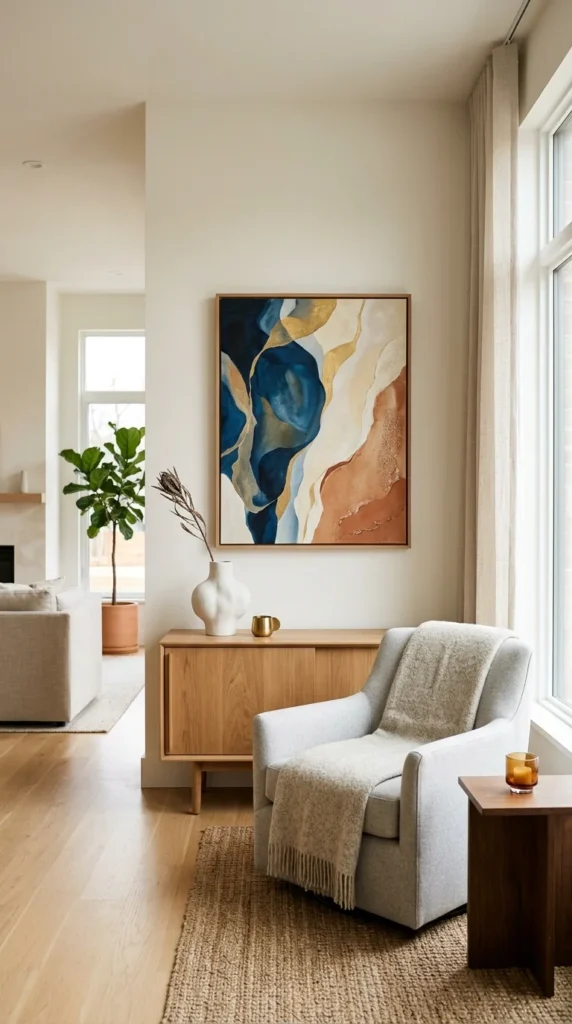
When space is at a premium, “less is more” is a survival rule. A few large, impactful decor pieces are better than a dozen small trinkets. Small items create “visual noise” that can make a room feel frantic and crowded. Choose one large piece of art for the wall or one statement vase for the table. This creates a focal point without overwhelming the senses.
12. Floating Shelves
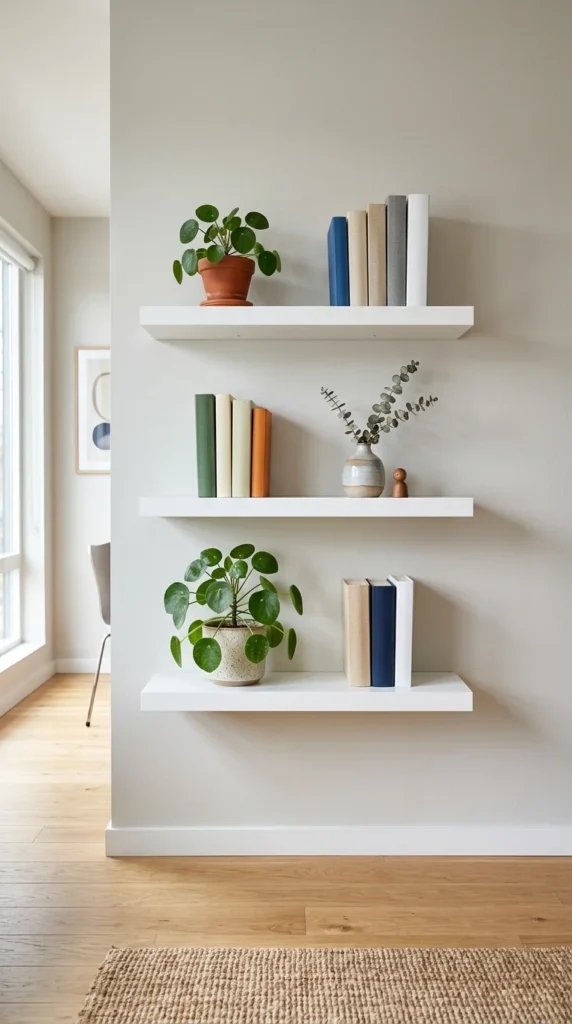
Floating shelves provide storage and display space without the heavy footprint of a traditional bookcase or console table. Because they don’t have legs or a base, they keep the floor area clear. This helps maintain a sense of openness and allows you to use the wall space effectively for both organization and personality.
13. Glass Tables
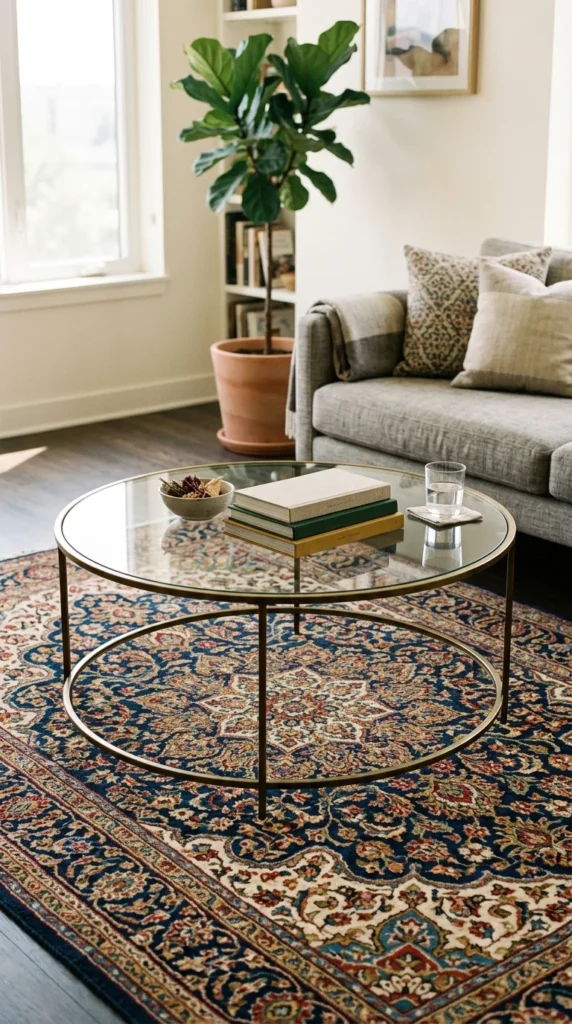
Similar to acrylic furniture, glass-topped tables are excellent for small rooms because they don’t block the line of sight. A glass coffee table or side table provides a functional surface for drinks or books but “disappears” when you look across the room. This transparency prevents the furniture from feeling like an obstacle in the middle of your living space.
14. Cohesive Flooring
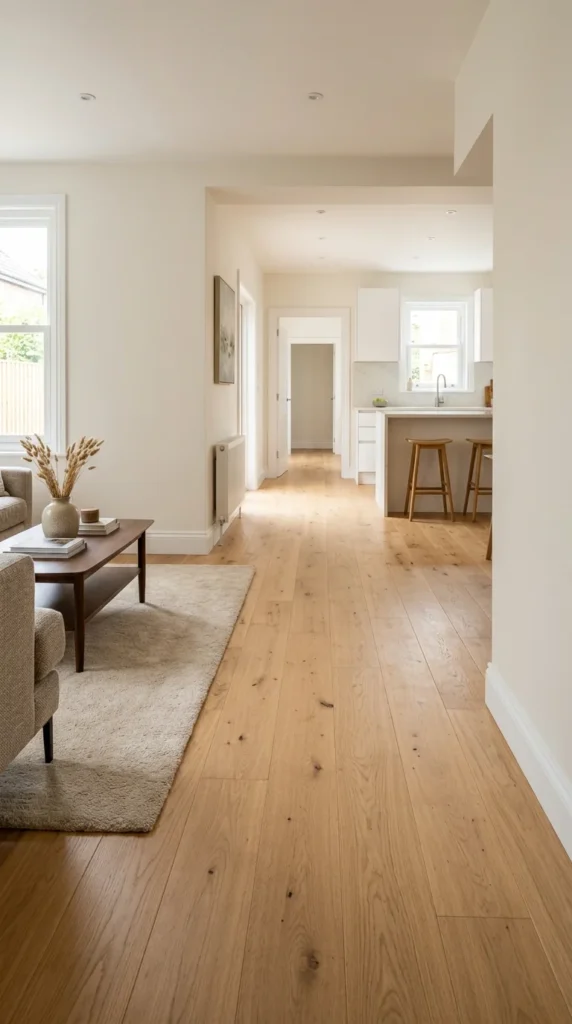
If your living room opens into a kitchen or hallway, try to keep the flooring consistent across both spaces. Using the same material and color creates a continuous “flow” that tricks the brain into thinking the living room is part of one giant, expansive area. Transition strips and changes in material act as “stop signs” for the eyes, which can make a small room feel boxed in.
15. Indoor Plants
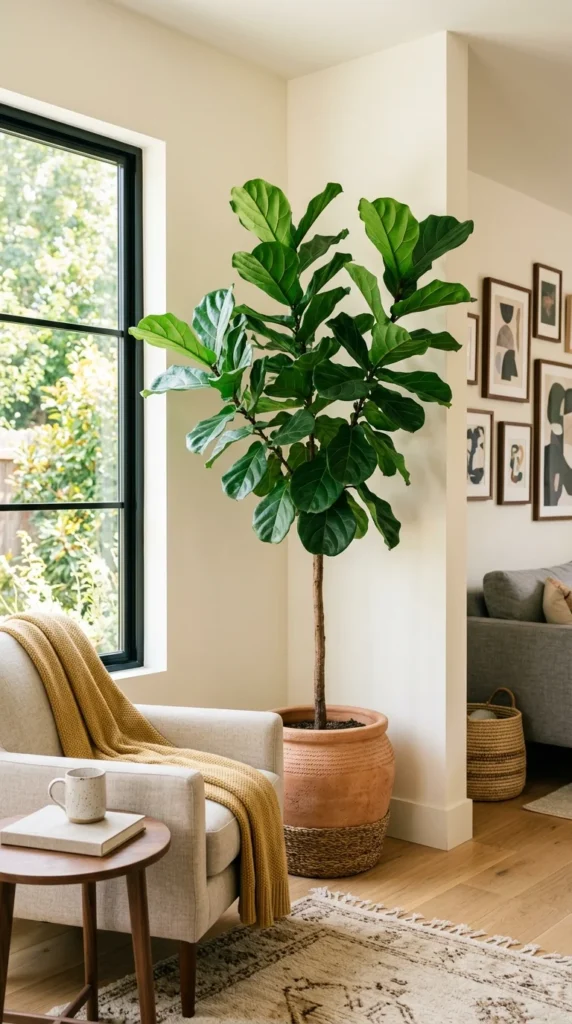
Plants add life and color, but they also add depth. Placing a tall plant in a corner can soften the sharp angles of the room and draw the eye upward. The organic shapes of leaves and branches break up the rigid lines of walls and furniture, making the boundaries of the room feel less defined and more fluid.
16. Strategic Layouts
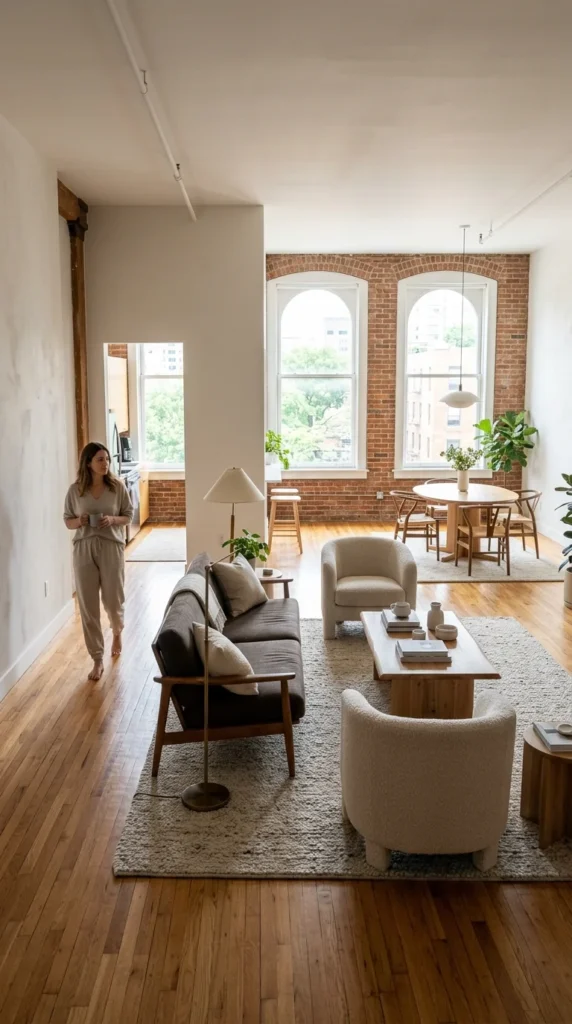
It is a common instinct to push all the furniture against the walls to maximize floor space, but this can actually make a room feel “tight.” Pulling your sofa even just a few inches away from the wall can create a sense of breathing room. Creating a central conversation area with clear walking paths around the perimeter makes the room feel like it was designed with intention and flow, rather than just being stuffed with furniture.