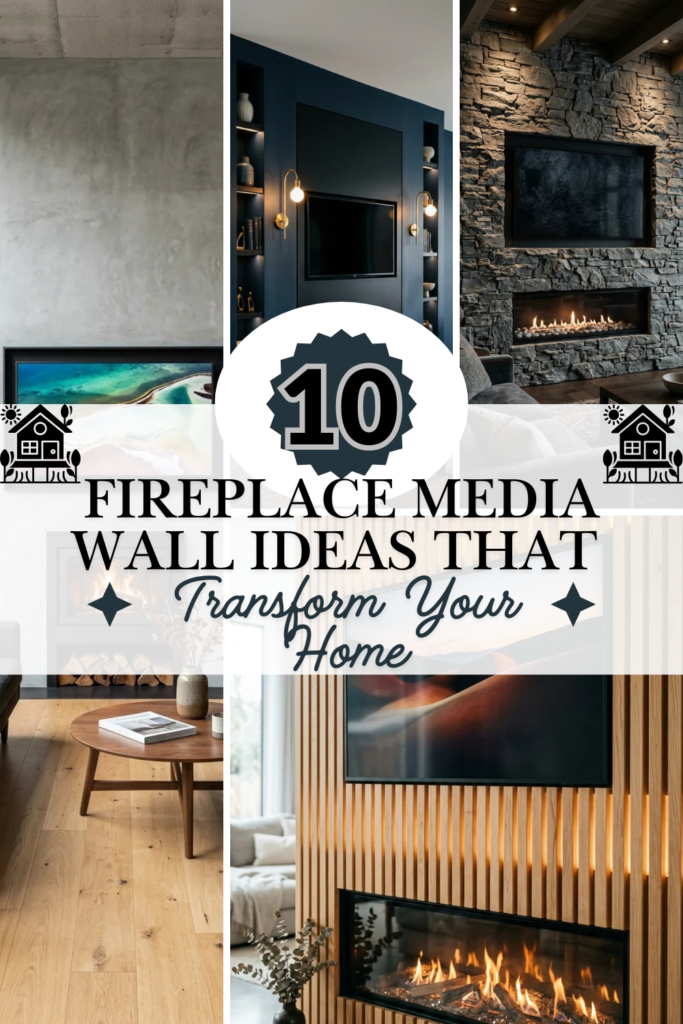

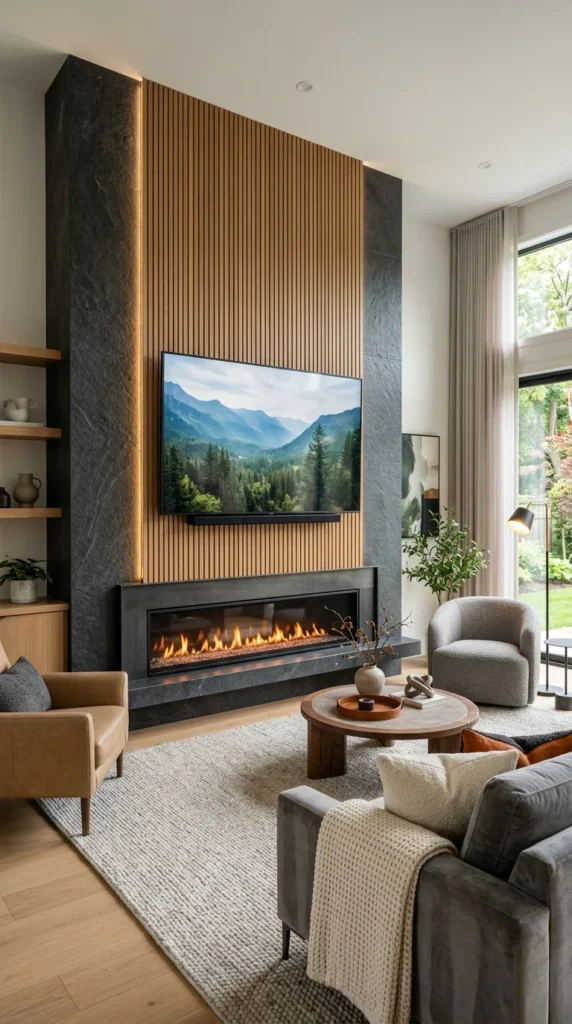
The fireplace has long been the traditional heart of the home, a place for warmth and gathering. However, in the modern era, the television has become the functional focal point of most living spaces. The “media wall” is the brilliant architectural solution that marries these two elements into one stunning, cohesive feature. By integrating your screen, your heat source, and your storage into a single custom-built structure, you can eliminate clutter and create a high-end designer look that elevates the entire room.
Whether you are working with a cozy cottage or a sprawling minimalist penthouse, a well-executed media wall serves as both a functional utility and a piece of art. Here are 10 fireplace media wall ideas to inspire your next home renovation.
1. Slatted Wood
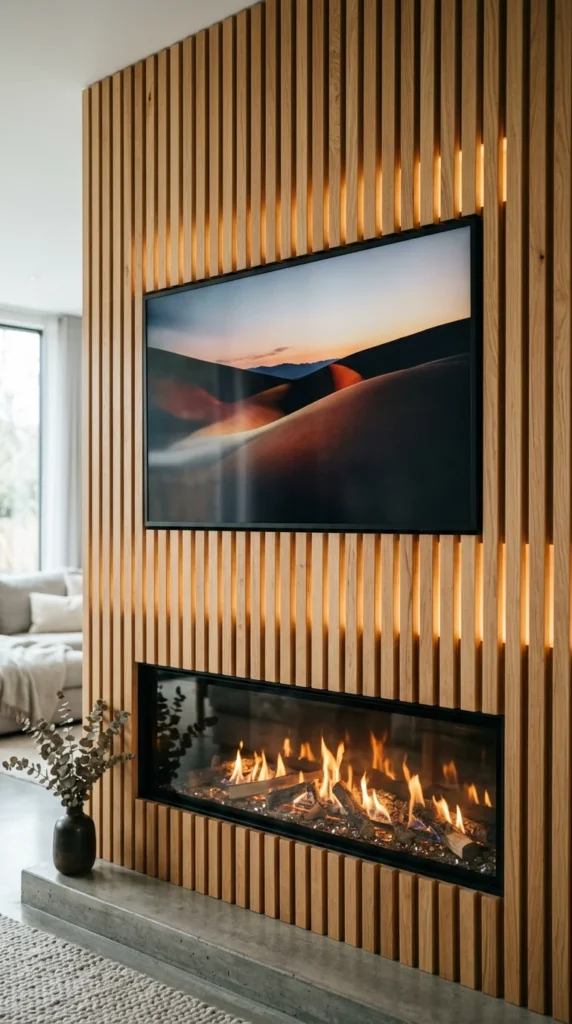
Wood slats have taken the interior design world by storm, and for good reason. They add instant texture, warmth, and a sense of organic movement to a room. When used on a media wall, vertical slats can make a ceiling appear higher, while horizontal slats can make a narrow room feel wider. Using a light wood like oak or ash keeps the space feeling airy and Scandi-inspired, while darker walnut slats lean into a mid-century modern or masculine aesthetic. This design is particularly effective at hiding the seams of “invisible” doors or cable management systems, ensuring the focus remains on the beautiful craftsmanship.
2. Floor-to-Ceiling Stone
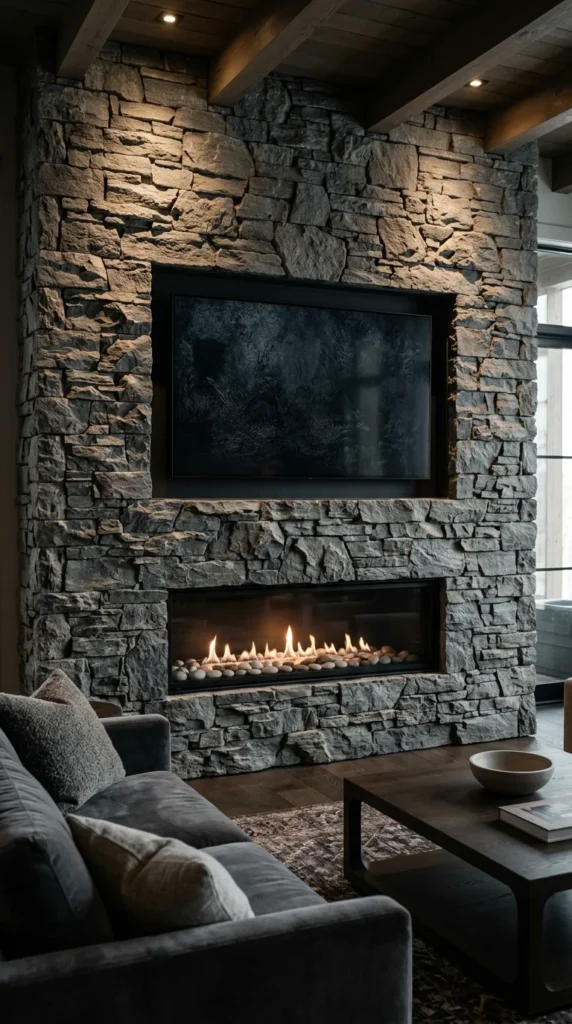
For those who want to make a bold, permanent statement, floor-to-ceiling stone is the gold standard. Whether you choose rugged stacked slate, smooth limestone, or contemporary porcelain tiles that mimic natural stone, this material provides a sense of permanence and luxury. Stone acts as a fantastic thermal mass and provides a neutral, textured backdrop that makes the colors on your TV screen pop. To keep the look modern, avoid chunky traditional mantels and instead opt for a “hole-in-the-wall” fireplace design that sits flush with the masonry.
3. Recessed Niches
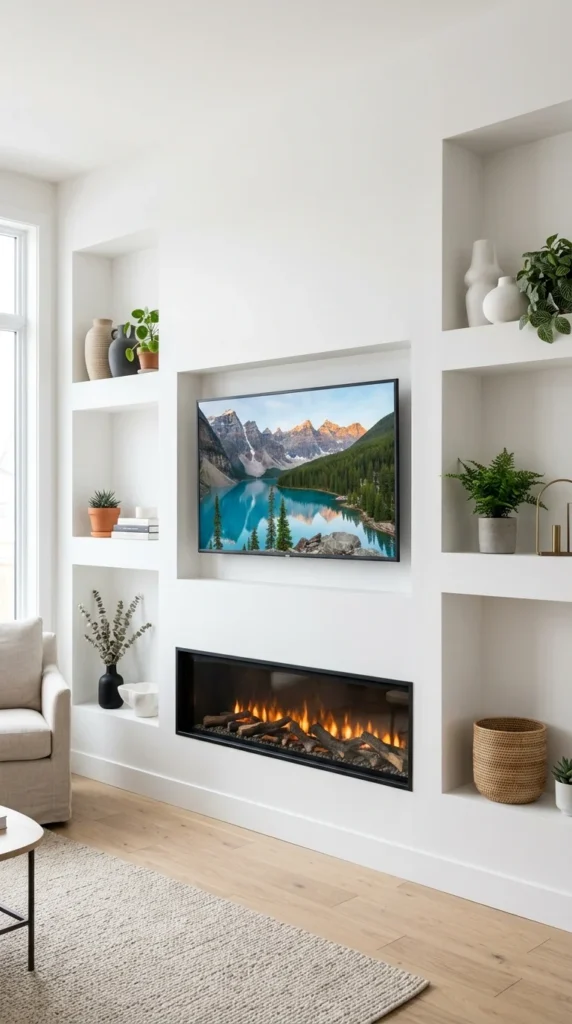
A common mistake in media wall design is making the structure feel like a flat, heavy block. Recessed niches solve this by adding depth and architectural interest. By carving out specific “pockets” for your TV, your soundbar, and your fireplace, you create a flush, integrated appearance where nothing protrudes into the room’s walking space. You can also add smaller decorative niches on the sides for books, art, or sculptures. Adding spotlights inside these alcoves creates a gallery-like feel that transforms the wall into a decorative feature even when the TV is off.
4. Industrial Concrete
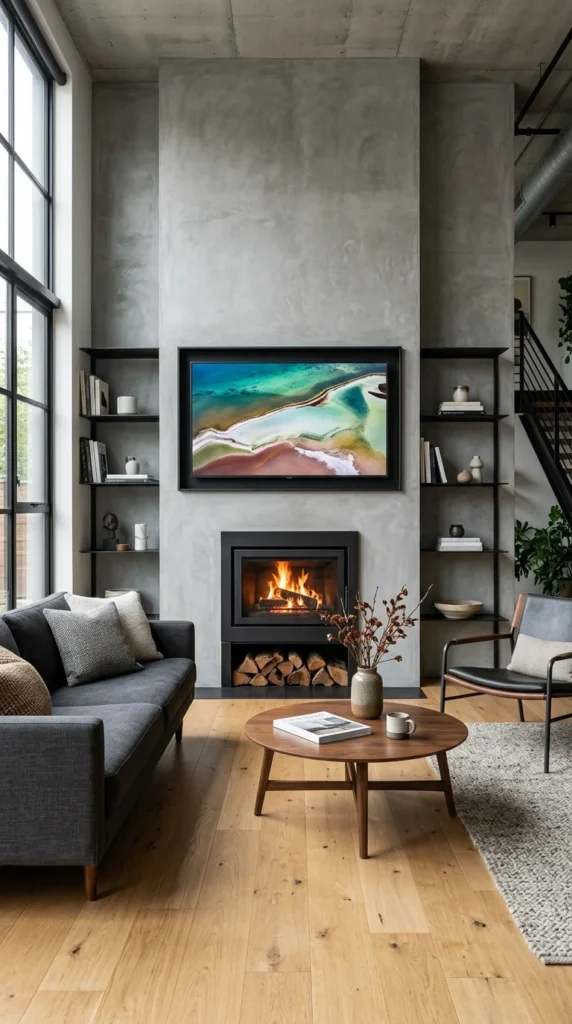
If your home leans toward a loft or industrial aesthetic, a concrete-effect media wall is a perfect choice. This can be achieved using real poured concrete, lightweight concrete panels, or high-quality micro-cement plaster. The cool, matte grey tones of concrete provide a sophisticated, urban vibe. It pairs exceptionally well with black metal accents and linear fireplaces. To prevent the look from feeling too cold, balance the concrete with plush textiles, such as a velvet sofa or a high-pile rug, and use warm-toned LED strips to “soften” the edges of the wall.
5. Floating Mantels
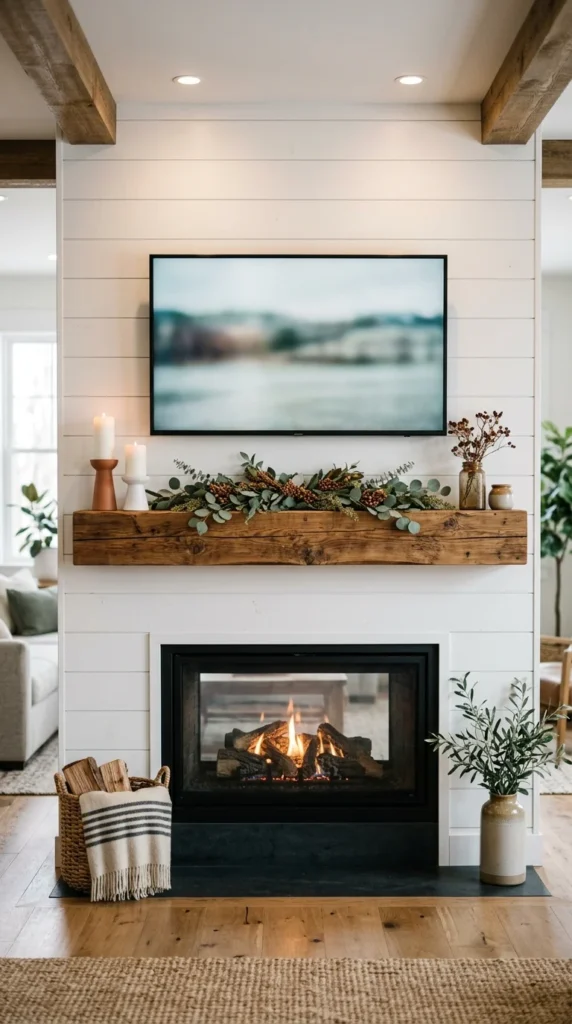
The “floating” look is a hallmark of modern design. By omitting a traditional hearth that sits on the floor, you create the illusion of more floor space, making the room feel larger. A floating media wall often features a cantilevered base or a simple, chunky wooden mantel that separates the fireplace from the TV. This gap is not just aesthetic; it also serves as a heat shield, protecting your electronics from the rising warmth of the fire. Using a reclaimed wood beam for the mantel adds a touch of rustic charm to an otherwise contemporary setup.
6. Bold Dark Tones
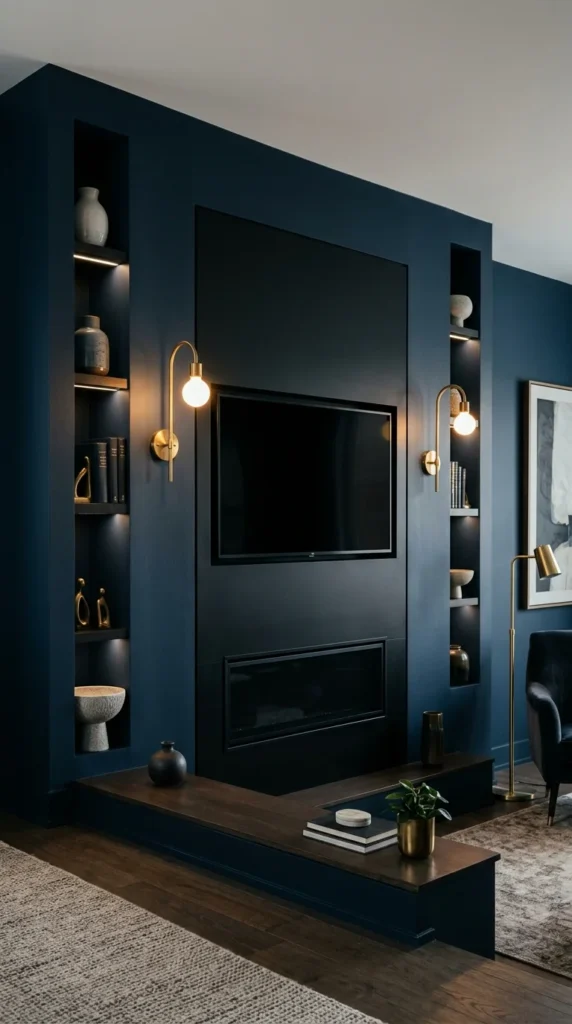
While white and grey are safe choices, a dark media wall can create a truly immersive cinematic experience. Painting your media wall in charcoal, forest green, or deep navy helps the TV screen “disappear” when it’s not in use, preventing the “big black box” syndrome that can ruin a room’s decor. Dark colors also make the orange glow of a fireplace look more vibrant and cozy. When going dark, ensure you have layered lighting—such as backlighting behind the wall or decorative sconces—to prevent the feature from looking like a dark void in the room.
7. Symmetrical Built-ins
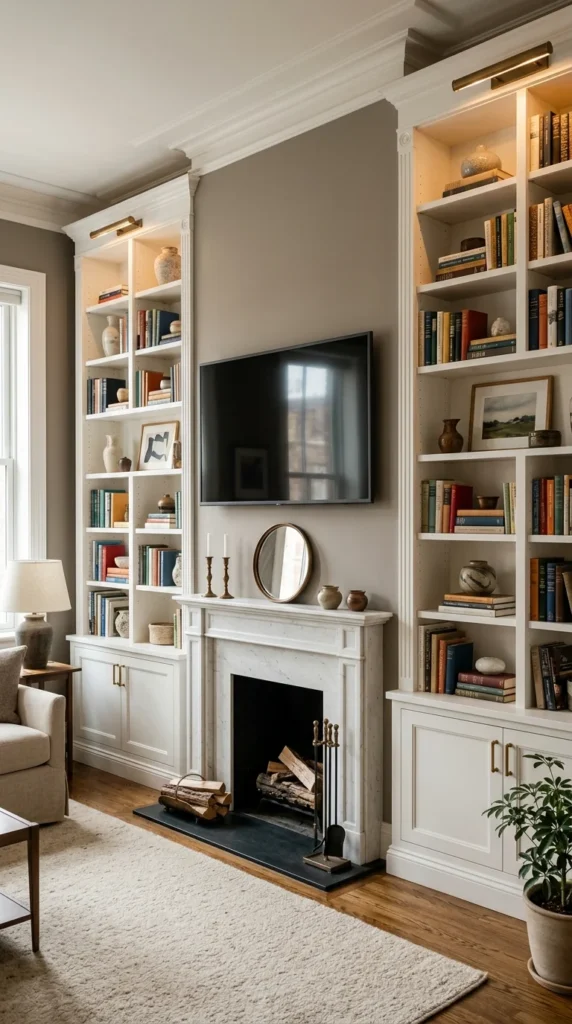
For a look that will never go out of style, symmetry is key. Framing your central fireplace and TV with identical shelving units or cabinets on either side creates a balanced, harmonious feel. This approach is highly functional, providing ample storage for media consoles, gaming systems, and personal libraries. To keep it modern, use “push-to-open” cabinetry without handles for a cleaner look, or incorporate glass-fronted cabinets with internal lighting to showcase your most prized possessions.
8. Marble Luxe
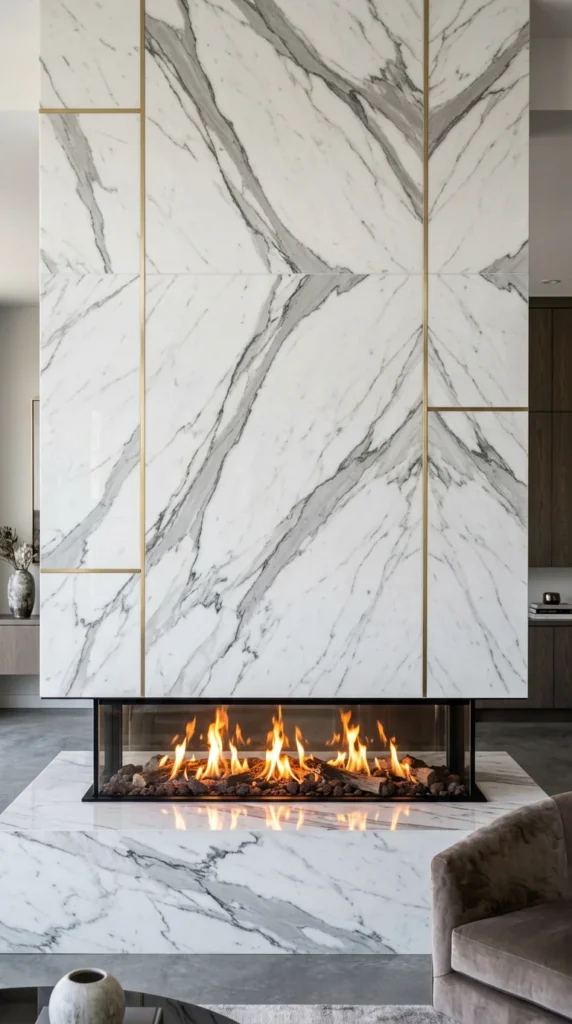
Nothing says luxury quite like marble. A marble-clad media wall acts as a stunning centerpiece that screams sophistication. Because marble comes in large slabs or oversized tiles, you can create a seamless look with very few grout lines. The reflective surface of polished marble helps bounce light around the room, making it a great choice for spaces that don’t get much natural sun. For a contemporary twist, look for “book-matched” marble where the veins line up perfectly to create a mirrored pattern across the wall.
9. Hidden Tech
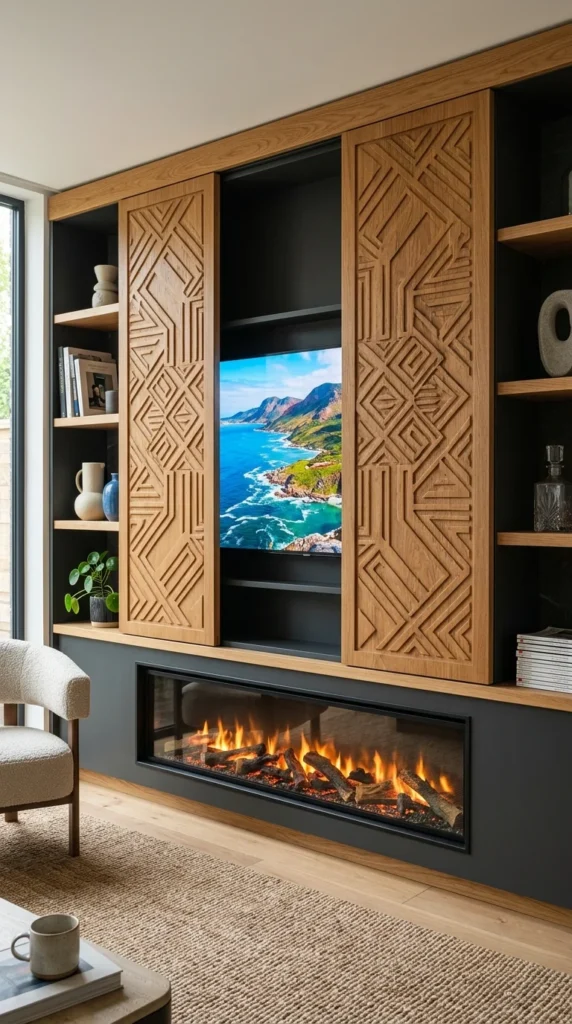
For some, the TV is a distraction from the room’s aesthetic. The hidden tech media wall uses sliding panels, bifold doors, or even motorized artwork to conceal the screen when it’s not in use. This allows the fireplace to be the sole focus during social gatherings or quiet reading time. You can use beautiful materials like fretwork wood, decorative mirrors, or large-scale canvas art to hide the TV, ensuring that your living room feels like a refined lounge rather than a home theater.
10. Venetian Plaster
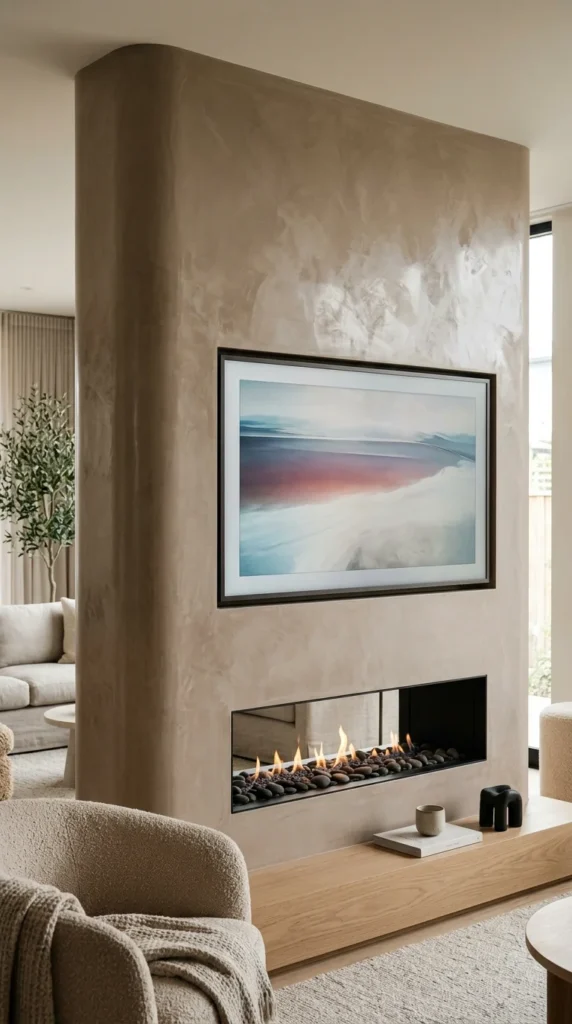
Venetian plaster is an ancient technique that has seen a massive resurgence. It involves applying thin layers of plaster mixed with marble dust to create a finish with incredible depth and a soft, subtle sheen. A Venetian plaster media wall feels soft to the touch and has a “cloud-like” visual texture that shifts depending on the light. It is perfect for those who want a minimalist look that still feels high-end and artisanal. Curved edges are particularly popular with this material, giving the media wall a bespoke, sculpted appearance that feels integrated into the very bones of the house.