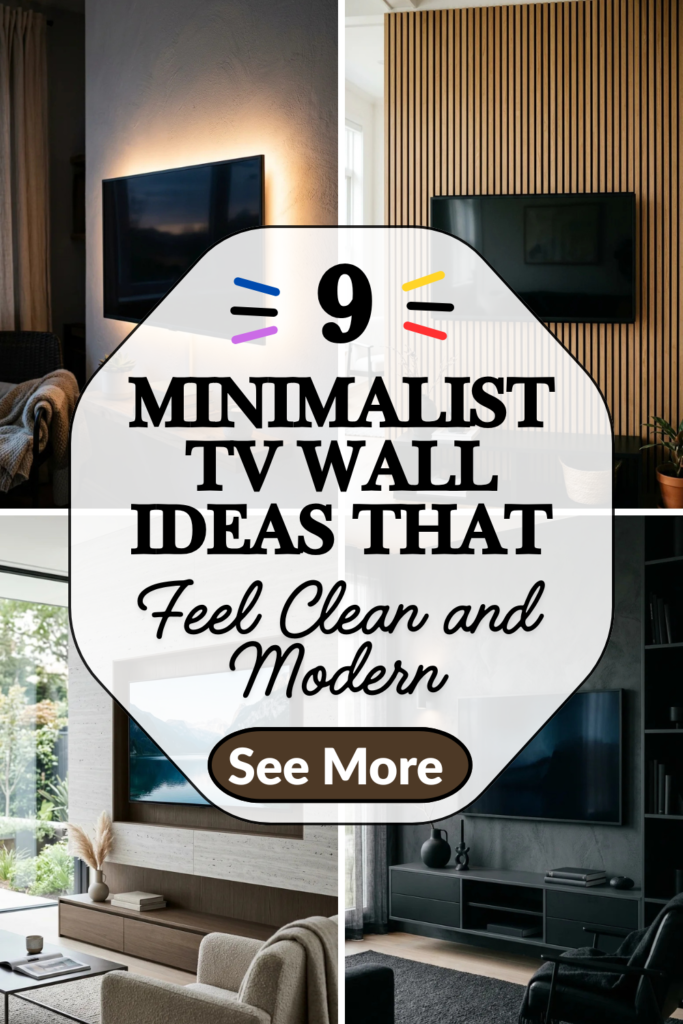

In the world of interior design, the television has long been a challenge. For decades, it was a bulky eyesore that dominated the room, surrounded by a chaotic web of wires and heavy, dark cabinetry. However, the rise of minimalist aesthetics has transformed the way we view our entertainment hubs. Minimalism isn’t just about having “less”; it’s about intentionality, clarity, and creating a space that breathes.
A minimalist TV wall serves as the focal point of the modern home, offering a sleek, distraction-free environment that enhances both your viewing experience and your overall sense of calm. By focusing on clean lines, hidden technology, and high-quality materials, you can turn a standard media setup into a sophisticated architectural feature. Here are nine minimalist TV wall ideas to help you achieve a clean and modern look.
1. Floating Consoles
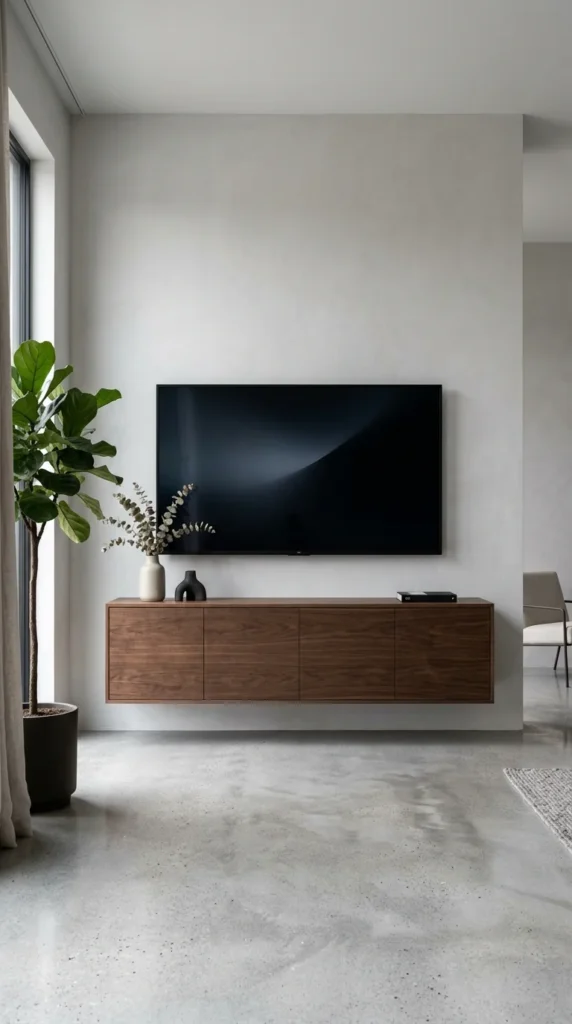
The floating console is a staple of minimalist design for a very good reason: it maximizes floor space. When a piece of furniture sits directly on the ground, it “closes” the room and makes the floor area appear smaller. By mounting a slim, handleless cabinet to the wall, you create a sense of weightlessness that makes the entire room feel airier and more expansive.
Floating consoles are ideal for those who need a small amount of storage for media players or gaming consoles but want to avoid the bulk of a traditional media center. To maintain the minimalist vibe, look for units with “push-to-open” mechanisms rather than visible handles. This keeps the lines of the furniture completely uninterrupted, contributing to a seamless, high-end appearance.
2. Art Mode
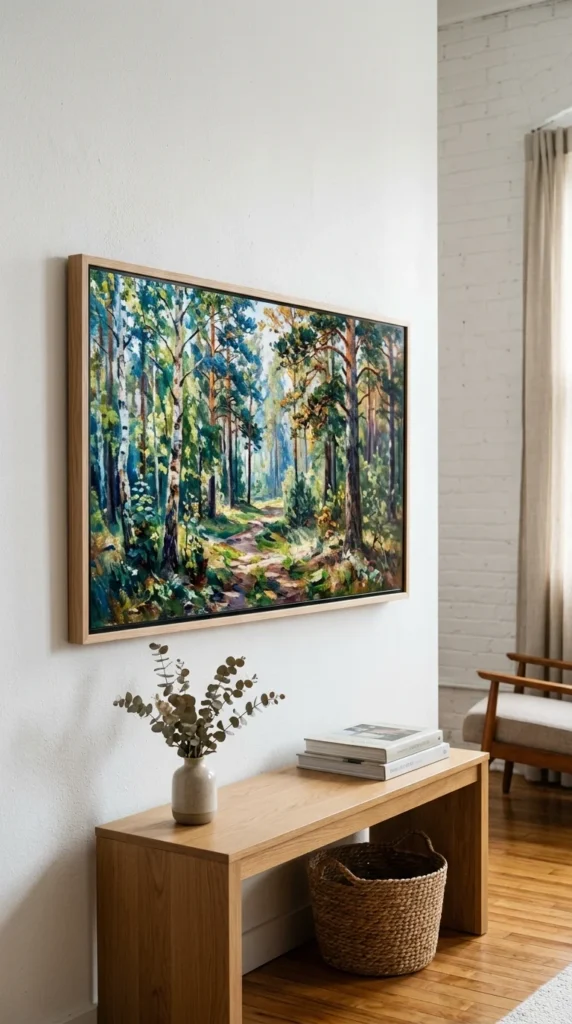
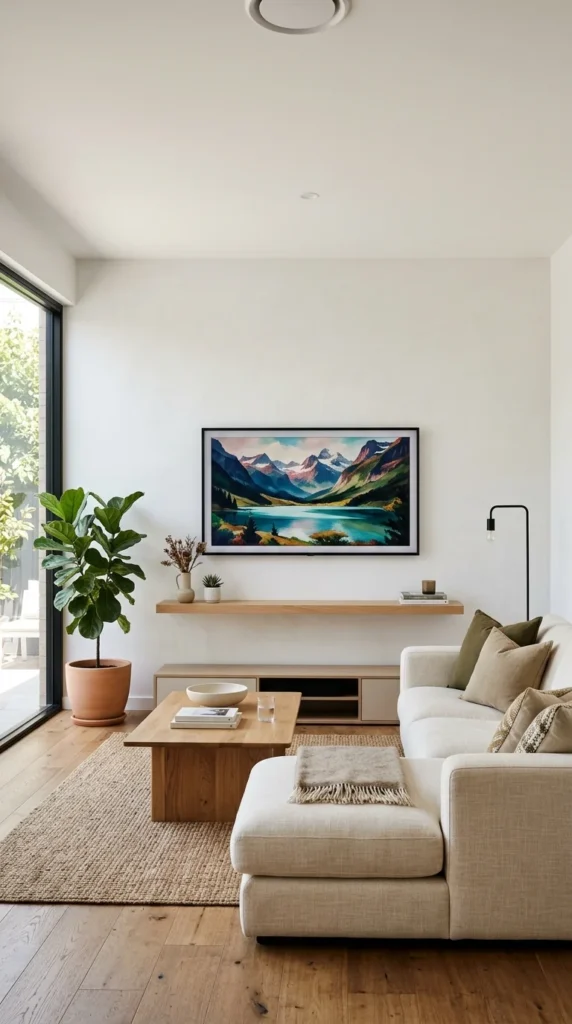
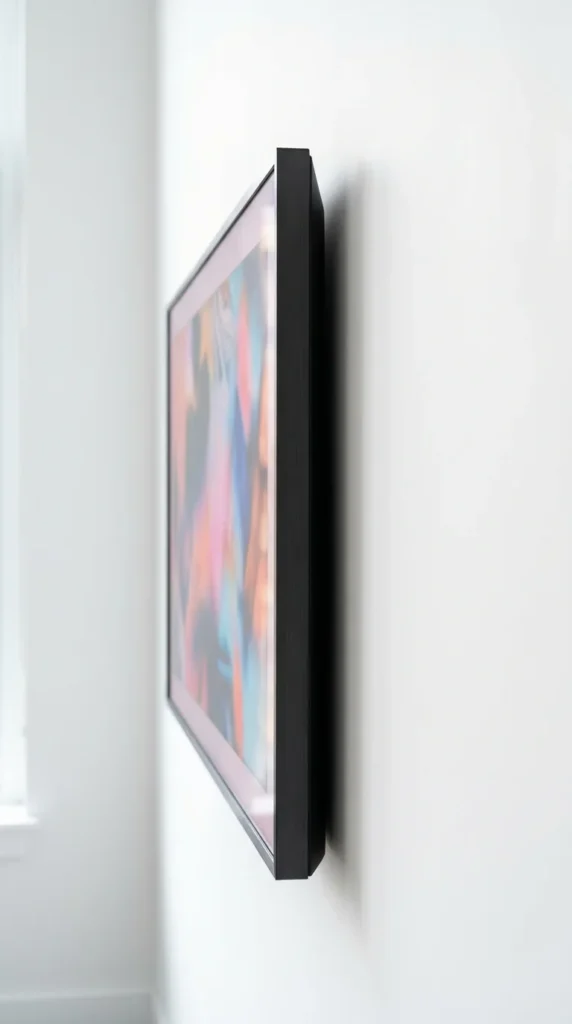
One of the biggest hurdles in minimalist design is the “black hole” effect—the giant, dark rectangle that sits on your wall when the TV is off. Modern technology has solved this with “Art Mode.” These specialized televisions are designed with matte screens and ultra-slim profiles that allow them to display high-resolution artwork or photography when not in use.
By utilizing a TV that doubles as art, you eliminate the need for a dedicated media wall. Instead, the TV becomes part of a gallery wall or a standalone statement piece. This approach is perfect for multi-purpose rooms where you want the entertainment aspect to disappear during social gatherings, leaving behind a curated, sophisticated atmosphere.
3. Monochromatic Palettes
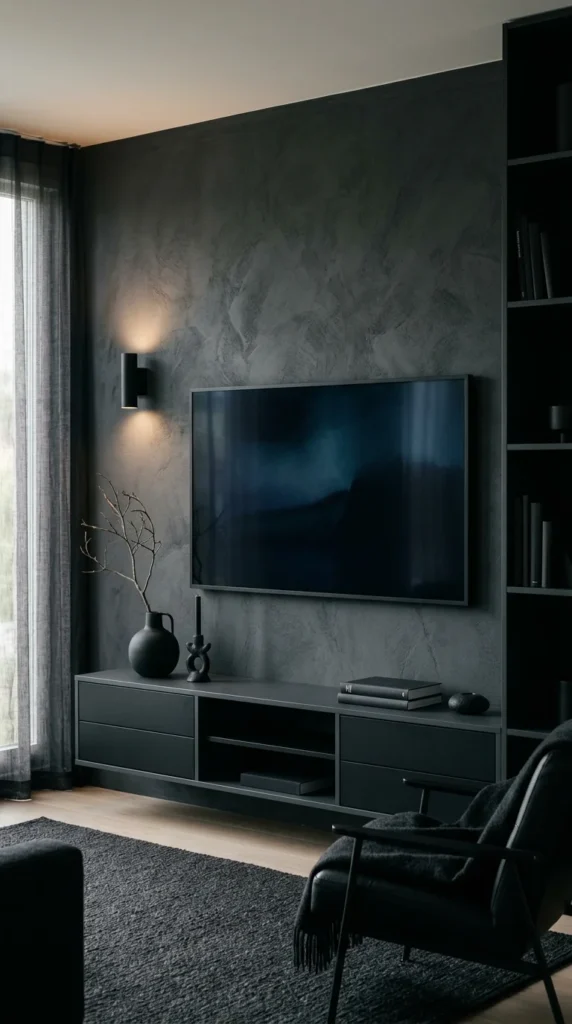
If you want your TV to truly blend into the background, consider a monochromatic color scheme. By painting the wall behind the TV a dark shade—such as charcoal, navy, or even true black—the screen virtually disappears when it is turned off. This “camouflage” technique is highly effective for creating a moody, cinematic feel in a living room.
To keep it minimalist, ensure that the media console, shelving, and even the cable covers (if any are visible) match the wall color exactly. This creates a continuous block of color that feels like an architectural choice rather than a collection of separate objects. The result is a clean, unified look that feels incredibly modern and intentional.
4. Wood Slats
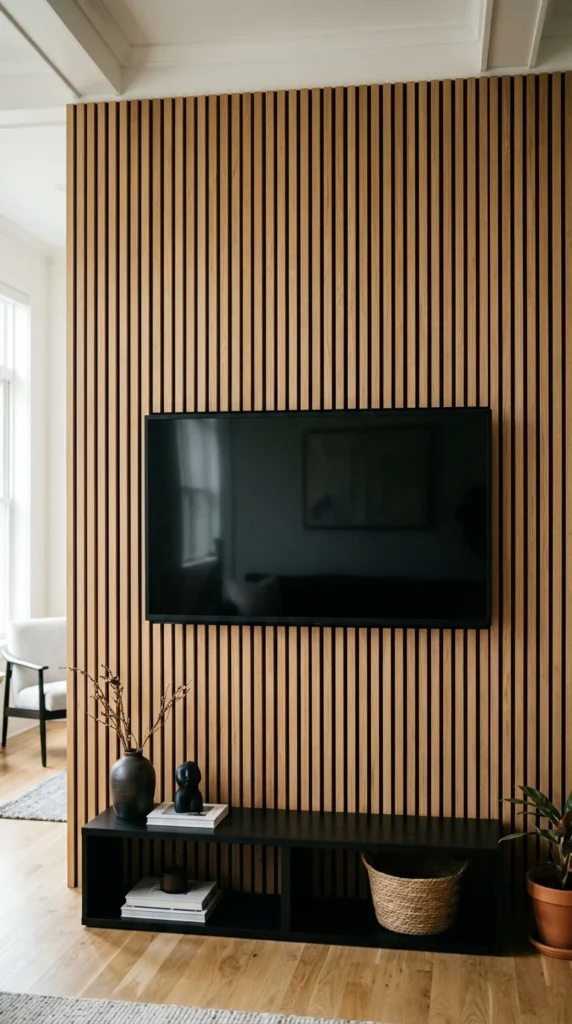
Minimalism doesn’t have to mean “cold” or “plain.” Adding texture is a great way to bring warmth to a clean space without adding clutter. Vertical wood slats (often referred to as tambour or acoustic panels) provide a stunning backdrop for a television. The repetitive vertical lines draw the eye upward, making the ceilings feel higher and adding a rhythmic quality to the room.
Beyond the aesthetic appeal, wood slats are excellent for hiding the seams of hidden doors or cable management systems. The gaps between the slats allow you to run wires behind the panels with ease. Additionally, the wood adds a natural element that softens the high-tech look of the television, bridging the gap between nature and modern electronics.
5. Hidden Wires
The number one enemy of a minimalist TV wall is cable clutter. No matter how expensive your furniture is or how beautiful your wall color is, a tangle of black cords will immediately ruin the aesthetic. True minimalism requires a “zero-wire” policy.
Achieving this look usually involves one of two methods: in-wall cable routing or the use of a “One Connect” style box. In-wall routing involves feeding the cables through the drywall and out behind the console. If you are in a rental where you can’t cut into the wall, high-quality, paintable cable raceways that match your wall color are a viable alternative. When the wires disappear, the TV looks like a floating piece of glass, which is the ultimate goal of modern media design.
6. Recessed Nooks
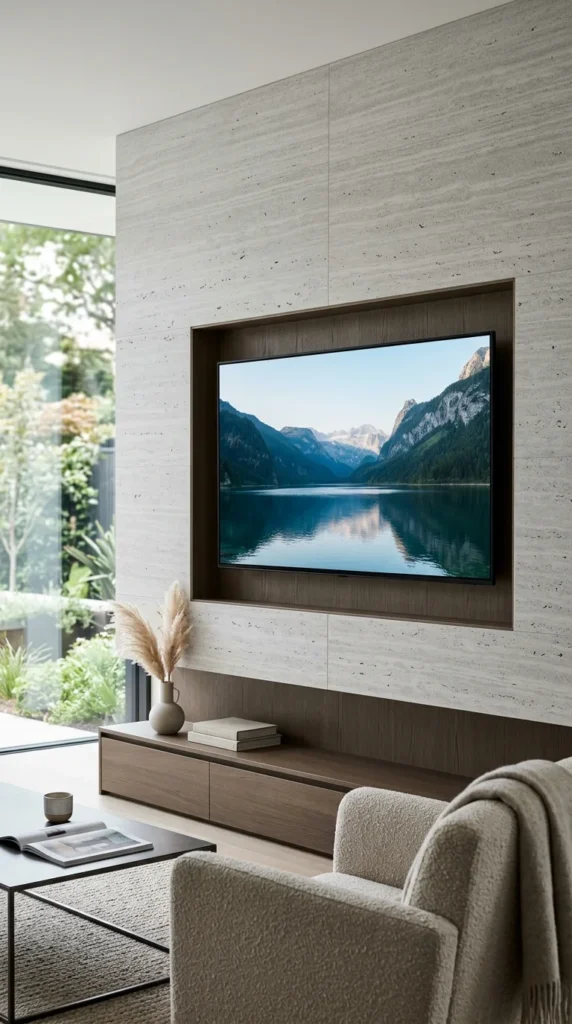
For those in the process of a renovation or new build, a recessed nook is the gold standard for minimalist TV integration. Instead of mounting the TV on the wall, you build a custom alcove that allows the TV to sit flush with the wall. This removes the side profile of the TV entirely, making it look like a built-in monitor rather than an appliance.
This design choice is incredibly sleek and architectural. It eliminates the problem of people bumping into the TV in high-traffic areas and provides a very tidy, boxed-in look. To take it a step further, you can design the nook to include a hidden soundbar shelf, ensuring that all audio equipment is equally integrated and out of sight.
7. Low Profiles
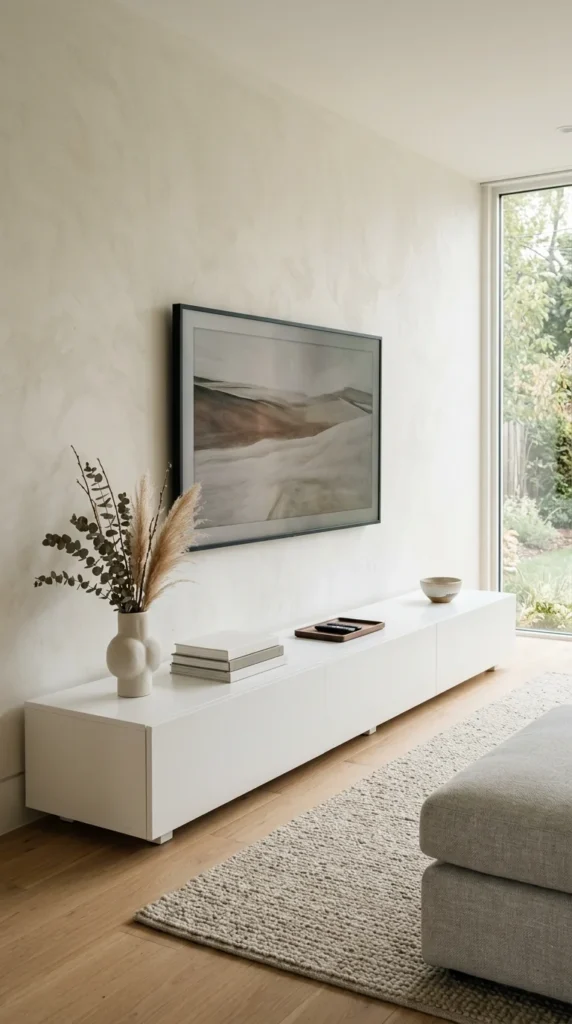
Inspired by Scandinavian and Japanese minimalism (Japandi), the low-profile look emphasizes the beauty of the floor and lower horizons. Instead of a standard-height console, a very low, long bench is used. This lowers the visual center of gravity in the room, which creates a more relaxed and grounded atmosphere.
A long, low-profile unit also provides an opportunity for “negative space.” Rather than filling the entire length of the bench with objects, leave large sections empty. A single sculptural vase or a stack of two books is all you need. This restraint is the hallmark of modern minimalism and allows the television to sit comfortably within a balanced composition.
8. Accent Lighting
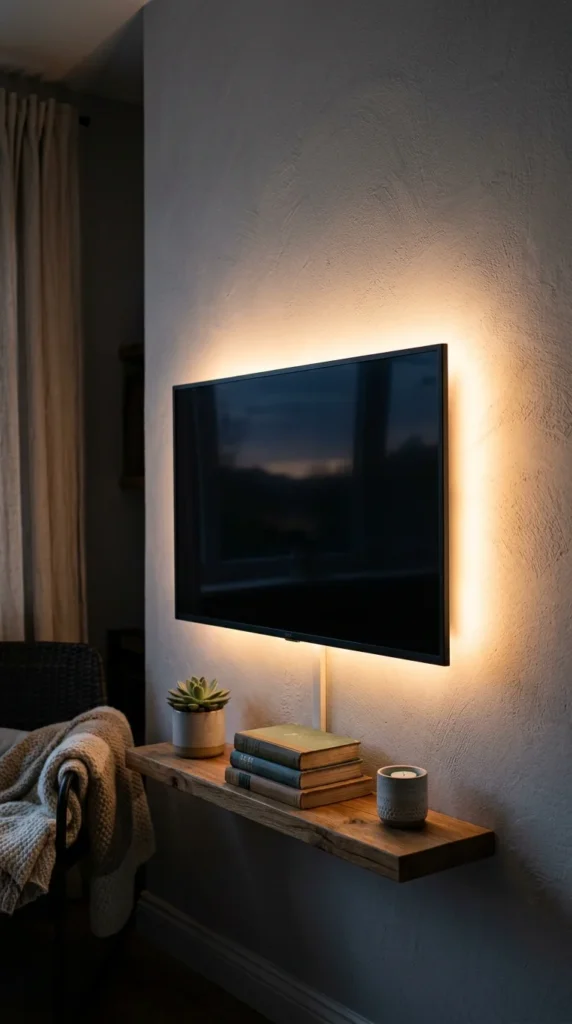
Minimalism is as much about light and shadow as it is about physical objects. Adding “bias lighting”—LED strips attached to the back of the TV—can dramatically change the feel of your wall. This backlight serves two purposes: it reduces eye strain by providing a soft glow that bridges the gap between the bright screen and the dark room, and it adds depth to the wall.
For a clean look, choose a light strip that can be set to a warm white or a neutral daylight tone. Avoid flashy, color-changing “gamer” lights if you want to maintain a sophisticated, modern vibe. The subtle halo effect makes the TV feel like a floating installation and adds a layer of luxury to the room without requiring any additional furniture or decor.
9. Stone Surfaces
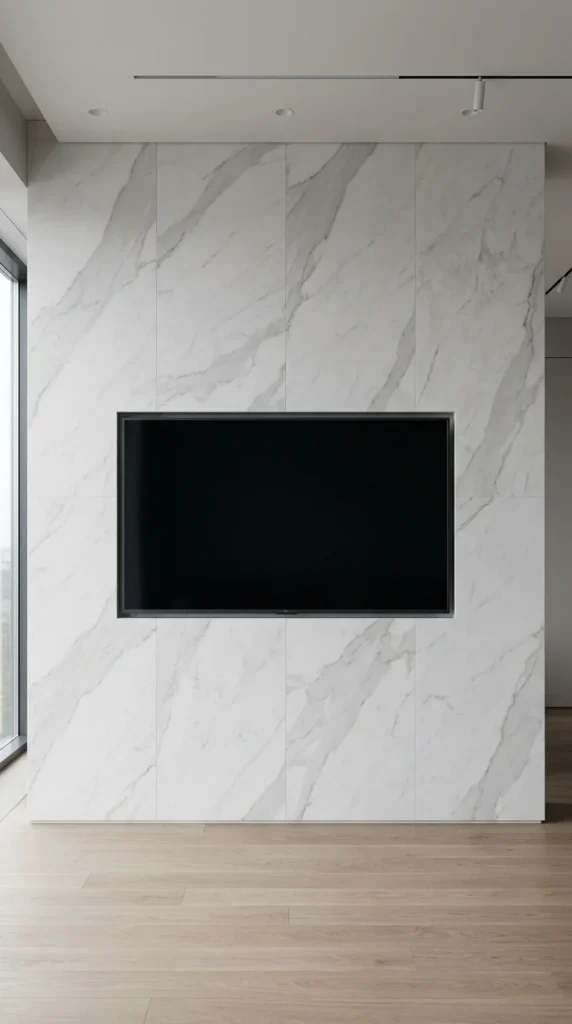
Using high-end materials like stone, marble, or concrete for the TV wall is a way to achieve minimalism through “quiet luxury.” When the wall itself is made of a beautiful, natural material, you don’t need any other decorations. The pattern of the marble or the texture of the concrete provides enough visual interest to sustain the room.
Large-format porcelain tiles are a popular way to achieve this look without the weight and cost of solid stone slabs. By keeping the TV wall strictly dedicated to the stone and the screen, you create a high-impact, museum-like quality in your home. This approach works best when the rest of the room is equally understated, allowing the material honesty of the stone to take center stage.