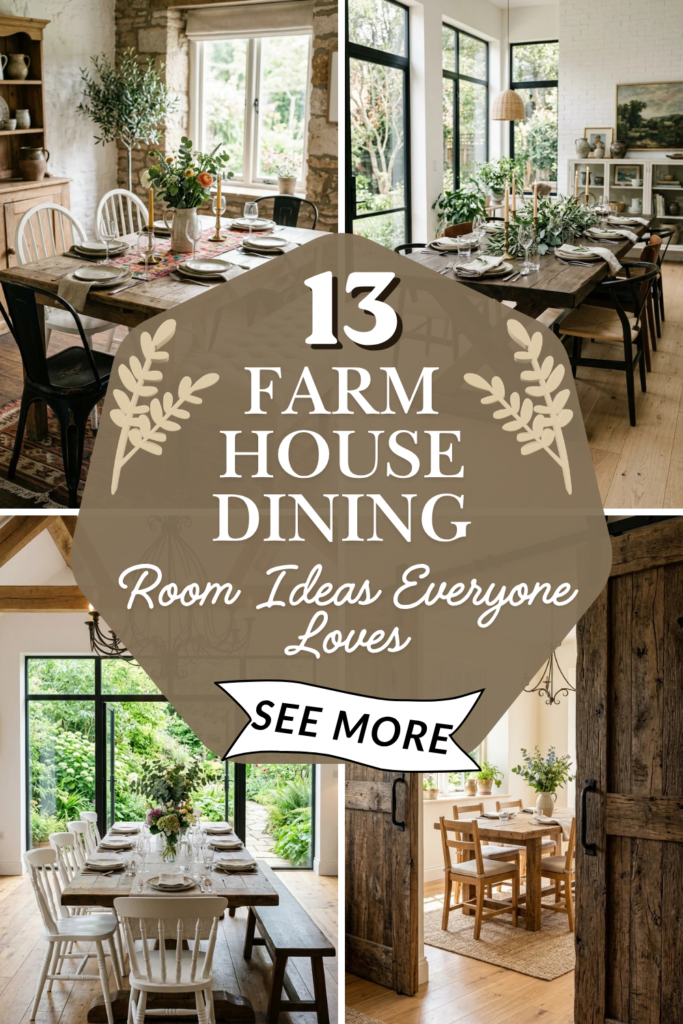

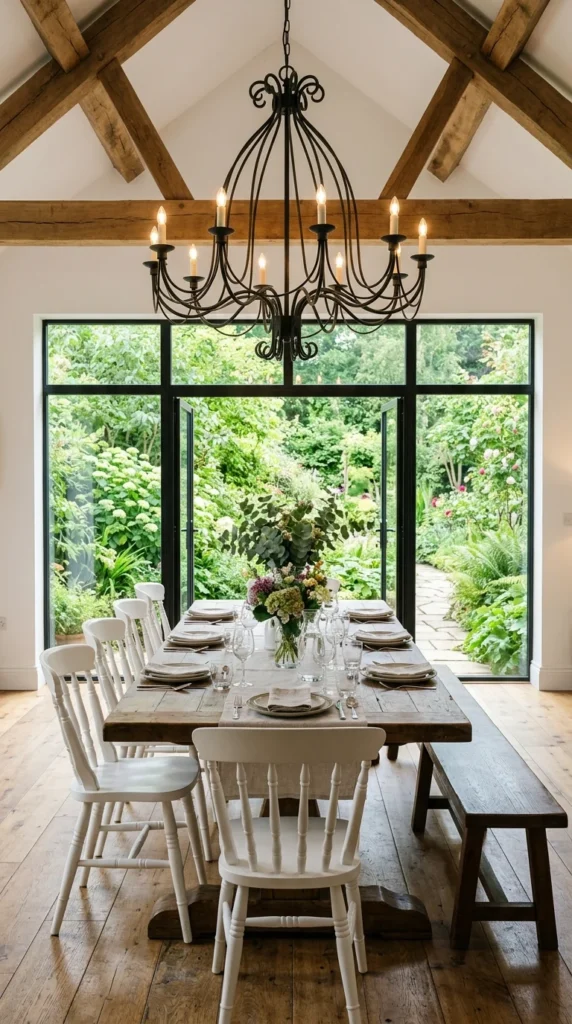
The farmhouse aesthetic has transcended being a mere “trend” to become a timeless staple in interior design. It strikes a rare balance between sophisticated elegance and lived-in comfort, making the dining room—the heart of many homes—the perfect canvas for this style. Whether you prefer the “Modern Farmhouse” look with its clean lines and high contrast, or a more “Rustic Country” feel with weathered textures and antique finds, there is a farmhouse approach for everyone.
Creating a farmhouse dining room isn’t just about putting a wooden table in a room; it’s about layering textures, choosing the right architectural details, and curating a space that feels both nostalgic and fresh. Here are 13 farmhouse dining room ideas that have captured the hearts of homeowners everywhere.
1. Trestle Tables
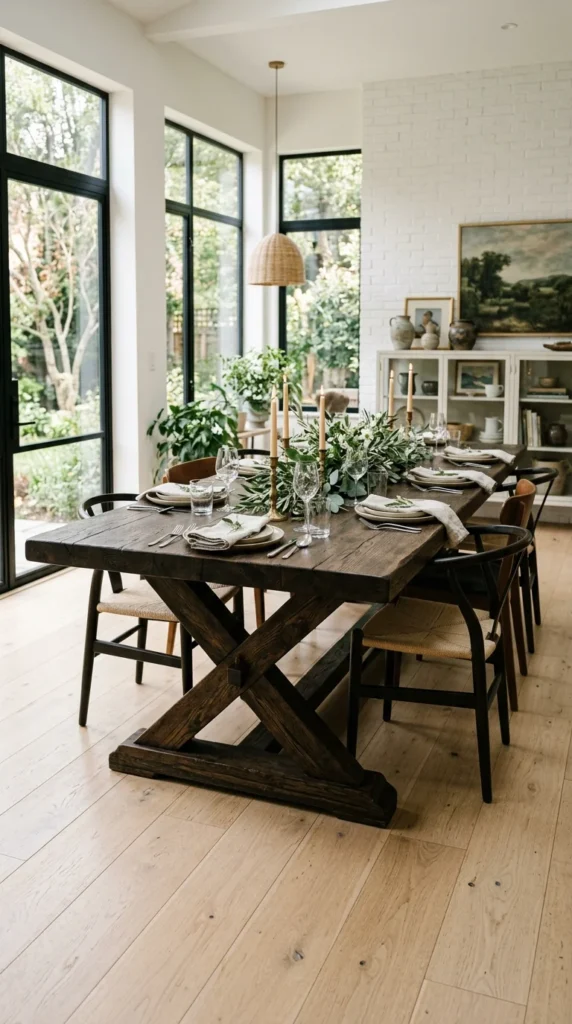
The centerpiece of any farmhouse dining room is the table, and nothing says “farmhouse” quite like a heavy-duty trestle table. Originally designed for stability and to maximize legroom for large families, the trestle table has become an iconic design element. These tables are typically made from solid wood—often reclaimed pine, oak, or maple—and feature a thick tabletop supported by two or three massive legs connected by a horizontal beam.
The beauty of a trestle table lies in its presence. It feels grounded and permanent. When styling a trestle table, look for finishes that show off the natural grain of the wood, including knots and slight imperfections. These “flaws” give the piece character and tell a story, which is the cornerstone of the farmhouse philosophy.
2. Mismatched Seating
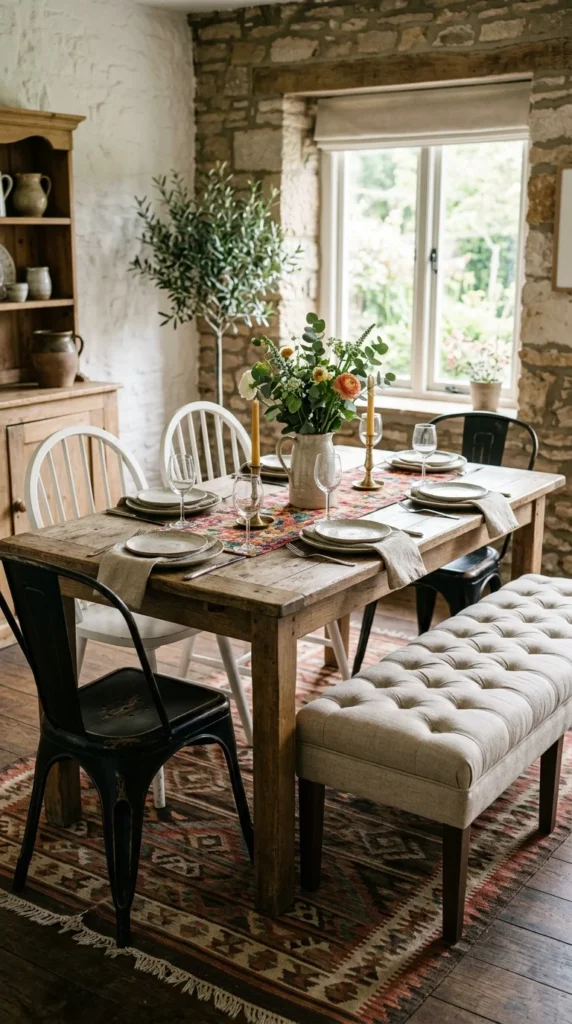
A hallmark of the farmhouse style is the “collected over time” look. Instead of buying a matching 7-piece dining set from a big-box store, many designers opt for mismatched seating. This approach breaks up the visual weight of the room and adds a layer of curated charm.
You might pair a sturdy wooden bench on one side of the table with a set of classic Windsor chairs on the other. For the “head” of the table, upholstered wingback chairs add a touch of formality and comfort. If you want a more cohesive look while still mismatching, try painting different styles of chairs the same color—such as a crisp “Farmhouse White” or a deep charcoal—to unify the varied silhouettes.
3. Beaded Chandeliers
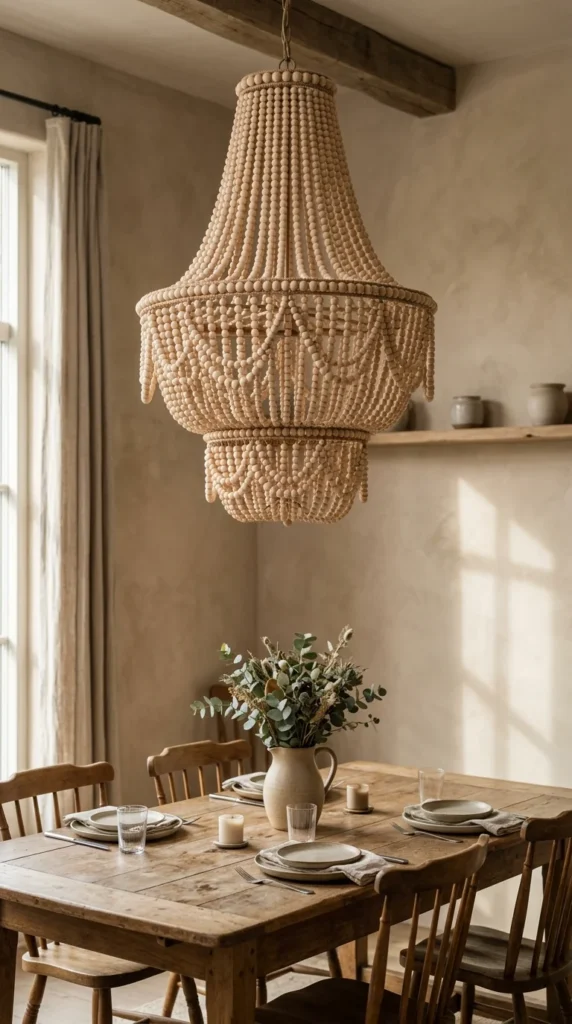
While industrial lighting is a common choice, beaded chandeliers have become a massive favorite for those wanting a “Boho-Farmhouse” or “Coastal Farmhouse” vibe. These fixtures replace traditional crystals with wooden or clay beads, offering a softer, more organic texture.
A beaded chandelier provides a wonderful juxtaposition to the heavy, hard surfaces of a wooden dining table. It brings an airy, light quality to the room. Look for beads in natural wood tones for a rustic feel, or white-washed beads for a cleaner, more contemporary look. The circular shape of these chandeliers also helps to soften the many straight lines typically found in farmhouse architecture.
4. Barn Doors
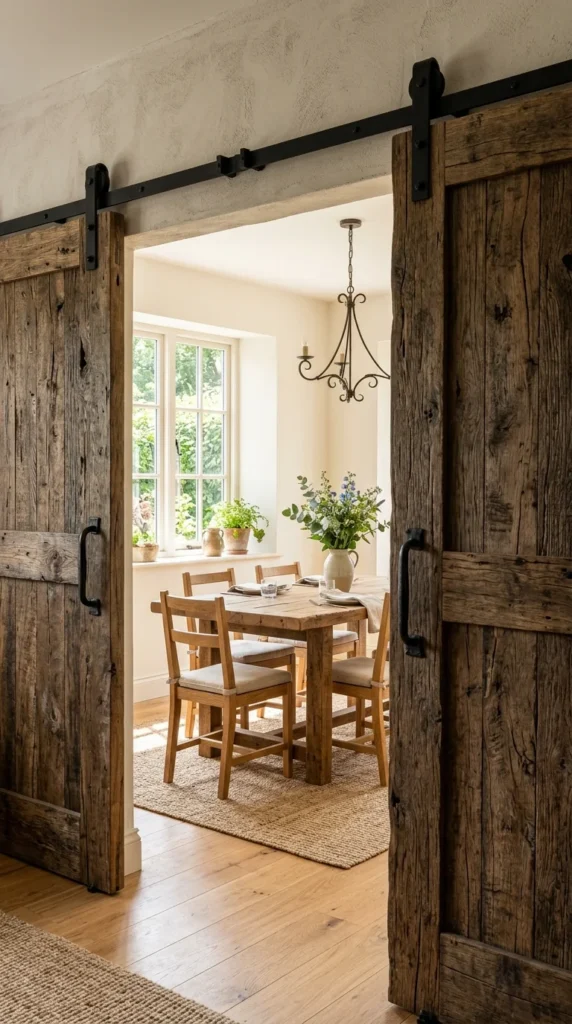
Sliding barn doors are perhaps the most recognizable architectural feature of the modern farmhouse movement. In a dining room setting, they serve both a functional and aesthetic purpose. They are excellent for closing off the dining area from the kitchen or living room during formal meals, but when open, they act as massive pieces of wall art.
For an authentic look, choose doors made from reclaimed wood with visible saw marks and weathered patinas. The hardware is just as important; matte black iron tracks and rollers provide that essential industrial “edge” that prevents the room from feeling too sweet or delicate.
5. Exposed Beams
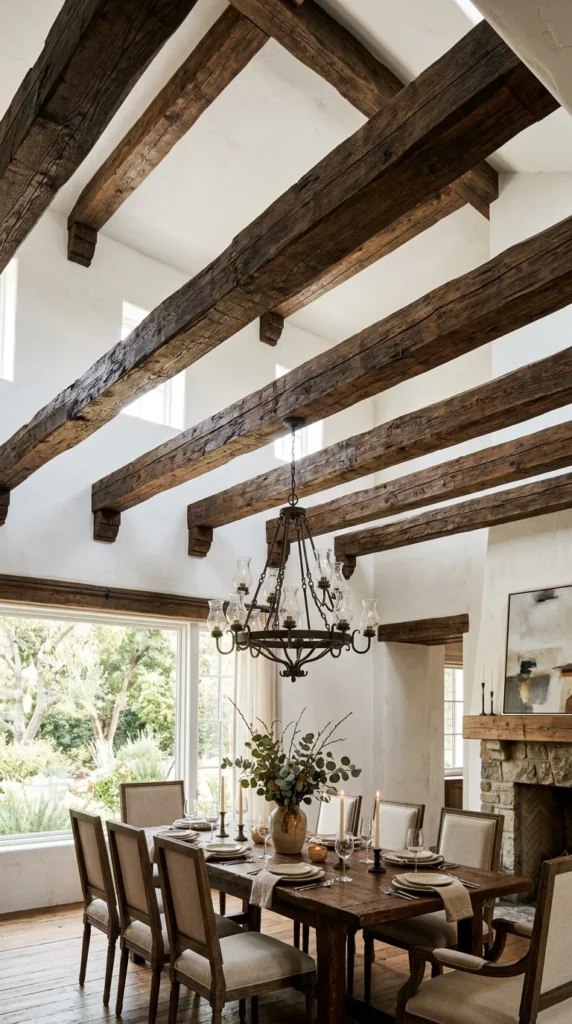
If you are lucky enough to have high ceilings, adding exposed wooden beams is the ultimate farmhouse upgrade. Beams draw the eye upward, emphasizing the height and volume of the space while adding a sense of history and structural integrity.
In modern farmhouse designs, the contrast of dark wood beams against a bright white ceiling is a classic choice. If you prefer a more French Country farmhouse look, you might opt for light-colored, rough-hewn “blonde” wood beams. For those who don’t have structural beams, “faux beams” made of lightweight polyurethane or hollowed-out wood can be installed to achieve the exact same look without the heavy construction.
6. Neutral Palettes
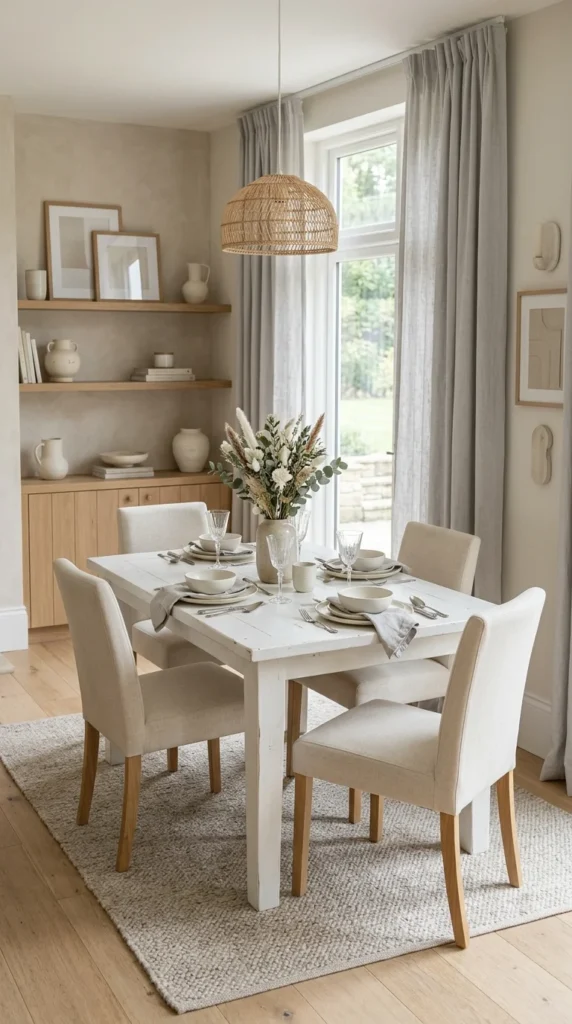
The farmhouse style is famous for its soothing, neutral color palettes. The goal is to create a space that feels bright, airy, and calm. This usually involves a base of “Gallery White” or “Alabaster” on the walls, layered with various shades of cream, beige, greige, and soft gray.
Using a neutral palette doesn’t mean the room has to be boring. The key is to vary the textures. Imagine a white shiplap wall, a cream linen chair, a tan jute rug, and a light oak table. Even though the colors are similar, the different materials create visual interest and depth. This “tone-on-tone” approach is what makes farmhouse dining rooms feel so expensive and well-designed.
7. Buffet Sideboards
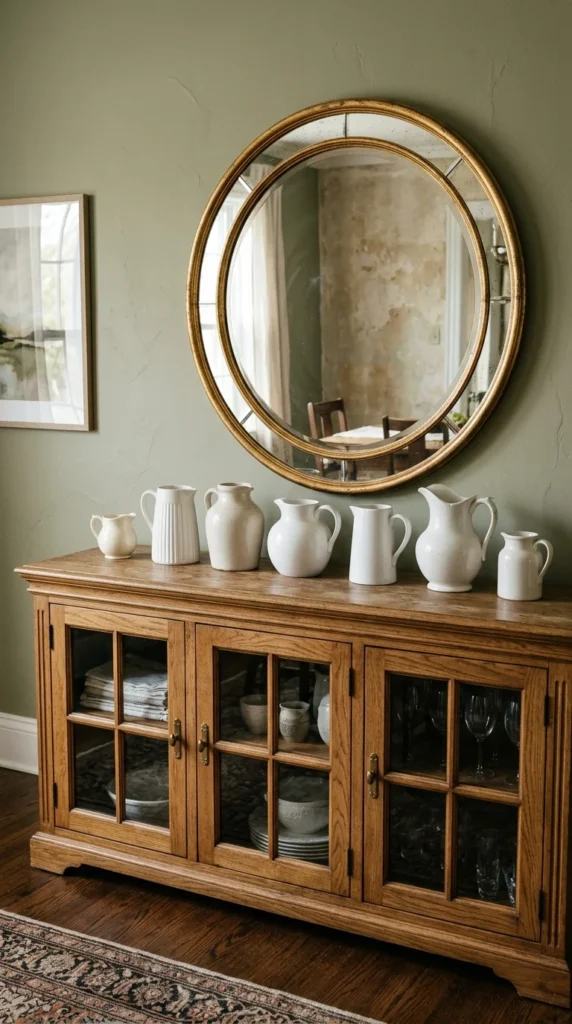
A dining room is not complete without a place to store linens, silverware, and serving platters. A buffet or sideboard is the perfect farmhouse solution. Many homeowners hunt for antique dressers or vintage “cupboards” to use as sideboards, adding a sense of history to the room.
To style your sideboard in a farmhouse fashion, use the “Rule of Three” or create a symmetrical display. A large mirror or a piece of oversized landscape art above the sideboard helps anchor the piece. On the surface, you can display a collection of white ironstone pitchers, a stack of vintage cookbooks, or a simple wooden dough bowl filled with seasonal fruit.
8. Woven Textures
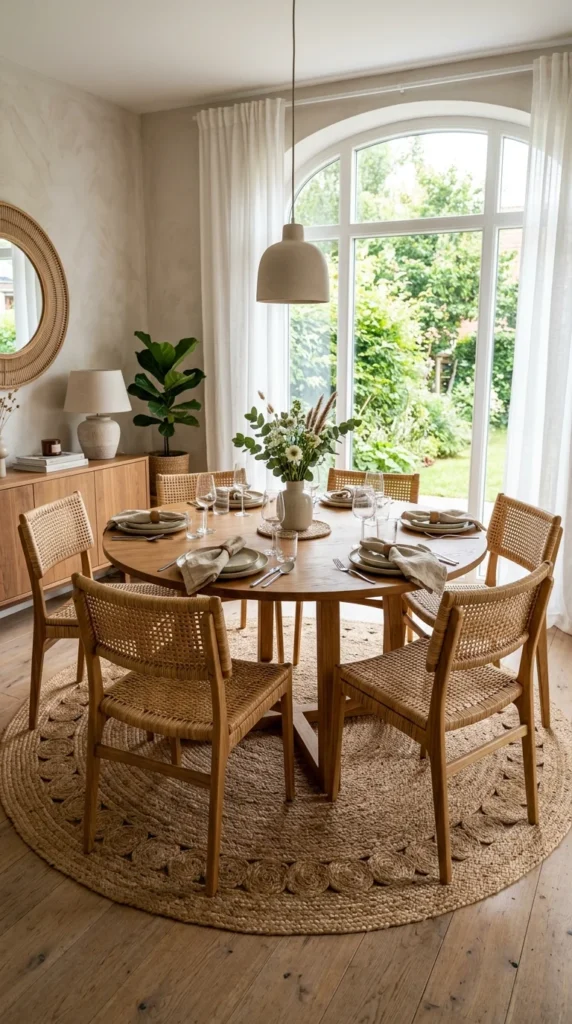
Texture is the “secret sauce” of farmhouse design. Without it, a neutral room can feel cold. Incorporating woven elements like rattan, seagrass, and jute adds an organic, earthy warmth that is essential for the farmhouse look.
Consider choosing dining chairs with woven cane backs or rush seats. On the floor, a large jute or sisal rug provides a durable, high-traffic base that can stand up to the crumbs and spills of a busy dining room. These natural fibers bring an “outdoors-in” element that connects the home to its agricultural roots.
9. Shiplap Walls
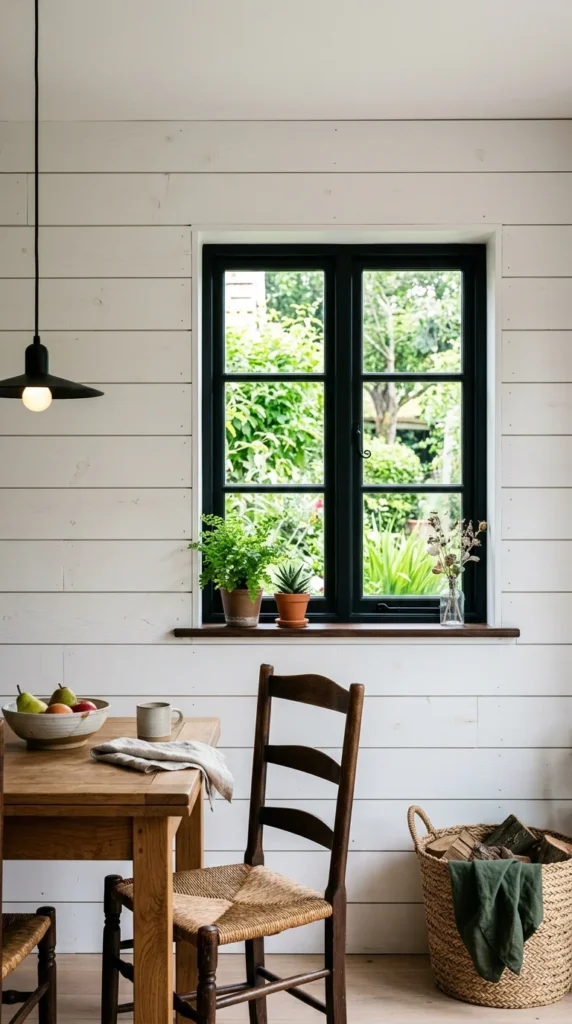
Thanks to popular home renovation shows, shiplap has become synonymous with farmhouse style. These horizontal wooden planks add a subtle architectural detail that drywall simply cannot provide. Shiplap creates a sense of “enclosure” and makes a room feel more custom and high-end.
While white shiplap is the standard, don’t be afraid to experiment. Dark charcoal or “Navy” shiplap can create a dramatic, moody dining room that feels incredibly cozy at night. For a more rustic look, you can use “nickel-gap” shiplap, which has a slightly wider space between the boards, emphasizing the linear pattern.
10. Open Shelving
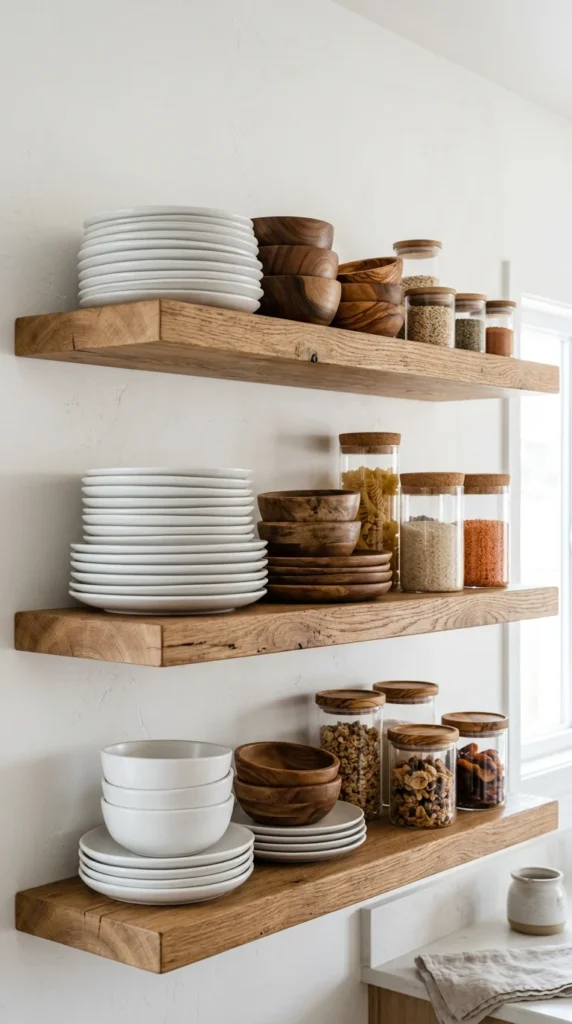
Open shelving is a fantastic way to combine storage with decor. In a farmhouse dining room, a set of thick wooden floating shelves can replace a traditional hutch. This keeps the room feeling “open” and provides a place to showcase your most beautiful dishes.
The trick to farmhouse open shelving is “functional decor.” You aren’t just displaying items for the sake of it; you are displaying items you actually use. Think white ceramic plates, clear mason jars filled with grains or pasta, and wooden cutting boards of various sizes. This creates a “pantry-to-table” aesthetic that feels authentic and unpretentious.
11. Greenery Accents
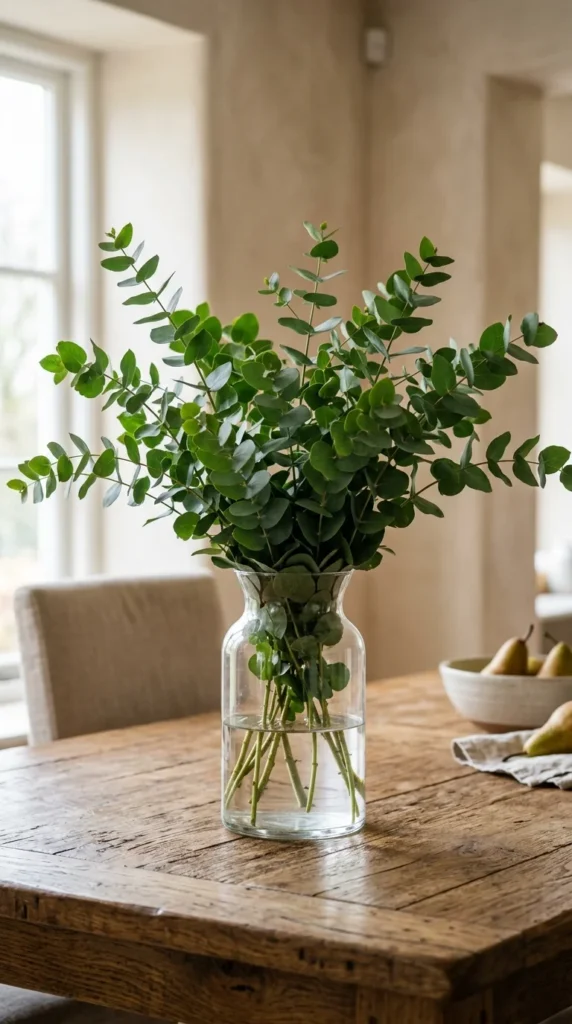
Since the farmhouse style is rooted in rural life, bringing in natural greenery is a must. You don’t need elaborate floral arrangements; in fact, the simpler, the better. A few stems of eucalyptus, olive branches, or even dried cotton stalks in a simple glass jar or galvanized bucket are perfect for a farmhouse centerpiece.
Greenery adds a pop of life and color to an otherwise neutral room. If you have a corner that feels empty, a large potted fiddle-leaf fig or an olive tree in a woven basket can fill the space while staying true to the theme. The goal is to make the room feel fresh and connected to the seasons.
12. Industrial Lighting
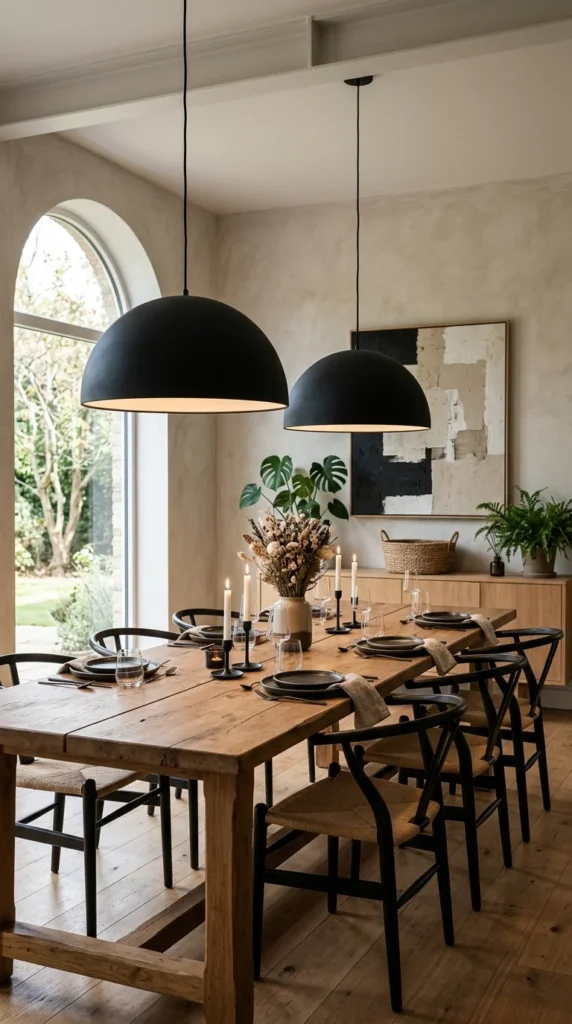
Modern farmhouse style often leans into “Industrial” elements to provide contrast. Black metal pendant lights are a favorite choice for this. The dark, hard metal provides a sharp “punctuation mark” against white walls and soft wood tones.
Look for “warehouse” style pendants, “Edison bulb” chandeliers, or “lantern” style fixtures. The key is the finish—matte black or oil-rubbed bronze are the most common. These fixtures often have a utilitarian feel that harkens back to old farm buildings and factories, adding a bit of “edge” to the dining space.
13. Rug Layering
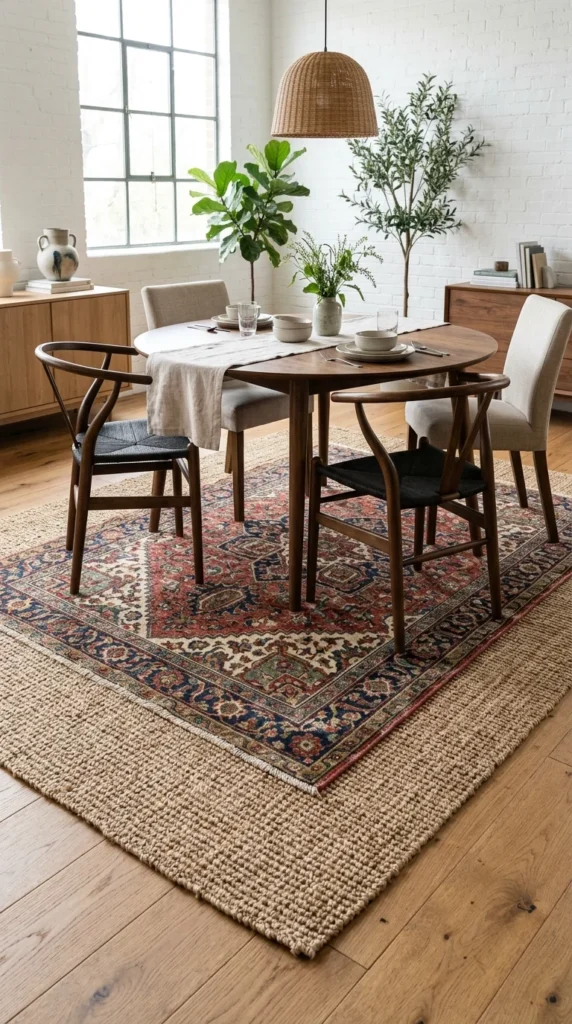
If you want your dining room to feel extra cozy, try the designer trick of rug layering. Start with a large, neutral jute or sisal rug that covers most of the floor area. Then, layer a slightly smaller, more colorful rug—such as a vintage-inspired Persian or an Oushak rug—on top.
Layering rugs adds visual weight and “grounds” the dining table. The bottom rug provides the durability and texture, while the top rug provides the color and pattern. This technique is particularly effective in large, open-concept dining rooms where you need to define the “dining zone” within a larger living space.