
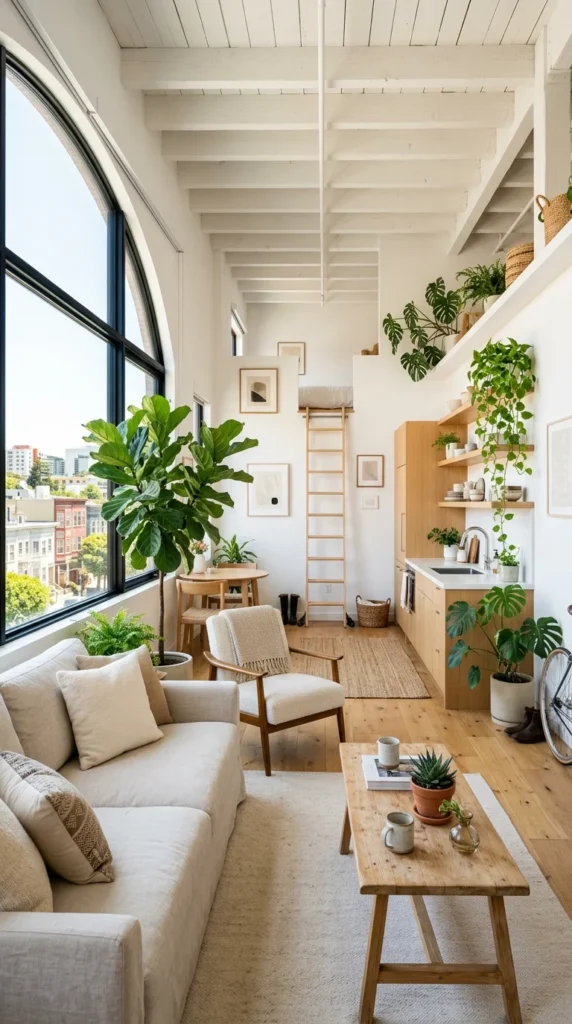
Living in a small space doesn’t have to mean living a “small” life. Whether you’re navigating a cozy studio apartment or a compact historical home, the square footage on your lease doesn’t dictate the potential of your sanctuary. The secret lies in the art of visual deception and strategic organization. By manipulating light, scale, and functionality, you can transform even the most cramped quarters into an open, breathable oasis.
Here are 15 expert-approved decorating ideas to help you reclaim your space and make every room feel significantly larger.
1. Mirror Walls
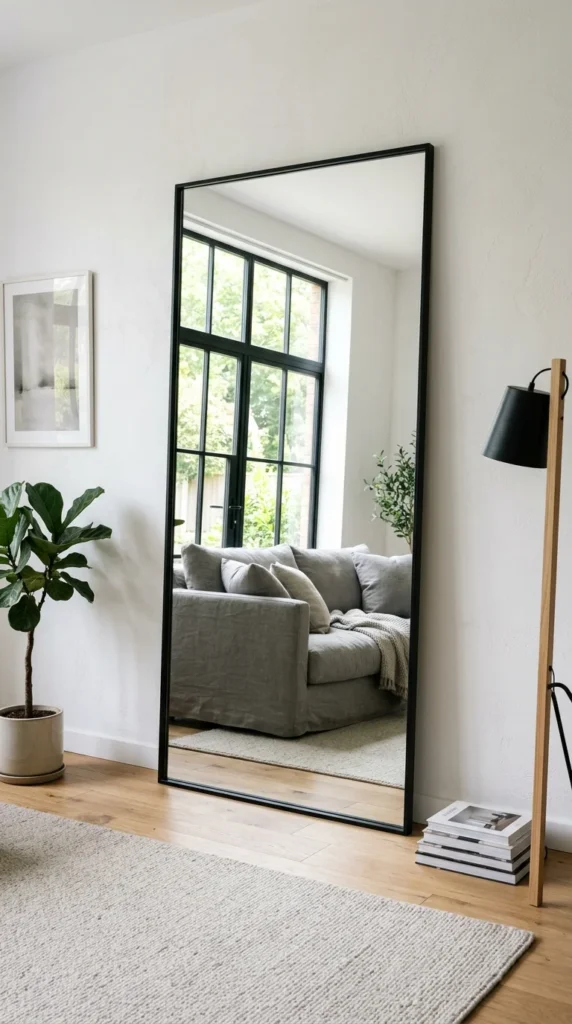
The oldest trick in the interior design book is also the most effective. Mirrors are the ultimate space-expanders because they reflect both natural and artificial light, bouncing it deeper into the room. A large floor-to-ceiling mirror or a collection of smaller mirrors can create the illusion of a “window” where there isn’t one. By reflecting the rest of the room, mirrors trick the eye into thinking the floor plan continues far beyond the wall. For the best results, place a mirror opposite a window to maximize the amount of daylight reflected into your space.
2. Light Tones
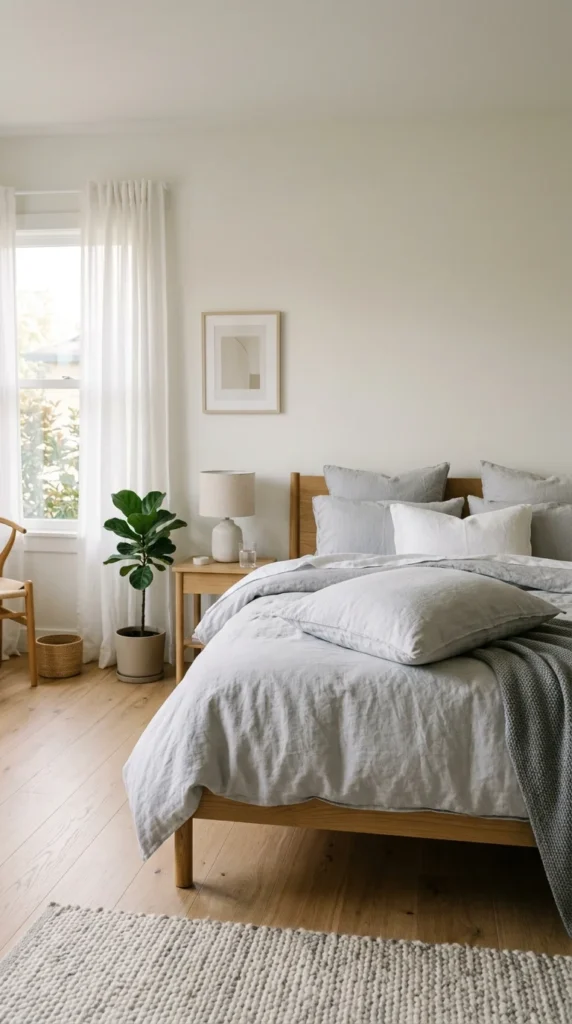
Color has a profound psychological and visual impact on our perception of space. Dark colors tend to absorb light, making walls feel like they are closing in. In contrast, light tones—such as crisp whites, soft creams, pale grays, and icy blues—reflect light and make the boundaries of a room feel more fluid and distant. This doesn’t mean your home has to be monochromatic; you can still add pops of color through accessories, but keeping the “envelope” of the room light will ensure a breezy, open feel.
3. Multi-functional Furniture
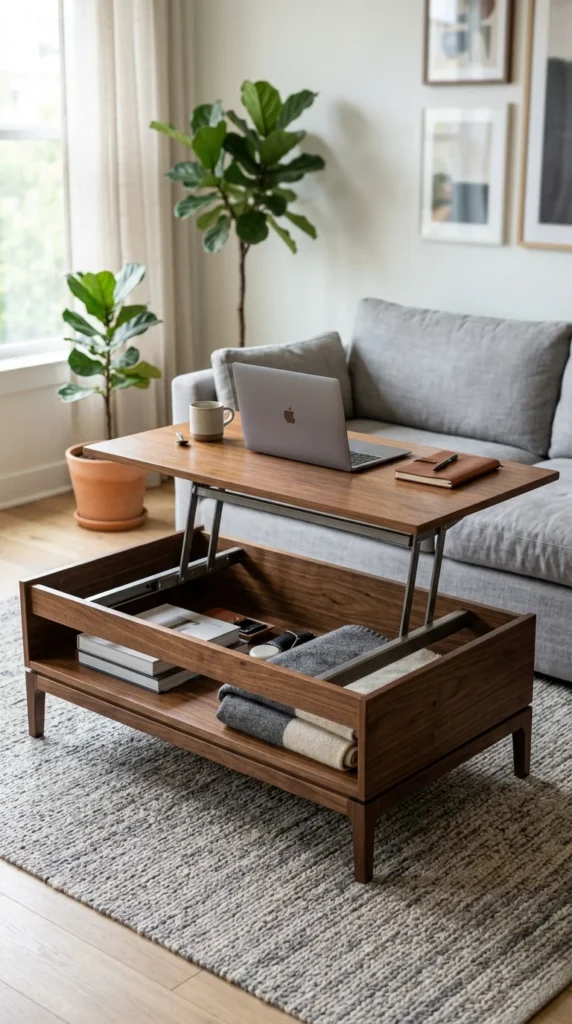
In a small room, every piece of furniture must earn its keep. Multi-functional pieces reduce the need for extra items that take up valuable floor space. Think of an ottoman that doubles as a storage chest and a coffee table, or a sofa bed for guests. When one item performs two or three tasks, you eliminate clutter and maintain a streamlined look. Investing in smart furniture is the most practical way to maintain a high level of utility without sacrificing movement.
4. Floating Shelves
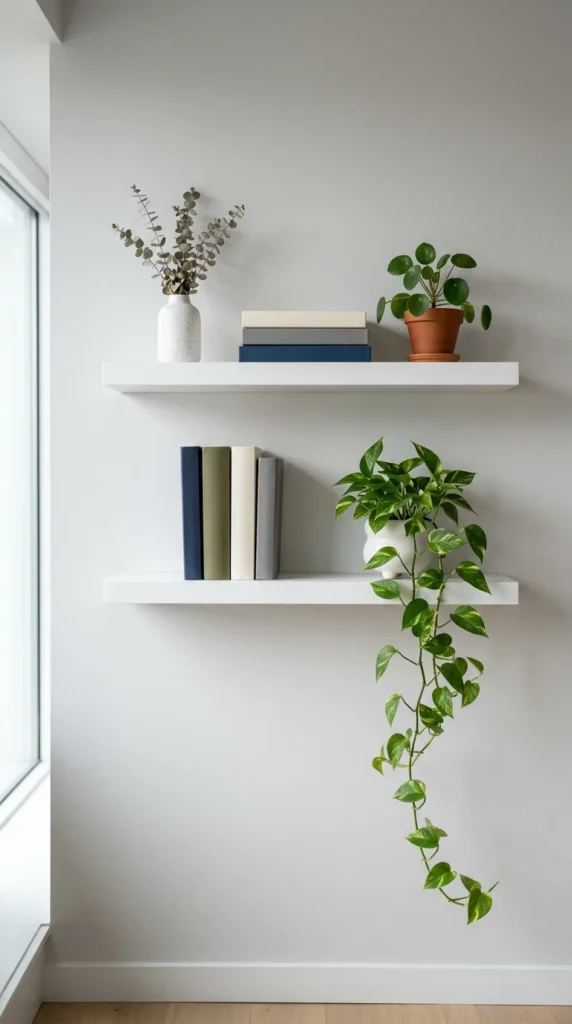
Floor space is your most precious commodity. When you run out of room on the ground, look up. Floating shelves provide necessary storage and display space without the heavy visual footprint of a traditional bookcase. Because you can see the floor and wall underneath them, they create a sense of “airiness.” Use them in the kitchen for spices, in the bathroom for toiletries, or in the living room for decor to keep the floor clear and the eye moving upward.
5. Transparent Accents
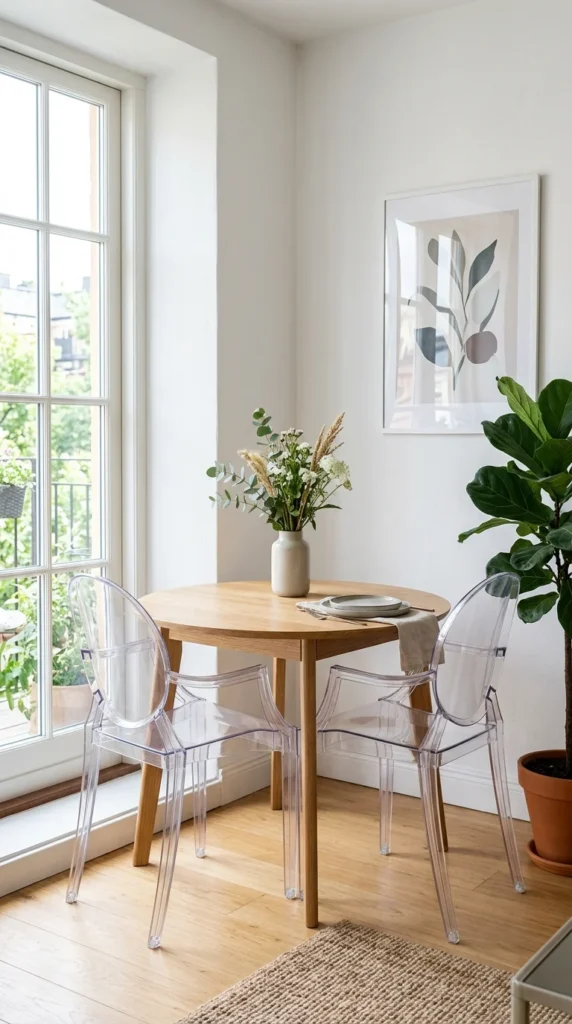
Furniture made of acrylic, glass, or Lucite is a designer’s secret weapon for small spaces. Because these items are see-through, they have zero “visual weight.” You get the functionality of a chair, desk, or coffee table without it physically cutting off the room. This allows the eye to travel right through the object to the walls beyond, maintaining a sense of uninterrupted space. Transparent pieces are particularly effective in narrow entryways or tiny dining nooks.
6. Tall Curtains
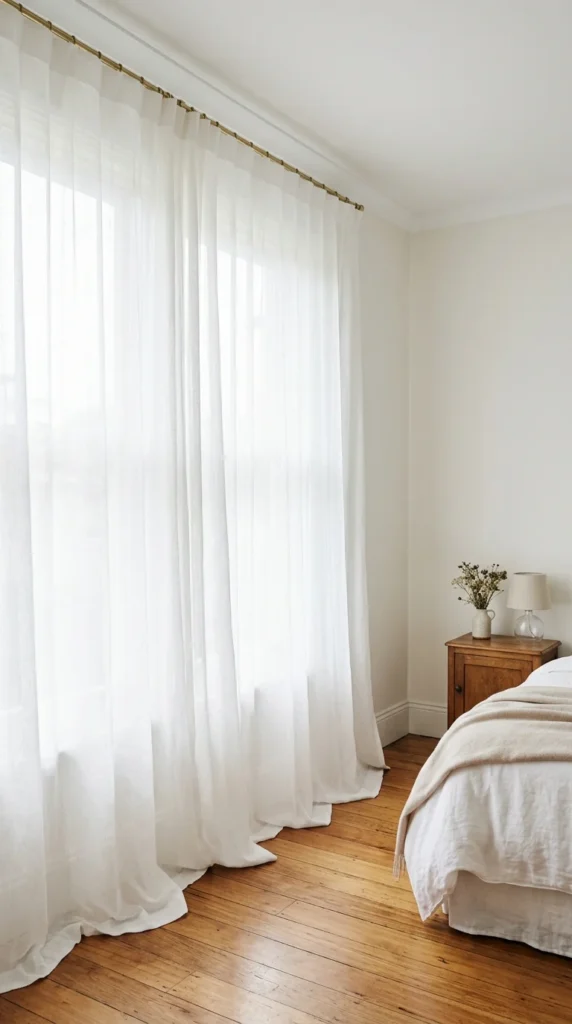
Standard curtain placement usually involves hanging the rod just above the window frame. To make a room feel bigger, you should “hang ’em high and wide.” By placing the curtain rod closer to the ceiling and extending it several inches past the window frame, you draw the eye upward and make the windows appear larger. This trick creates the illusion of higher ceilings and grander architecture, instantly making a cramped room feel more majestic.
7. Leggy Furniture
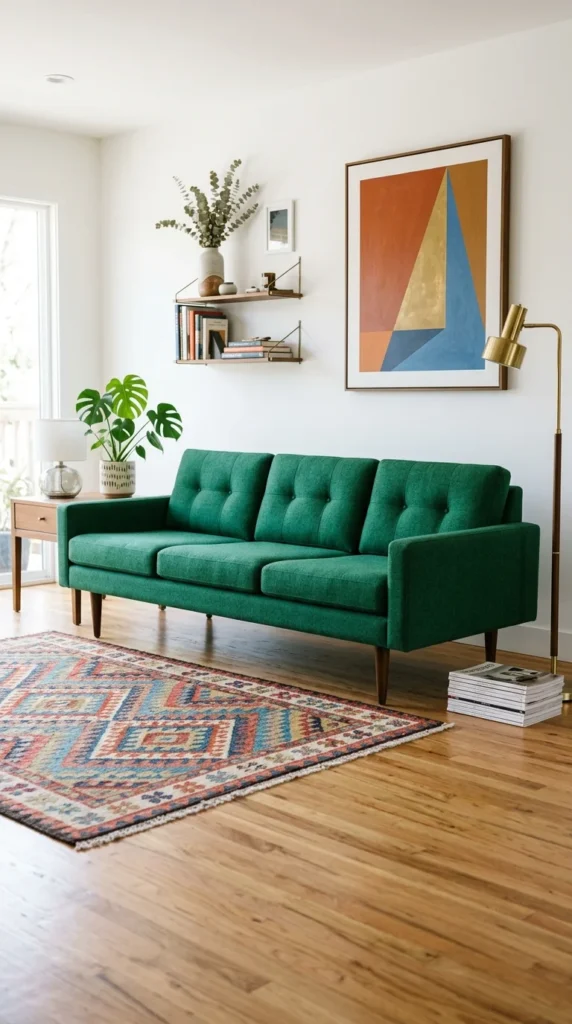
Bulky furniture that sits flush against the floor acts like a roadblock for the eye, making a room feel heavy and grounded. To counteract this, opt for “leggy” furniture. Sofas, armchairs, and credenzas with exposed, slender legs allow light and air to flow underneath them. Being able to see the floor extending beneath your furniture tricks the brain into perceiving more square footage than there actually is.
8. Large Rugs
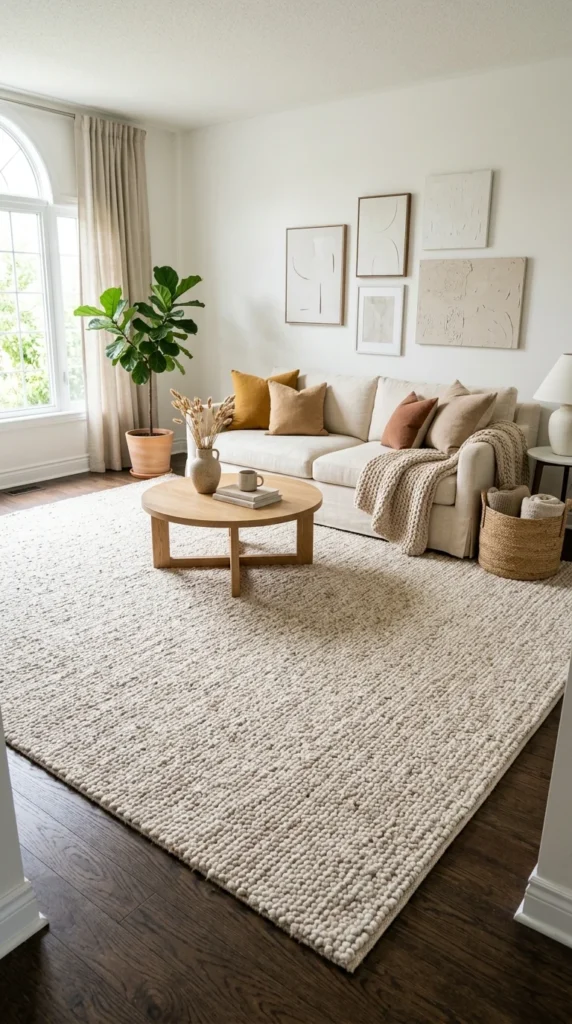
It may seem counterintuitive, but one large rug makes a room feel bigger than several small ones. Small rugs break up the floor space and can make a room look choppy and disjointed. A large rug that extends under all your furniture pieces anchors the room and creates a cohesive, expansive foundation. Aim for a rug that leaves only a small border of floor exposed around the edges of the room to maximize the sense of scale.
9. Layered Lighting
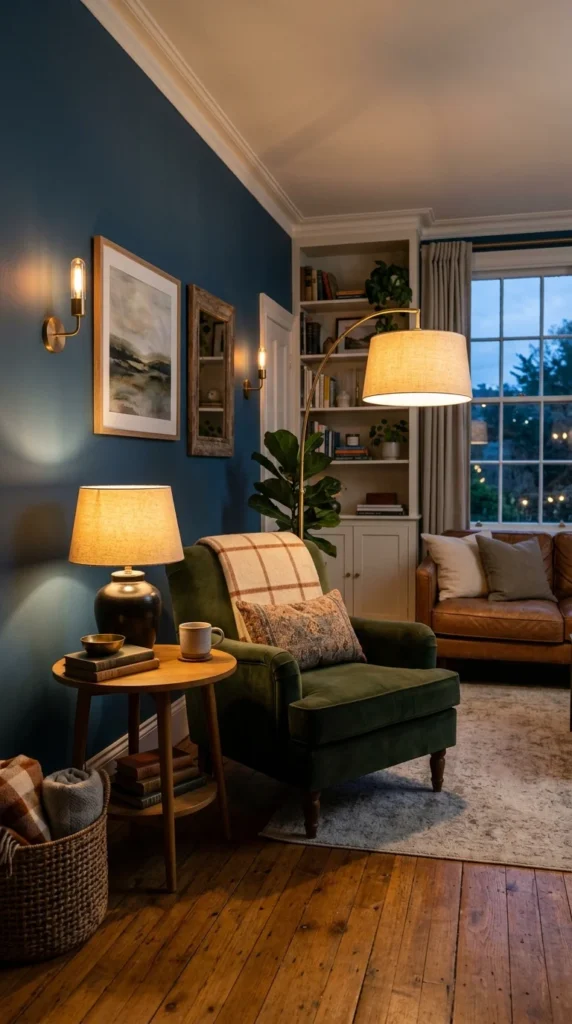
A single overhead light source often creates harsh shadows and leaves corners in the dark, which can make a room feel like a cave. To expand your space, use layered lighting. Combine ambient overhead lights with task lighting (like desk lamps) and accent lighting (like wall sconces or LED strips). By illuminating all four corners of a room, you eliminate dark spots that shrink the space and create a warm, multidimensional atmosphere that feels much larger.
10. Minimalist Decor
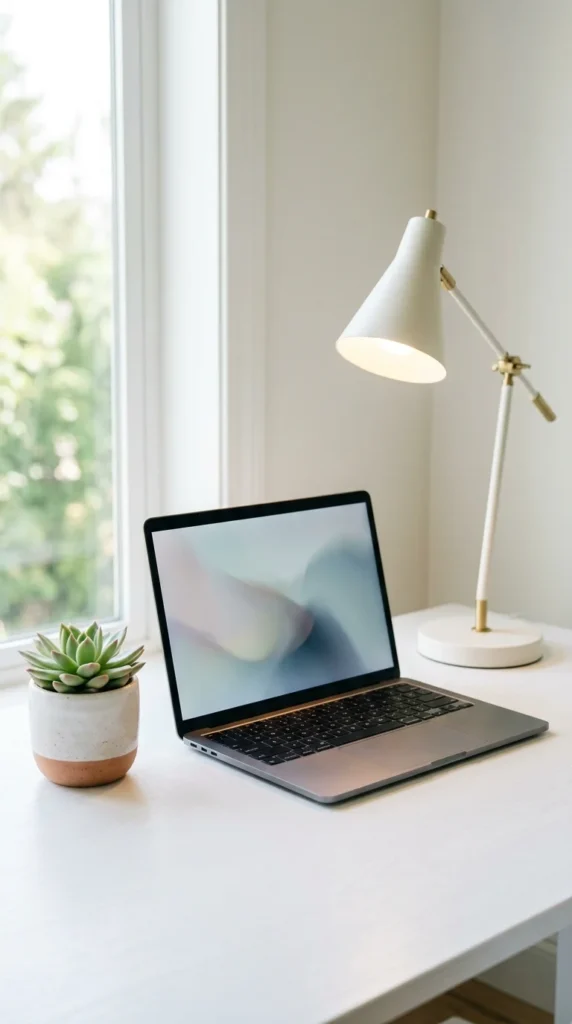
Clutter is the enemy of small spaces. When every surface is covered in “stuff,” the room feels chaotic and cramped. Adopting a minimalist approach—where every item has a purpose and a place—allows the architecture of the room to shine. Choose a few high-impact decor pieces rather than dozens of small trinkets. Clear surfaces create “visual breathing room,” which is essential for making a small area feel peaceful and expansive.
11. Vertical Storage
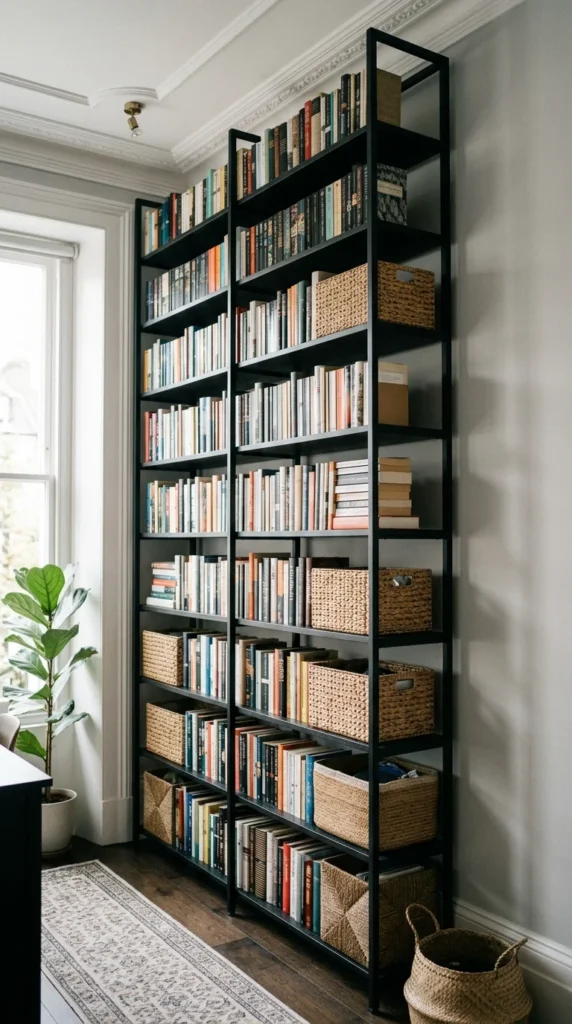
When horizontal space is limited, the only way to go is up. Floor-to-ceiling shelving units or tall wardrobes draw the eye toward the ceiling, emphasizing the height of the room. This vertical orientation helps to move the focus away from the narrowness of the floor. Additionally, using the top-most shelves for items you rarely use allows you to maximize storage without cluttering your immediate living area.
12. Glass Doors
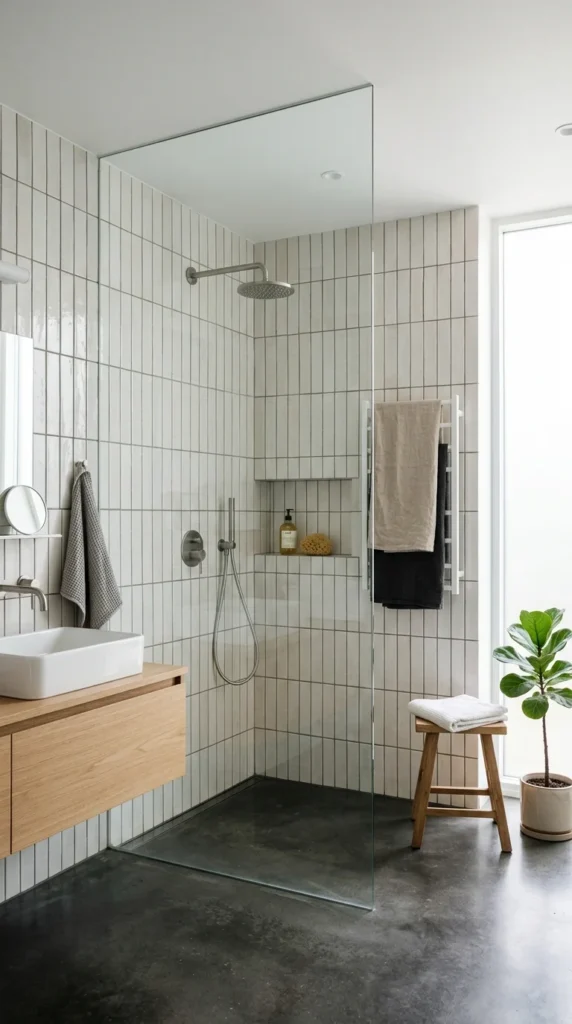
In small bathrooms or kitchens, solid doors can feel like walls. Replacing a solid pantry door with a glass-paned one, or opting for a clear glass shower enclosure instead of a shower curtain, can make a massive difference. Removing visual barriers allows the eye to see the full depth of the room. In a bathroom, a glass shower door makes the entire footprint of the room visible at once, preventing the “boxed-in” feeling common in small wet rooms.
13. Statement Pieces
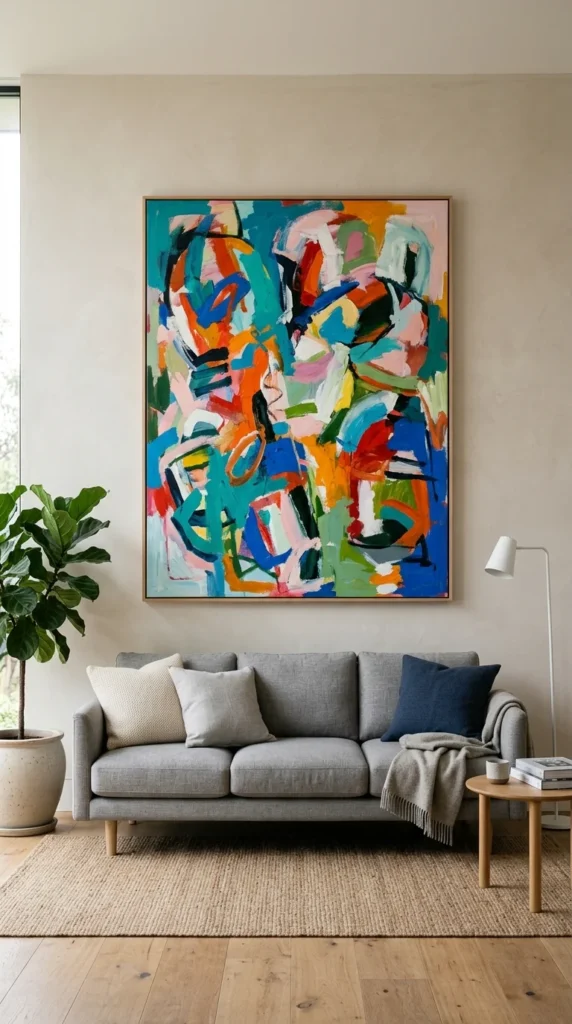
It’s a common mistake to think that small rooms need small furniture and small art. In reality, a sea of tiny items can make a room feel cluttered and “dollhouse-like.” Instead, try using one or two large statement pieces—like a bold piece of art or a full-sized sofa. A large-scale piece provides a focal point and gives the room a sense of confidence and grandeur. It simplifies the visual landscape and makes the space feel more intentional and less cramped.
14. Hidden Storage
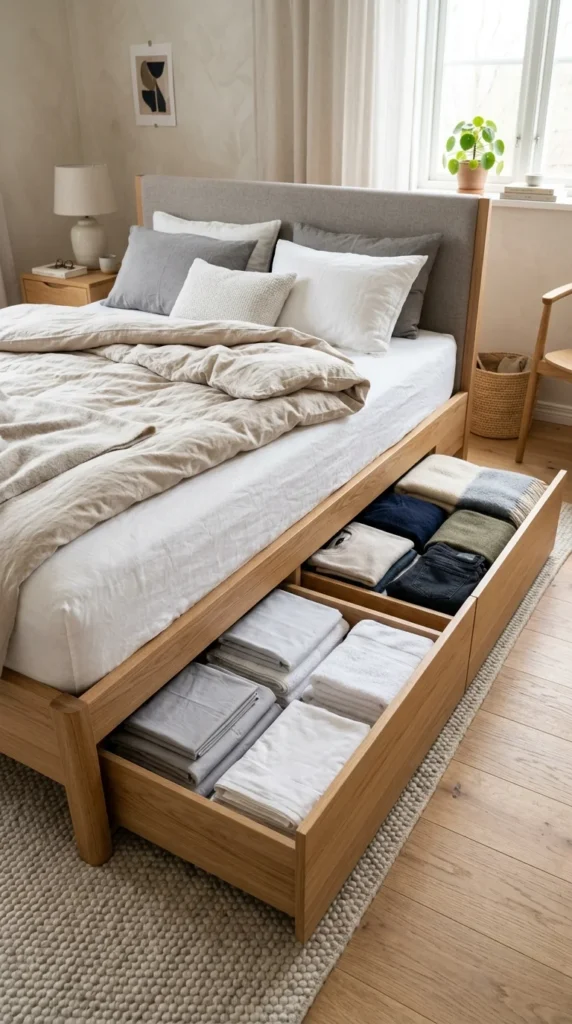
The key to a big-feeling room is keeping “daily life” out of sight. Furniture with hidden storage allows you to tuck away blankets, electronics, and seasonal clothing. Beds with built-in drawers, hollow ottomans, and benches with flip-tops are essential for maintaining a clean aesthetic. When the mess is hidden, the room feels lighter and more organized, which directly contributes to the perception of a larger space.
15. Natural Light
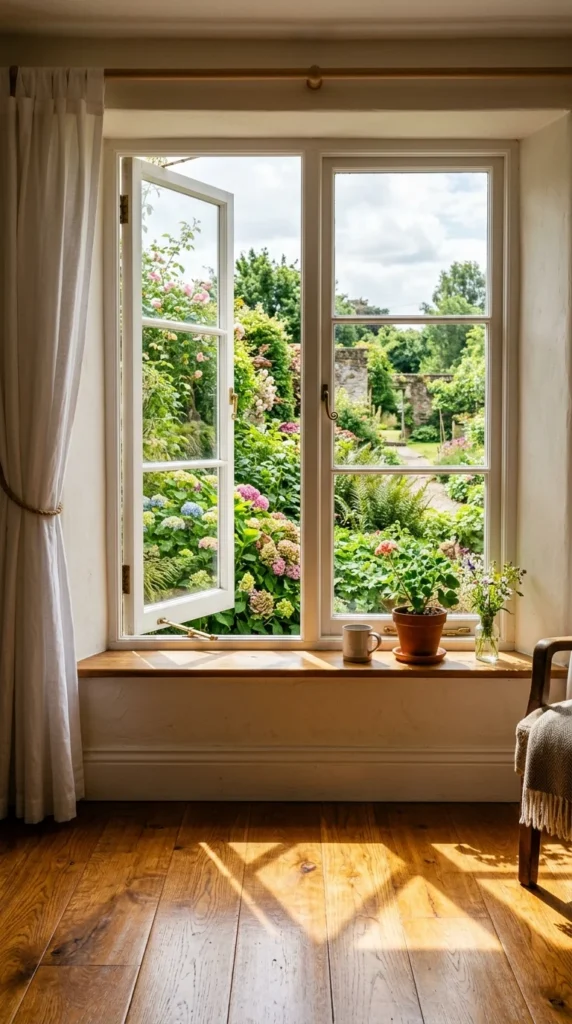
Nothing opens up a space quite like natural light. If you have windows, treat them as the most important feature of the room. Keep windows clean and unobstructed. Avoid heavy, dark drapes that block the sun. Instead, use sheer fabrics or blinds that can be fully retracted during the day. Connecting the indoors with the outdoors blurs the boundaries of the room, making the surrounding environment feel like an extension of your living space.