
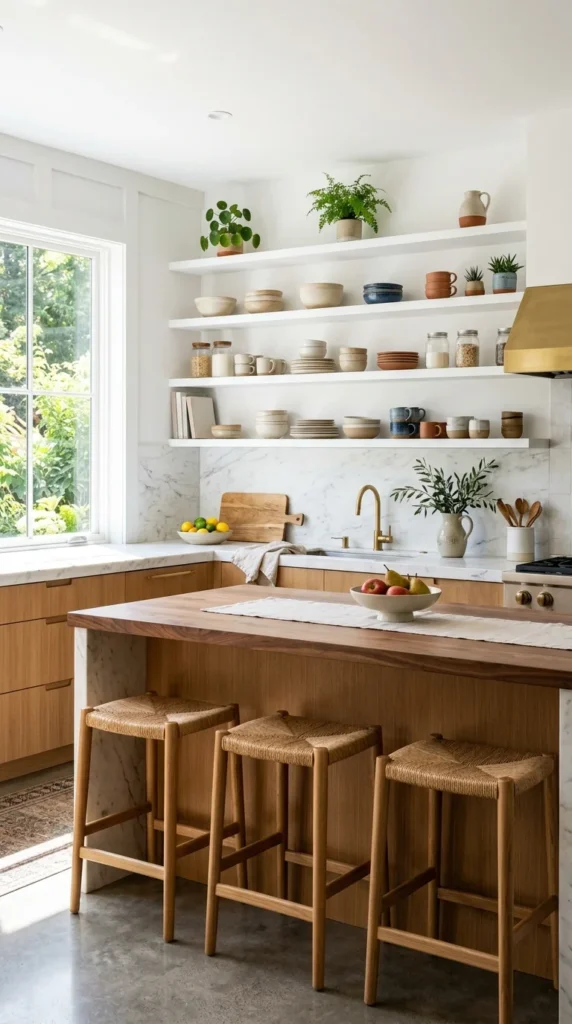
The kitchen is often called the heart of the home, but for many of us, it feels more like the “clutter headquarters.” Between the stack of mismatched plastic lids, the spice cabinet that requires a search party to find the cumin, and the precarious pile of baking sheets under the oven, the kitchen can quickly become a source of stress rather than a culinary sanctuary.
A truly organized kitchen isn’t just about aesthetics; it’s about efficiency. When everything has a designated home, cooking becomes faster, grocery shopping becomes more precise, and the entire atmosphere of your home shifts from chaotic to calm. If you are tired of rummaging through deep cabinets on your hands and knees, these twelve genius organization ideas will transform your space into a functional masterpiece.
1. Tiered Organizers
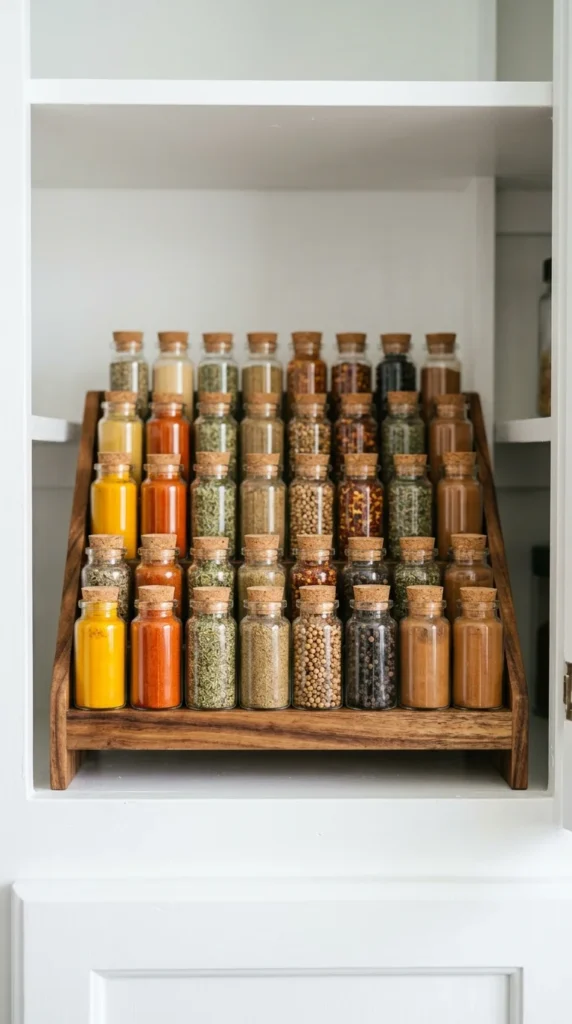
One of the most common frustrations in a kitchen is the “lost at the back” syndrome. Whether it’s canned goods or small spice jars, items placed behind one another effectively disappear. Tiered organizers, often called stadium seating for your pantry, solve this by elevating each row.
By using tiered shelving, you gain a clear line of sight to every single item. This prevents you from buying a third jar of cinnamon because you couldn’t see the two you already had. Beyond spices, large tiered racks can be used in the pantry for canned beans, soups, and jars of pasta sauce. It’s a simple, low-cost investment that maximizes vertical space and eliminates the need to dig through layers of clutter.
2. Magnetic Strips
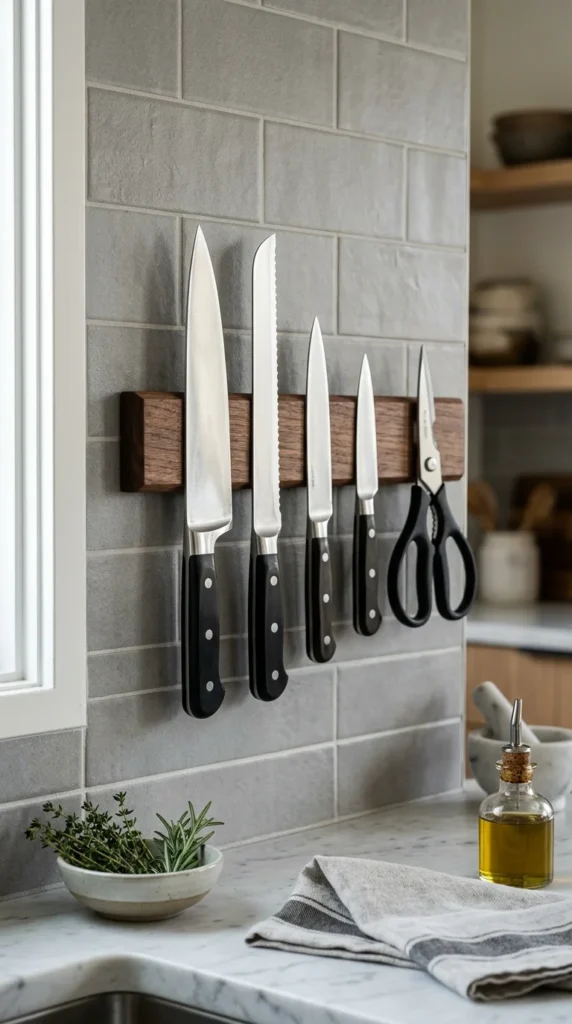
Counter space is the most valuable real estate in your kitchen. If you currently have a bulky knife block taking up a six-inch square of your prep area, it’s time to move to the wall. Magnetic strips are a professional-grade solution that keeps your most-used tools within arm’s reach while freeing up the counter.
These strips aren’t just for knives. You can use them to hang metal measuring spoons, whisks, or even small metal spice tins. It gives the kitchen a modern, industrial look while ensuring your blades stay sharper for longer (as they aren’t rubbing against the wood or plastic slots of a block). Installation is usually just two screws, and the payoff in workspace is immediate.
3. Clear Containers
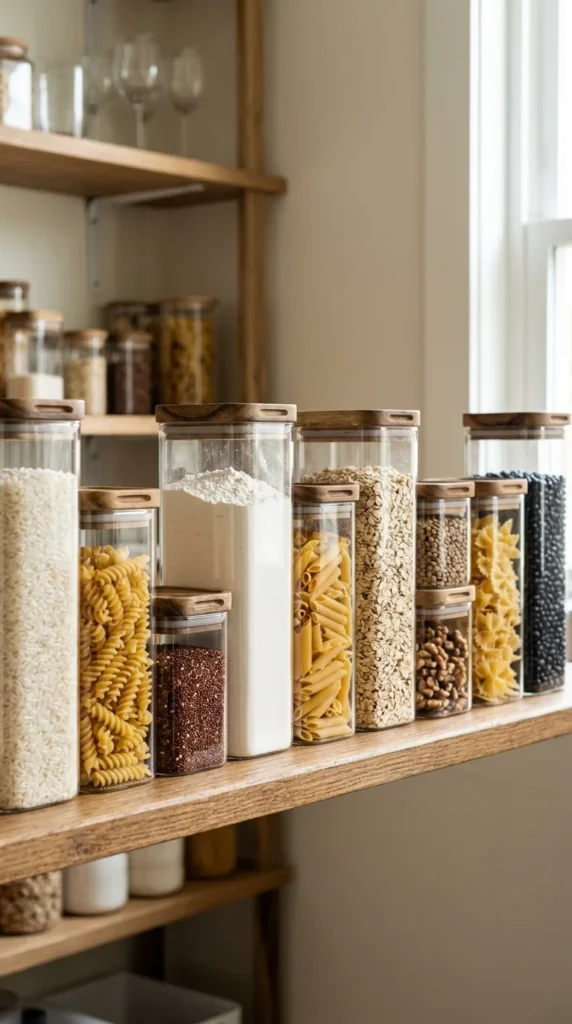
Visual noise is a major contributor to a cluttered feeling. When you open your pantry and see a dozen different cardboard boxes and plastic bags in clashing colors, your brain registers it as a mess. Decanting your dry goods into clear, airtight containers is the ultimate secret to a “Pinterest-perfect” kitchen.
Clear containers allow you to see exactly how much of an ingredient you have left, so you never run out of flour mid-bake. Furthermore, they keep food fresher for longer and prevent pests from getting into opened bags of grains or sugar. Choose rectangular or square containers rather than round ones, as they stack more efficiently and leave no wasted “dead air” between jars.
4. Pull-out Drawers
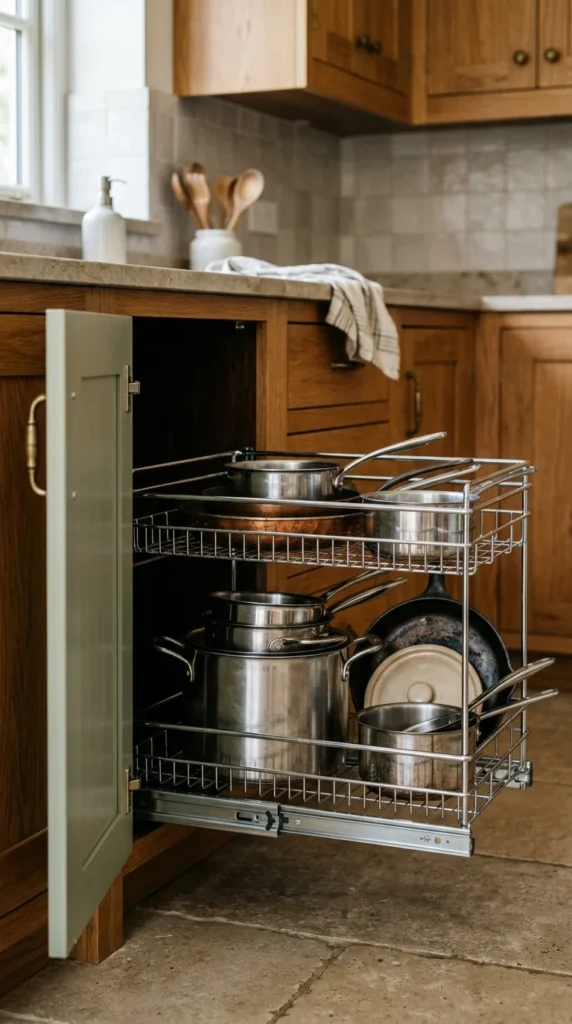
Lower cabinets are notorious for being “black holes” where heavy pots and lids go to be forgotten. Bending over and reaching into the dark recesses of a cabinet is tough on your back and your patience. Installing pull-out drawers or sliding wire baskets effectively turns a cabinet into a giant drawer.
This modification allows you to bring the contents of the cabinet out into the light. You can easily access the heavy Dutch oven at the very back without moving five other pans first. Many of these systems are DIY-friendly and can be retrofitted into existing cabinetry, making them one of the most high-impact upgrades you can make to a standard kitchen.
5. Lazy Susans
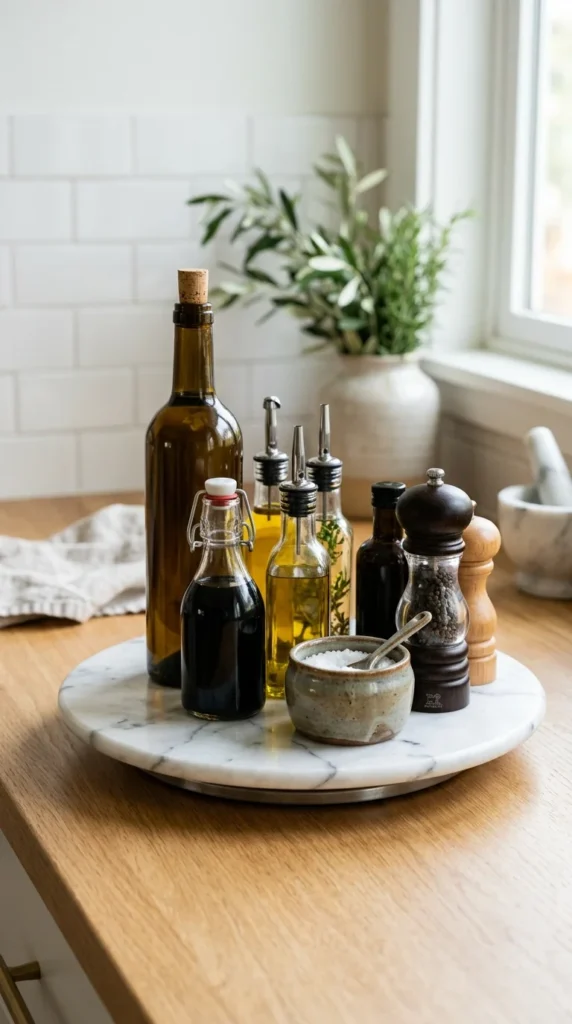
Corner cabinets and high shelves are often wasted space because they are difficult to reach. Enter the Lazy Susan. This rotating turntable ensures that whatever is at the back is only a quick spin away from being at the front.
In a pantry, Lazy Susans are perfect for oils, vinegars, and condiments that tend to leak or leave rings on shelves. Because they rotate, you can pack them tightly and still find what you need. They also work wonders in the refrigerator for jars of pickles, olives, and mustard, ensuring that nothing expires simply because it was hidden in a dark corner.
6. Vertical Dividers
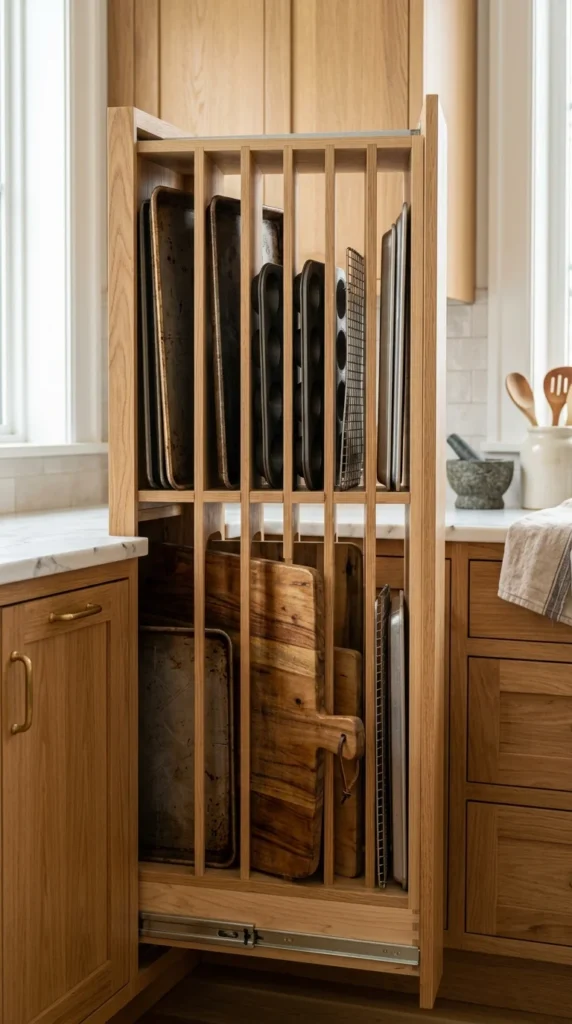
Storing flat items like baking sheets, pizza stones, and cutting boards in a horizontal stack is a recipe for a loud, clattering mess. Every time you need the bottom sheet, you have to lift the entire pile. Vertical dividers change the game by allowing you to store these items like books on a shelf.
You can buy tension-based dividers or permanent wooden inserts. By storing items vertically, you can slide out exactly what you need without disturbing anything else. This also prevents your non-stick pans and cookie sheets from getting scratched by being stacked on top of one another, extending the life of your cookware.
7. Over-the-door Racks
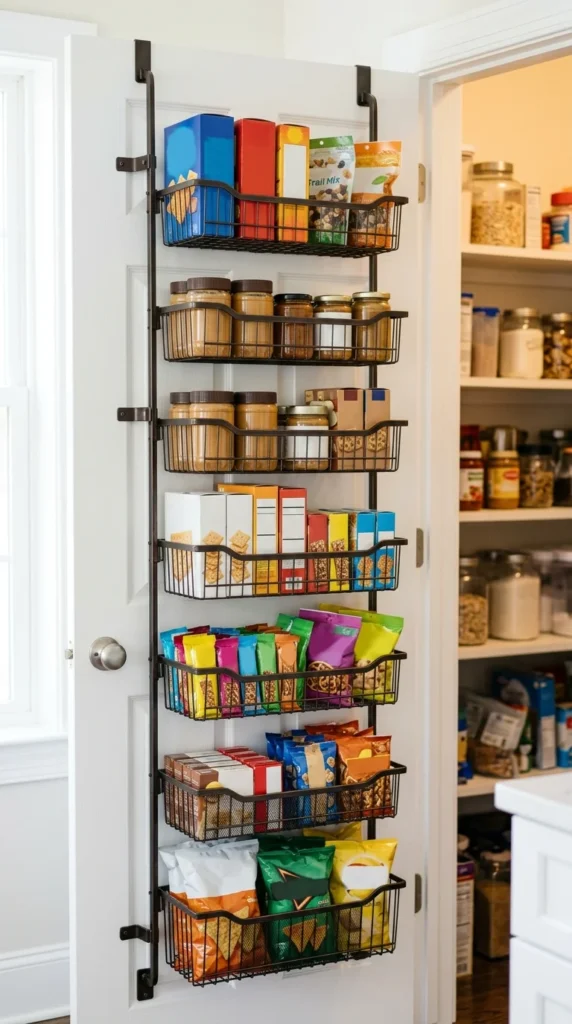
If you have a small kitchen, you have to look for storage in unexpected places. The back of your pantry or cellar door is often a massive amount of unused vertical space. An over-the-door rack can hold a surprising amount of weight and provides easy access to frequently used items.
These racks are ideal for “small” items that tend to get lost on deep shelves, such as spice packets, boxes of tea, or snacks for the kids. It keeps these items at eye level and frees up the main pantry shelves for bulkier items like appliances or gallon-sized jugs.
8. Tension Rods
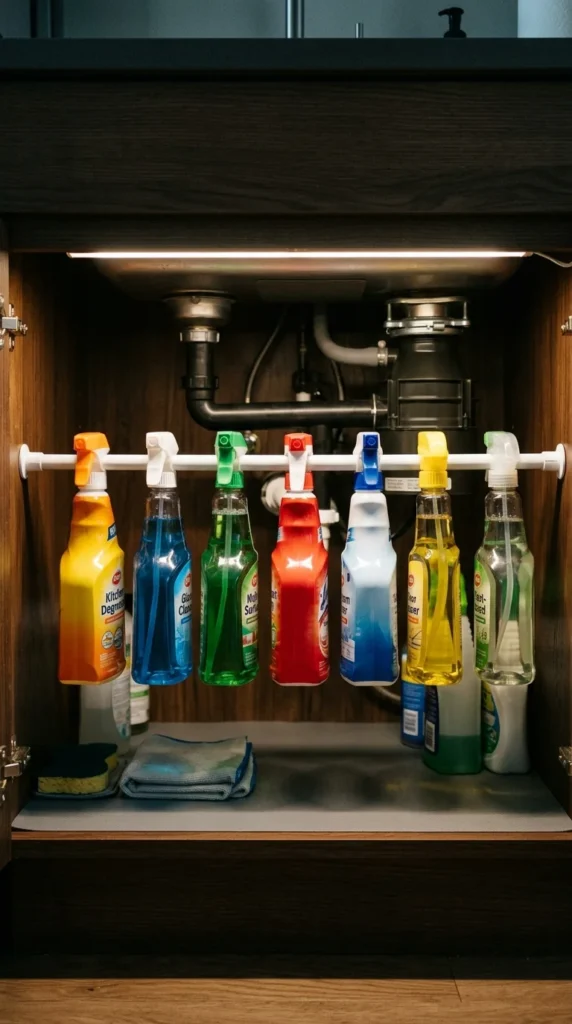
The space under the kitchen sink is notoriously difficult to organize due to the plumbing pipes. It often becomes a graveyard for half-empty cleaning bottles and sponges. A simple, inexpensive tension rod can solve this in seconds.
By wedging a tension rod across the width of the cabinet, you can hang spray bottles by their triggers. This utilizes the “upper” half of the cabinet that usually goes to waste, leaving the floor of the cabinet free for bins of sponges, dish tabs, or trash bags. It’s a low-cost hack that doubles your storage capacity instantly.
9. Pegboard Walls
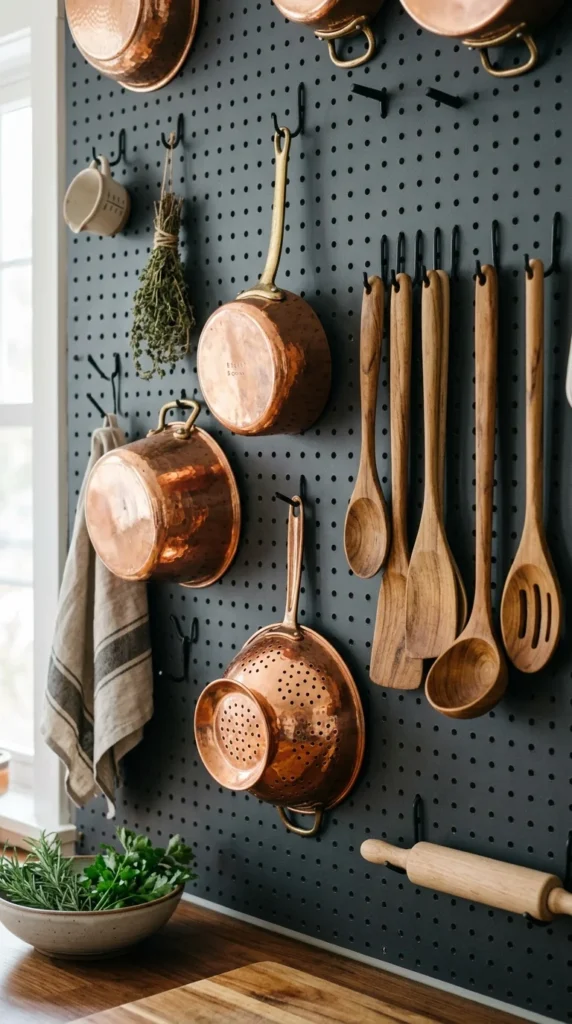
Popularized by the legendary Julia Child, the kitchen pegboard is both a stylistic statement and an organizational powerhouse. If you lack cabinet space for your bulky pots and pans, move them to the wall.
A pegboard is infinitely customizable. As your cookware collection grows or changes, you can simply move the hooks around. It keeps your most-used tools visible and accessible, and it serves as a beautiful piece of “functional art.” To keep it looking tidy, you can even trace the outline of your pans onto the board so you (and everyone else in the house) know exactly where each item belongs.
10. Drawer Dividers
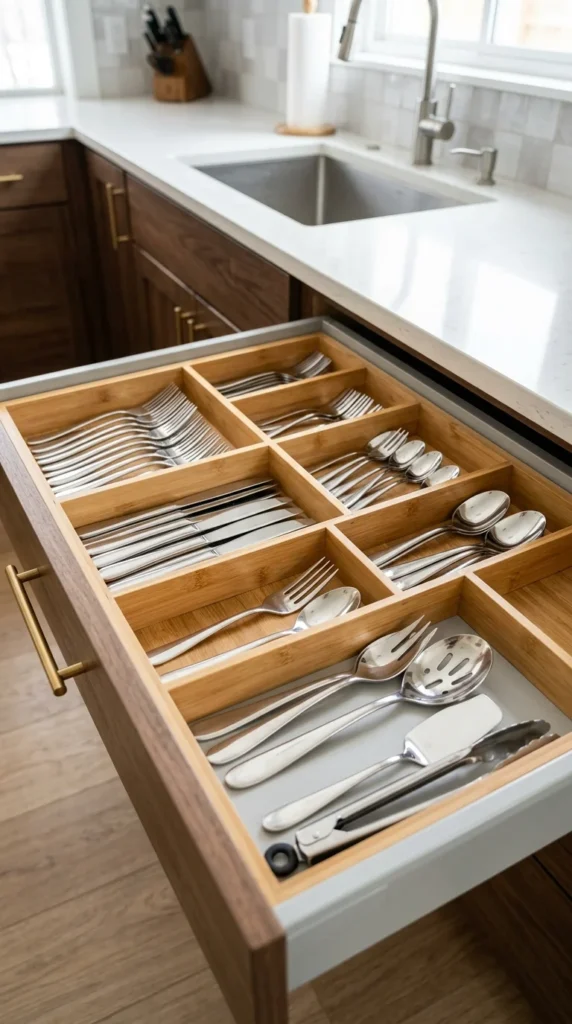
A drawer without dividers is just a “junk drawer” waiting to happen. Even if you start with the best intentions, the act of opening and closing a drawer causes items to slide around and mix together. Custom or adjustable drawer dividers are essential for maintaining order.
Don’t stop at the silverware drawer. Use deep dividers for your “gadget” drawer to separate the citrus juicer from the garlic press. Use them in the “tupperware” drawer to keep lids separated from containers by size. When every spatula and whisk has a specific slot, you’ll never find yourself digging through a tangled mess of metal while your onions are burning on the stove.
11. Under-shelf Baskets
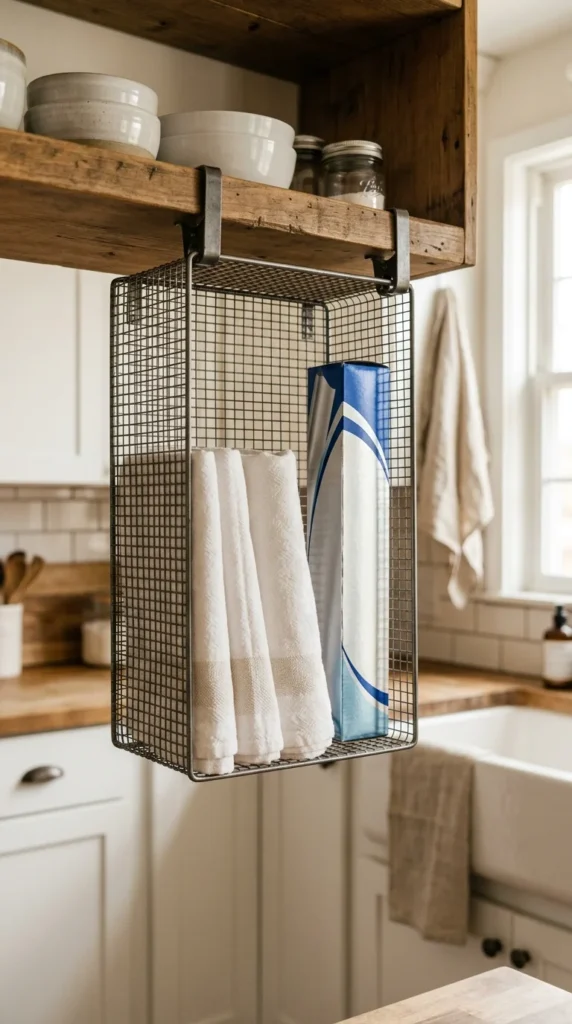
Most kitchen cabinets have a lot of “dead air” between the top of the items on one shelf and the bottom of the shelf above it. Under-shelf baskets are wire units that slide onto an existing shelf, creating a secondary “hanging” drawer underneath.
These are perfect for lightweight, flat items that don’t stack well. Think of them as a home for boxes of aluminum foil, parchment paper, or even stacks of napkins and placemats. In the pantry, they are great for storing bread or bags of chips that might otherwise get crushed under heavier items.
12. Labeling Systems
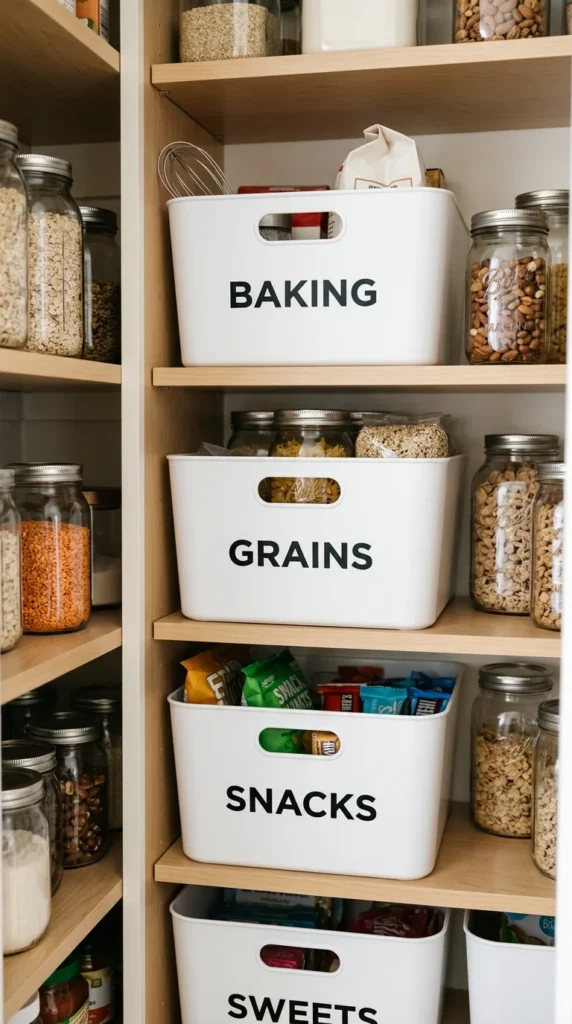
The final, and perhaps most important, step in kitchen organization is labeling. You might know that the white powder in the glass jar is powdered sugar and not flour, but will your guest or your spouse know? Labels remove the guesswork and provide a visual roadmap for where things go.
When everything is labeled, the system becomes “self-maintaining.” It’s much harder to put the crackers in the wrong spot when there is a clear sign saying “SNACKS.” You can use a high-tech label maker, elegant vinyl stickers, or even a simple chalk marker for a more rustic look. Regardless of the style, labels are the “glue” that keeps your organizational system from falling apart over time.