

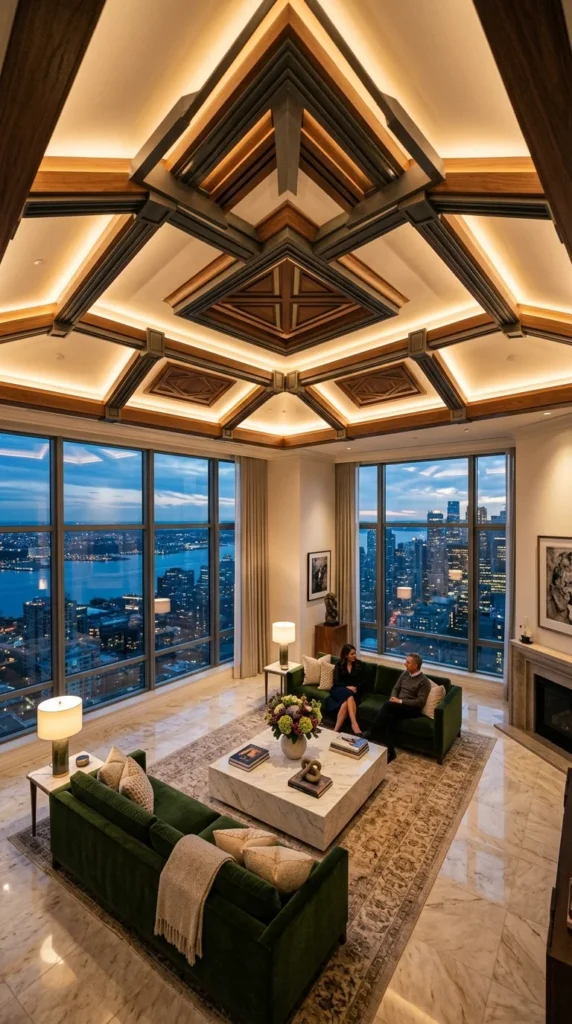
The ceiling is often referred to by interior designers as the “fifth wall,” yet it is frequently the most overlooked surface in a home. For decades, the standard white, flat ceiling was the default choice for living rooms everywhere. However, the tide has turned. Homeowners and designers are now looking upward to add character, depth, and a sense of architectural grandeur to their living spaces.
Whether you are looking to create a cozy, rustic sanctuary or a sleek, ultra-modern entertainment hub, the right ceiling design can transform the entire proportions and mood of a room. From the timeless elegance of coffered grids to the avant-garde appeal of suspended panels, here are 13 living room ceiling designs that are currently dominating social media mood boards and high-end interior portfolios.
1. Coffered Ceilings
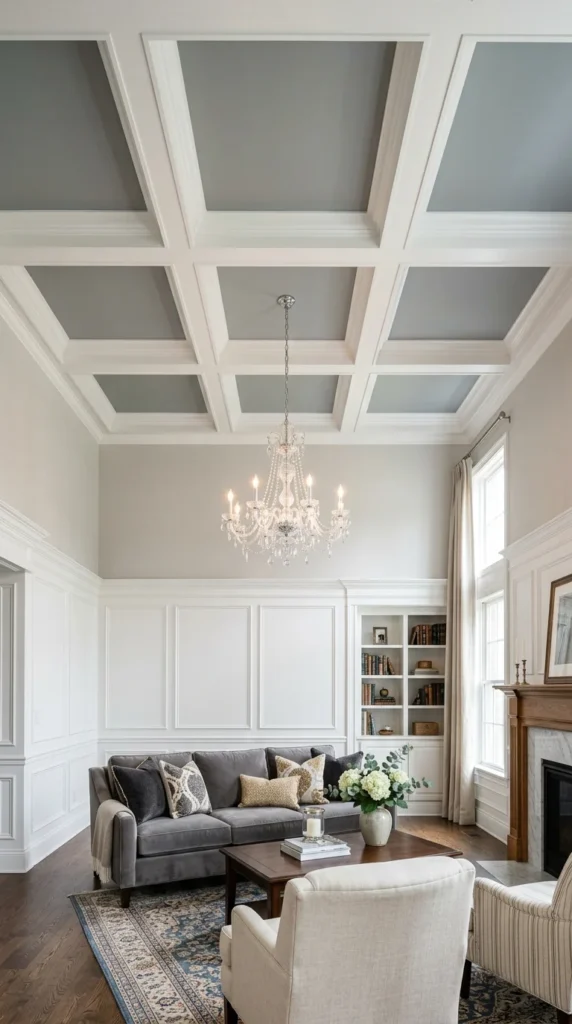
The coffered ceiling is the epitome of classic luxury. This design consists of a grid of sunken panels (usually square or rectangular) accented by decorative molding. Originally found in grand estates and historic libraries, the coffered look has been modernized for today’s homes.
One of the primary benefits of a coffered ceiling is its ability to add structural depth. It creates an illusion of height and provides a perfect framework for integrated lighting. To make this design feel contemporary, many designers are painting the beams a different color than the recessed panels—such as charcoal beams against a white background—to create a striking, high-contrast aesthetic.
2. Exposed Beams
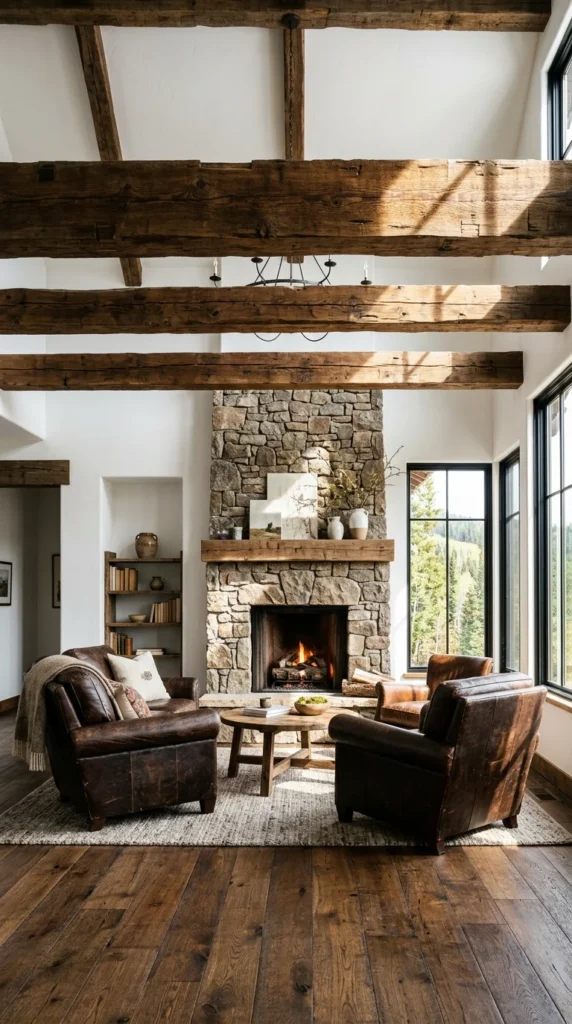
Nothing brings warmth and organic texture to a living room quite like exposed beams. While traditionally associated with farmhouse or Mediterranean styles, exposed beams have found their way into minimalist and industrial designs as well.
You can opt for heavy, rustic reclaimed wood for a sense of history and “hygge,” or choose sleek, painted steel beams for an urban loft vibe. For those with standard-height ceilings, “faux beams” made of lightweight polyurethane or hollow wood offer a budget-friendly and easy-to-install way to achieve this architectural look without the structural weight.
3. Tray Ceilings
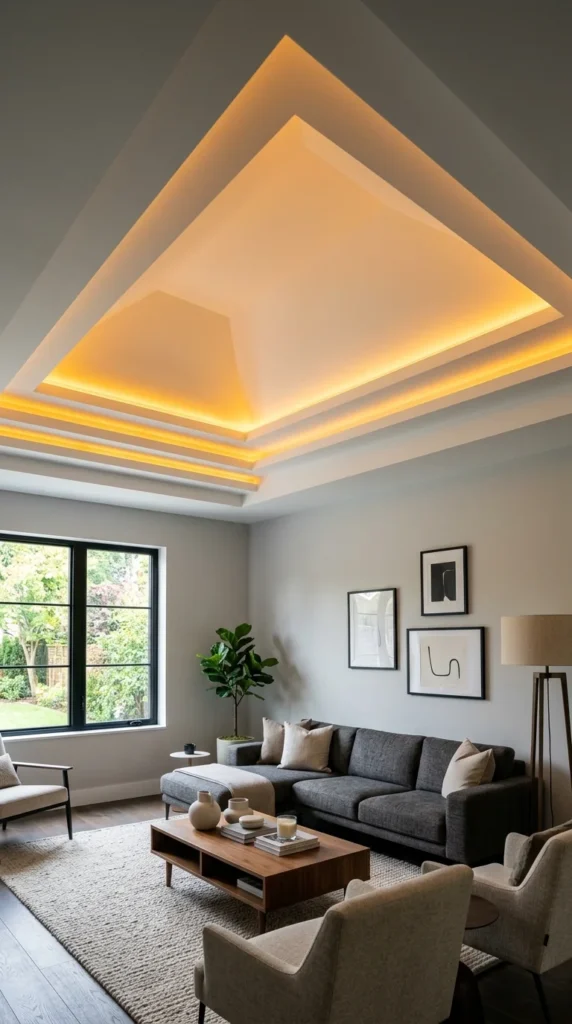
A tray ceiling (also known as an inverted or recessed ceiling) features a center section that is several inches higher than the perimeter. This “cut-out” design mimics the look of an upside-down tray, adding a layer of architectural interest without being as busy as a coffered design.
Tray ceilings are particularly popular because they provide the perfect “niche” for crown molding and hidden cove lighting. By installing LED strips along the inner edge of the tray, you can create a soft, ethereal glow that makes the ceiling appear as if it’s floating. This design is excellent for defining the seating area in an open-concept floor plan.
4. Wood Slats
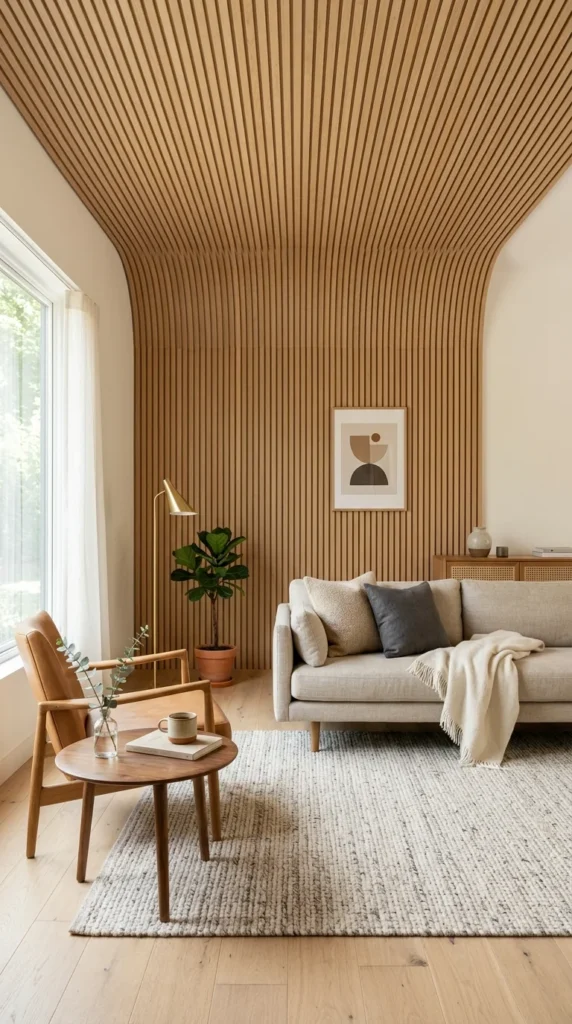
Linear wood slat ceilings are having a major moment in the world of modern interior design. This look is characterized by thin strips of wood installed with narrow gaps between them, often over a dark acoustic felt backing.
Beyond the undeniable aesthetic appeal, wood slat ceilings are highly functional. They provide excellent sound absorption, making them ideal for large, open living rooms with hard flooring where echoes might be a problem. This design adds a rhythmic, textural element that feels both warm and incredibly sophisticated.
5. Wallpapered Ceilings
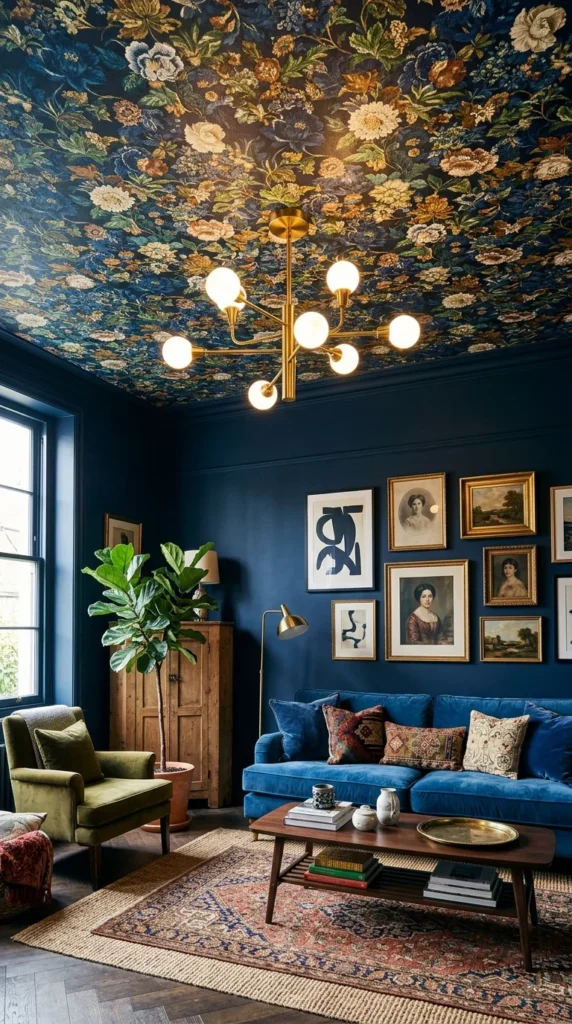
If you want to make a statement, look no further than the wallpapered ceiling. This trend challenges the “white ceiling rule” by treating the fifth wall like a canvas for art and pattern.
For a subtle look, designers use textured “grasscloth” wallpapers that add organic warmth. For those who want drama, bold geometric prints, metallic foils, or oversized floral murals are the way to go. Wallpapering the ceiling is a clever way to make a room feel more intimate and “wrapped” in design, especially in rooms with very high ceilings that might otherwise feel cold.
6. Venetian Plaster
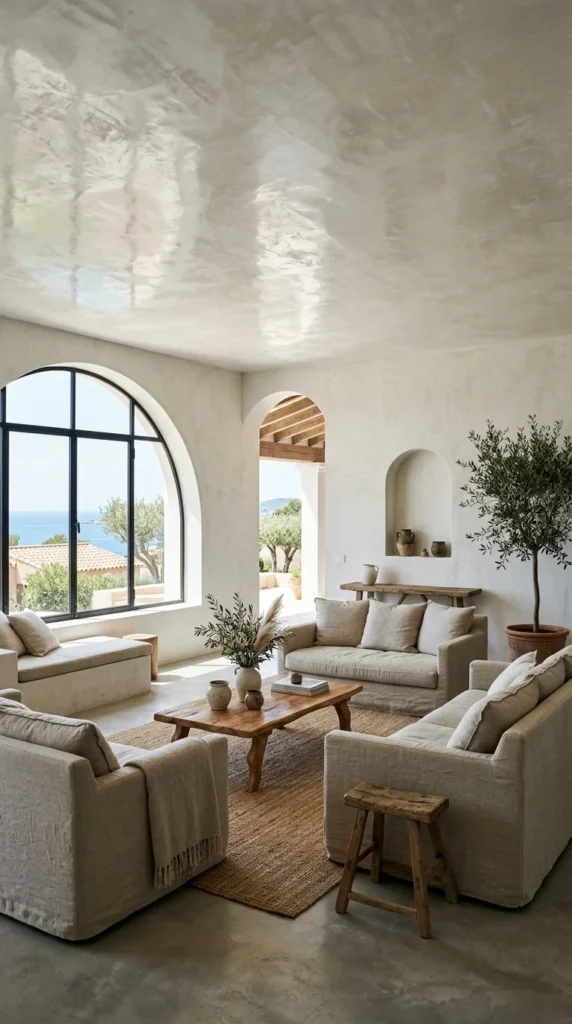
Venetian plaster is a centuries-old technique that involves applying multiple layers of fired limestone and water to a surface, then buffing it to a high sheen. On a ceiling, this creates a finish that looks like polished stone or marble.
The beauty of Venetian plaster lies in its depth. It isn’t a flat color; rather, it has a subtle movement and luminosity that changes as the sun moves across the room. It’s an ideal choice for homeowners who want a luxurious, tactile finish that feels more “old-world” and artisanal than standard paint.
7. Vaulted Ceilings
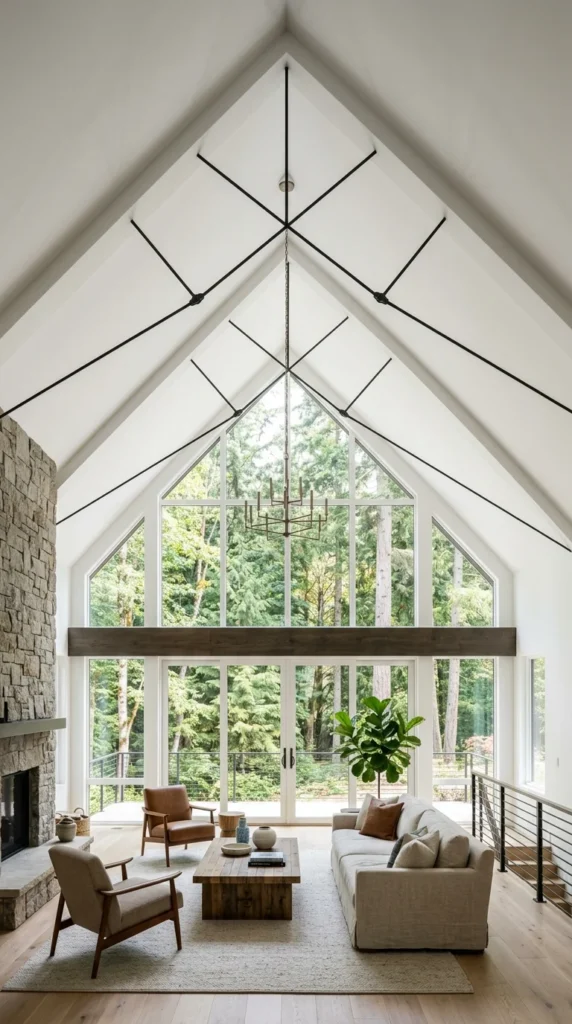
Vaulted ceilings are the ultimate luxury in terms of volume. By following the pitch of the roof, these ceilings create an expansive, airy feel that can make even a modest-sized living room feel like a cathedral.
Current trends in vaulted ceilings involve keeping the lines clean and uncluttered. Instead of heavy ornamentation, designers are using “cathedral” pitches to emphasize verticality. Adding a single, oversized statement chandelier at the highest point of the vault serves as an anchor, drawing the eye upward and highlighting the impressive scale of the architecture.
8. Cove Lighting
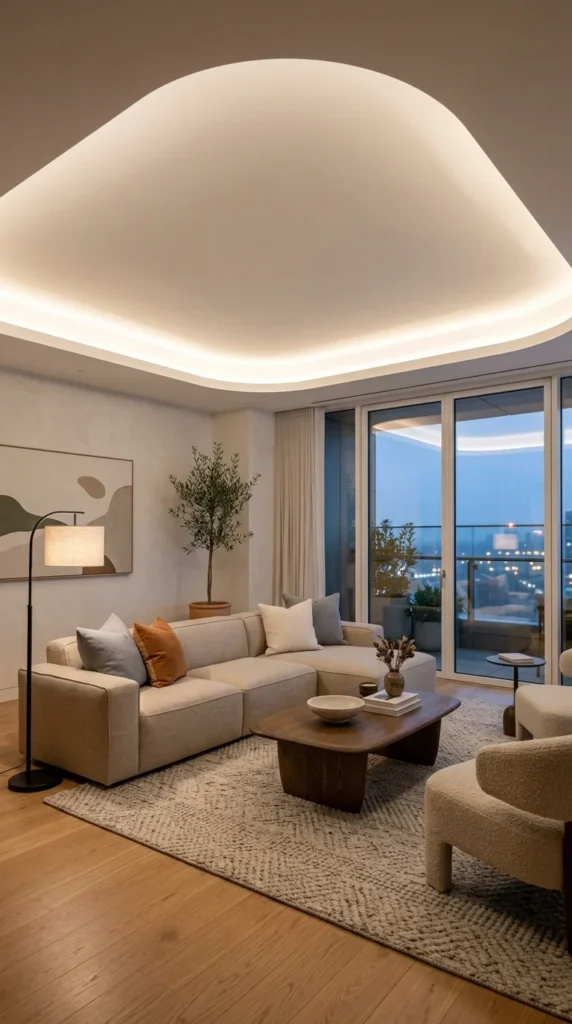
Cove lighting is a design technique where the light source is hidden within a ledge or recess high on the wall or on the ceiling. This directs the light upward, reflecting it off the ceiling and back down into the room.
This is a favorite for those who love a “moody” or cinematic atmosphere. Because the light is indirect, it eliminates harsh shadows and glare. It’s perfect for living rooms used for movie nights or relaxation. Modern smart-lighting systems allow you to change the color of the cove lighting, allowing the ceiling to glow in soft blues, warm ambers, or crisp whites depending on the time of day.
9. Molding Accents
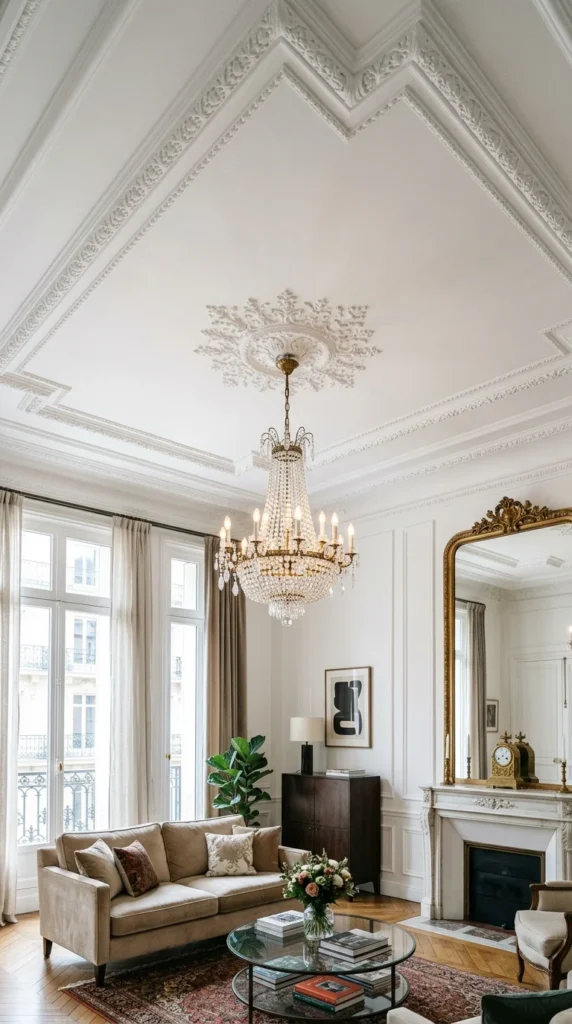
You don’t need a full renovation to upgrade your ceiling; sometimes, all it takes is the right molding. Decorative ceiling “frames” or “boxes” created with lightweight trim can add an instant touch of European elegance to a standard living room.
A popular current trend is the use of oversized “ceiling roses” or medallions. While these were historically used to protect the ceiling from candle smoke, today they serve as a stunning architectural pedestal for a chandelier. When painted the same color as the ceiling, these moldings provide a subtle, “shadow-play” texture that is incredibly chic.
10. Painted Contrasts
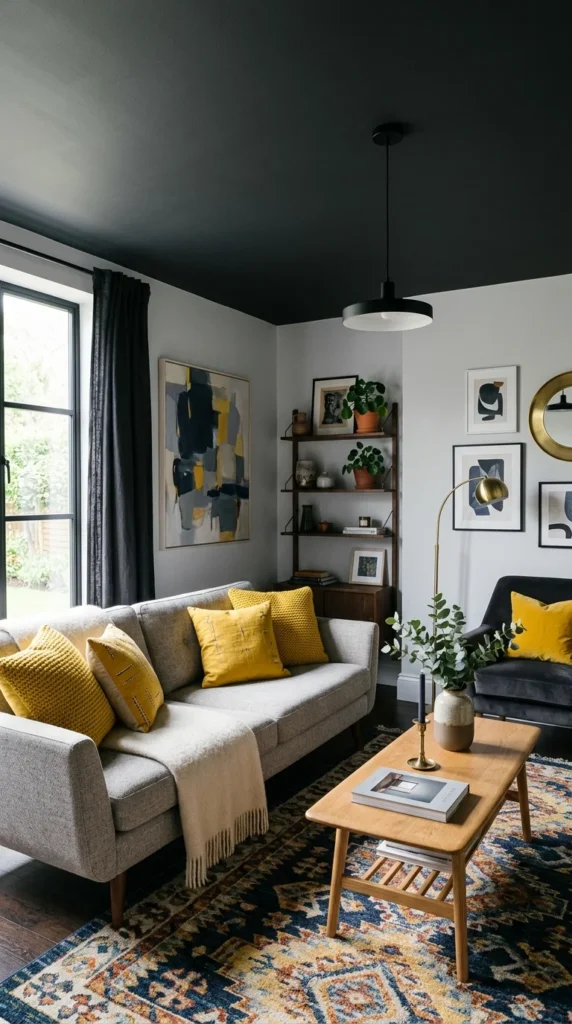
One of the most cost-effective ways to transform a ceiling is with a tin of paint in a surprising hue. While dark ceilings were once thought to make a room feel small, designers now use them to create a “jewel-box” effect.
A deep navy, forest green, or even matte black ceiling can make the walls appear to recede and the ceiling to vanish into the infinite, creating a cozy and sophisticated vibe. Conversely, painting a ceiling a soft, pale blue (a tradition in the American South known as “Haint Blue”) can make a room feel as if it’s open to the sky, adding a refreshing, airy quality.
11. Metal Tiles
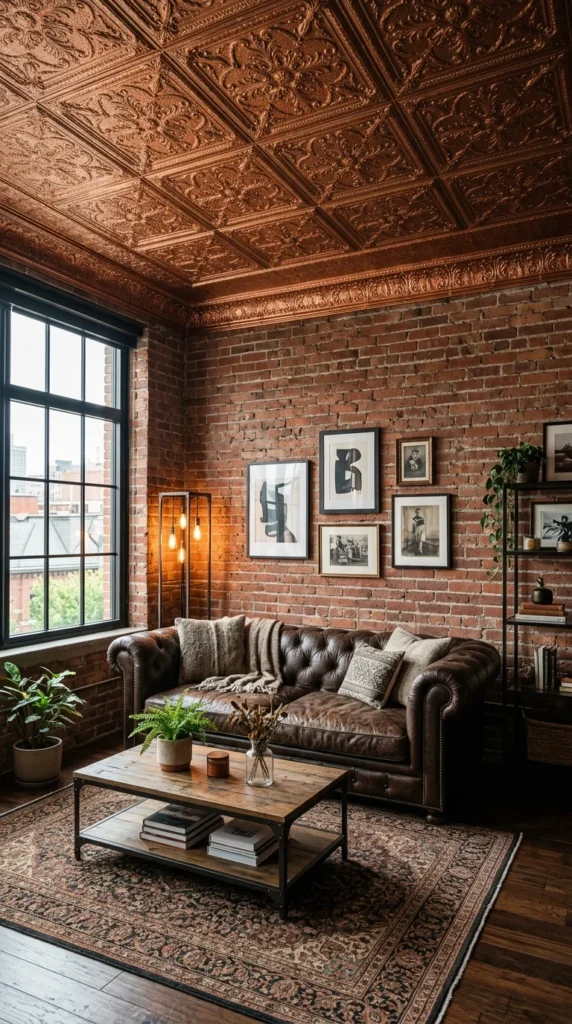
For an industrial or vintage aesthetic, metal ceiling tiles are a top choice. Traditionally made of tin, copper, or aluminum, these tiles feature embossed patterns ranging from geometric Art Deco shapes to ornate Victorian florals.
In a modern living room, a metal ceiling adds a reflective quality that bounces light around the room. It also introduces a “hard” texture that balances out soft elements like velvet sofas or plush rugs. While authentic antique tin can be expensive, modern drop-ceiling versions or “nail-up” panels make this look accessible for residential renovations.
12. Skylight Integration
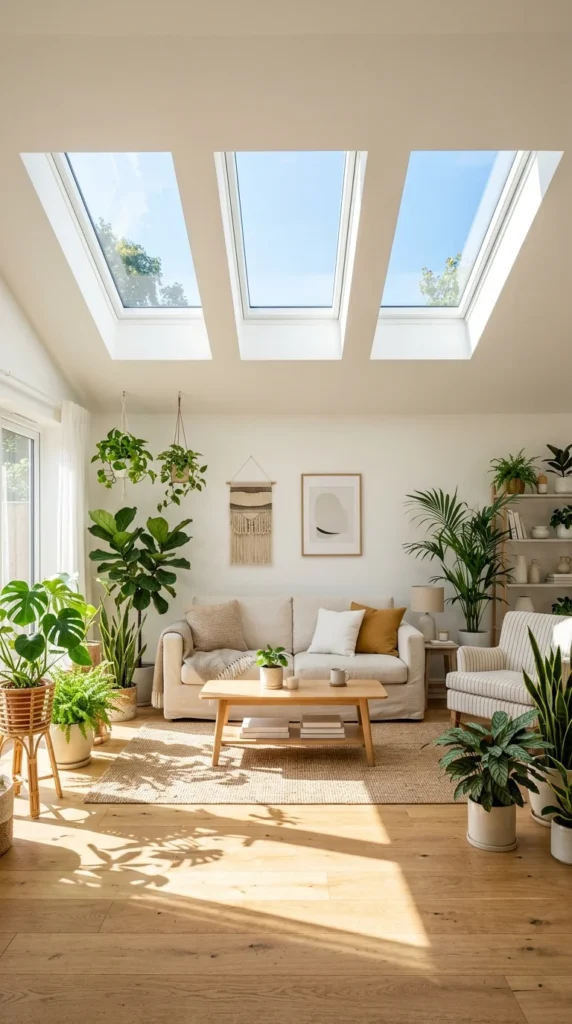
If your living room is on the top floor or in a single-story home, integrating skylights into the ceiling design is a literal way to “bring the outdoors in.” Beyond the obvious benefit of natural light, skylights act as “dynamic art,” showing the movement of clouds, the change in light throughout the day, and the stars at night.
Modern skylight designs are sleek and minimalist, often flush-mounted with the ceiling plane. Some even feature motorized shades or “smart glass” that can tint automatically to prevent the room from overheating during the peak of the day.
13. Suspended Panels
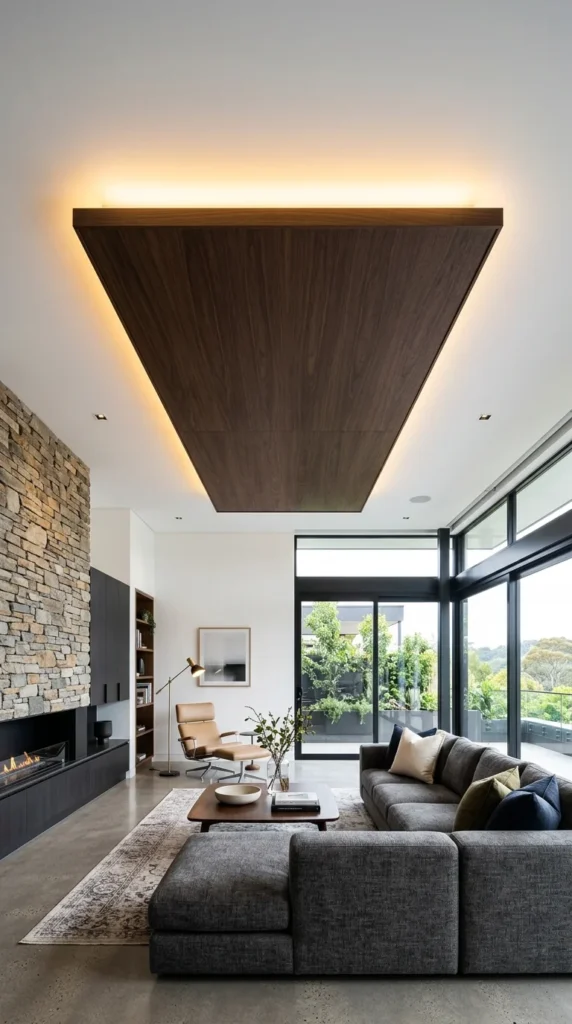
Suspended (or dropped) panels are a favorite in high-end, contemporary architecture. Unlike a traditional drop ceiling used in offices, these are artistic installations. A large panel—made of wood, acoustic fabric, or even metal—is hung from the main ceiling, leaving a gap around the edges.
This design creates a powerful sense of “compression and release,” defining specific zones within a room. It is also an incredibly practical solution for hiding bulky HVAC ducts, wiring for surround-sound speakers, or complex lighting systems, all while looking like a deliberate piece of sculptural art.