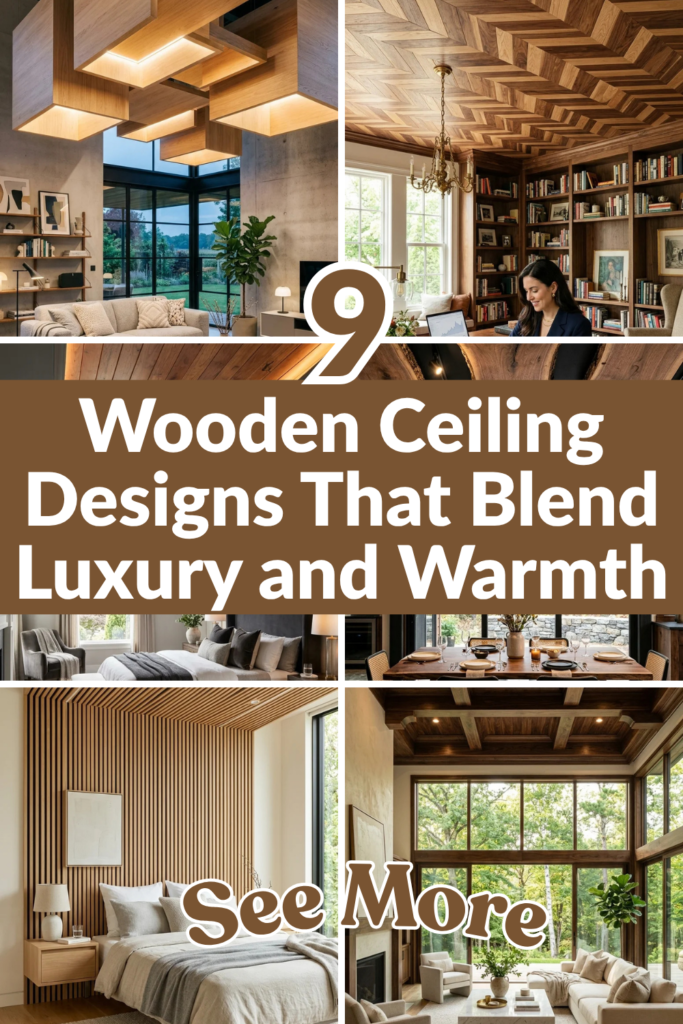

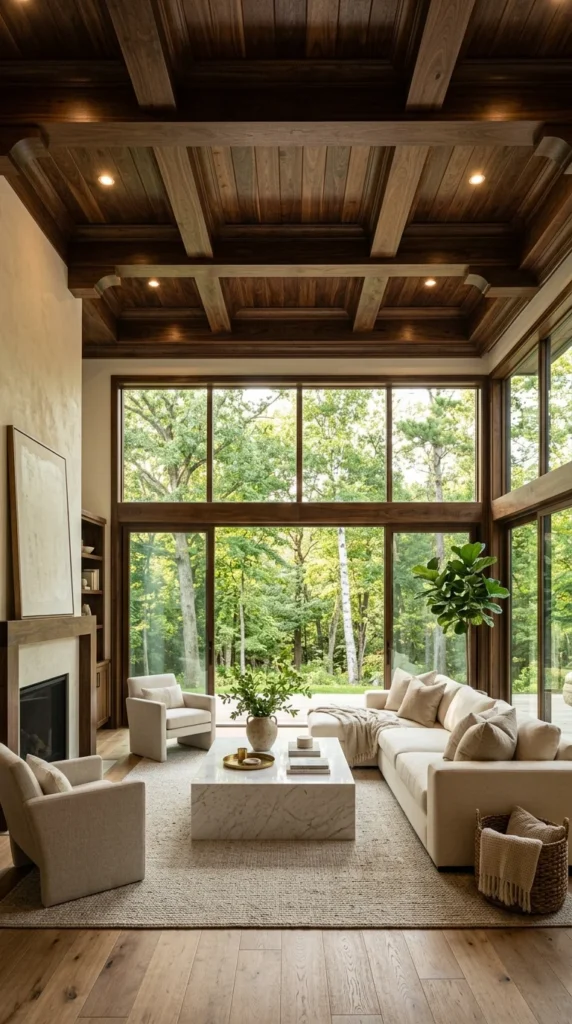
For centuries, wood has been the cornerstone of high-end interior design. While we often focus on hardwood floors or bespoke cabinetry, the “fifth wall”—the ceiling—is frequently the most overlooked canvas in a home. A wooden ceiling does more than just cover structural elements; it transforms a room into a sanctuary, absorbing sound, radiating warmth, and providing a sense of grounded luxury that cold plaster simply cannot replicate.
Whether you are looking to evoke the cozy charm of a mountain lodge or the sleek sophistication of a modern penthouse, wood offers unparalleled versatility. From the intricate geometry of coffered panels to the raw, organic beauty of live-edge slabs, these nine wooden ceiling designs demonstrate how to elevate your living space into a masterpiece of architectural design.
1. Coffered Panels
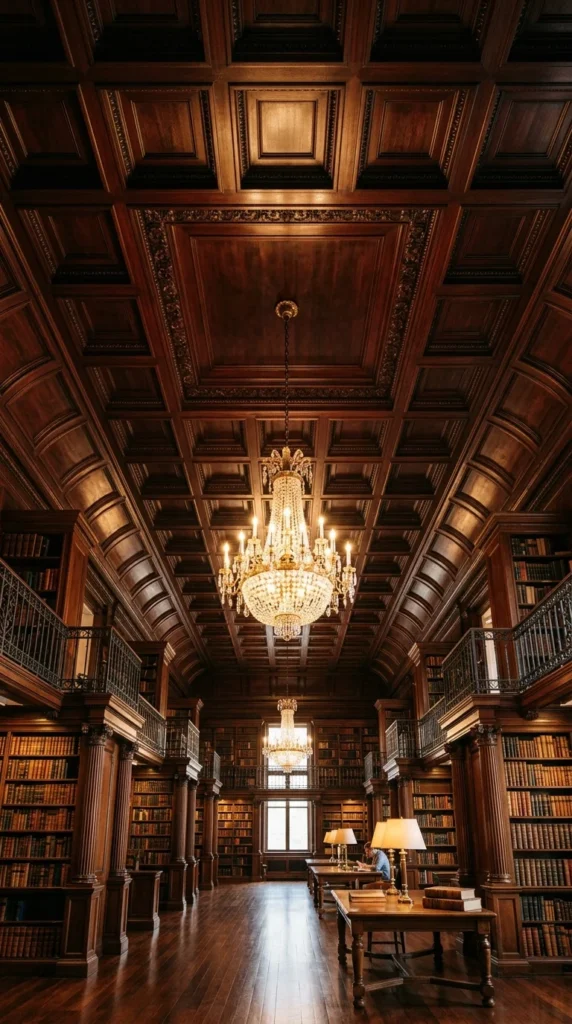
The coffered ceiling is the ultimate symbol of traditional luxury. Historically found in grand estates and government buildings, this design uses a grid of sunken panels framed by decorative molding. The depth created by the “coffers” adds an immediate sense of weight and importance to a room.
To achieve a modern luxury look with coffers, consider playing with scale. Larger, shallower squares can make a room feel more open, while deep, intricately carved panels are perfect for intimate spaces like home libraries or formal dining rooms. Integrating recessed LED lighting within each panel can also give this classical design a contemporary edge, casting a soft glow that emphasizes the wood’s natural texture.
2. Exposed Beams
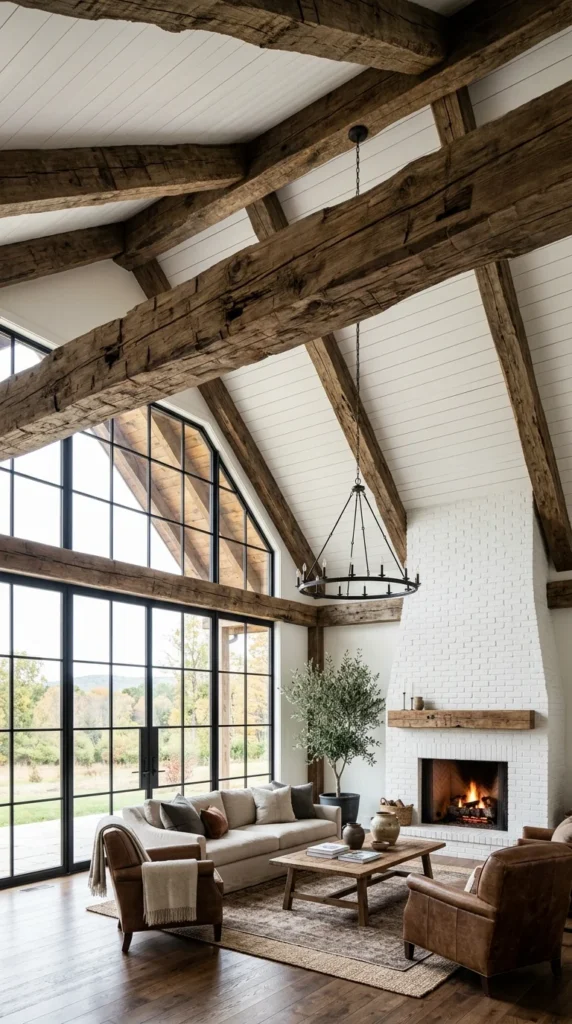
Few things say “warmth” quite like exposed wooden beams. This design bridges the gap between rustic charm and high-end architectural interest. In a vaulted or cathedral ceiling, heavy timber beams draw the eye upward, emphasizing the height and volume of the space.
For a truly luxurious feel, many designers are opting for reclaimed wood beams. These pieces carry history, featuring unique weathering, bolt holes, and a patina that new wood simply cannot mimic. If your home has a more minimalist aesthetic, smooth, dark-stained beams against a crisp white ceiling provide a sharp, clean contrast that feels both grounded and airy.
3. Linear Slats
Few things say “warmth” quite like exposed wooden beams. This design bridges the gap between rustic charm and high-end architectural interest. In a vaulted or cathedral ceiling, heavy timber beams draw the eye upward, emphasizing the height and volume of the space.
For a truly luxurious feel, many designers are opting for reclaimed wood beams. These pieces carry history, featuring unique weathering, bolt holes, and a patina that new wood simply cannot mimic. If your home has a more minimalist aesthetic, smooth, dark-stained beams against a crisp white ceiling provide a sharp, clean contrast that feels both grounded and airy.
3. Linear Slats
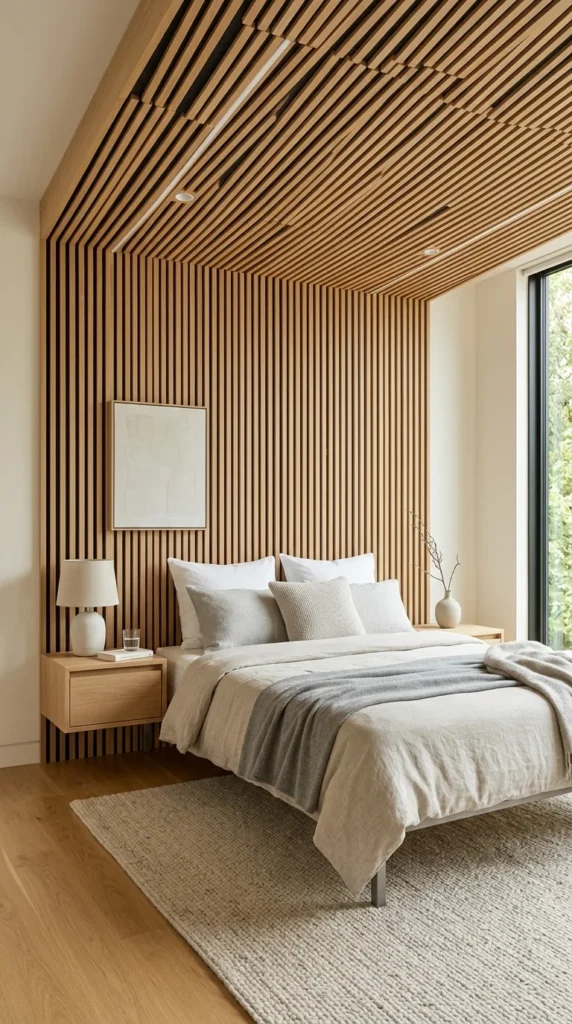
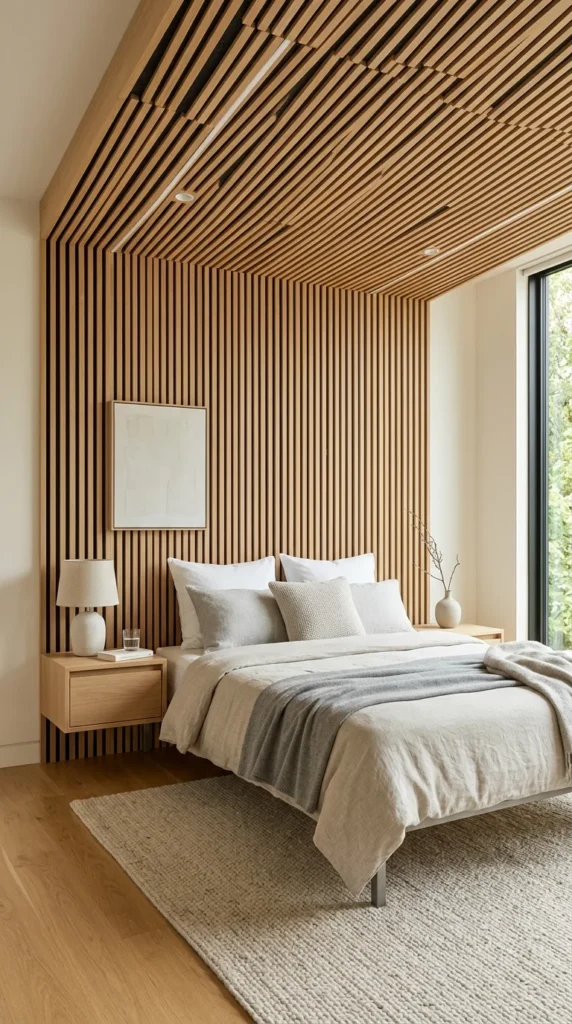
Linear wood slats are the darling of modern architectural design. This style consists of thin strips of wood installed with narrow gaps between them, creating a rhythmic, textured surface. It is a favorite for those who want to achieve a “Scandi-chic” or Japanese-inspired minimalist look.
Beyond its aesthetic appeal, a slatted ceiling is incredibly functional. The gaps between the slats allow for superior acoustic treatment, making this an ideal choice for open-concept living areas where echoes can be a problem. When paired with hidden black acoustic felt, the wood appears to float, adding a three-dimensional quality to the ceiling that is both subtle and striking.
4. Wood Tray
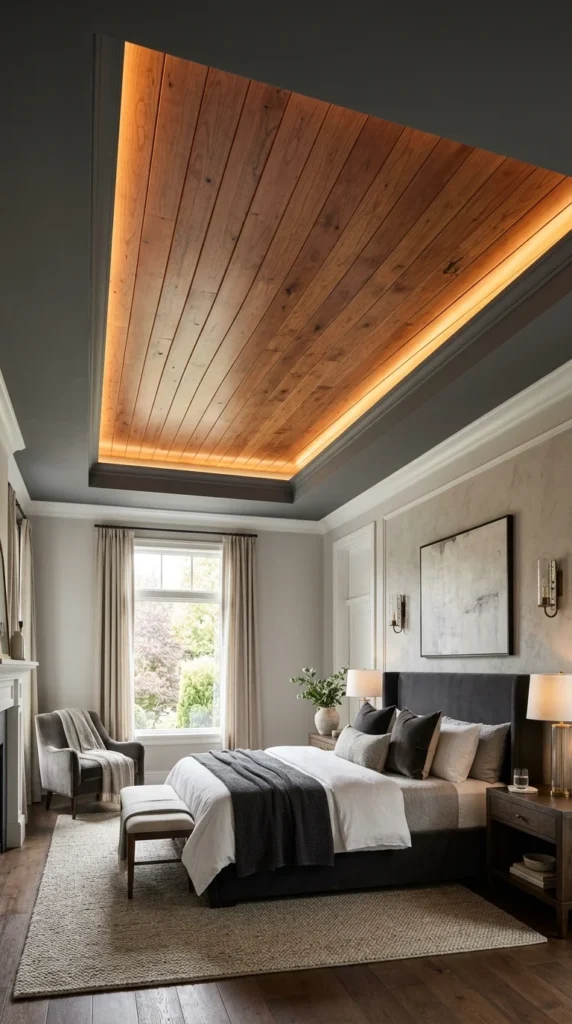
A tray ceiling—also known as a recessed ceiling—is a popular way to add architectural interest to standard-height rooms. By lining the inner “tray” with wood, you create a focal point that draws the eye and adds a layer of sophistication.
This design works particularly well in bedrooms and dining rooms. The wood inlay acts as a frame for the center of the room, often highlighting a statement light fixture. Using a wood species that matches your furniture or flooring creates a cohesive, “wrapped” feeling that makes a large room feel more intimate and expensive.
5. Tongue & Groove
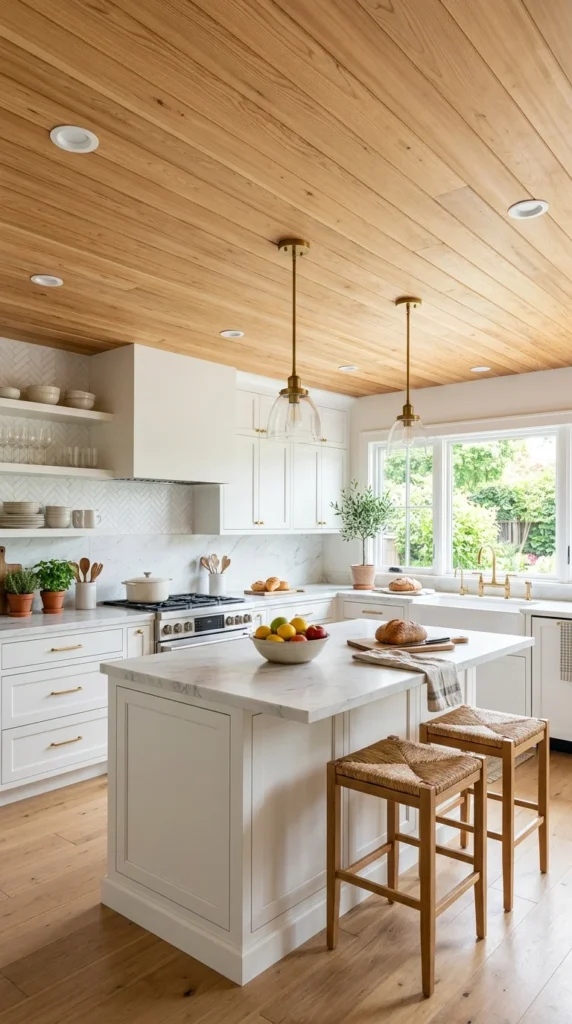
Tongue and groove (T&G) is a classic technique where each board has a protruding “tongue” that fits into a “groove” on the adjacent board. This creates a smooth, flat surface with very tight seams, offering a clean and finished appearance that is less aggressive than exposed beams but more textured than drywall.
For a coastal or “Hamptons” luxury vibe, T&G ceilings are often painted in a soft white or light grey. However, to lean into the warmth, keeping the wood in its natural state—perhaps a light white oak or a rich cedar—allows the subtle variations in the wood to provide the primary decoration for the room. It’s a timeless choice that never goes out of style.
6. Barrel Vault
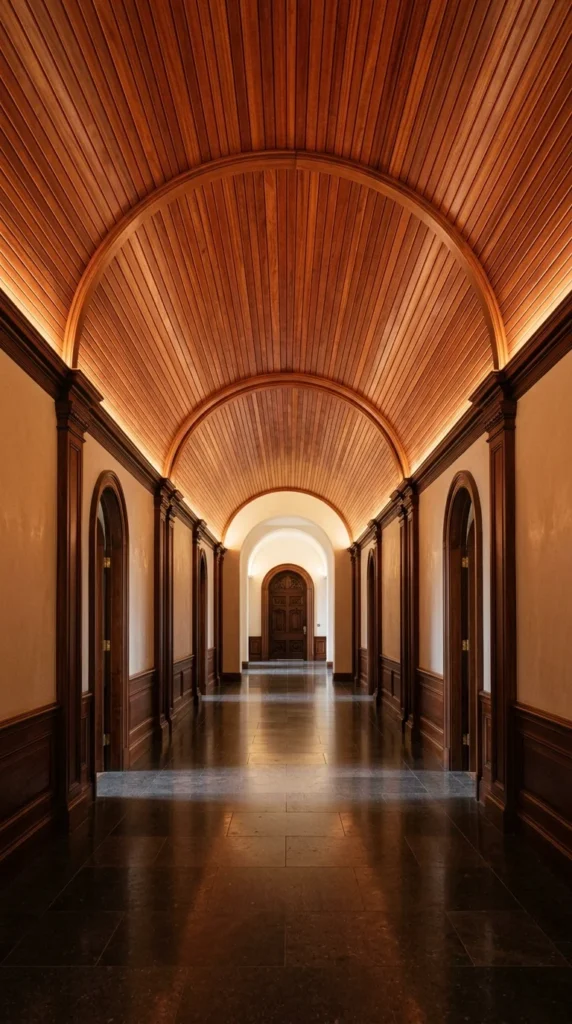
If you want to make a dramatic architectural statement, the wooden barrel vault is the way to do it. This design features a continuous arch that resembles the inside of a barrel. Because wood is naturally rigid, creating these curves requires exceptional craftsmanship, often using thin veneers or bent-wood techniques.
Barrel vaults are most effective in transitional spaces like hallways, entryways, or wine cellars. The curve of the wood softens the hard angles of a room, creating a sense of movement and flow. When executed in a dark, polished wood, it evokes the feeling of a vintage luxury rail car or a high-end yacht.
7. Herringbone Wood
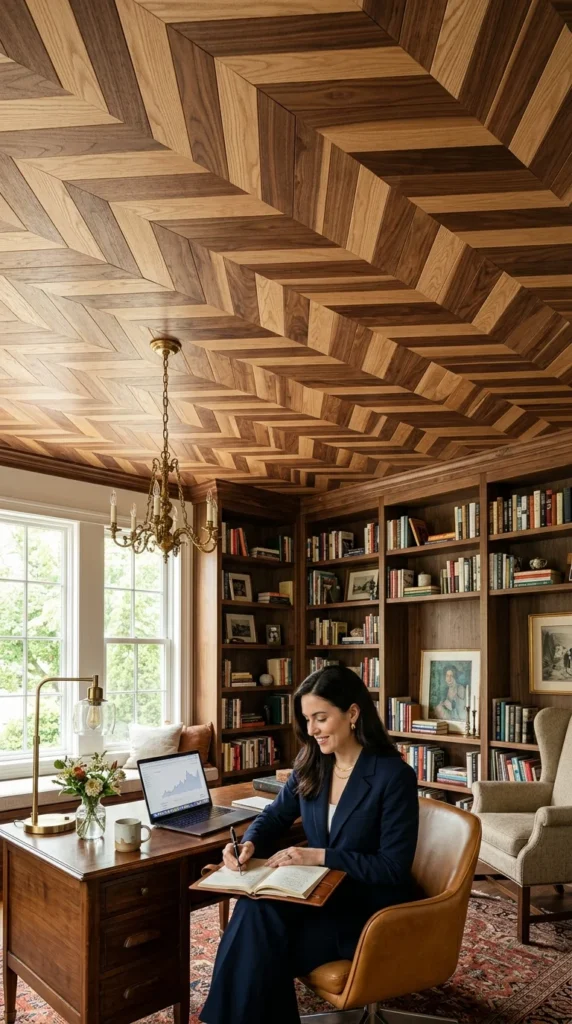
Why should floors have all the fun? The herringbone pattern—a classic V-shaped weave—is increasingly making its way to the ceiling. This design is for the homeowner who views their house as a piece of art. It requires precision installation, but the result is a stunning, tapestry-like effect overhead.
Using contrasting wood tones can highlight the pattern, while using a single species creates a more subtle, tactile texture. This design works exceptionally well in smaller rooms where the detail can be appreciated up close, or as a “zone” marker in a large open-plan space, such as directly above a dining table.
8. Live Edge
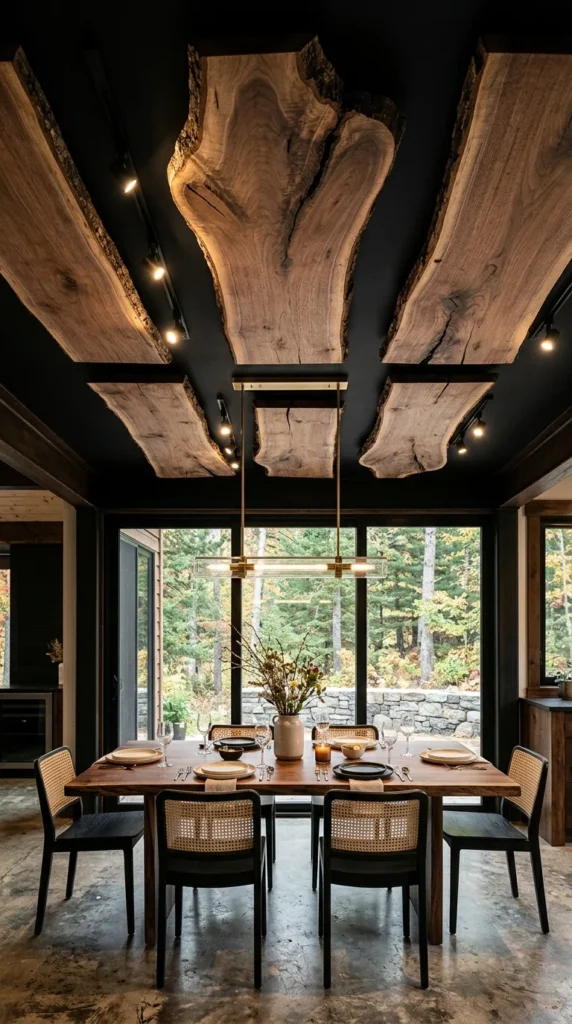
For a design that leans into the “Biophilic” trend—bringing nature indoors—live-edge wooden ceilings are unmatched. This involves using slabs of wood where the natural, irregular edge of the tree is preserved. Instead of straight lines and perfect 90-degree angles, you get the raw, flowing silhouette of the forest.
Because live-edge slabs are heavy and visually dominant, they are often used as “floating” features rather than covering the entire ceiling. Mounting a single, massive live-edge slab above a kitchen island or a boardroom table creates a conversation piece that feels both primal and incredibly high-end.
9. Floating Clouds
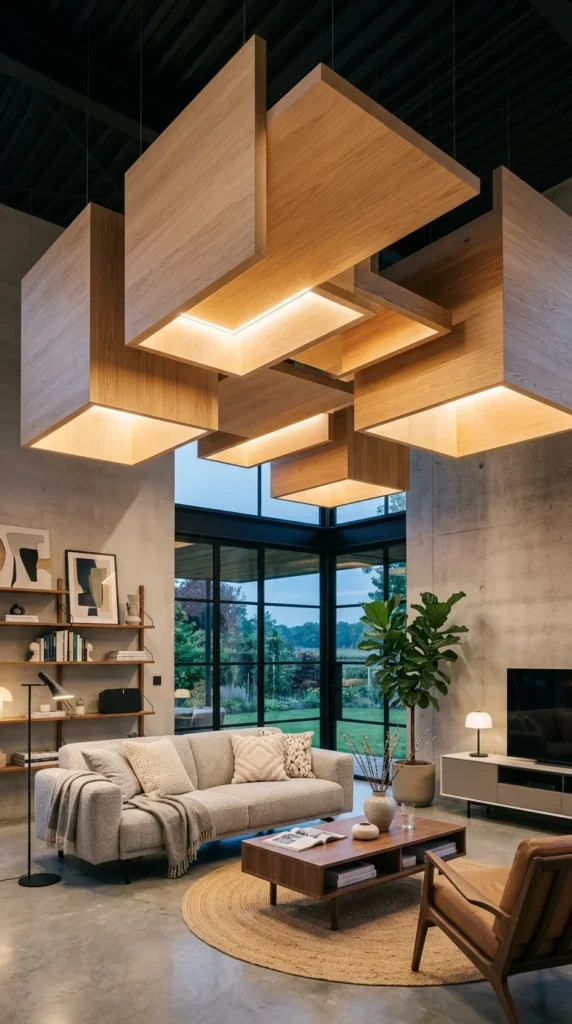
Floating clouds are a staple of contemporary luxury design. These are essentially suspended wooden panels that do not touch the walls. By leaving a gap around the perimeter and installing “halo” lighting (LED strips) behind the panel, the wood appears to be hovering in mid-air.
This design is perfect for multi-functional rooms. You can use the floating clouds to define different areas—one over the seating area and one over the dining area—without the need for walls. It also provides a clever way to hide HVAC vents, speakers, and lighting fixtures, keeping the overall aesthetic clean and uncluttered.
Final Thoughts on Wooden Ceilings
Incorporating wood into your ceiling design is an investment in the long-term character of your home. It provides a tactile warmth that balances modern materials like glass, steel, and stone. Whether you choose the structured elegance of a coffered design or the airy modernity of floating clouds, a wooden ceiling ensures that your home doesn’t just look luxurious—it feels like a warm, inviting sanctuary.