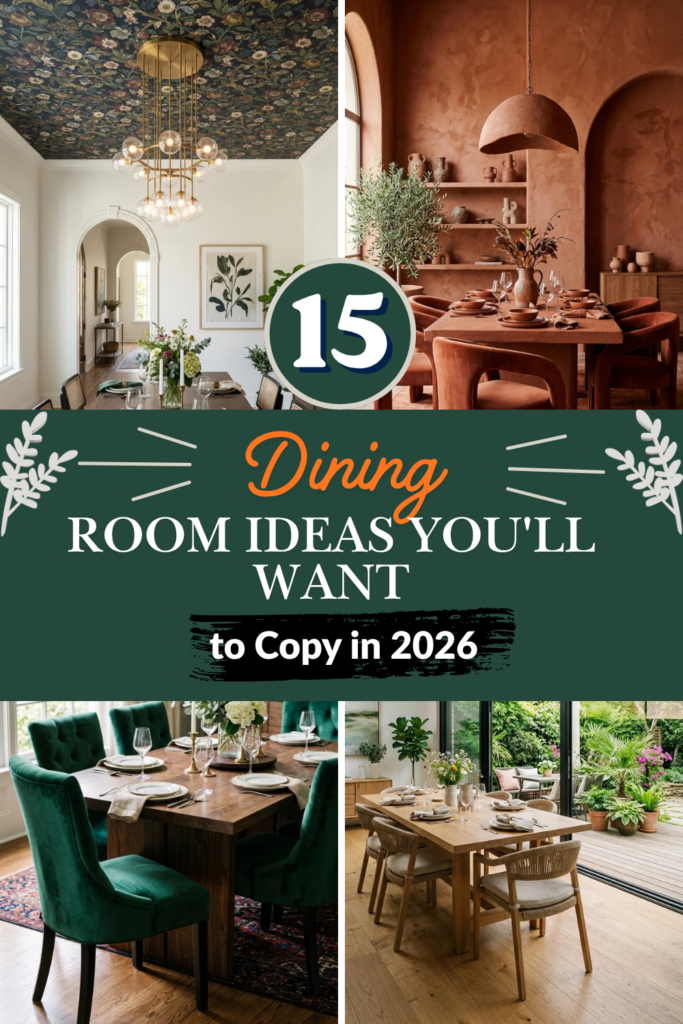

The dining room has undergone a massive transformation over the last decade. Once a stiff, formal area reserved for holidays, it has evolved into a multi-functional sanctuary where technology, comfort, and high design intersect. As we look toward 2026, the trends are leaning heavily into “sensory luxury”—spaces that don’t just look beautiful but feel grounded, organic, and deeply personal.
In 2026, we are moving away from the cold minimalism of the past and embracing “Warm Futurism.” This means integrating smart technology discreetly while layering textures like cork, velvet, and raw stone. Whether you are hosting a digital-nomad brunch or a high-concept dinner party, these 15 ideas will define the next era of interior excellence.
1. Biophilic Walls
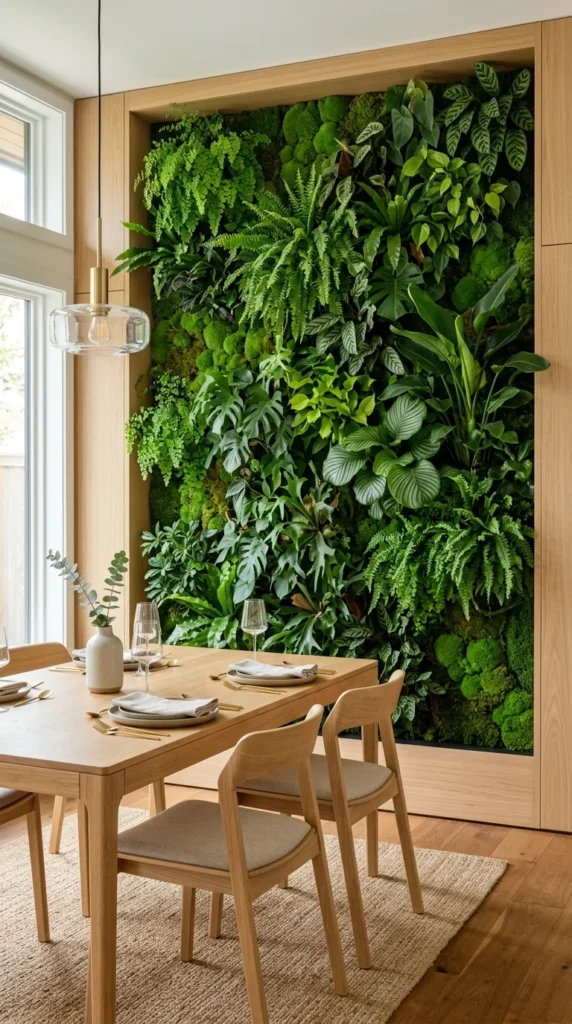
Biophilic design continues to dominate, but in 2026, it moves beyond the occasional potted plant. Entire “living walls” are becoming a staple in dining spaces. These installations act as natural air purifiers and acoustic buffers, creating a serene, forest-like atmosphere for meals. The key to making this work in 2026 is the integration of automated irrigation systems hidden behind the cabinetry, ensuring your greenery stays vibrant with zero effort.
2. Curved Silhouettes
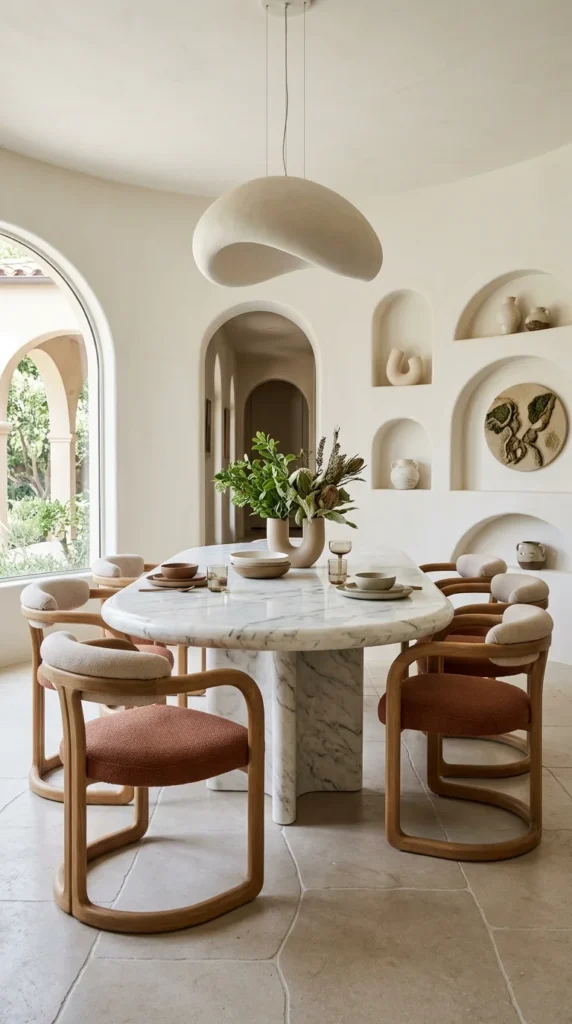
Sharp edges are out. The 2026 aesthetic is defined by softness and flow. Curved dining tables—whether oval, kidney-shaped, or circular—encourage better conversation and a sense of inclusivity. This trend extends to the furniture around the table, with “hug-style” chairs that wrap around the sitter. These organic shapes break the rigidity of traditional rectangular rooms, making the space feel more inviting and less formal.
3. Sculptural Lighting
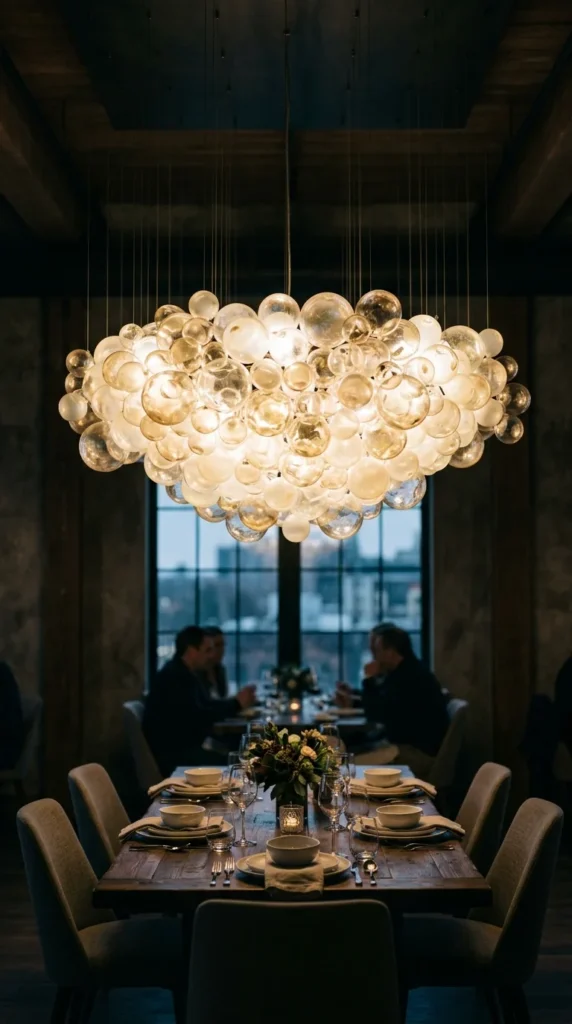
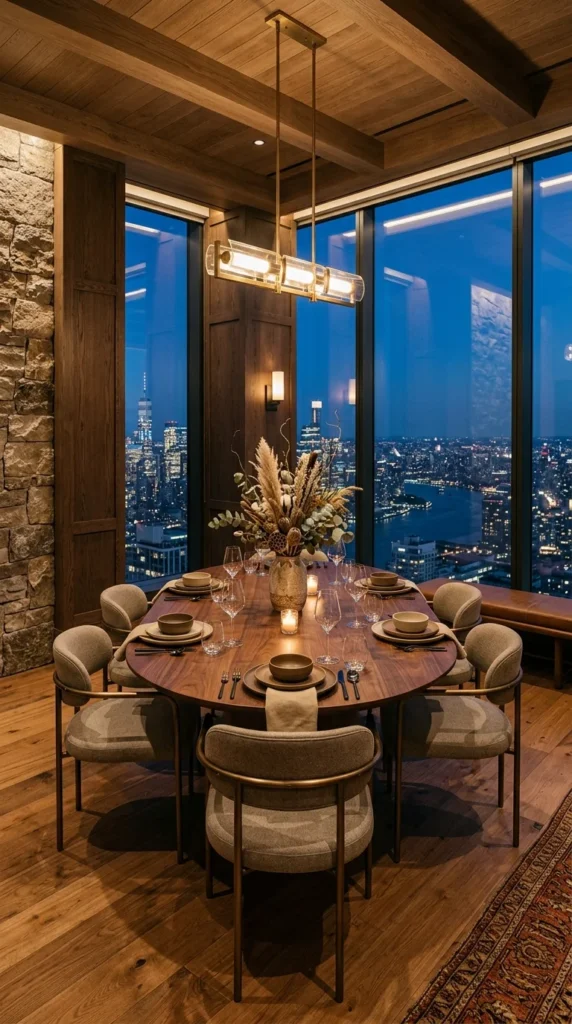
In 2026, the dining room light fixture is no longer just a utility; it is the primary piece of art. We are seeing a shift toward massive, sculptural pendants that serve as a focal point. Think hand-blown glass, 3D-printed organic shapes, and kinetic installations that subtly change position. The “smart” element allows the color temperature to shift automatically from a bright, focused “work mode” during the day to a warm, candle-lit “amber glow” for evening entertaining.
4. Earthy Monochromes
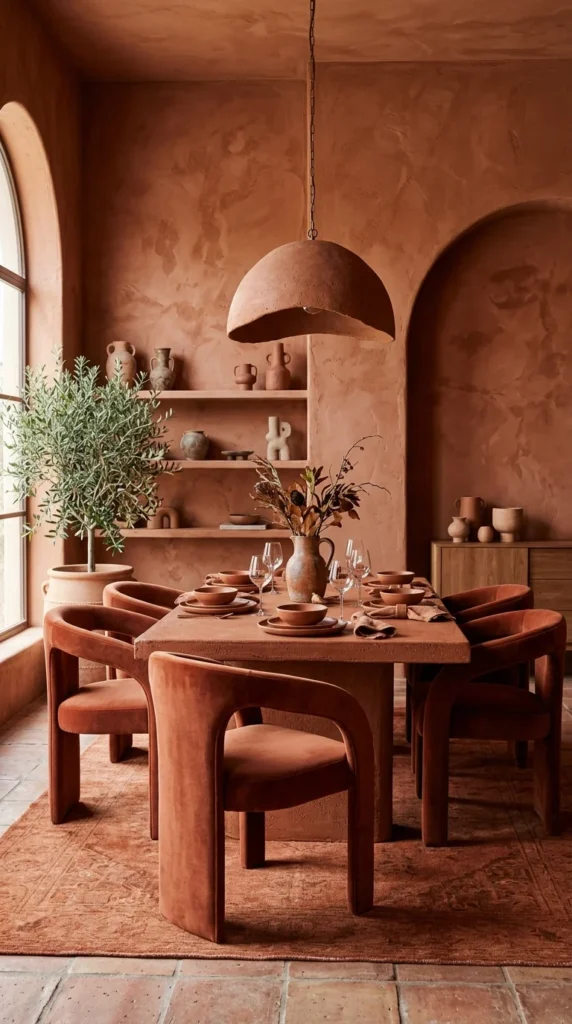
The “all-white” kitchen and dining room are officially relics of the past. 2026 is the year of the Earthy Monochrome. This involves picking a single, nature-inspired hue—like terracotta, sage green, or deep ochre—and using it across various textures. By mixing matte-painted walls with velvet upholstery and stone surfaces in the same color family, you create a sophisticated, “enveloped” feeling that is both cozy and avant-garde.
5. Sustainable Cork
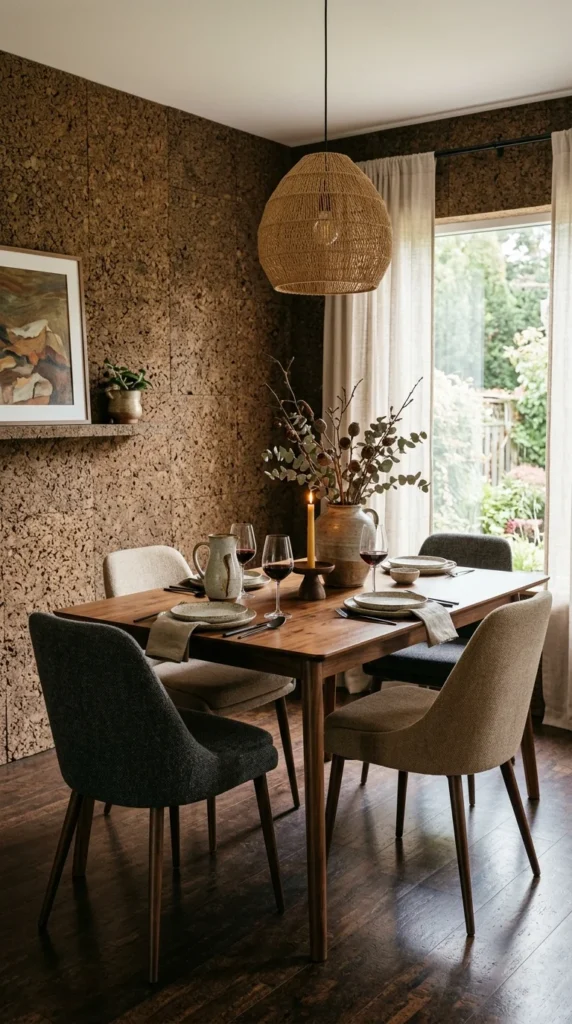
Sustainability is no longer an afterthought; it is the blueprint. Cork is making a massive comeback in 2026 as a premium material for dining room walls and flooring. Not only is it renewable and carbon-positive, but it also provides incredible sound insulation—perfect for intimate dinner conversations. Modern cork finishes come in various patterns, from marble-mimicking swirls to brutalist geometric blocks.
6. Smart Tables
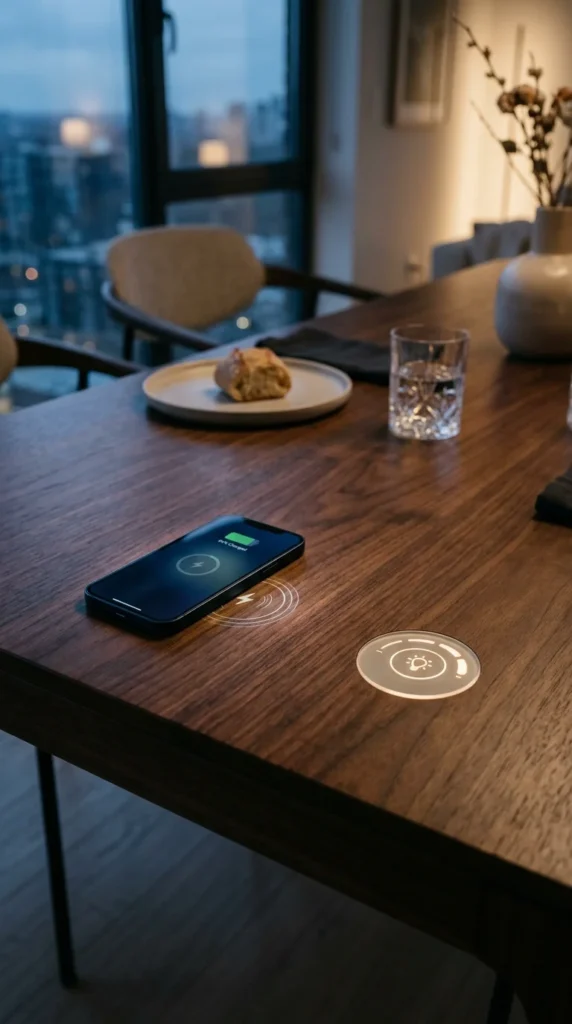
The 2026 dining table is a feat of engineering. “Invisible tech” is the goal here. Imagine a solid oak or marble table with integrated induction heating zones to keep your serving platters warm, or built-in wireless charging stations hidden beneath the veneer. These tables allow the dining room to function as a high-tech conference room by day and a clutter-free sanctuary by night.
7. Mixed Metals
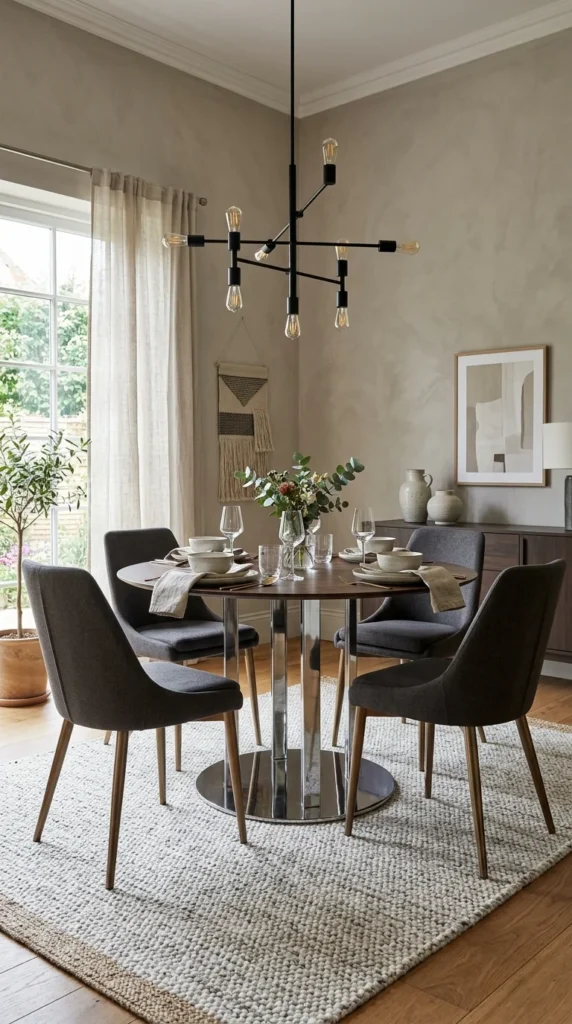
The old rule of “never mix your metals” has been completely discarded. In 2026, the most stylish rooms feature a curated mix of silver, gold, bronze, and blackened steel. The trick is to ensure each metal has a different texture—match a high-shine chrome with a brushed brass. This adds a layer of industrial sophistication and prevents the room from feeling like a “showroom set.”
8. Sunken Seating
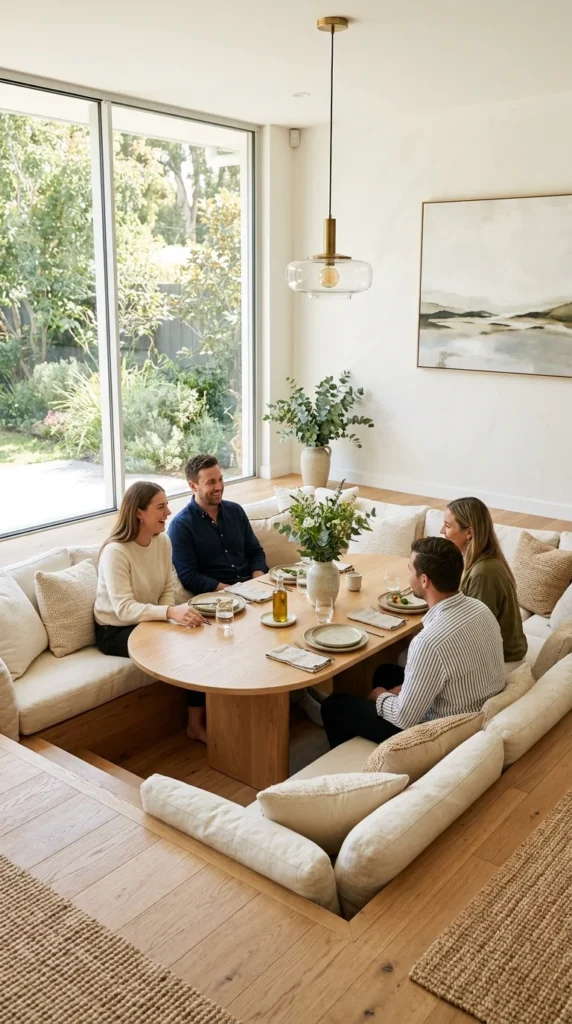
Borrowing from 1970s conversation pits, the 2026 dining room often features sunken architectural elements. By lowering the dining area, you create a distinct “zone” within an open-concept home. This architectural choice makes the dining experience feel more grounded and intimate, physically separating the act of eating and connecting from the rest of the household’s hustle and bustle.
9. Velvet Accents
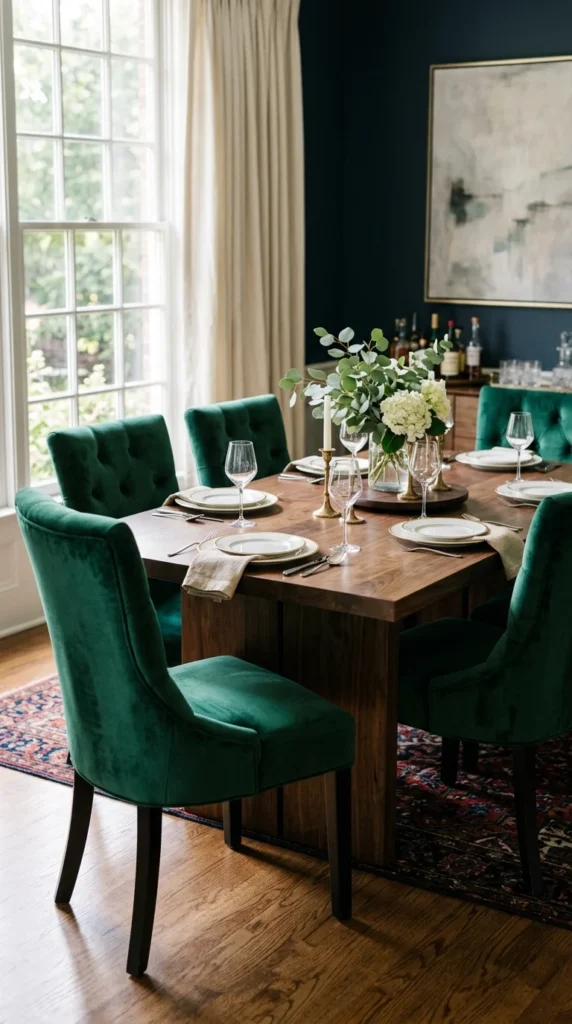
Velvet remains the king of textiles for 2026, but with a twist. New-age performance velvets are now spill-proof and eco-friendly, made from recycled ocean plastics. In 2026, we are seeing velvet used in bold, jewel-toned accents. It provides a necessary tactile contrast to the hard surfaces of dining tables and stone floors, adding a layer of “quiet luxury” to the room.
10. Glass Partitions
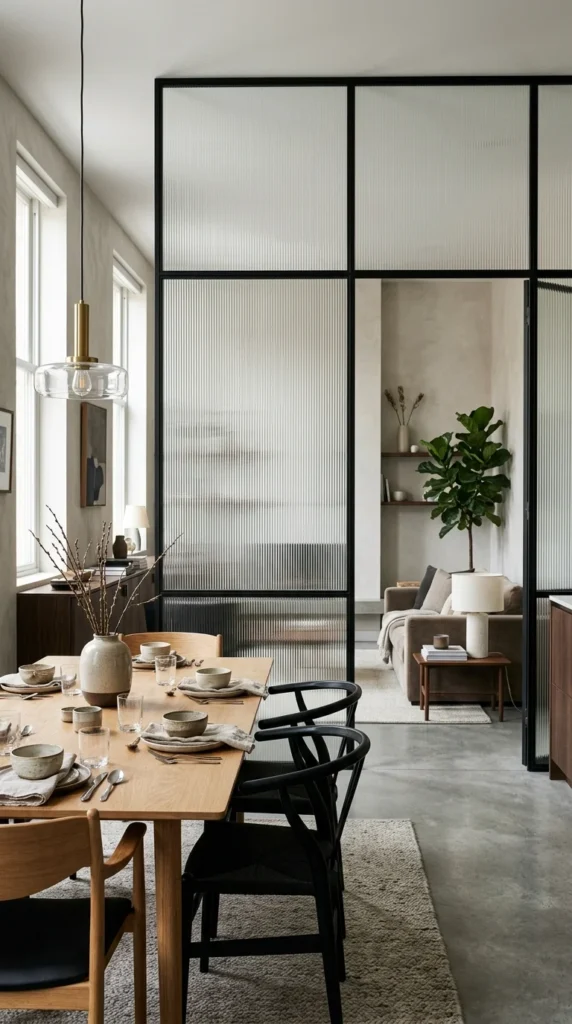
As open-concept living begins to fade in favor of “broken-plan” layouts, glass partitions have become the go-to solution. Fluted, frosted, or “smart” glass (which turns opaque at the flip of a switch) allows the dining room to feel spacious while maintaining privacy. This is particularly useful for those who want to hide the kitchen mess while hosting guests.
11. Statement Ceilings
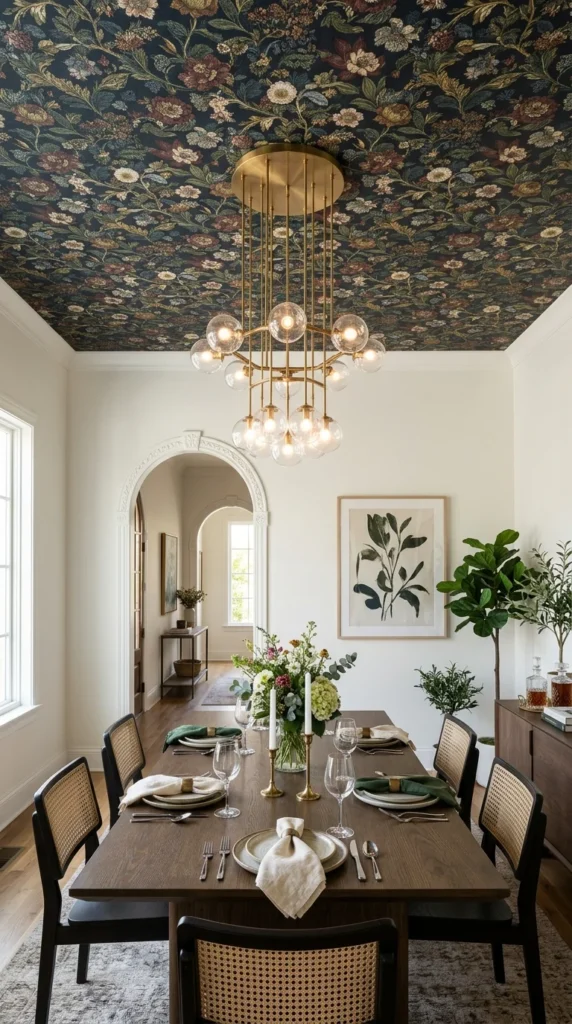
In 2026, designers are looking up. The “fifth wall” is the new frontier for dining room creativity. Whether it’s a bold coat of high-gloss lacquer, intricate wood coffering, or even vibrant wallpaper, the statement ceiling draws the eye upward and adds a sense of grandeur. This technique is especially effective in smaller dining rooms, as it adds character without taking up any floor space.
12. Hidden Storage
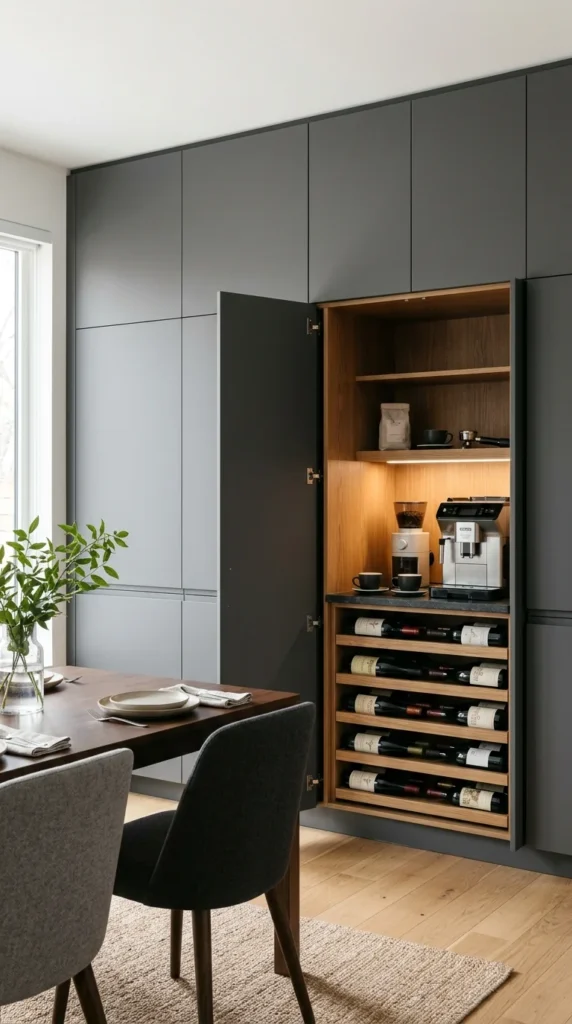
Clutter is the enemy of the 2026 aesthetic. Seamless, handle-less cabinetry that blends perfectly into the walls is a major trend. These “stealth kitchens” and hidden sideboards house everything from fine china to wine fridges and even small appliances. When closed, the room looks like a minimalist gallery; when open, it reveals a fully functional hosting hub.
13. Vintage Revival
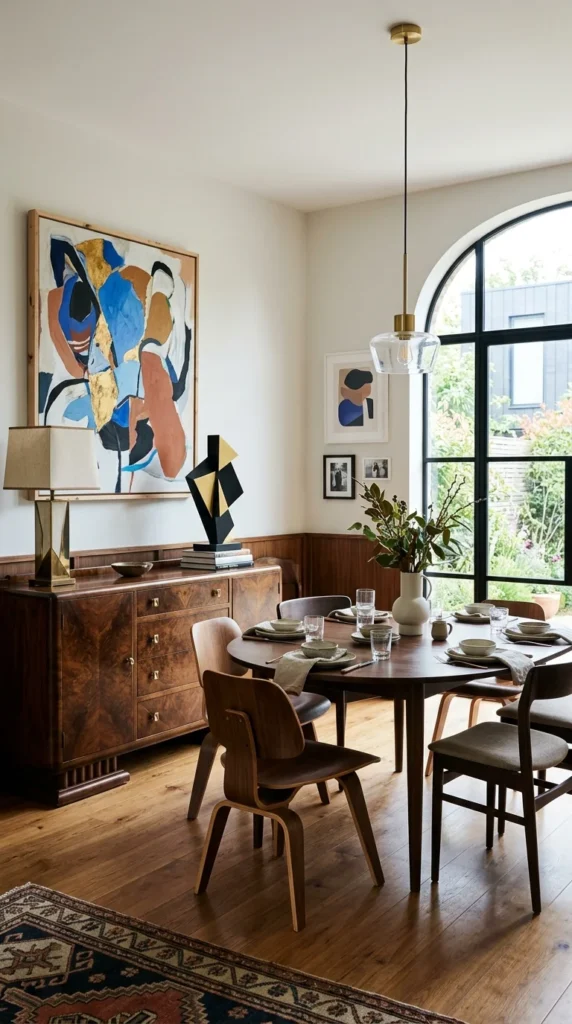
2026 is moving away from “fast furniture” and toward “legacy pieces.” The most stylish dining rooms will feature a mix of high-end contemporary furniture and authentic vintage finds. A 1960s Danish teak table paired with ultra-modern 3D-printed chairs creates a “time-traveler” aesthetic that feels curated and soulful rather than mass-produced.
14. Indoor-Outdoor Flow
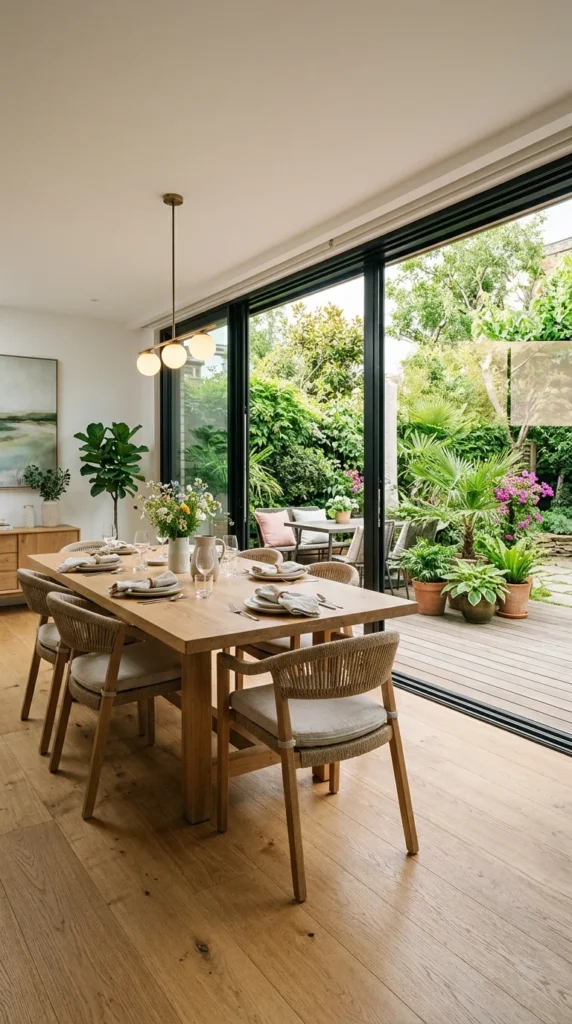
The boundary between the garden and the dining room is blurring. In 2026, we see a rise in “disappearing walls”—large-scale folding glass systems that turn the dining room into an outdoor pavilion. Using the same flooring material for both the interior and the exterior patio creates a visual illusion of a much larger, continuous space, perfect for summer entertaining.
15. Bold Carpeting
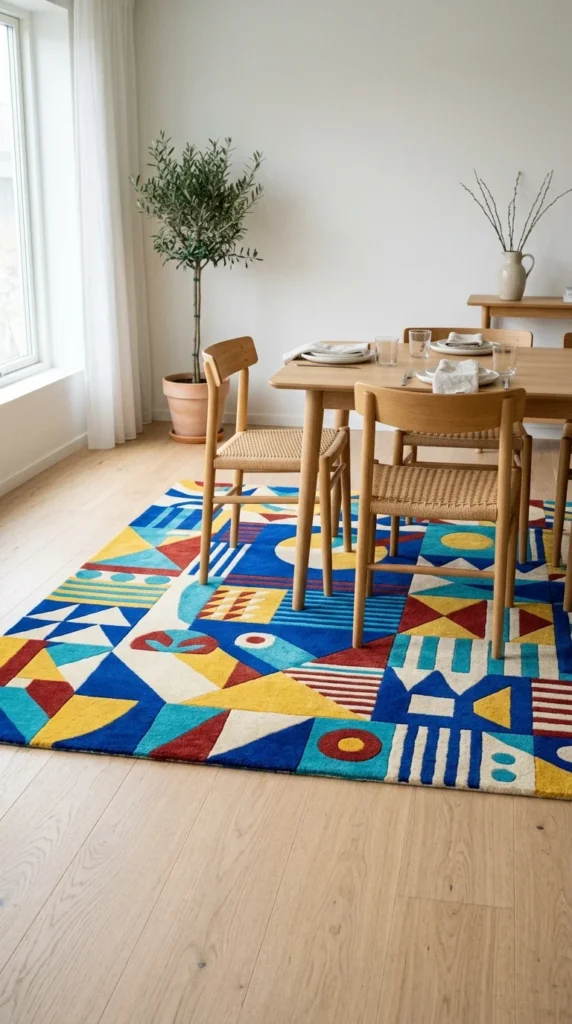
While hardwood and stone are classic, 2026 is seeing a return to bold, oversized area rugs in the dining room. These aren’t your grandmother’s Orientals; they are high-traffic, low-pile rugs with abstract, maximalist patterns. A bold rug acts as an anchor for the dining set, defining the space and adding a much-needed layer of warmth and acoustic dampening to modern homes.