
Creating a dining room that exudes luxury isn’t just about the price tag on the furniture; it’s about the intentionality of the design. A truly “expensive” looking room relies on balance, texture, and a few high-impact focal points that draw the eye. Whether you are working with a palatial floor plan or a cozy urban nook, modern design principles allow you to elevate your dining experience to a five-star level.
From the play of light on metallic surfaces to the grounding presence of natural stone, achieving a high-end aesthetic is an art form. Here are 12 modern dining room ideas that will make your home look and feel incredibly expensive.
1. Monochromatic Palettes
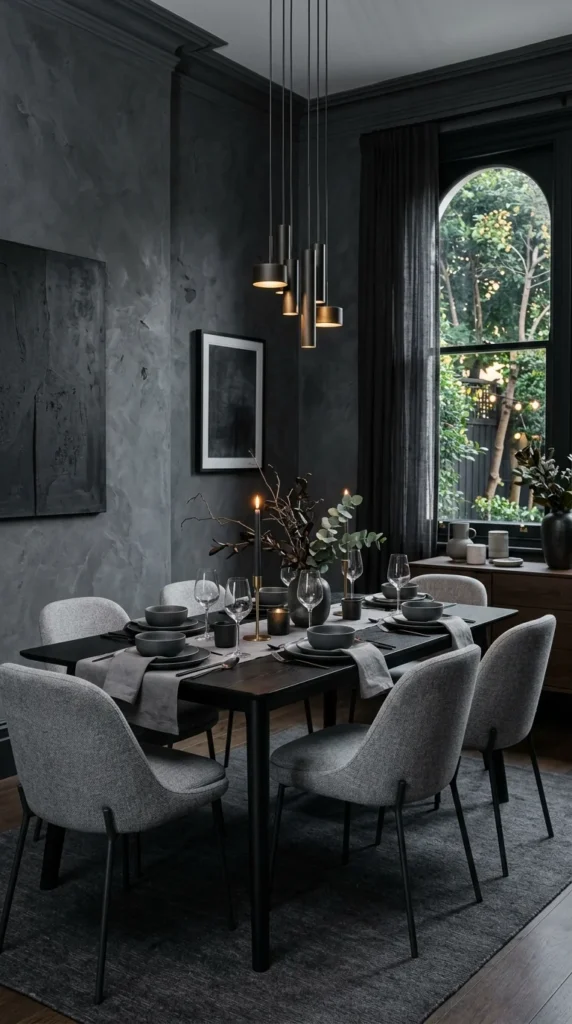
One of the easiest ways to signal “luxury” is through a strictly curated color palette. Monochromatic rooms—those utilizing various shades, tints, and tones of a single color—feel cohesive, intentional, and high-fashion. When you remove the distraction of clashing colors, the eye focuses on the quality of the materials and the silhouettes of the furniture.
To pull this off without the room feeling flat, layer different textures. Pair a matte black table with glossy black ceramics and a plush charcoal rug. The subtle shift in how light hits these different surfaces creates a depth that feels curated by a professional designer.
2. Statement Lighting
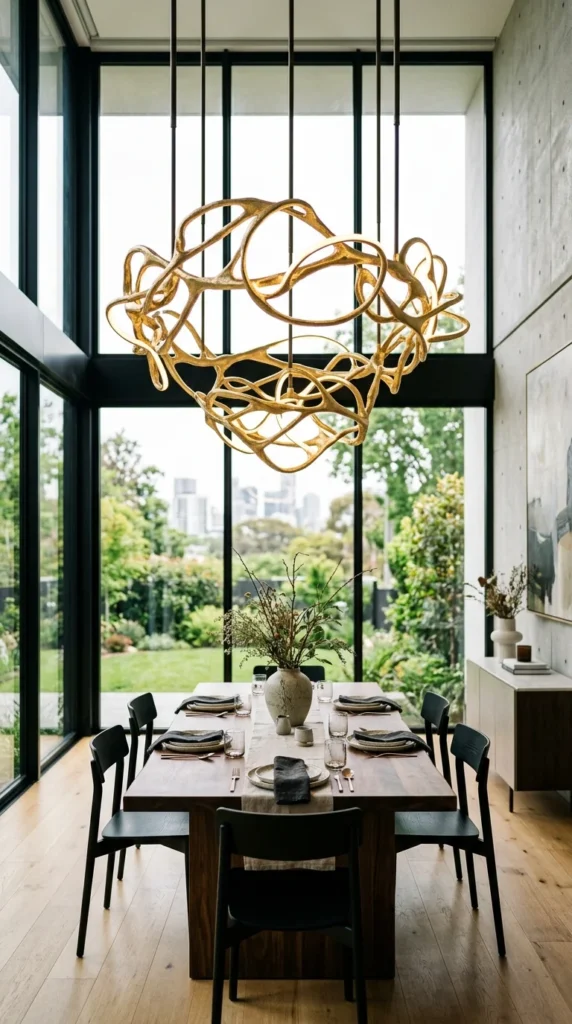
In the world of interior design, lighting is often referred to as the “jewelry” of the room. A standard, builder-grade light fixture is a tell-tale sign of a budget space. To instantly upgrade your dining room, invest in an oversized, sculptural statement piece.
Whether it’s a tiered Sputnik chandelier, a series of hand-blown glass pendants, or a massive geometric LED ring, the light fixture should be the anchor of the room. High-end spaces often play with scale, so don’t be afraid to go slightly larger than you think you need. A light that hangs low over the table creates an intimate, upscale atmosphere perfect for late-night dinner parties.
3. Marble Surfaces
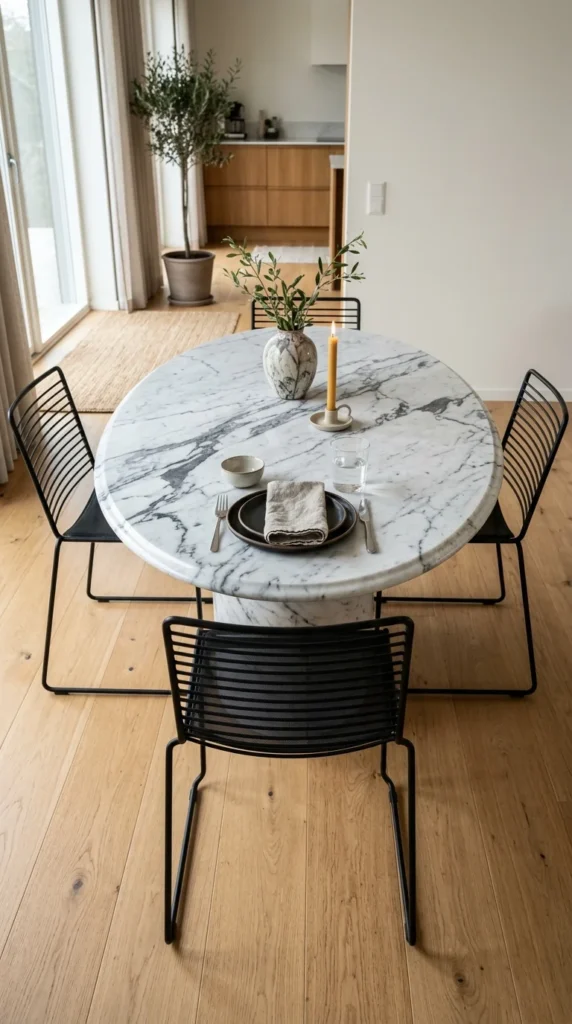
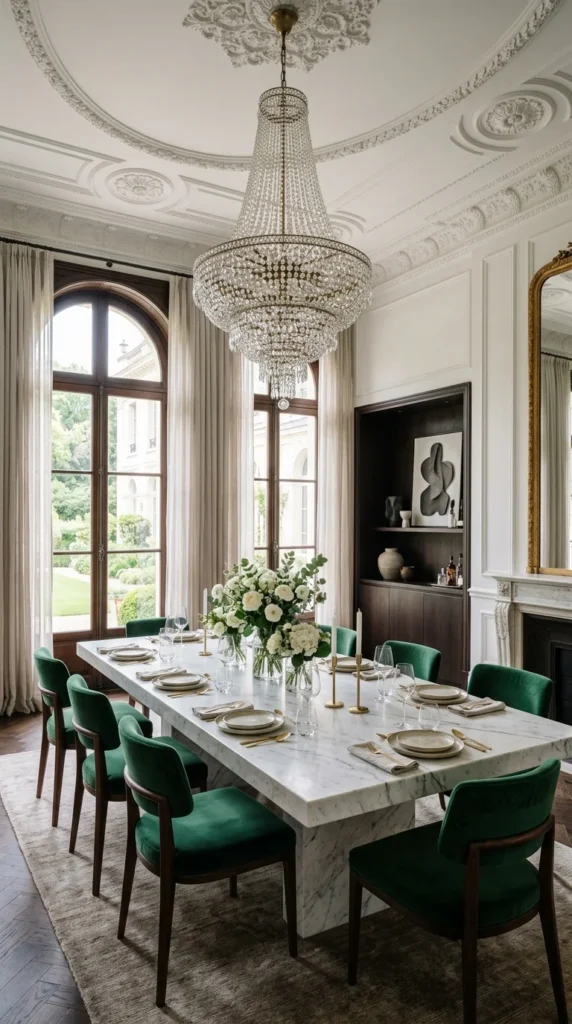
Nothing says “expensive” quite like natural stone. Marble has been the hallmark of luxury for centuries, and in a modern dining room, it provides a cool, polished elegance that is hard to replicate with other materials. A solid marble dining table serves as a functional piece of art, offering unique veining patterns that ensure no two pieces are exactly alike.
If a full marble table isn’t in the cards, consider a marble-topped sideboard or even large-scale marble floor tiles. The weight and cold-to-the-touch feel of the stone add a sensory layer of luxury that guests will immediately notice.
4. Velvet Seating
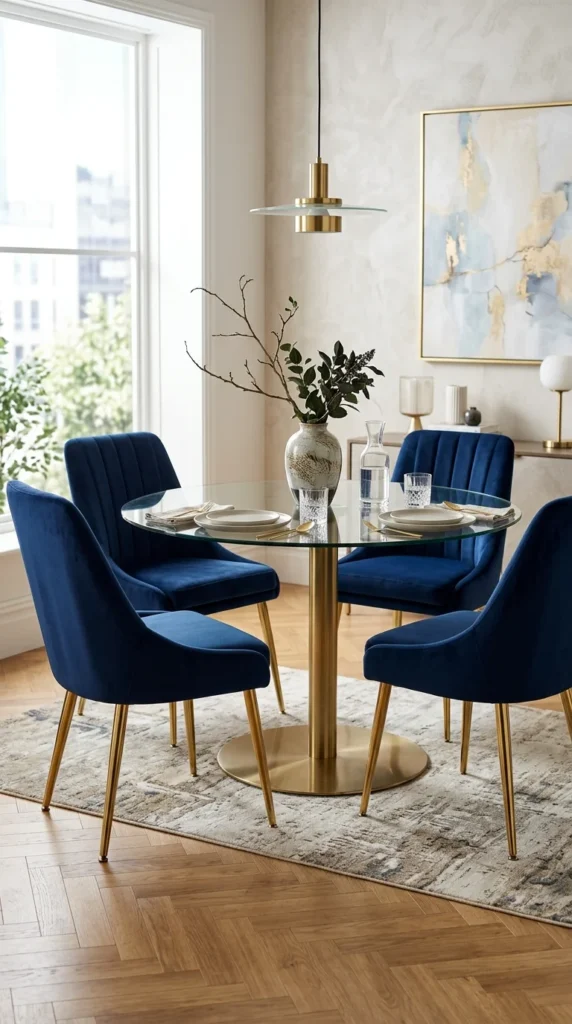
Texture is a secret weapon in high-end design. Velvet, with its soft sheen and deep color saturation, adds a layer of opulence to any dining room. Modern velvet chairs often come in sleek, mid-century or contemporary shapes that prevent the material from looking too traditional or “stuffy.”
Choose jewel tones like emerald, sapphire, or amethyst to create a dramatic pop against a neutral room, or stick to champagne and dove grey for a more “quiet luxury” vibe. Beyond the aesthetics, velvet chairs are incredibly comfortable, encouraging guests to linger over their meals—a hallmark of the luxury lifestyle.
5. Curved Silhouettes
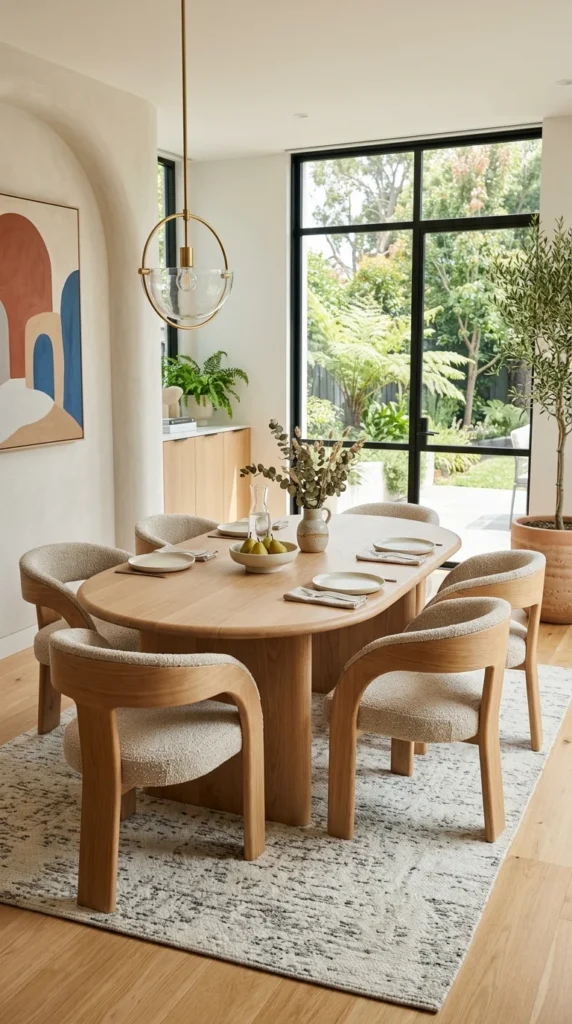
The “New Modern” movement has moved away from the sharp, clinical lines of the early 2000s and toward softer, organic shapes. Curved furniture feels more bespoke and expensive because it often requires more intricate craftsmanship than standard rectangular pieces.
An oval or round dining table facilitates better conversation and creates a flow in the room that feels effortless. Pair a curved table with barrel-back chairs or a crescent-shaped banquette to lean into this high-design trend. The lack of sharp corners makes the space feel more inviting and expertly styled.
6. Oversized Art
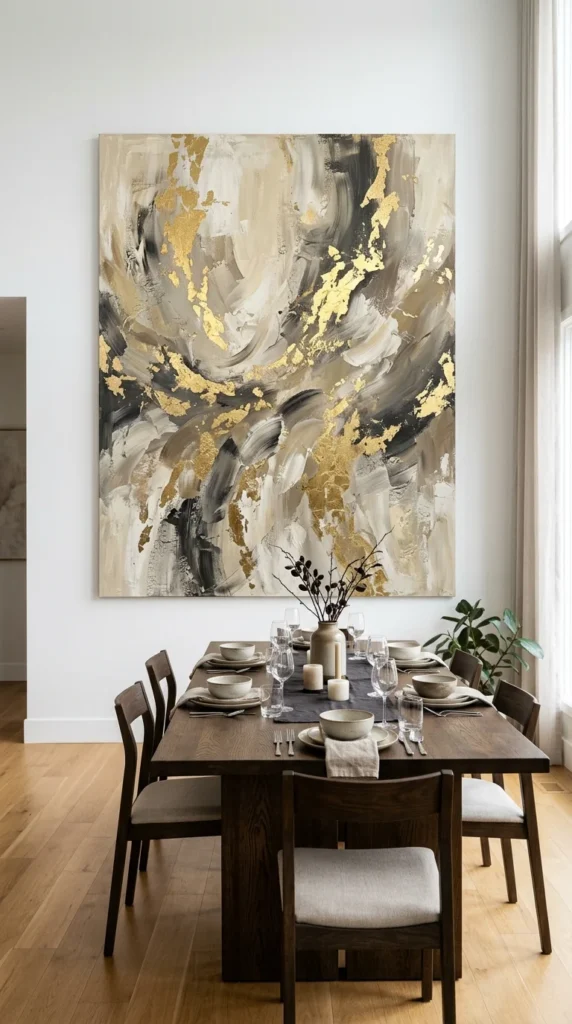
Small, cluttered gallery walls can sometimes make a room feel busy rather than expensive. To achieve a gallery-like, high-end feel, go big. A single, massive piece of abstract art or a large-scale photograph can transform a dining room into a sophisticated sanctuary.
The key to making art look expensive is the framing and the placement. Ensure the piece is hung at eye level and has enough “breathing room” around it. The art doesn’t necessarily have to be pricey; even a DIY large-scale canvas can look like a million dollars if the scale is grand and the colors complement the room’s palette.
7. Metallic Accents
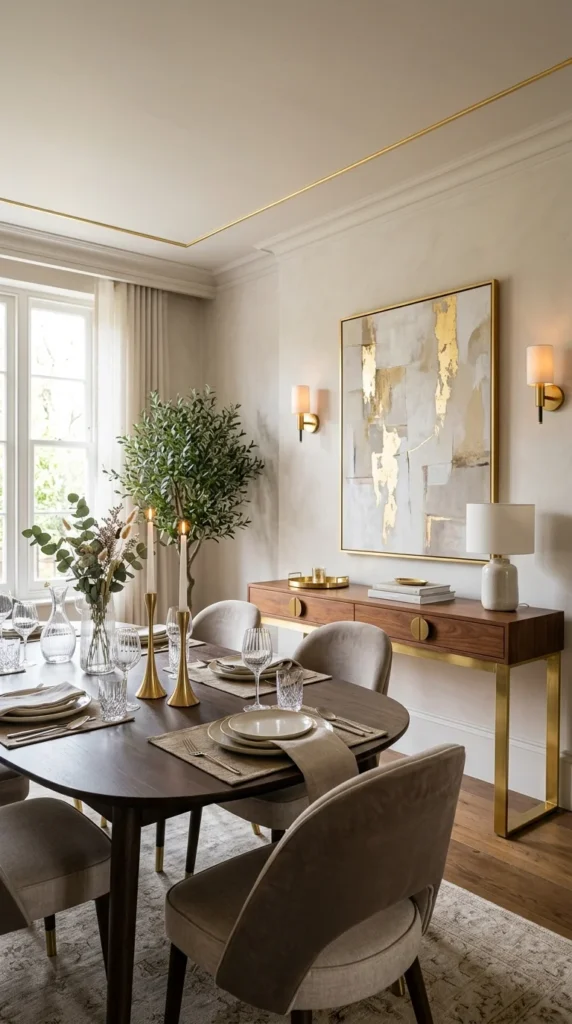
A touch of shine is essential for a glamorous, expensive look. However, the modern approach to metallics is subtle and refined. Move away from shiny, “yellow” golds and toward brushed brass, matte black steel, or polished nickel.
Incorporate these metals through chair legs, cabinet hardware, or even the inlay of the dining table itself. Mixing metals—such as pairing a brass chandelier with silver-toned flatware—can actually make a room look more expensive, as it suggests the space was curated over time rather than bought as a matching set from a showroom.
8. Dark Wood
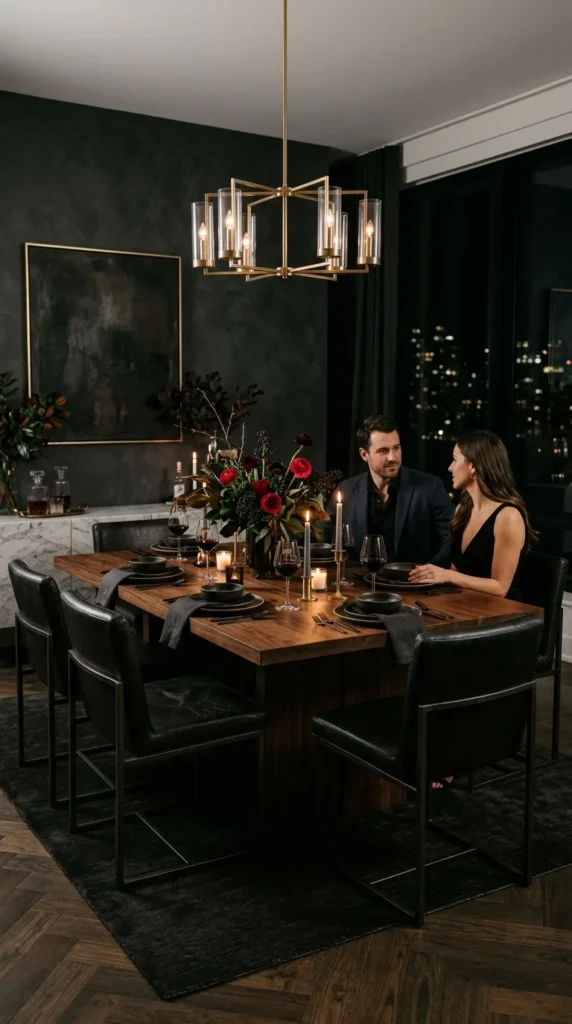
While light-colored woods like white oak have been popular for years, dark wood is making a major comeback in luxury interiors. Deep walnut, espresso, and ebony finishes bring a sense of gravity and “old world” sophistication to a modern space.
Dark wood looks particularly expensive when paired with high-contrast elements, like a white rug or light-colored walls. The richness of the grain in dark wood adds a natural warmth that feels grounded and permanent, giving the room a sense of history and prestige.
9. Minimalist Layout
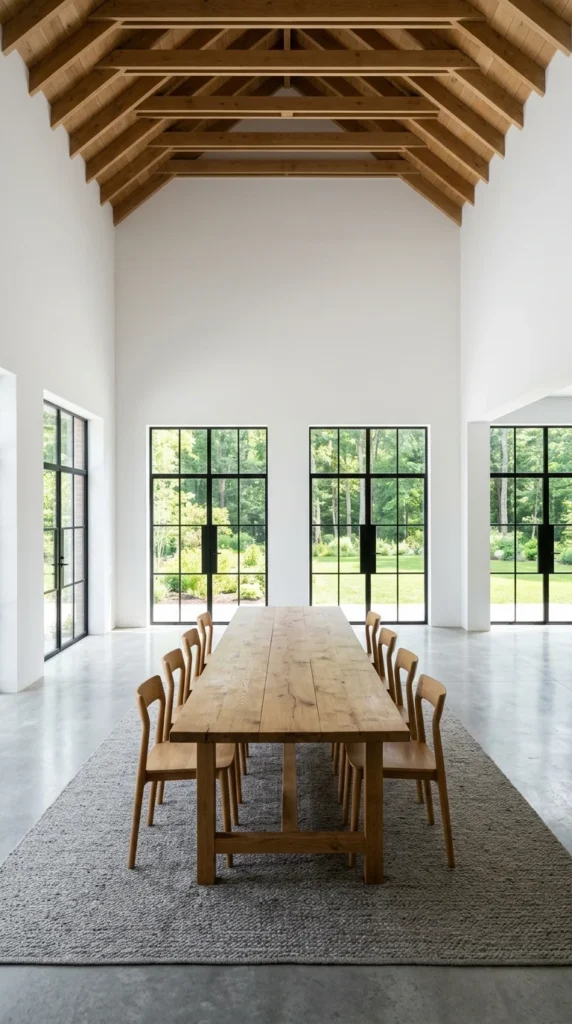
In luxury design, space itself is a commodity. An “expensive” room is never cluttered. A minimalist layout focuses on a few high-quality pieces and allows them room to shine. This doesn’t mean the room should be empty, but rather that every item should be chosen with purpose.
By leaving plenty of “negative space”—the empty areas around your furniture—you create a sense of calm and grandeur. Avoid the temptation to fill every corner with plants or side tables. A single, beautiful table in a large, airy room makes a much stronger statement than a room packed with expensive but crowded decor.
10. Indoor Greenery
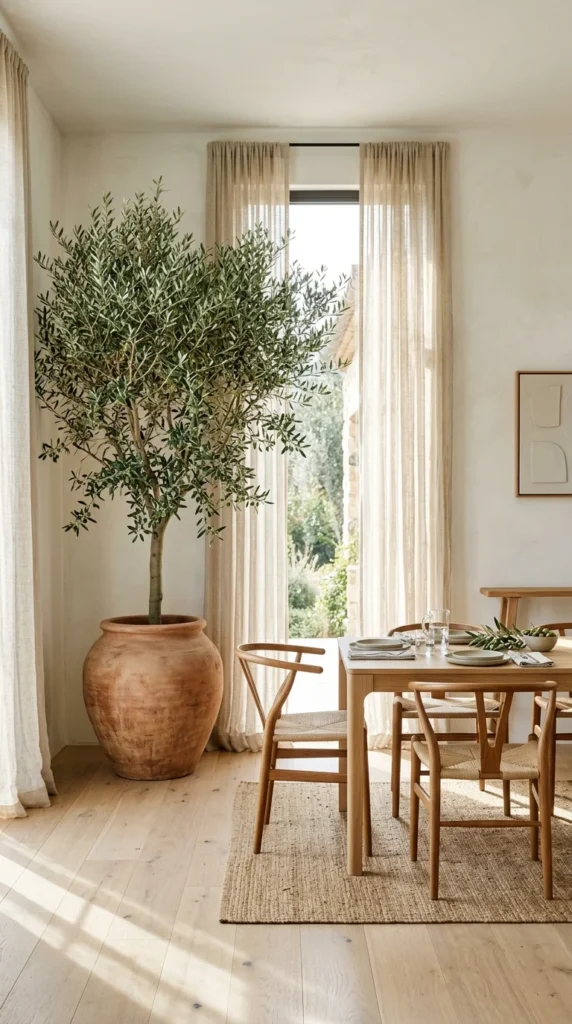
Biophilic design—the practice of bringing nature indoors—is a staple in high-end modern homes. However, skip the small plastic plants. To look expensive, you need large-scale, living greenery. A tall Fiddle Leaf Fig, a Mediterranean Olive Tree, or a lush Bird of Paradise can add height and a vibrant organic element to the room.
The container is just as important as the plant. Choose a large, high-quality ceramic or stone planter that matches the room’s aesthetic. Greenery softens the hard lines of modern furniture and makes the space feel lived-in and fresh.
11. Sculptural Furniture
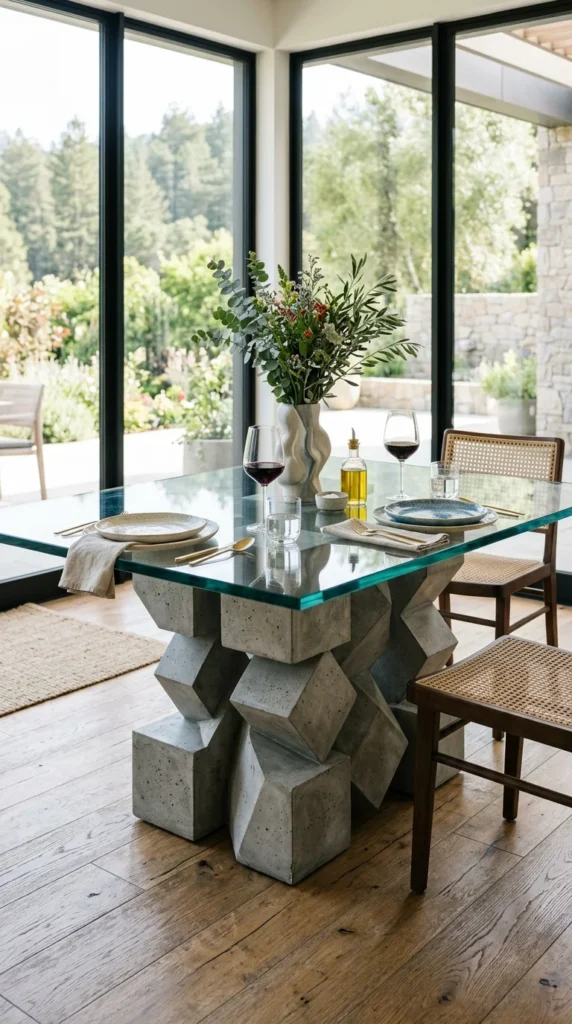
When your furniture looks like a sculpture, your dining room looks like a museum. Sculptural furniture prioritizes form and visual impact, often featuring unconventional legs or artistic pedestals. A table with a heavy, fluted base or chairs with unique architectural silhouettes will immediately elevate the room.
These pieces act as conversation starters. Because they aren’t standard designs, they give the impression of being custom-made or sourced from a high-end designer boutique. When using sculptural furniture, keep the rest of the decor simple to let the “art” speak for itself.
12. Textured Rugs
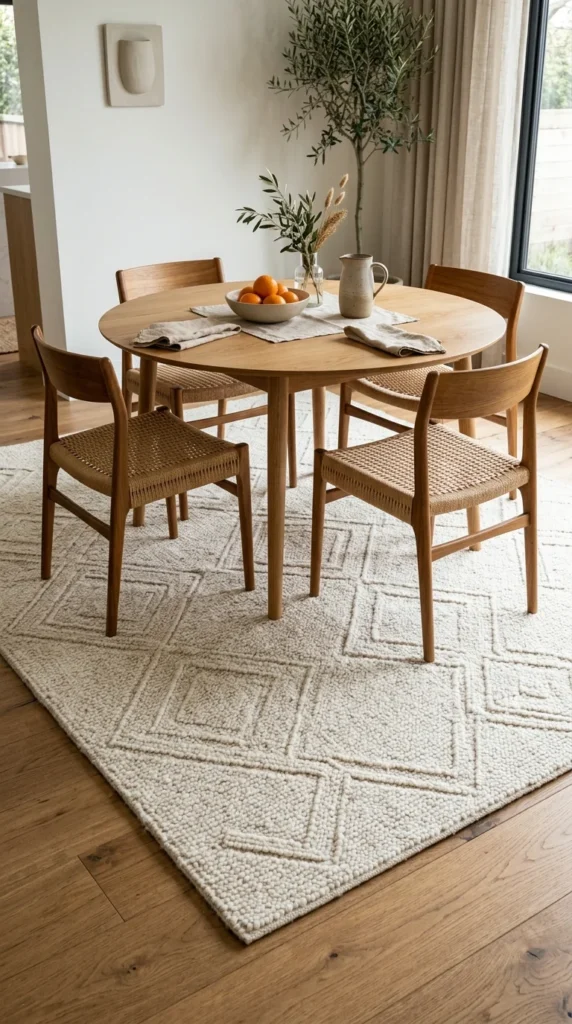
A rug is the foundation of the dining room. It defines the space and adds much-needed warmth and sound absorption. To achieve an expensive look, go for natural materials like wool, silk, or jute. A high-pile or intricately textured rug adds a tactile luxury that guests will feel as soon as they step into the room.
The most important rule for an expensive-looking rug is the size. Nothing kills the luxury vibe faster than a rug that is too small. Ensure the rug is large enough that all the chair legs remain on it even when they are pulled out from the table. This creates a “zone” of luxury that feels expansive and well-planned.