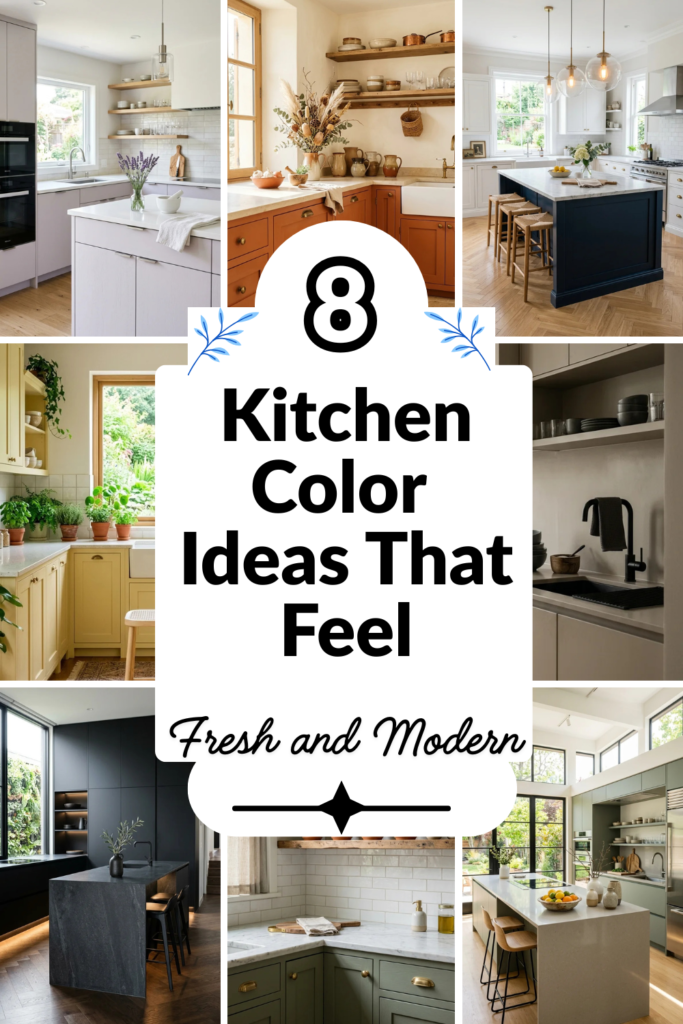

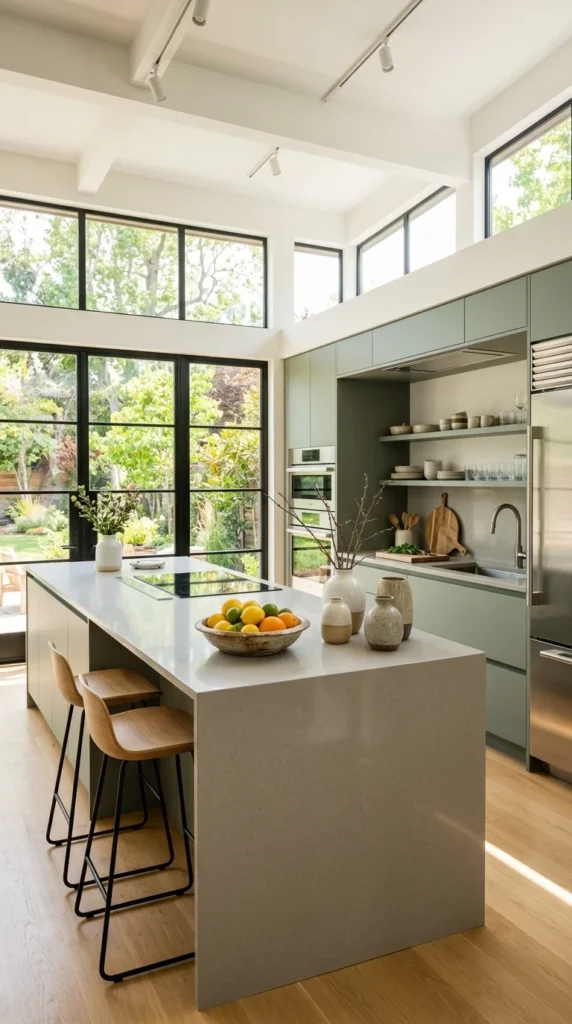
The kitchen is no longer just a place for meal preparation; it has evolved into the social epicenter of the modern home. As the boundaries between cooking, dining, and living spaces continue to blur, the choice of color has become the most powerful tool in a designer’s arsenal to define the mood and aesthetic of the entire house. Moving away from the clinical all-white kitchens of the past decade, today’s trends embrace personality, warmth, and a sophisticated play of light and shadow. Whether you are planning a full renovation or a simple weekend refresh, these eight kitchen color ideas will breathe new life into your home with a fresh, modern perspective.
1. Sage Green
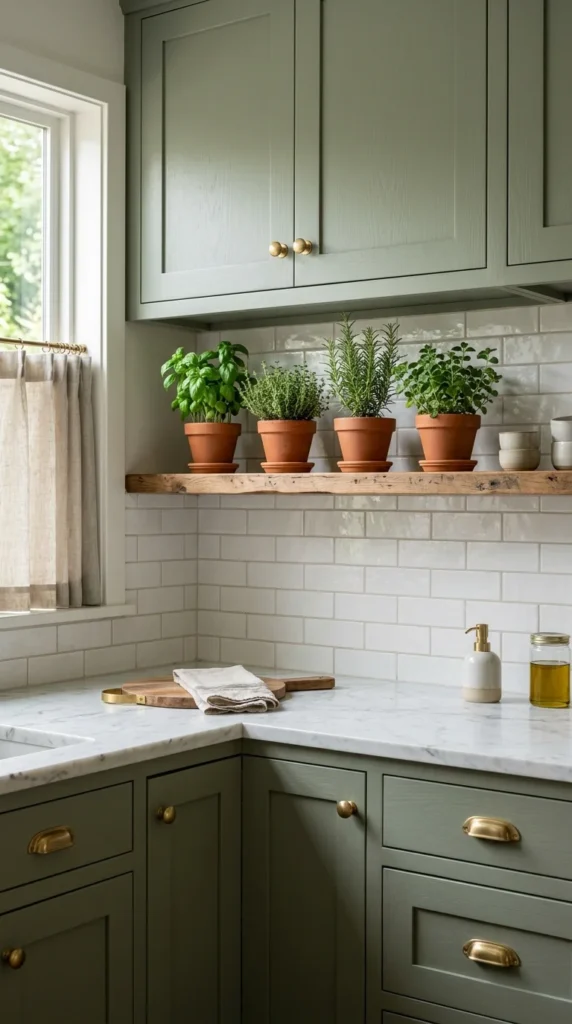
Sage green has emerged as the “new neutral” for those who want a hint of color without overwhelming the senses. This soft, herbaceous hue brings a sense of the outdoors inside, creating a calming atmosphere that feels both organic and high-end. Its success lies in its versatility; it pairs beautifully with natural wood tones, crisp whites, and metallic accents like brass or copper.
In a modern setting, sage green works best when applied to cabinetry with clean lines. To keep the look fresh, consider using a matte finish rather than a high-gloss one. This absorbs light and gives the color a velvety, sophisticated depth. Complement the green with a backsplash of handmade Zellige tiles to add texture and a sense of craftsmanship to the space.
2. Matte Black
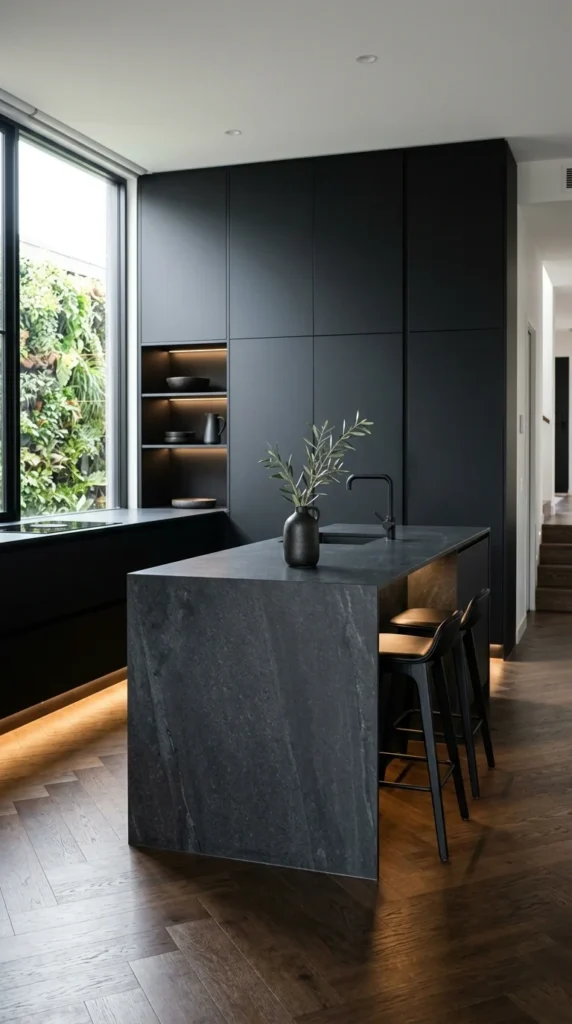
For those who crave drama and a touch of industrial luxury, matte black is the ultimate choice. While it may seem intimidating, black creates an incredibly grounded and focused environment. It acts as a perfect backdrop that allows architectural details and high-end appliances to pop.
The key to a successful black kitchen is balance. Since black absorbs light, it is essential to have ample natural light or a layered lighting scheme involving task, ambient, and accent lights. Pairing matte black cabinets with warm wooden elements—such as a light oak island or walnut open shelving—prevents the room from feeling cold or subterranean. This contrast between the dark, smooth surfaces and the textured grain of the wood is a hallmark of modern Scandinavian and industrial design.
3. Dusty Terracotta
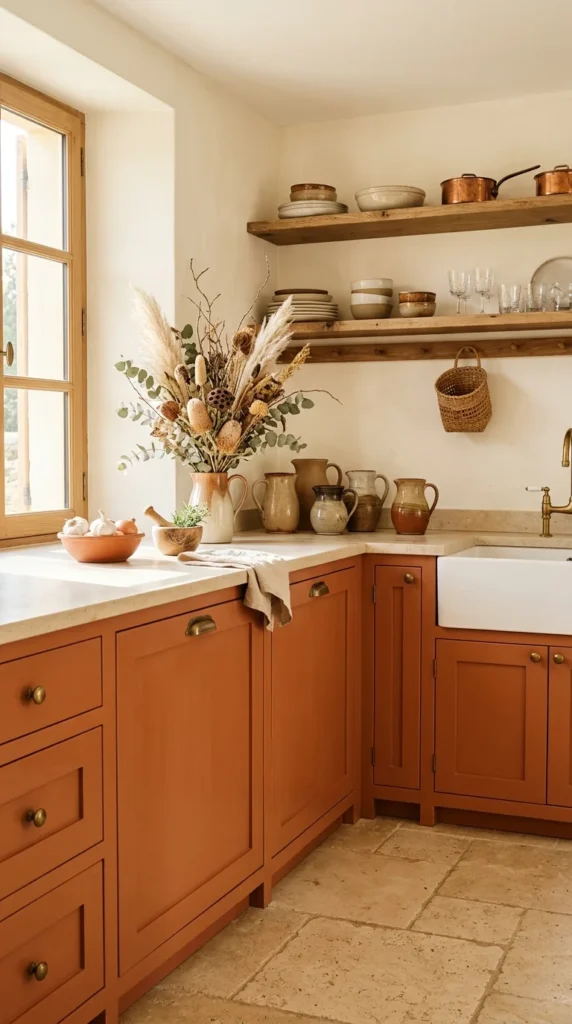
Terracotta is experiencing a major renaissance, moving away from its rustic 1970s roots and into a refined, contemporary context. This “dusty” version of the color is more muted, leaning toward a clay or baked earth tone. It provides an instant infusion of warmth and “soul” into a kitchen, making it feel inviting and lived-in.
This color works exceptionally well in kitchens that feature Mediterranean or Southwestern influences. To keep it modern, pair terracotta with sleek, minimalist hardware and light-colored countertops, such as limestone or white concrete. The earthiness of the color provides a beautiful contrast against the sharpness of modern kitchen technology, creating a space that feels both timeless and trendy.
4. Navy Blue
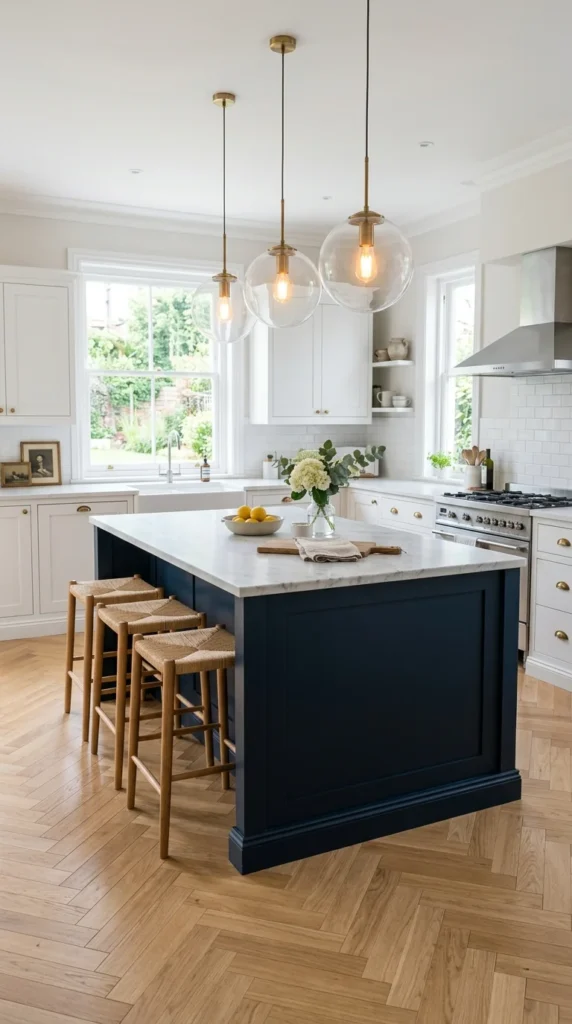
Navy blue remains a staple in modern kitchen design because of its ability to convey stability and timeless elegance. However, the modern approach to navy involves using it as a foundational “anchor” rather than just an accent. A navy blue island paired with lighter perimeter cabinets creates a focal point that draws the eye and anchors the room.
To keep navy blue feeling fresh rather than traditional, opt for a “true navy” with slightly grey undertones. This prevents the color from looking too “nautical.” Modernizing the look further involves the use of silver or polished chrome hardware, which provides a cool, crisp contrast to the deep blue. If you prefer a warmer feel, gold or unlacquered brass hardware will give the navy a regal, luxurious edge.
5. Soft Greige
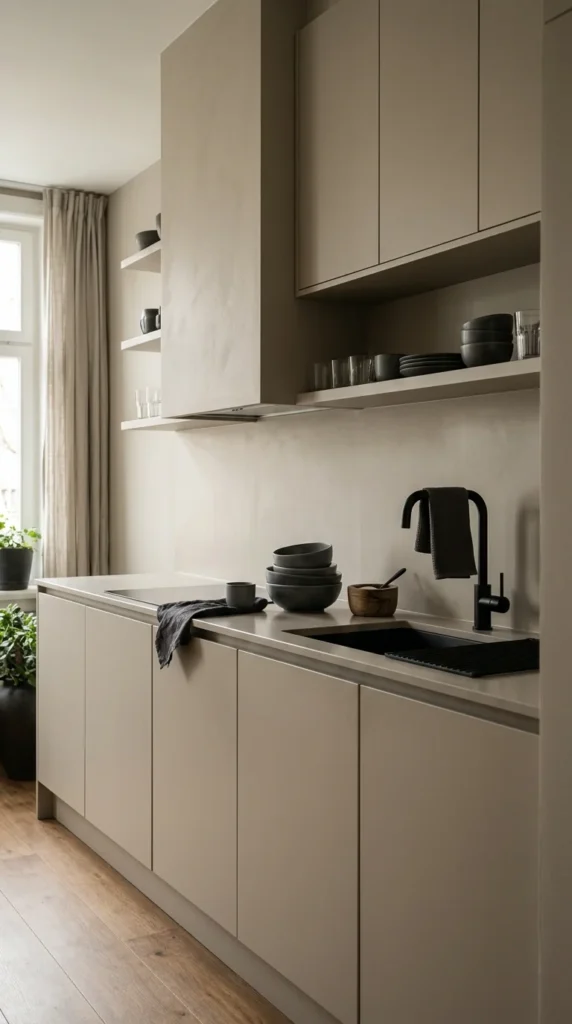
If you love the simplicity of a neutral palette but find grey too cold and beige too dated, “greige” is the perfect solution. This sophisticated blend of grey and beige offers the best of both worlds: the modern edge of grey and the welcoming warmth of beige. It is an exceptionally flexible color that changes beautifully depending on the time of day and the lighting conditions.
A modern greige kitchen often utilizes a monochromatic approach. By painting the cabinets, walls, and trim in varying shades of the same greige, you create a seamless, expansive feel that makes the kitchen appear larger. Incorporate different textures—such as a fluted wood island or a honed stone countertop—to prevent the monochromatic look from feeling flat.
6. Butter Yellow
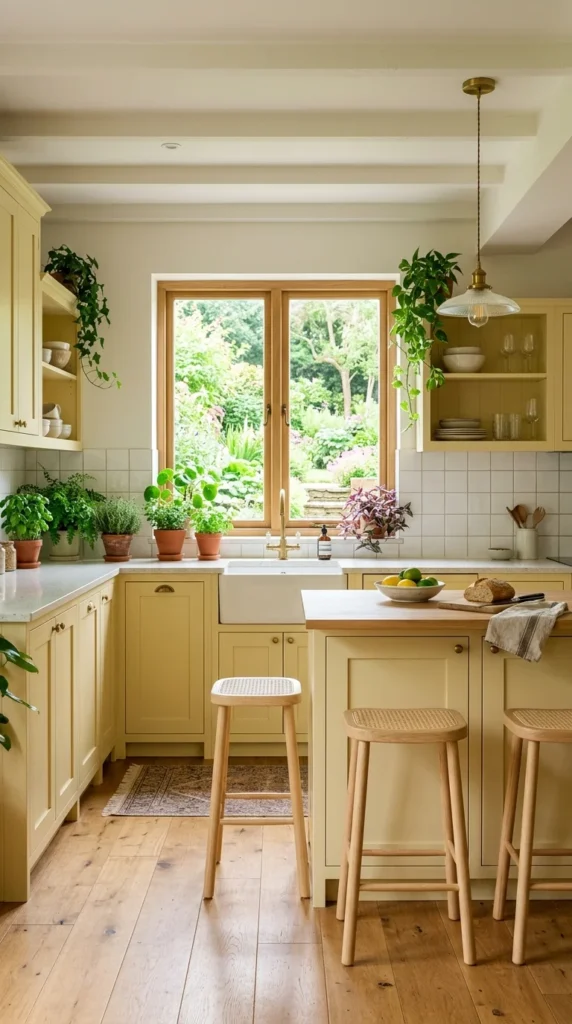
Butter yellow is the unexpected hero of modern kitchen design. While bold primary yellows can be overwhelming, this soft, creamy iteration brings a sense of optimism and light to the heart of the home. It feels like a permanent splash of morning sunshine, making it an excellent choice for kitchens that don’t receive much natural light.
To keep yellow from looking “country” or “kitsch,” use it on modern cabinet silhouettes—think flat-panel or skinny-shaker doors. Pair it with cool-toned elements like stainless steel appliances or a light grey concrete floor to ground the brightness. This color is perfect for those who want their kitchen to be a joyful, energetic space for family gatherings.
7. Charcoal Grey
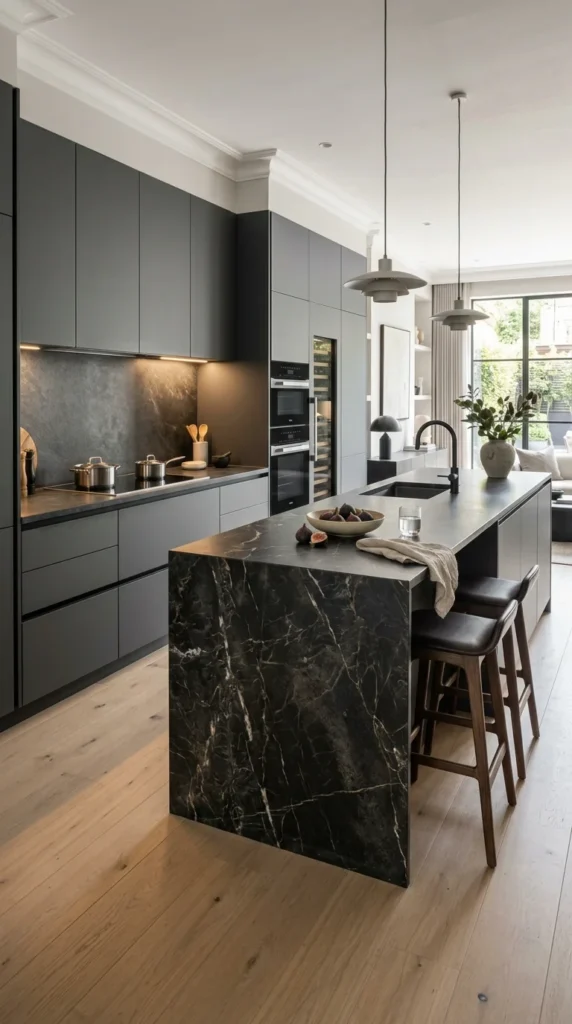
Charcoal grey offers the sophistication of black but with a softer, more approachable edge. It is a deep, moody color that provides a sense of enclosure and luxury. In a modern kitchen, charcoal works best when used in a “total look,” where the cabinetry, backsplash, and even the countertops share similar dark tones.
This color is particularly effective in open-concept homes, as it helps define the kitchen zone against lighter living areas. To elevate the look, incorporate “living finishes” like copper or brass, which will develop a patina over time and look stunning against the dark grey. Charcoal also acts as a brilliant canvas for displaying vibrant food or colorful cookware, making the kitchen feel like a professional chef’s studio.
8. Dusty Lilac
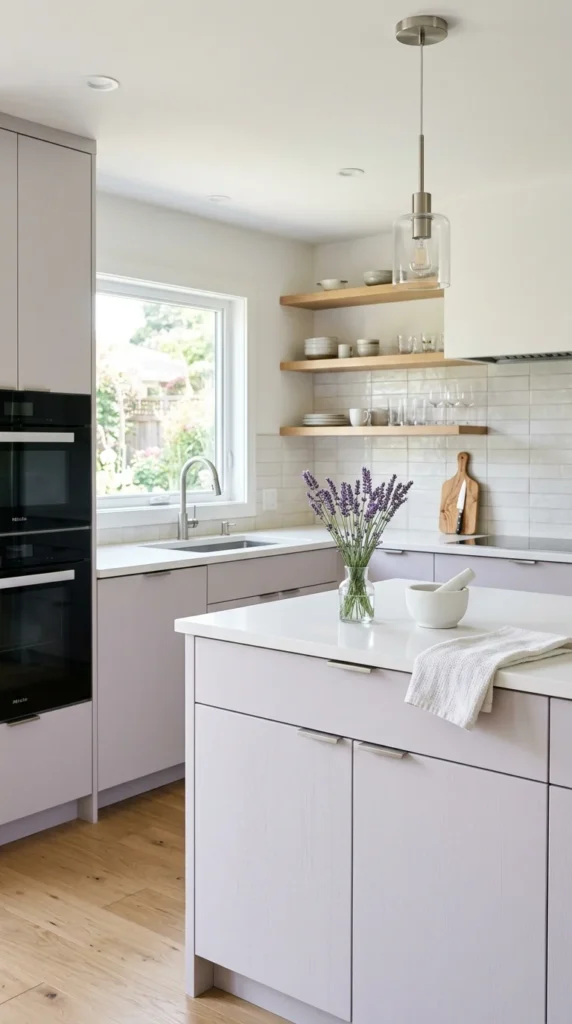
For the homeowner who wants something truly unique, dusty lilac is a bold yet sophisticated choice. This isn’t the bright purple of a child’s bedroom; it is a muted, grey-toned violet that feels mature and ethereal. It is a color that commands attention through its subtlety and novelty.
In a modern kitchen, dusty lilac should be treated with restraint. It looks best when paired with very clean, bright whites and reflective surfaces like glass or polished metal. This prevents the color from feeling too heavy or “sweet.” It is a fantastic choice for a small kitchen or a studio apartment, as the lightness of the shade keeps the space feeling airy and open while providing a distinct design identity that separates it from the mundane.